 If you are comparing AI SEO tools, RankPill may appear attractive because it brings keyword research, AI content creation, automated publishing and backlink credits into one subscription. That combination can appeal to a small business owner who wants to publish more often without hiring an SEO agency or managing several separate tools.
However, a useful RankPill review needs to look beyond article volume. The real questions are whether the platform identifies realistic opportunities for your website, produces content that reflects search intent, gives you enough editorial control and provides clear value for your budget. This guide examines the available information about RankPill and compares its approach with a more data-led SEO content platform such as Ammpli.
The aim is not to declare one tool suitable for every business. It is to help founders, marketing managers and small teams in the United Kingdom and other English-speaking markets choose an SEO content process that fits their website, resources and growth objectives.
RankPill review: quick verdict
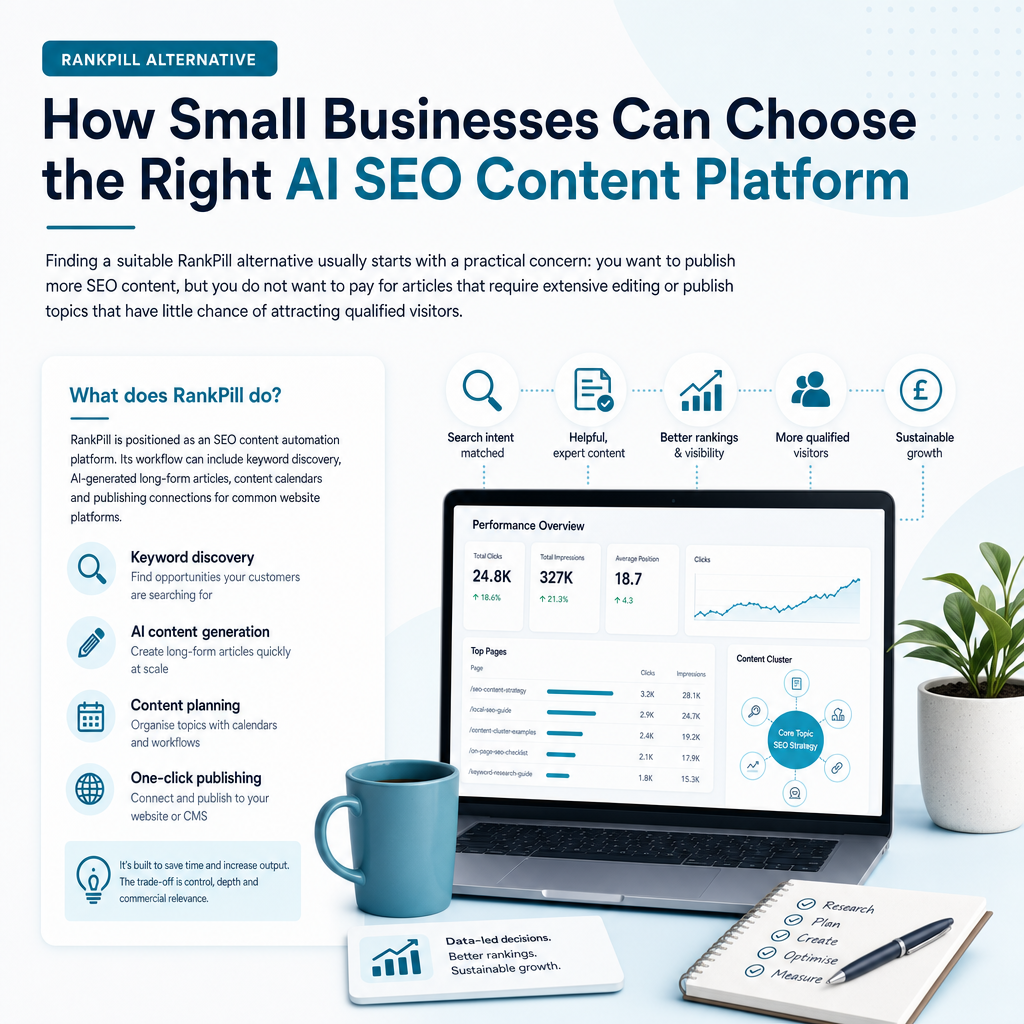
RankPill is positioned as an automated SEO growth platform. Its advertised workflow covers personalised keyword research, AI-written articles, SEO optimisation, internal and external links, image insertion, publishing and backlink-related features. It also promotes visibility across Google and AI search services such as ChatGPT, Claude, Gemini and Perplexity.
This broad feature set may suit a business that values hands-off publishing and wants a single system for producing a regular stream of long-form articles. The trade-off is that automation can create quality-control questions, particularly where content is published without a mandatory human approval stage or where the subject requires specialist expertise.
Based on the pricing and product information available in 2026, RankPill’s advertised Business plan is $99 per month when billed monthly, or an effective $82.50 per month with annual billing. The plan is described as including 30 articles per month, publishing connections, backlink credits, rewrites and a growth plan. Extra backlink packages can materially increase the total cost.
RankPill may be suitable if you want:
- A single workflow for keyword research, writing and publishing.
- Regular article production with limited manual involvement.
- Support for several website publishing platforms.
- Backlink-related features included in the wider product offer.
- A simple starting point for testing automated SEO content.
You may need another approach if you require:
- Detailed analysis of your own Google Search Console and Analytics data.
- Strong control over which opportunities are prioritised.
- Mandatory editorial review before content reaches your website.
- Detailed competitor content-gap analysis and semantic mapping.
- Clear evidence that the content plan reflects your existing visibility.
What does RankPill offer?
RankPill presents itself as an end-to-end SEO automation platform rather than a simple AI writing assistant. Its advertised features include a keyword research tool, personalised growth planning, SEO article generation, automated publishing, internal linking, image and rich media insertion, backlink exchange or credits, and marketing activity related to Reddit.
The product also promotes content for both conventional search and AI-generated search results. This reflects a wider shift in SEO, where businesses want their content to be useful to Google as well as answer engines and conversational tools. Visibility in those systems is not guaranteed by publishing frequently, but clear, authoritative and well-structured content can support discovery across several channels.
Key features described in available product information
- SEO automation: A workflow designed to move from research to article publication with fewer manual steps.
- Keyword research: A personalised keyword growth plan intended to identify subjects for future content.
- AI content writing: Long-form articles designed for search engines and AI search interfaces.
- Auto-publishing: Connections advertised for WordPress, Shopify, Webflow, Wix, Framer and webhook-based setups.
- Backlink support: Included backlink credits on the main plan, with additional packages described separately.
- Internal and external links: Features intended to help connect new articles with other relevant pages.
- Multi-language publishing: Product information has described support for more than 50 languages.
These features make RankPill broader than a generic AI content generator. Still, feature breadth does not automatically prove that the resulting strategy will fit a small business. The quality of the initial research, the relevance of each topic and the review process matter more than the number of functions listed on a pricing page.
RankPill pricing and value
Pricing is a major part of any RankPill review because small businesses usually need predictable costs. The information supplied for 2026 describes a Business plan at $99 per month on monthly billing, with an effective annual rate of $82.50 per month when paid as $990 for the year. The plan is described as including 30 SEO or GEO articles per month, with each article potentially exceeding 3,000 words.
Additional backlink packages are reported at $249 per month for a Plus package and $799 per month for a Max package. These amounts sit on top of the main subscription. A business comparing RankPill with a content platform should calculate the full monthly cost rather than comparing only the base plan.
| Option | Reported price | Reported inclusions | Best suited to |
|---|---|---|---|
| Business monthly | $99 per month | Up to 30 articles, publishing features, backlink credits and growth planning | A small team testing automated content on one website |
| Business annual | $990 per year | Same core plan at an effective $82.50 per month | A business prepared to commit for a longer period |
| Backlinks Plus | $249 per month | Additional backlink credits described as an add-on | Sites seeking more link-related activity |
| Backlinks Max | $799 per month | A larger backlink credit package described as an add-on | Businesses with a substantial link-building budget |
Publicly reported information also describes three-month billing at a lower monthly rate and volume discounts for multiple websites. Pricing, limits and commercial terms can change, so prospective customers should verify the current terms directly before subscribing.
Does the price represent good value?
It may be reasonable for a business that genuinely needs 30 pieces of content each month and has the capacity to review, improve and promote them. If the articles require extensive rewriting, the apparent saving can reduce quickly. Publishing more content is not the same as building a useful topical resource.
The calculation also changes when backlink packages are added. A small business may be better served by spending part of that budget on opportunity analysis, local service pages, conversion improvements or expert review. The right comparison is not simply software price versus agency price; it is the cost of producing content that is relevant, accurate, publishable and connected to commercial goals.
How RankPill compares with other SEO options
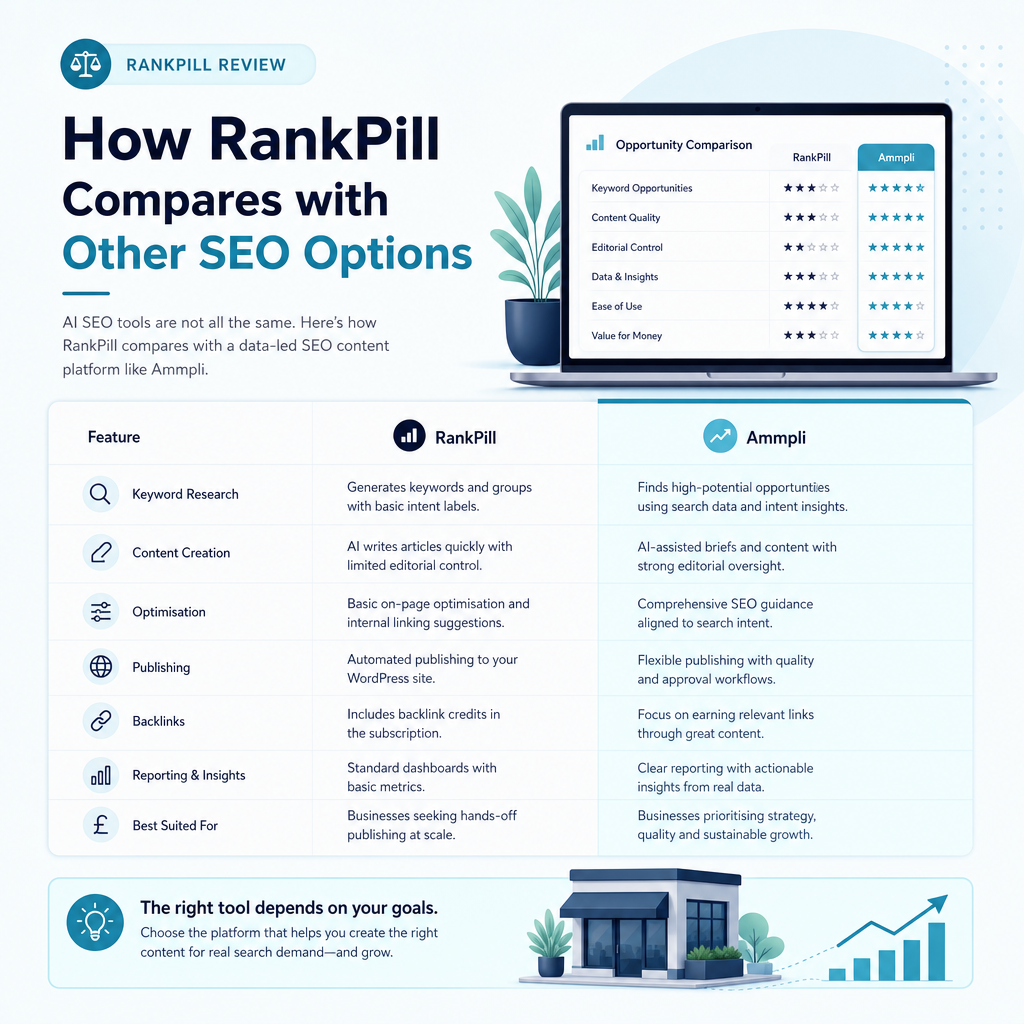
RankPill sits among several different categories of SEO solution. Some alternatives focus on writing, some on keyword and competitor research, some on technical auditing and others on professional strategy. Comparing them as if they were identical products can lead to a poor buying decision.
A small business should begin with the problem it needs to solve. If the main issue is a lack of publishing capacity, automation may help. If the issue is uncertainty about which pages and keywords deserve attention, a research-led planning platform may offer greater value. If the site has technical problems, neither tool category should replace a technical audit.
| Option | Best fit | Strengths | Potential limitations |
|---|---|---|---|
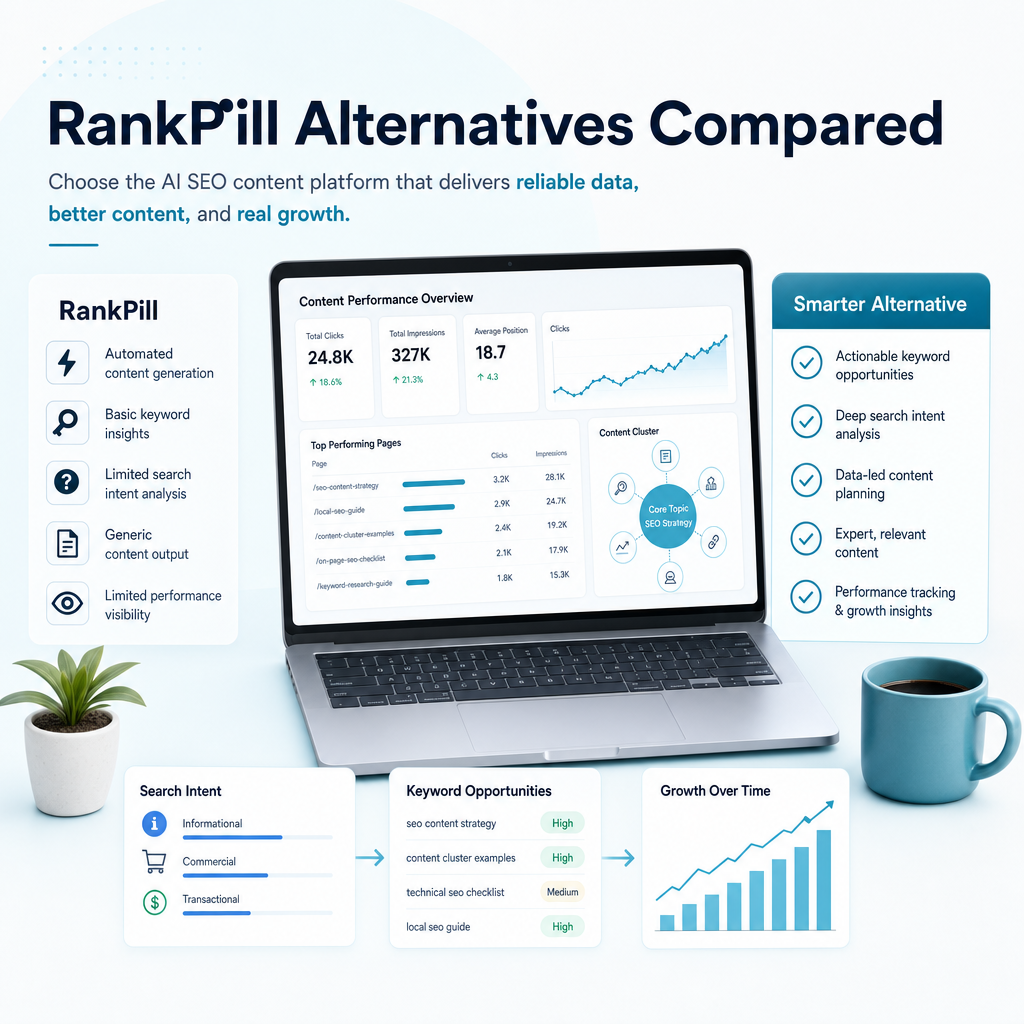
| RankPill-style automation | Teams seeking high-volume research, writing and publishing in one workflow | Convenience, recurring output and broad automation | Quality control, strategic depth and total cost require close review |
| Generic AI writing tool | Drafting ideas, outlines or early copy | Fast and flexible for many writing tasks | May not use your search data, competitor gaps or business context |
| All-in-one SEO suite | Marketing teams needing research, auditing and reporting | Broad datasets and detailed analysis | Can be expensive or complex for a small team |
| Freelance SEO writer | Businesses wanting human research and editorial judgement | Subject expertise, nuance and direct collaboration | Less predictable output and a higher cost per article |
| Traditional SEO agency | Businesses seeking strategic support across several SEO areas | Planning, technical work, content and ongoing advice | Higher retainers and longer communication cycles |
| Ammpli | Small businesses wanting data-led content planning and creation | Google Search Console and Analytics analysis, competitor research, search intent and semantic mapping alongside up to date relevant content | Still requires sensible review and business expertise for important topics |
RankPill strengths
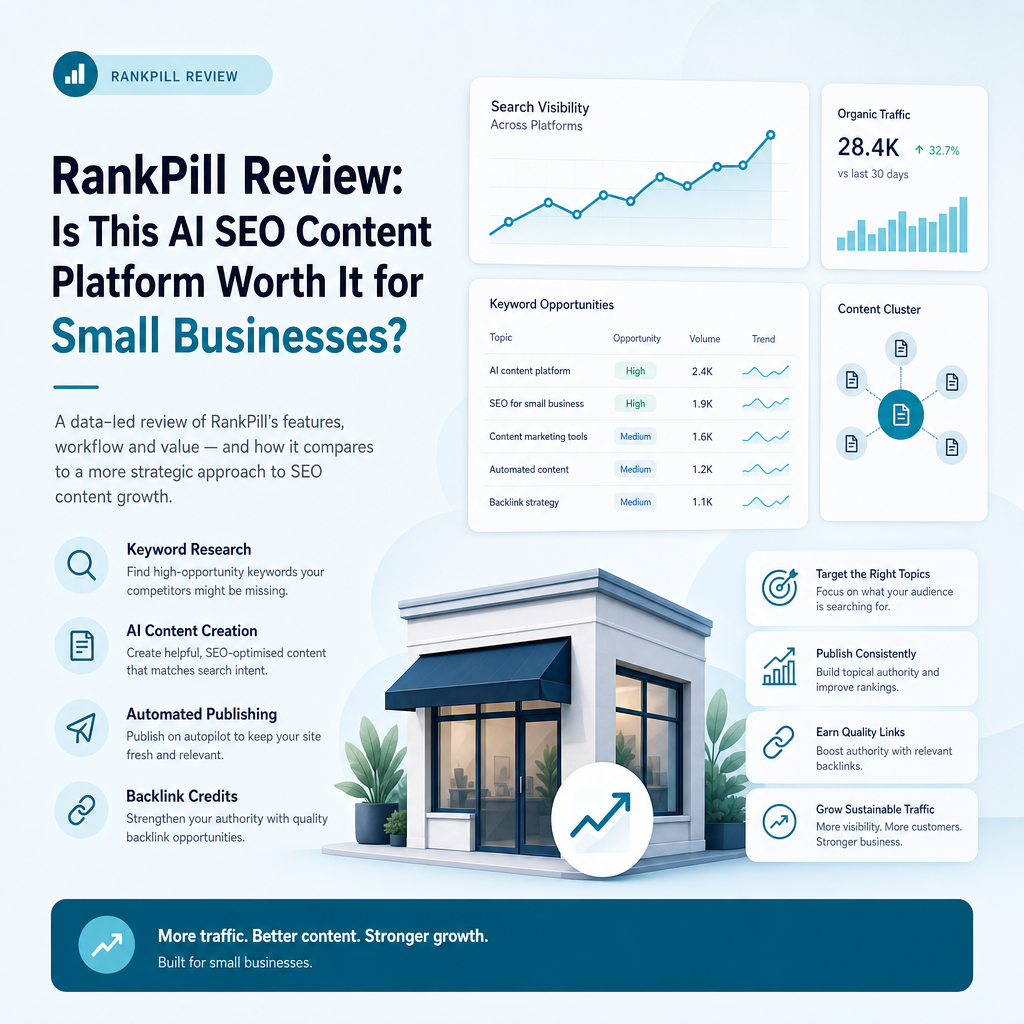
The strongest part of RankPill’s proposition is convenience. A small team can avoid moving manually between a keyword tool, writing application, CMS and publishing calendar. That can reduce operational friction for businesses that already know their topics and want a consistent production workflow.
Its wide publishing support may also be useful for businesses operating websites across different platforms. The advertised connections cover several popular CMS options, while webhook support may help with custom processes. A broad publishing layer can be more practical than a tool that only exports text for manual uploading.
1. A broad automation workflow
RankPill aims to connect research, content generation, optimisation and publishing. This is more useful than a standalone text generator when the main bottleneck is execution rather than strategy.
2. Regular content production
A recurring article allowance can help a business create a content calendar. Consistency may make it easier to maintain publishing habits, provided each topic is relevant and the content meets the required standard.
3. Multiple publishing options
Support advertised for WordPress, Shopify, Webflow, Wix, Framer and webhooks may suit small businesses with different website setups. The exact integration experience should be checked before purchase.
4. AI search positioning
RankPill promotes visibility across Google and AI search services. The underlying principle is sensible: content should answer real questions clearly and establish a recognisable subject area. No platform can promise that an AI system will cite or recommend a particular business.
RankPill limitations and risks
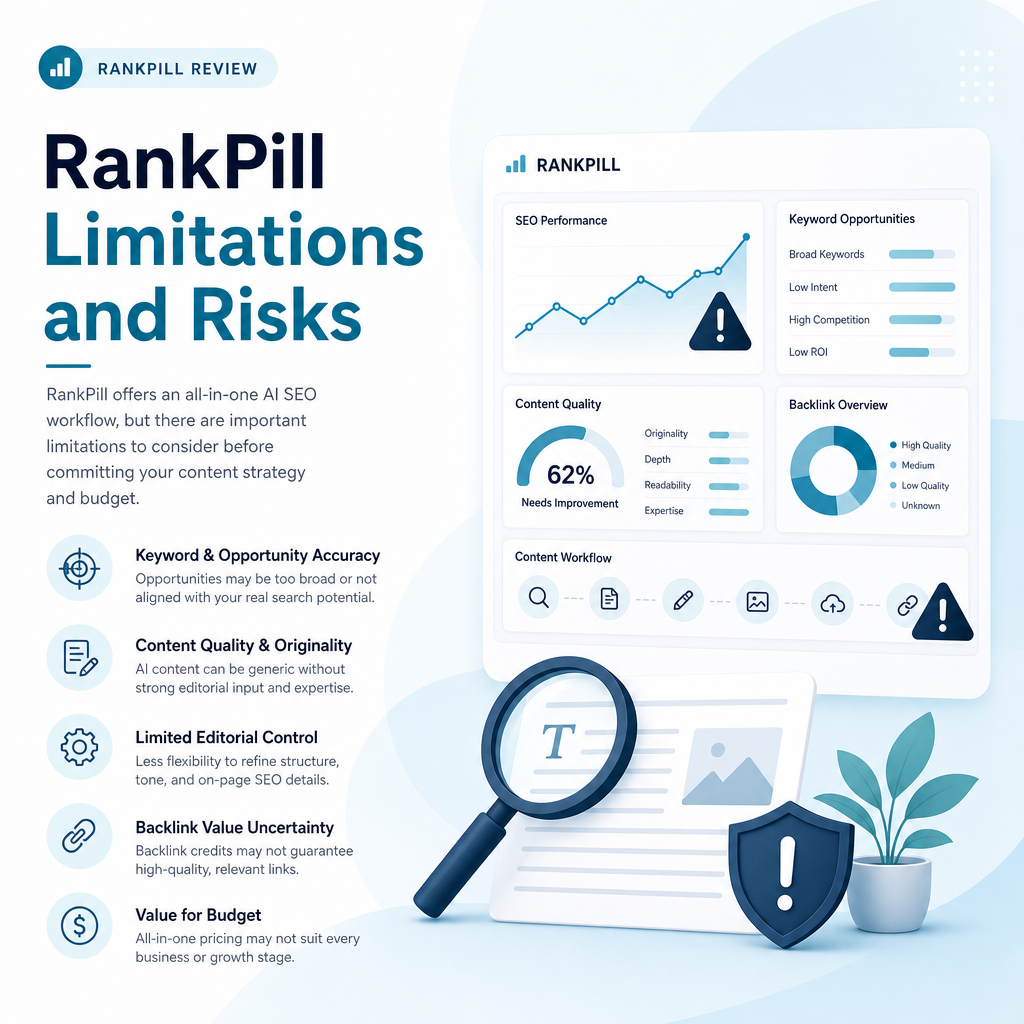
Automation creates risk when it removes useful checks. One reported concern is that content may be published automatically without a mandatory editorial approval stage. For general subjects, that may be manageable. For healthcare, financial, legal, technical or regulated topics, unchecked publication creates a higher risk of factual errors, weak advice or unsuitable claims.
Independent review material also describes variable output quality, limited brand customisation and gaps in technical SEO reporting. These reports are third-party observations rather than universal product facts, but they are useful prompts for a buyer’s checklist.
Content quality may vary by subject
AI content often performs best when the topic is well documented and the required answer is straightforward. A specialist service business may need original examples, local knowledge, regulations, pricing boundaries and subject-matter review that an automated workflow cannot infer reliably.
Before subscribing, request sample outputs for topics close to your market. Check whether the drafts reflect your services, audience, location and point of difference, rather than simply repeating general information found elsewhere.
Automation can encourage excessive publishing
Thirty articles per month sounds productive, but a small business may not need that volume. Publishing a large number of weakly differentiated pages can make a website harder to manage and may dilute internal linking and editorial attention. Google also punishes websites who over produce mediocre content, initially you’ll have a big up tick in impressions and maybe clicks but by continuing to publish on such a schedule, google will punish you and your business. There are many documented cases with agentic SEO causing complete data crashes.
A better process begins with realistic opportunities. A service business might gain more from one strong page targeting a valuable local search and three supporting articles than from publishing dozens of loosely related posts.
Backlink features require careful scrutiny
Backlinks can support discovery and authority, but quality and relevance matter. A business should ask how links are sourced, whether websites are reviewed for relevance, how placements are selected and what happens when a link is removed. Link activity should never be treated as a substitute for useful content or a sound website.
Public information may not answer every buyer question
Some comparison sources have described limited public detail about methodology, integrations or backlink processes. This does not prove that a product lacks those capabilities. It does mean that buyers should ask direct questions before committing, especially where there is no free plan or risk-free trial.
What to ask before choosing an AI SEO tool
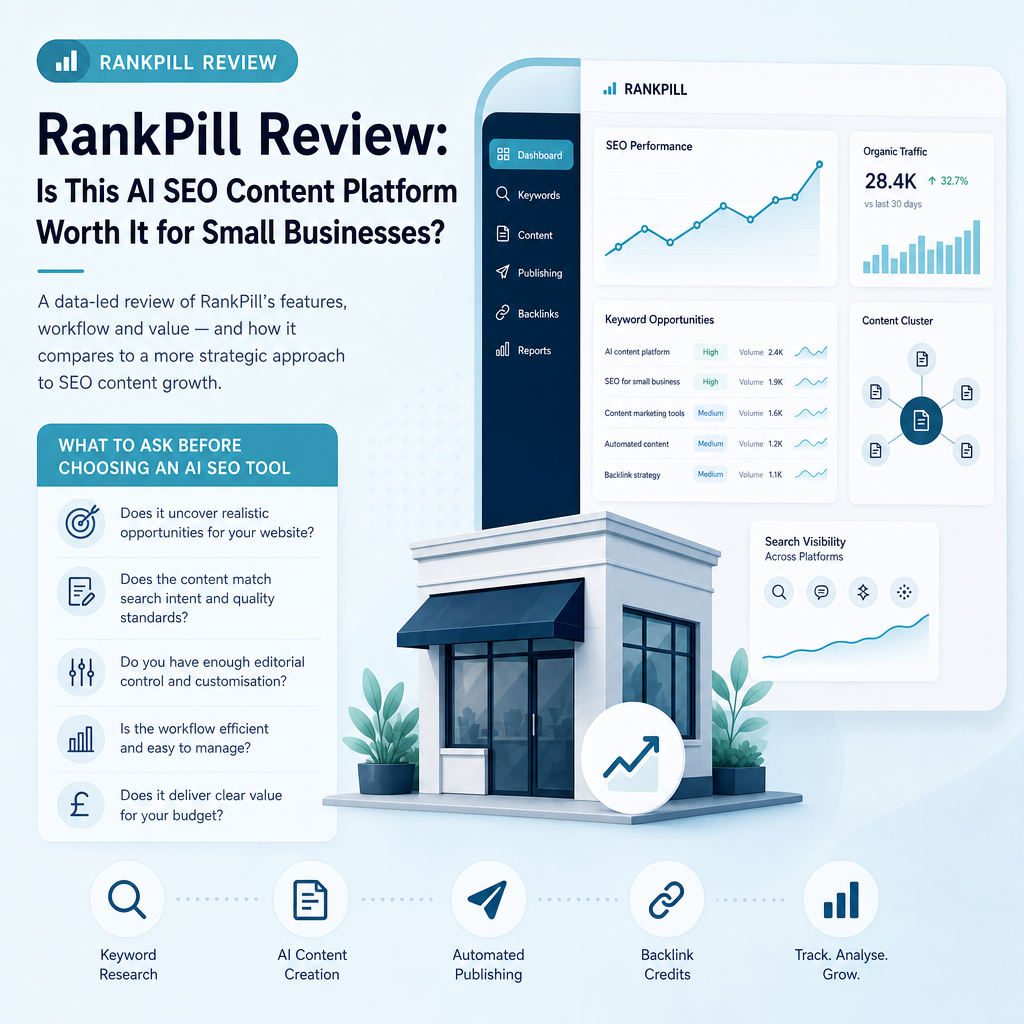
A practical buying process can prevent many of the problems associated with automated content. Ask for clear answers about data sources, approval controls, publishing permissions, cancellation terms and the way the platform measures progress.
For a small business in the UK or an international English-speaking market, the provider should also be able to explain how it handles local intent, spelling conventions, service areas and industry-specific terminology.
- Does the platform connect to Google Search Console and Google Analytics?
- How does it identify realistic keywords for a website with modest authority?
- Can you approve, edit or reject every article before publication?
- How does it separate informational topics from commercial service searches?
- Can it map related terms and supporting pages into topic clusters?
- How does it analyse competitor content gaps?
- What publishing permissions are required for your CMS?
- Can your team control tone, terminology, claims and brand information?
- What happens to unused credits or published content if you cancel?
- Which reports show whether content is gaining impressions, clicks and enquiries?
Why a data-led approach can be better for small businesses
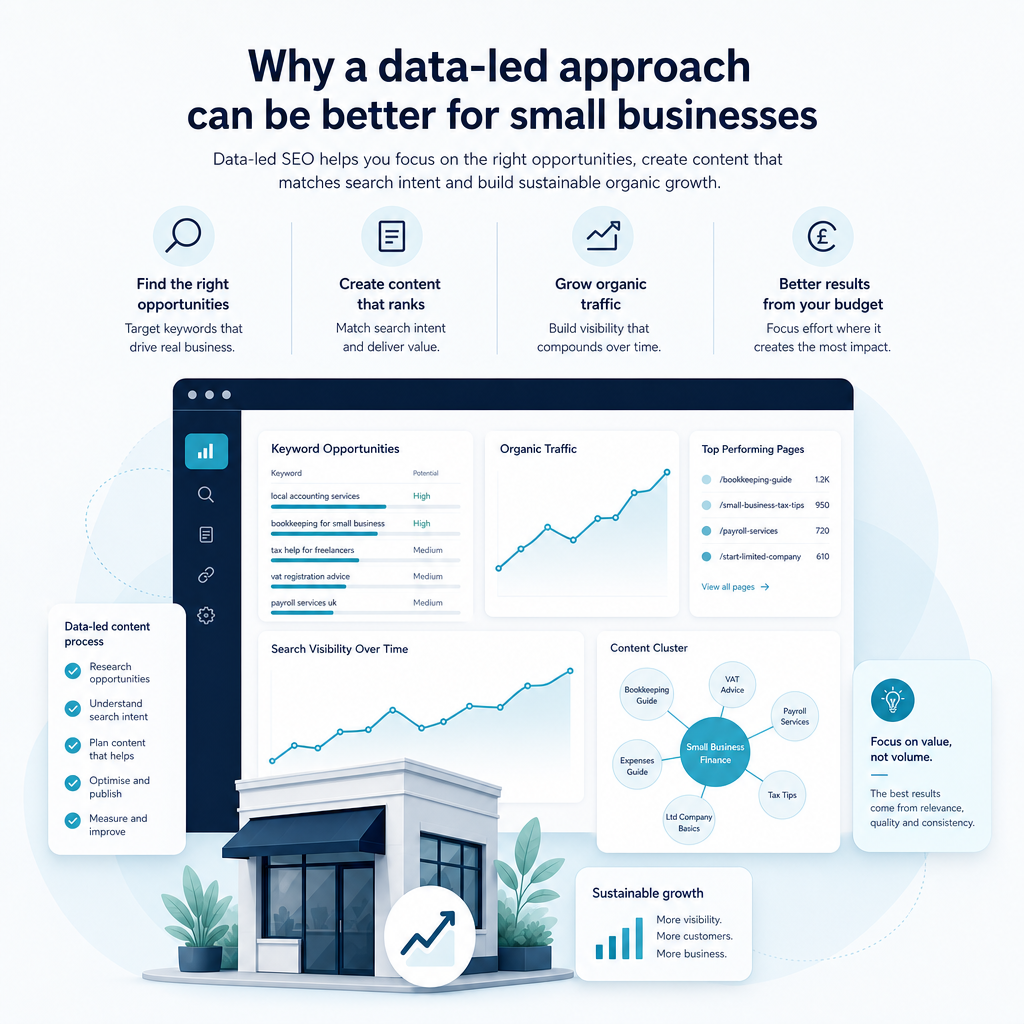
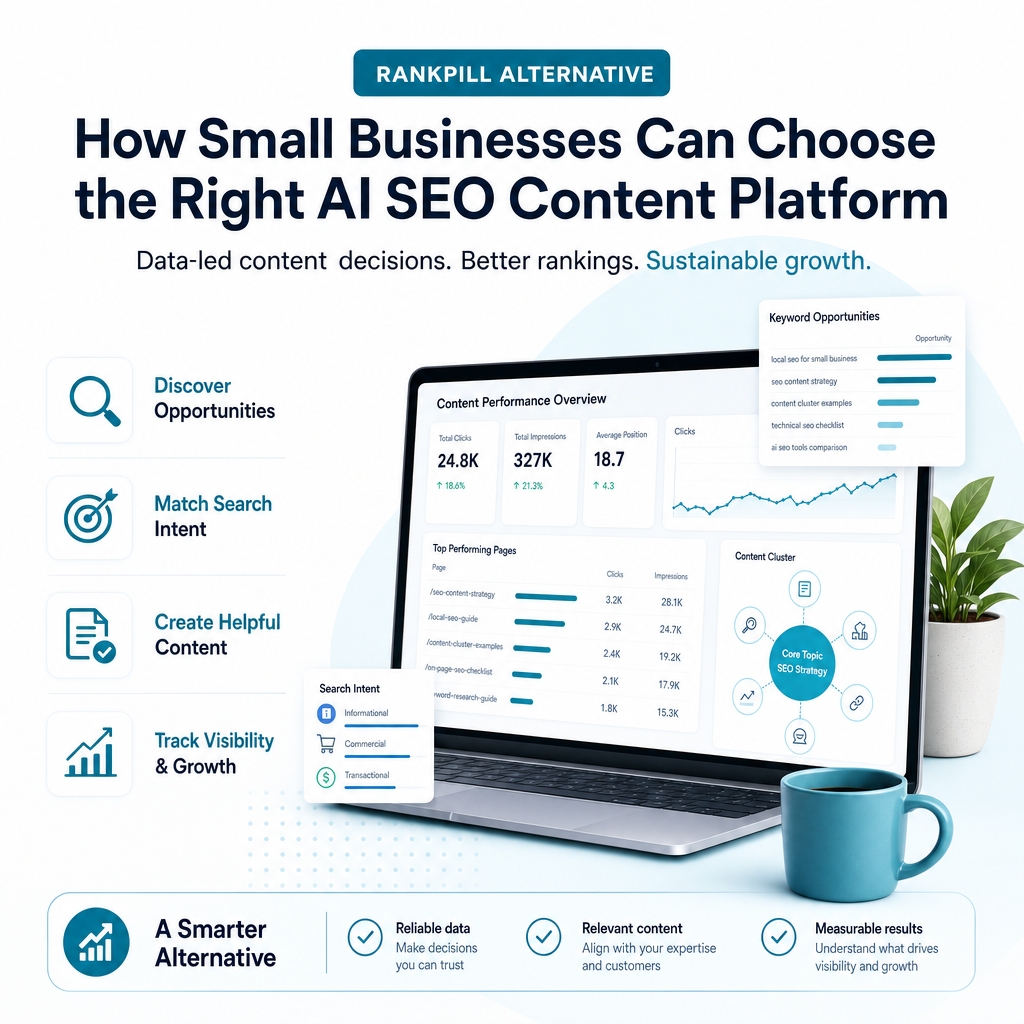
Many small businesses already have valuable SEO evidence in Google Search Console. The website may be appearing for searches that are relevant but not yet generating enough clicks. Those terms can reveal practical opportunities that a generic content generator may miss.
For example, a UK property business might receive impressions for several variations of a service query but rank outside the strongest positions. A healthcare practice may appear for questions related to a treatment but lack a clear explanatory page. A B2B software company may rank for a narrow use case without supporting content that answers the next question. These are not abstract keyword ideas; they are signals from the business’s existing visibility.
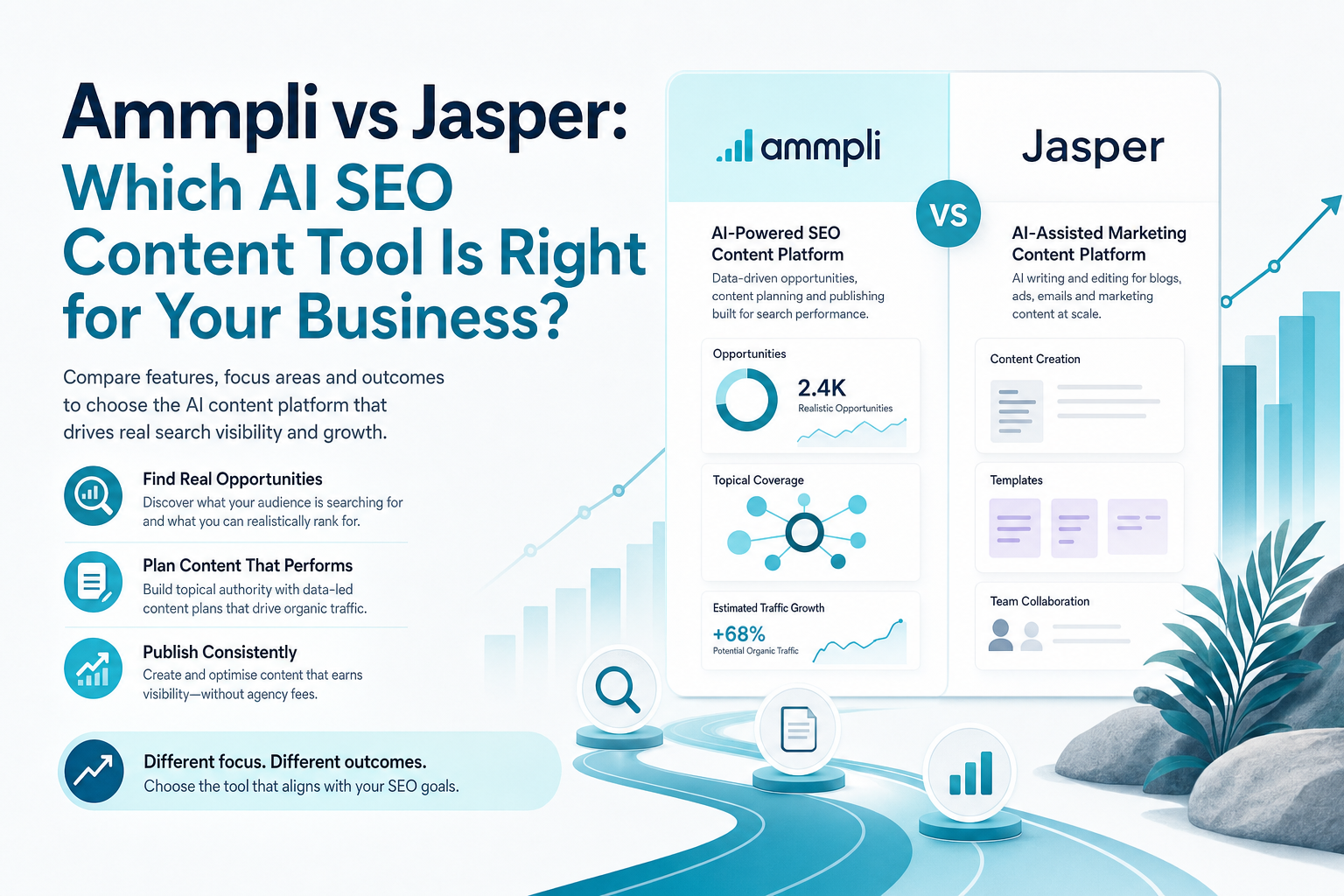
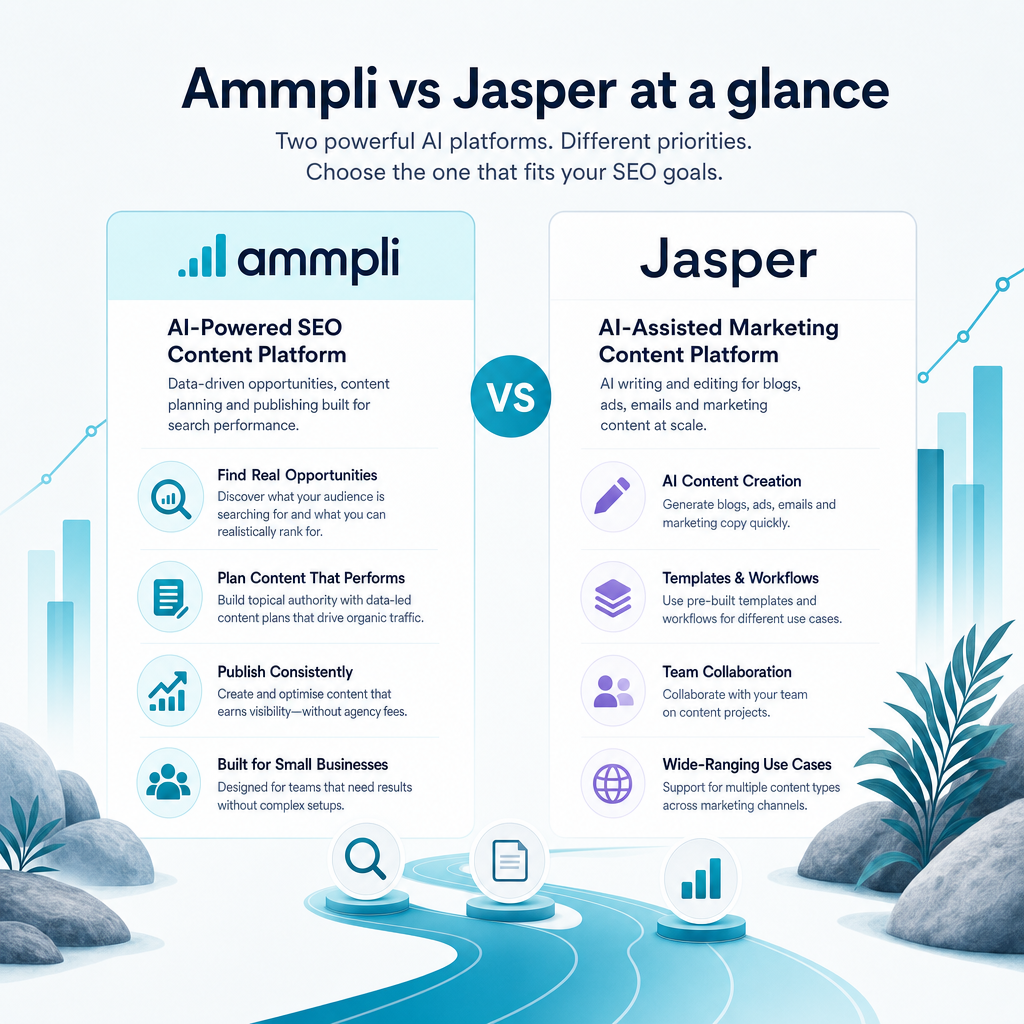
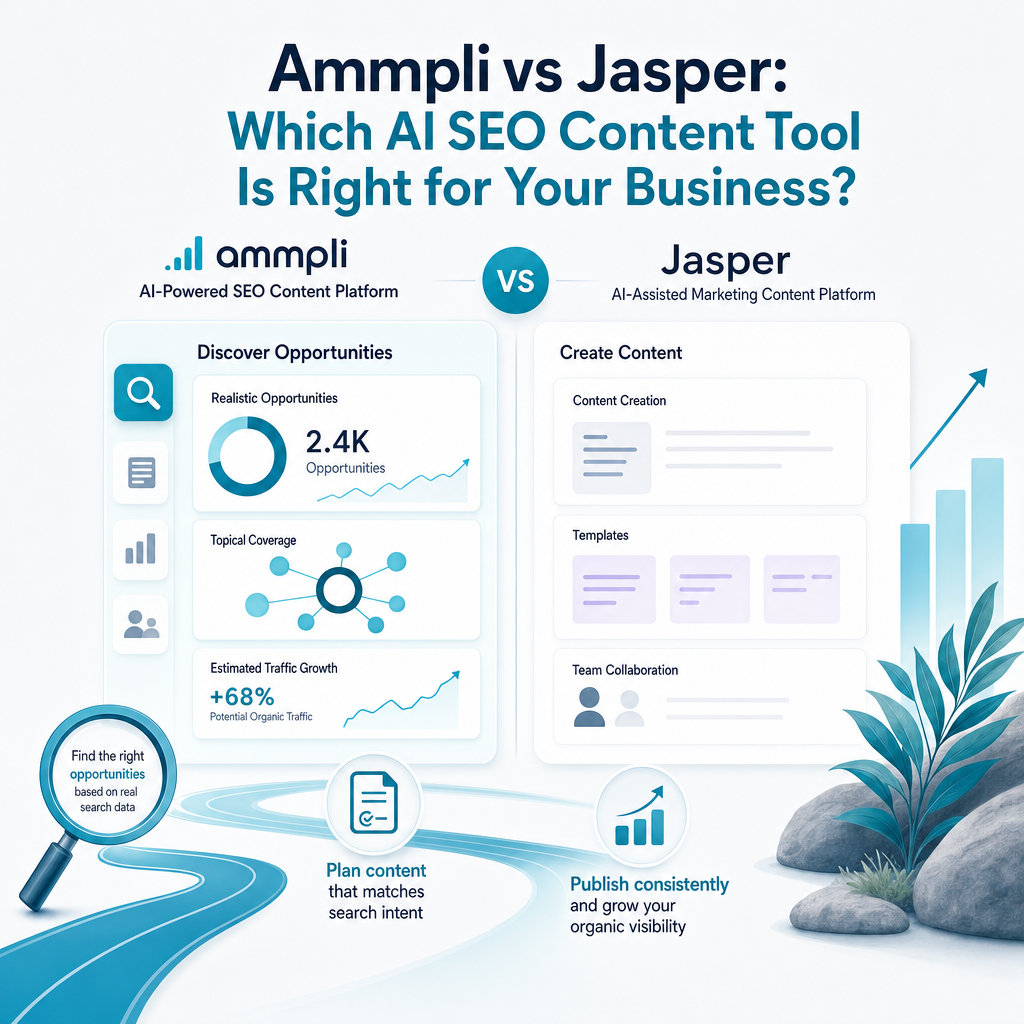
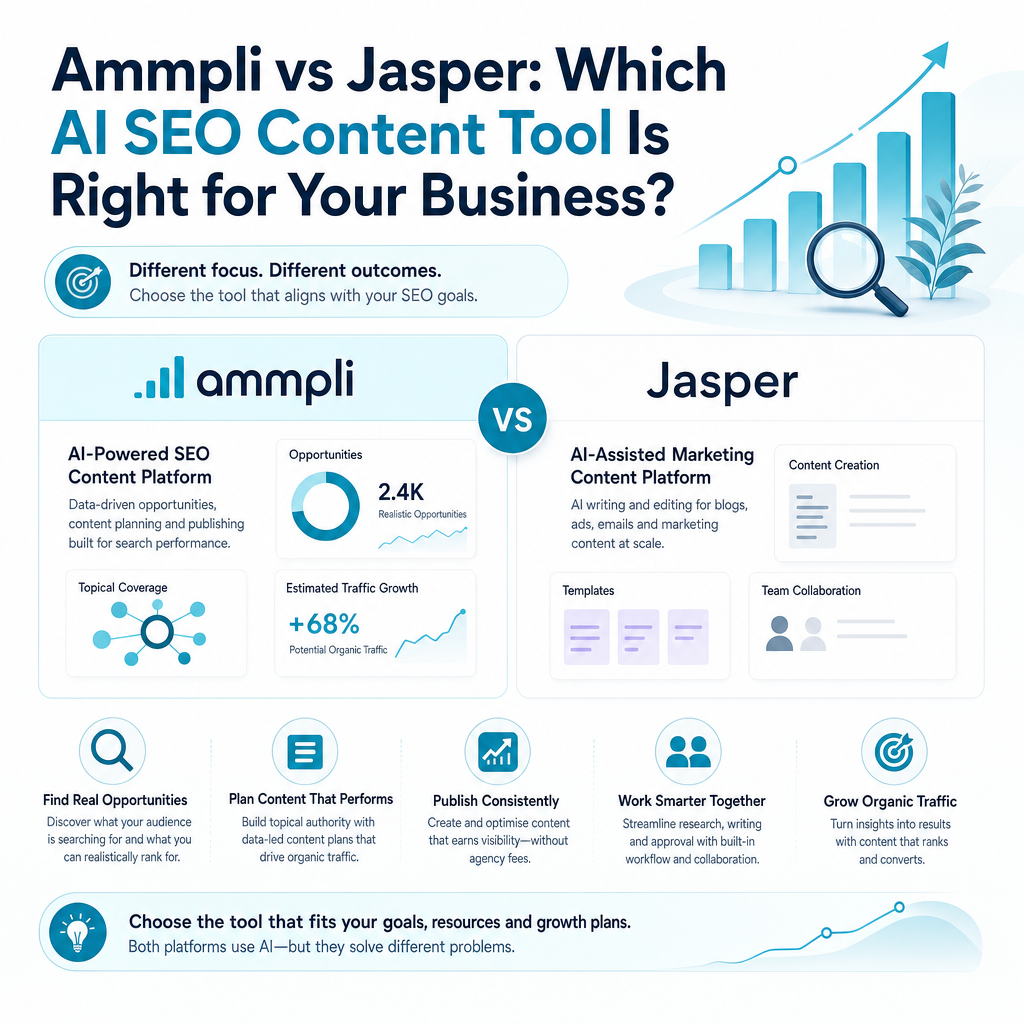
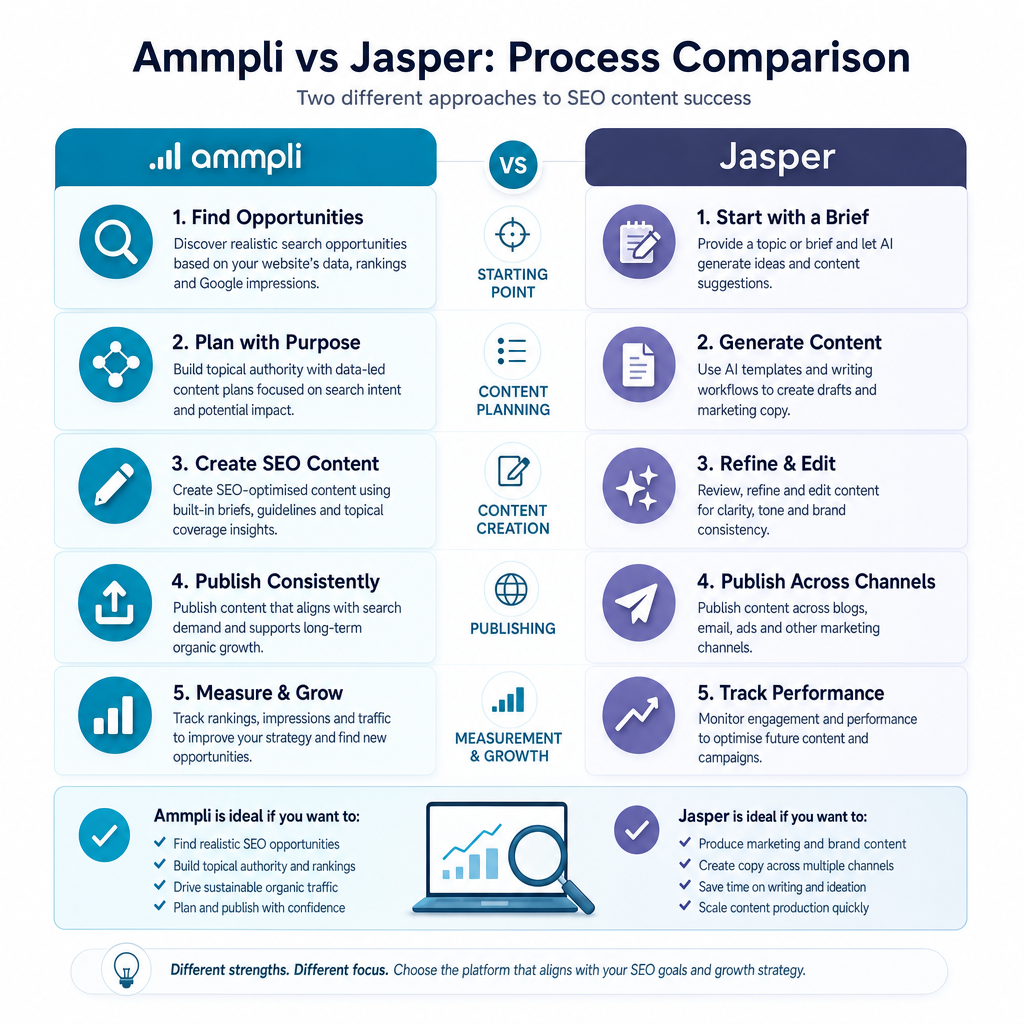
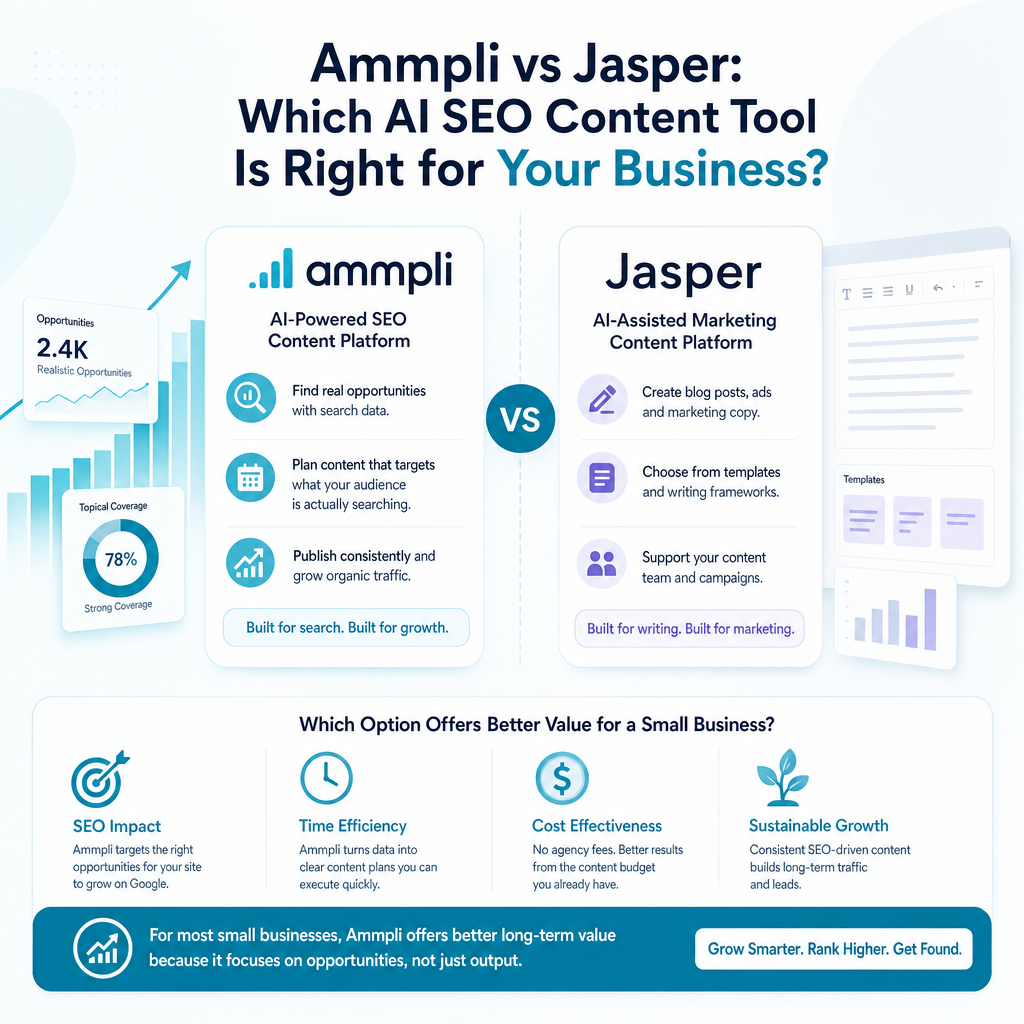
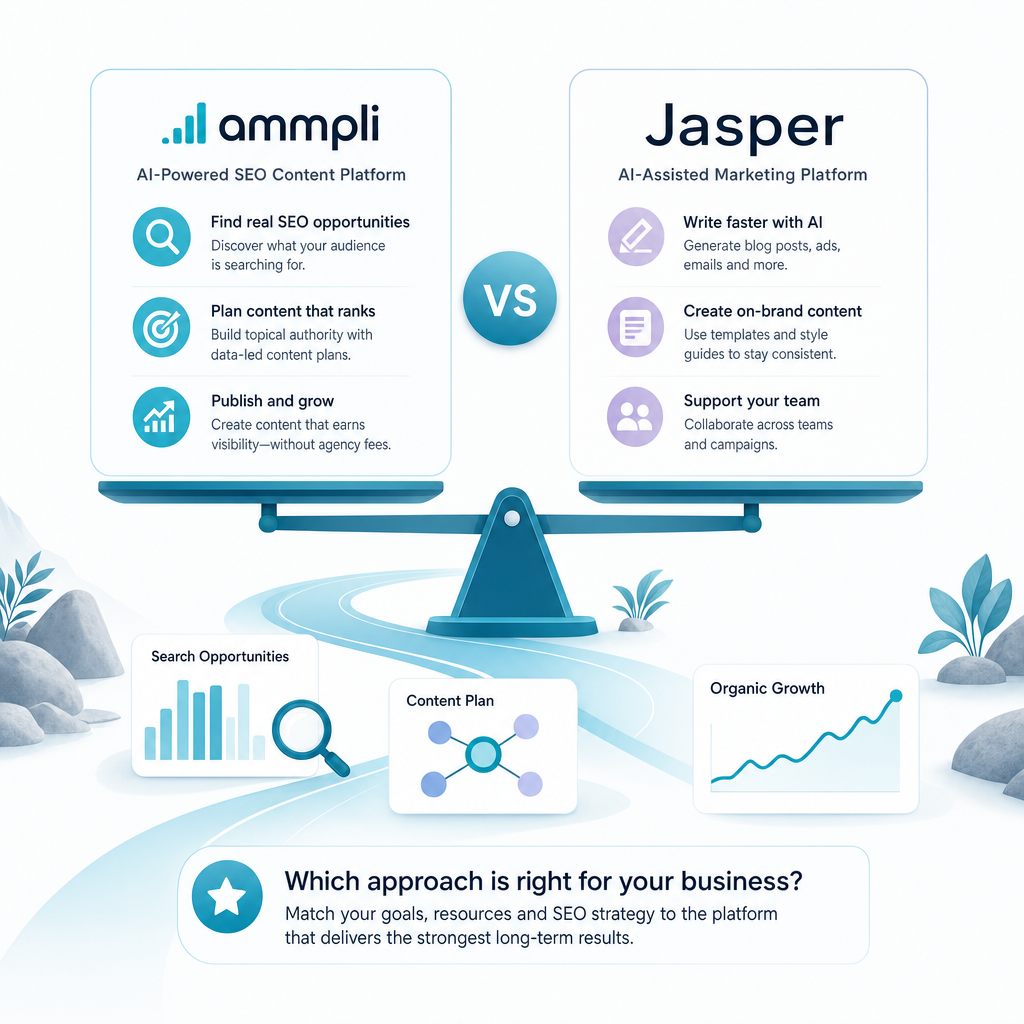
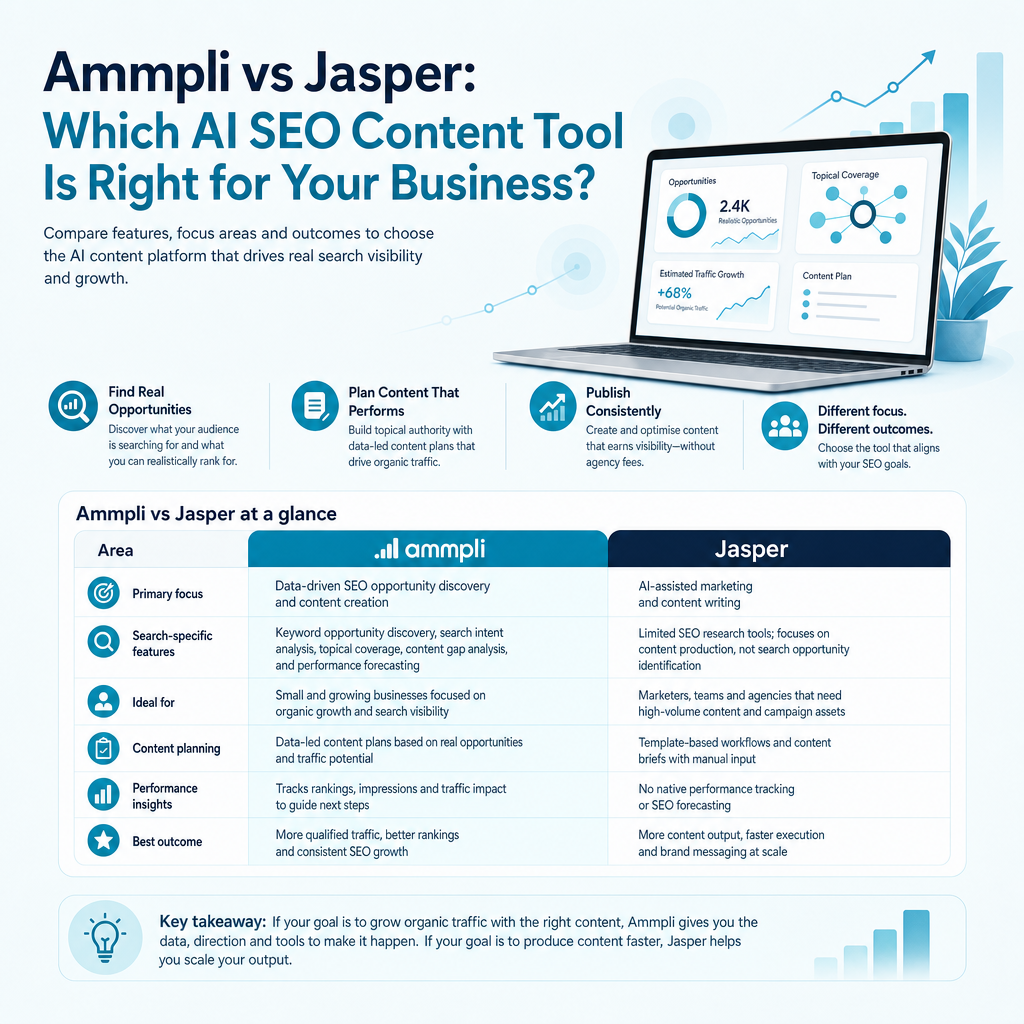
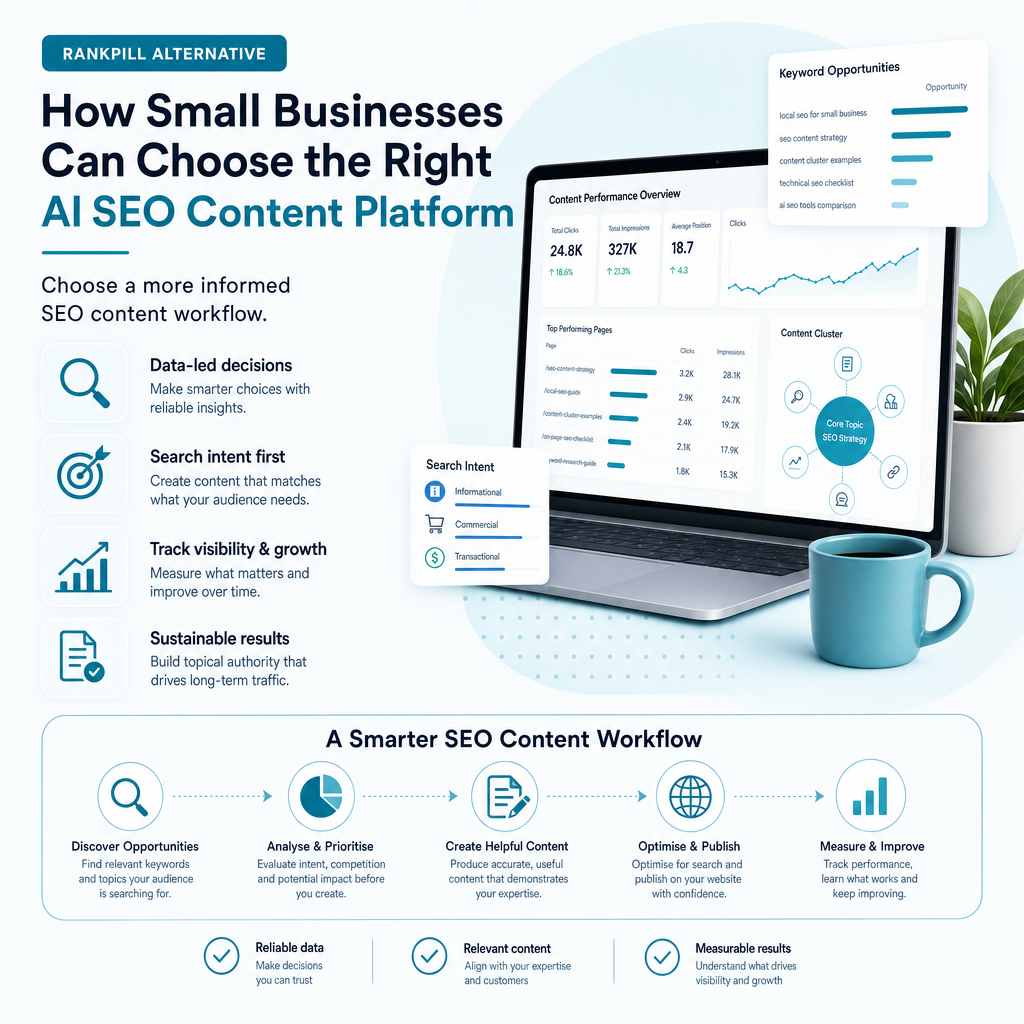
Ammpli is designed around this type of opportunity analysis. It combines Google Search Console and Analytics data with competitor research, search-intent analysis and semantic keyword mapping. The result is intended to be a practical content plan rather than a list of high-volume terms that may be difficult to reach.
How Ammpli differs from generic AI writing software
Generic AI writing tools such as Chatgpt can produce a draft when given a prompt, but they do not automatically know which topics match your current performance, which competitor gaps matter or how a new article should support your wider website. That research and planning still falls to the user.
Ammpli connects opportunity discovery with AI-powered SEO content creation. It can help a small team move from search data to topic selection, content planning, semantic coverage and publication with less manual research. The platform also supports SEO content calendars, local SEO content creation, blog and brand analysis, direct CMS publishing and SEO performance reporting.
What this means for a small service business
The benefit is not simply producing more words. It is choosing content that has a clear role in the customer journey. An article may answer an early research question, support a service page, address a local concern or strengthen a topical cluster around an important offer.
This approach can be more suitable for a business that has some existing impressions or rankings but lacks time, internal expertise or the budget for a traditional SEO agency. It keeps the business’s search data and commercial priorities at the centre of the process.
RankPill versus Ammpli: which approach fits?
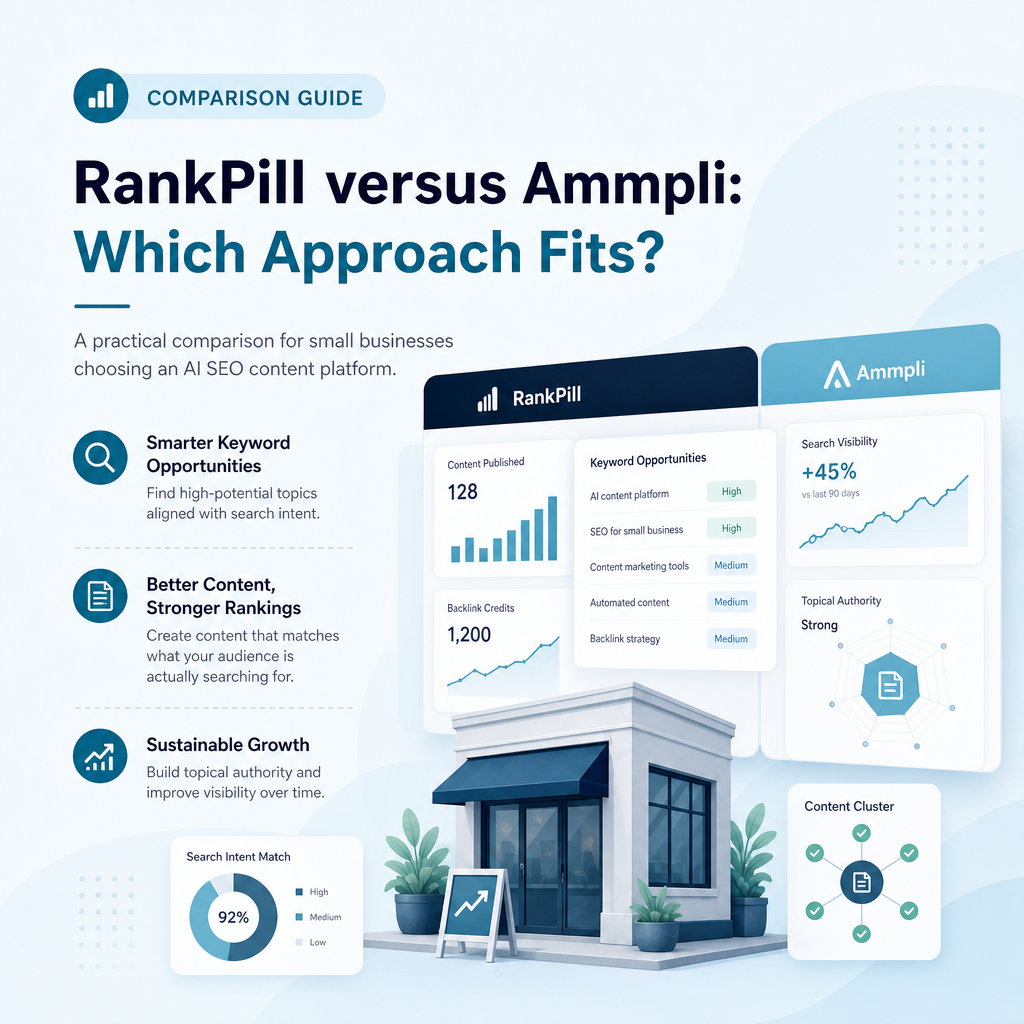
RankPill and Ammpli represent different priorities. RankPill places strong emphasis on automated production, recurring publishing and a wider growth narrative that includes backlink-related features. Ammpli focuses on using a business’s existing search performance and market context to identify realistic opportunities and turn them into a relevant up to date content plan, almost guaranteed to rank on google.
Neither approach removes the need for judgement. A business should review important facts, confirm that content matches its services and make sure that each page gives customers a useful next step. The difference is where the workflow begins: production volume or evidence-based opportunity analysis.
| Decision factor | RankPill | Ammpli |
|---|---|---|
| Primary emphasis | Automated SEO content and publishing | Search-data analysis, opportunity identification and SEO content planning |
| Research approach | Personalised keyword growth planning is advertised | Uses Google Search Console and Analytics data, competitor research and search intent |
| Content workflow | AI article creation with recurring publishing | AI-powered content creation based on mapped opportunities and semantic topics |
| Best fit | Teams prioritising convenience and publishing volume | Small businesses wanting less guesswork and closer alignment with existing visibility |
| Planning support | Growth plan and content automation are promoted | SEO content calendars, topical authority planning and semantic keyword mapping |
| Local SEO | Local suitability should be checked for the specific workflow | Local SEO content creation is included in the service scope |
| Reporting | Reporting depth should be confirmed before purchase | SEO performance reporting is included in the service scope |
Common mistakes when choosing automated SEO content
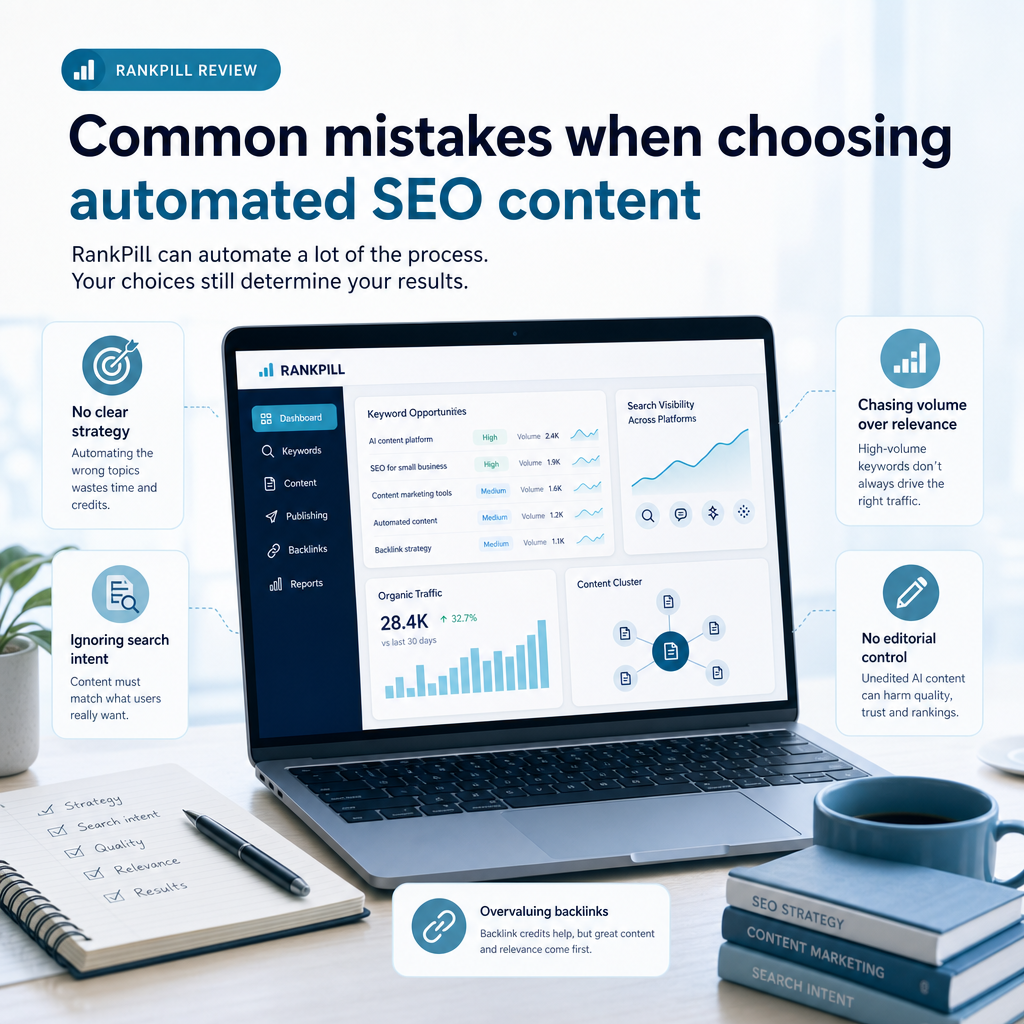
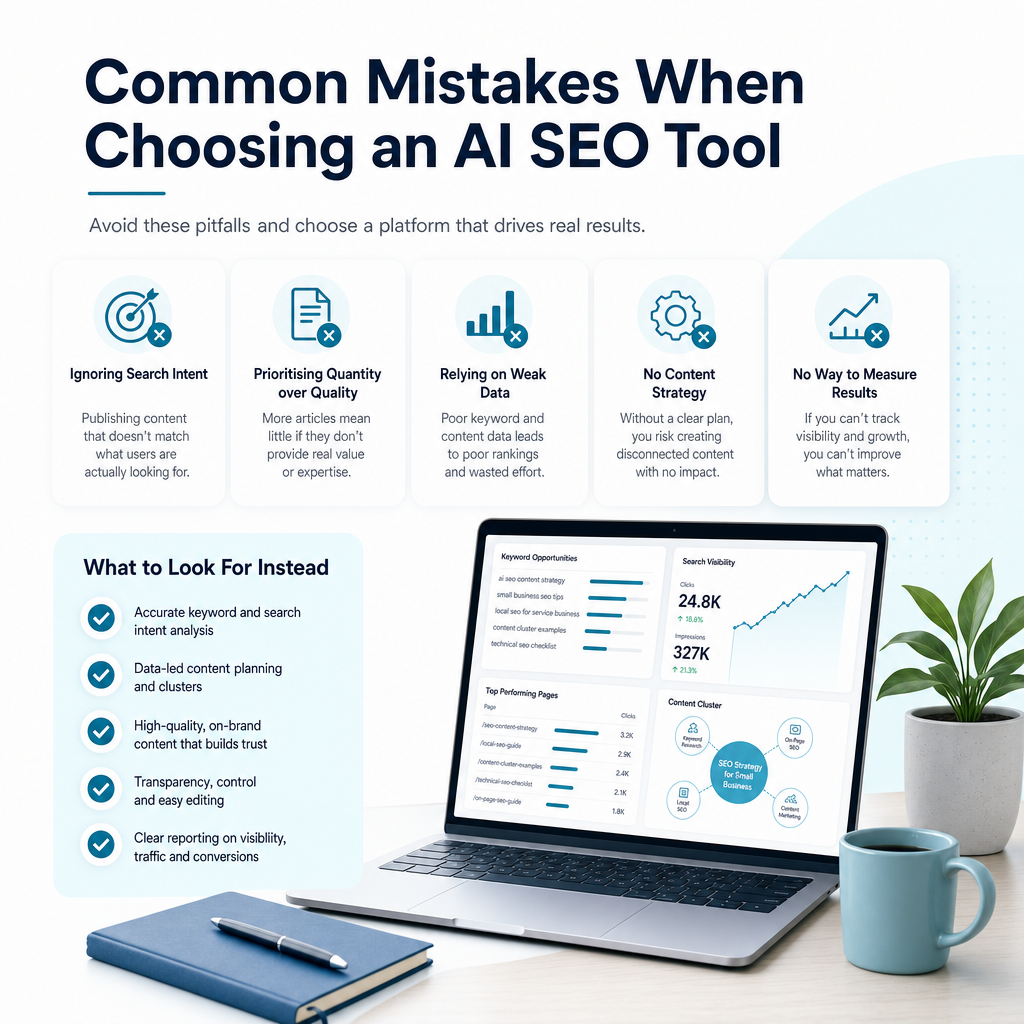
The most frequent mistake is judging a platform by article count. A high monthly allowance does not tell you whether the subjects are commercially relevant, whether the content is accurate or whether the website can support the new pages with a clear structure.
Another mistake is assuming that AI search visibility is a separate shortcut. AI assistants still need accessible, trustworthy and well-structured information. They may use different retrieval and presentation methods, but weak content, unclear business identity and poor topical coverage remain problems.
Mistake 1: Choosing volume over relevance
Start with the questions your customers ask and the searches where your website already shows signs of relevance. Build from evidence rather than publishing generic articles simply to fill a calendar.
Mistake 2: Allowing automatic publication without review
Use approval stages for content that affects reputation, health, finance, legal decisions or complex technical purchases. Human review should check facts, tone, claims, links and calls to action.
Mistake 3: Ignoring existing content
New articles should support, update or replace existing pages where appropriate. A content plan that ignores cannibalisation, outdated information and internal linking can make a website less clear.
Mistake 4: Treating backlinks as the whole strategy
Backlinks can be useful, but they do not compensate for weak intent matching or poor service pages. Prioritise relevance, quality and a sound website structure.
Mistake 5: Failing to define success
Set measures that reflect the business goal. Impressions, clicks, ranking changes, enquiries and relevant conversions may all matter, but they answer different questions. A platform should help you distinguish visibility from commercial impact.
How to test an AI SEO content platform responsibly
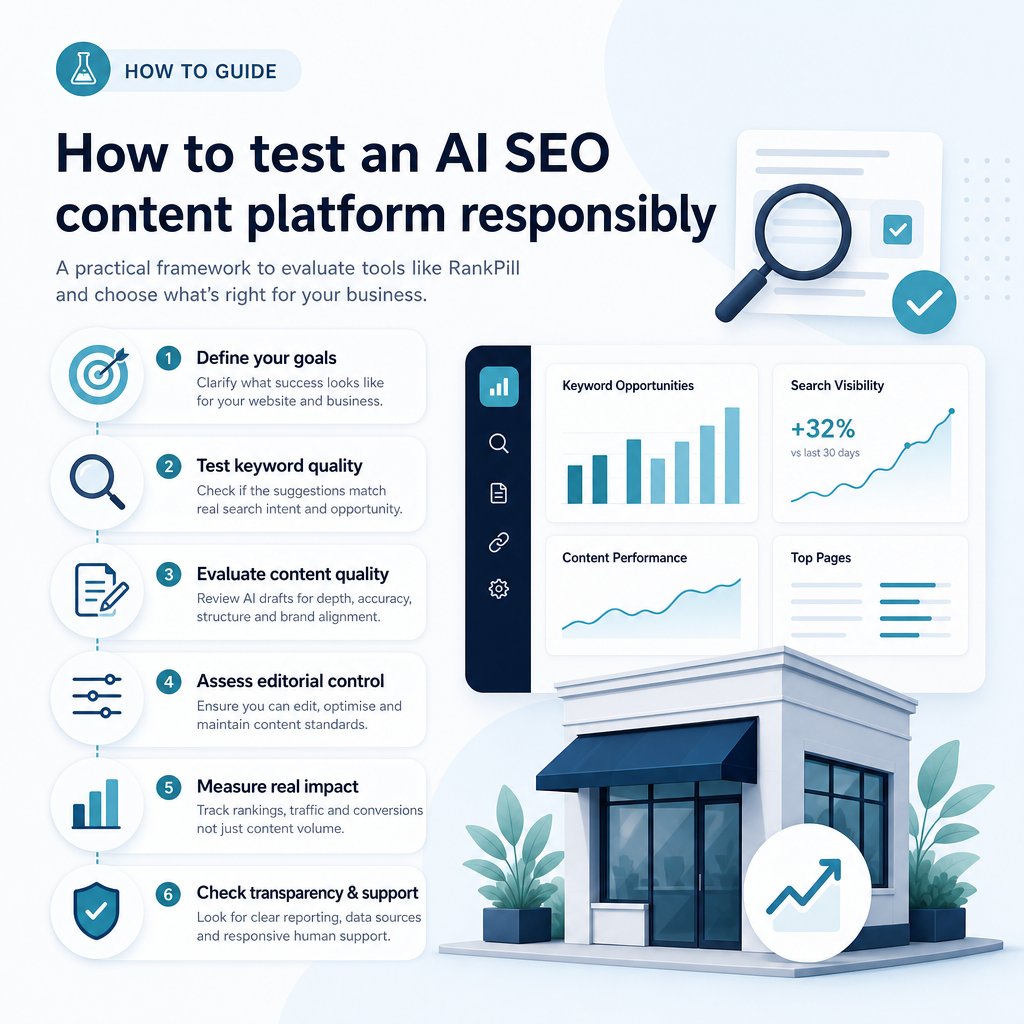
Before committing to an annual plan, create a small evaluation process. Select three to five topics that reflect your actual services, customers and location. Compare the platform’s research, outlines and drafts against your own knowledge and existing Search Console data.
Check the articles for factual accuracy, original value, natural language, internal links, local relevance and a suitable call to action. Review how much editing is needed and record the time required from brief to publication. This gives you a more useful estimate of value than a feature list.
- Export or review your recent Search Console queries.
- Choose topics with clear customer relevance and realistic ranking potential.
- Ask the platform to produce briefs or sample articles.
- Check whether the recommendations reflect your services and competitors.
- Review every draft before publication.
- Track impressions, clicks and enquiries after publishing.
- Revisit the plan when the data shows new opportunities or weak performance.
Is RankPill worth it?
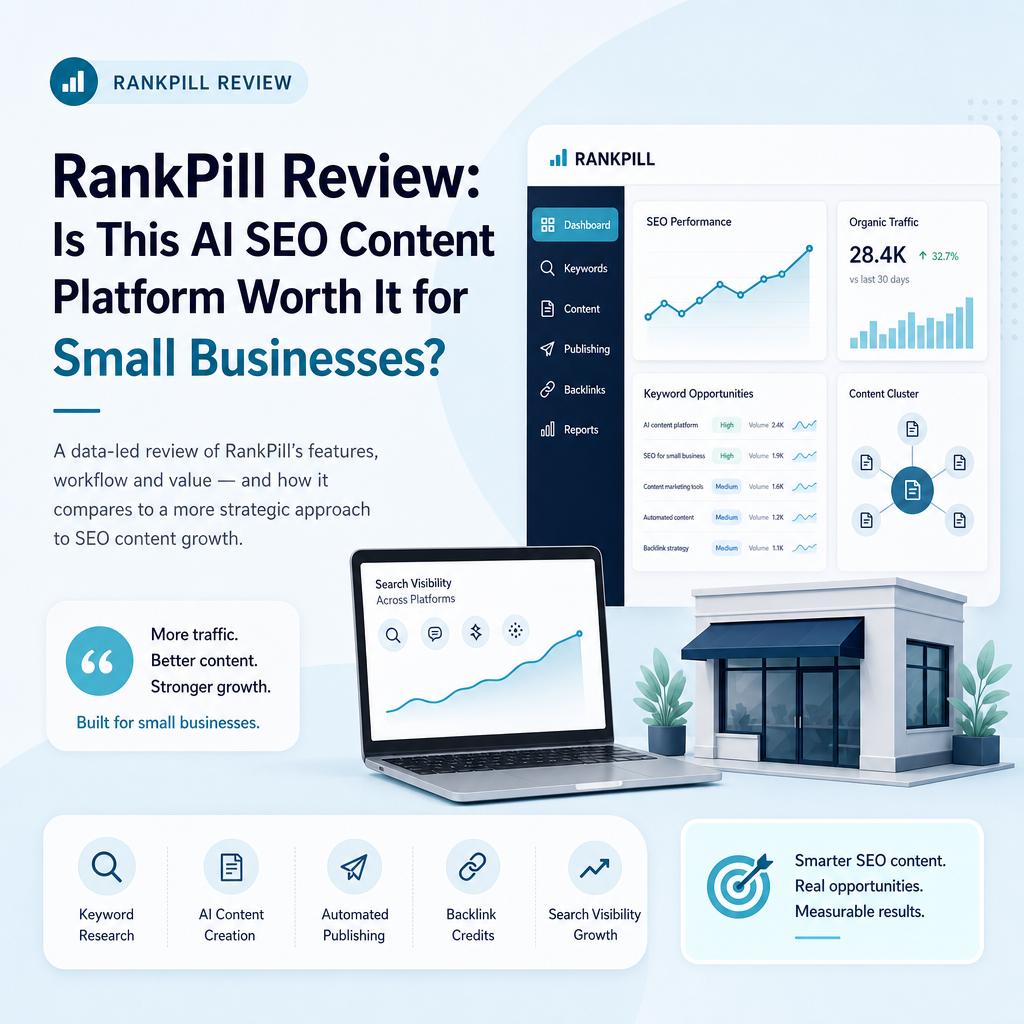
RankPill may be worth considering for a team that values a broad automated workflow, has a clear content strategy and is comfortable reviewing AI-generated articles. Its advertised combination of research, writing, publishing and backlink-related functions may reduce the number of separate tools a business needs.
It is less suitable when the business needs detailed control over opportunity selection, strong use of first-party search data or a carefully managed editorial process. The absence of a widely described free trial or money-back safety net increases the value of checking current terms, requesting demonstrations and testing sample outputs before making a longer commitment.
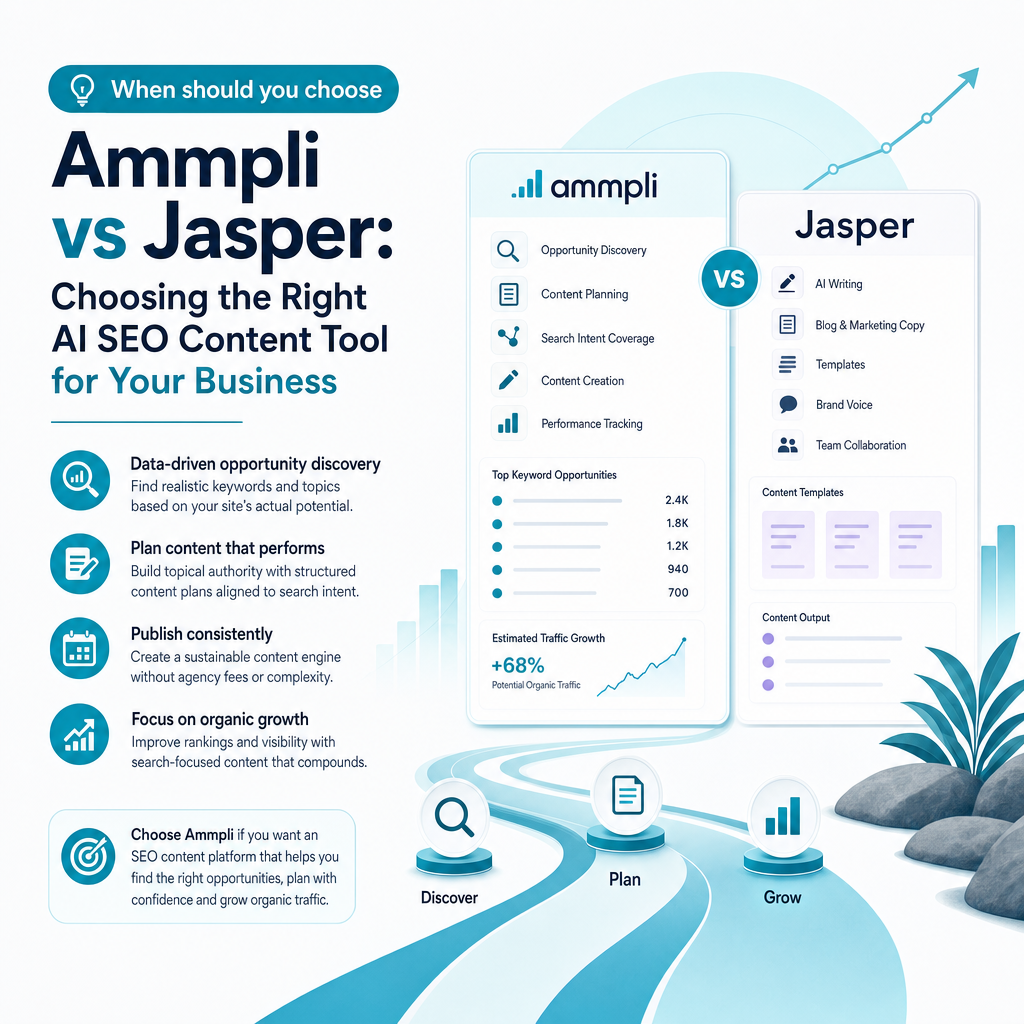
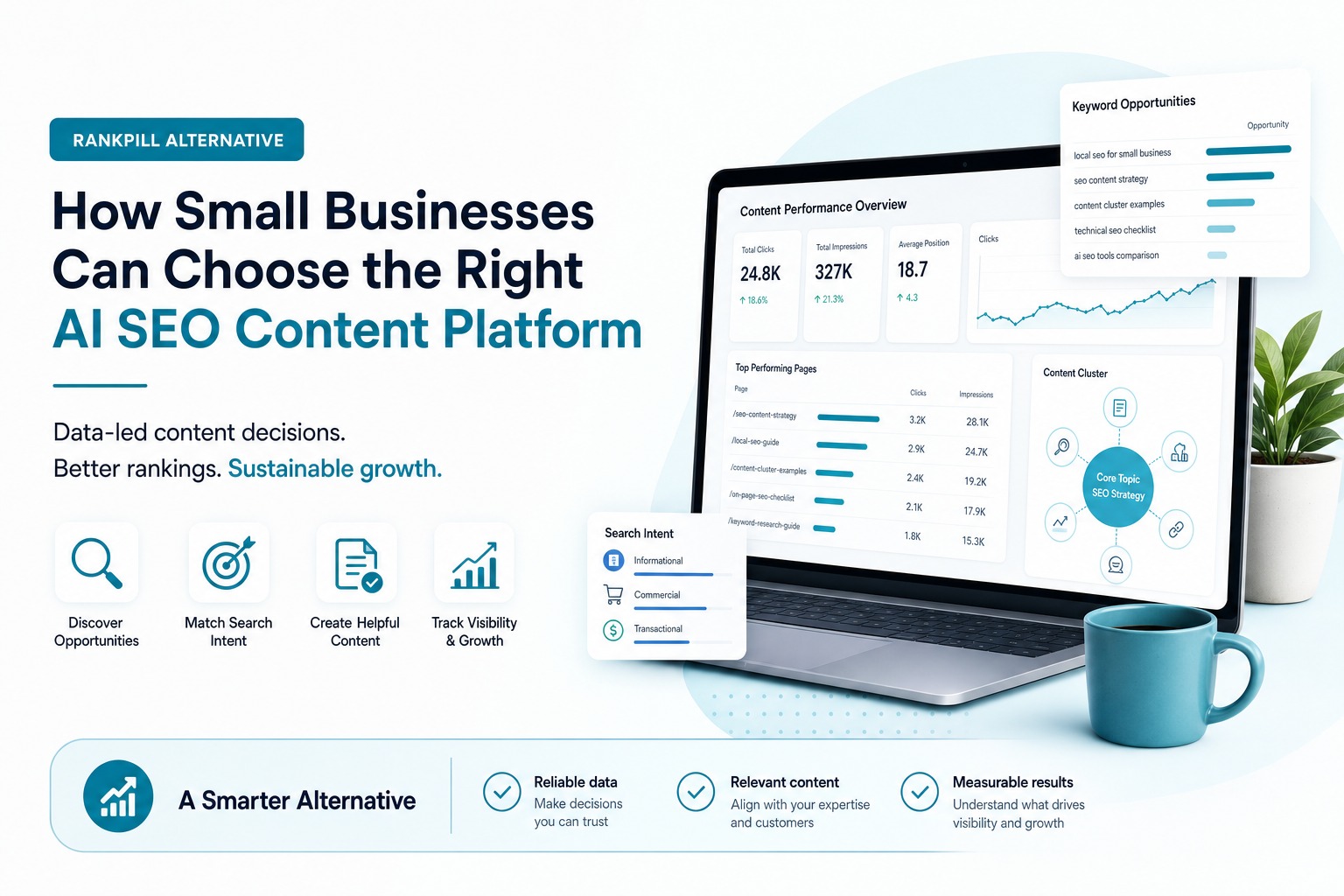
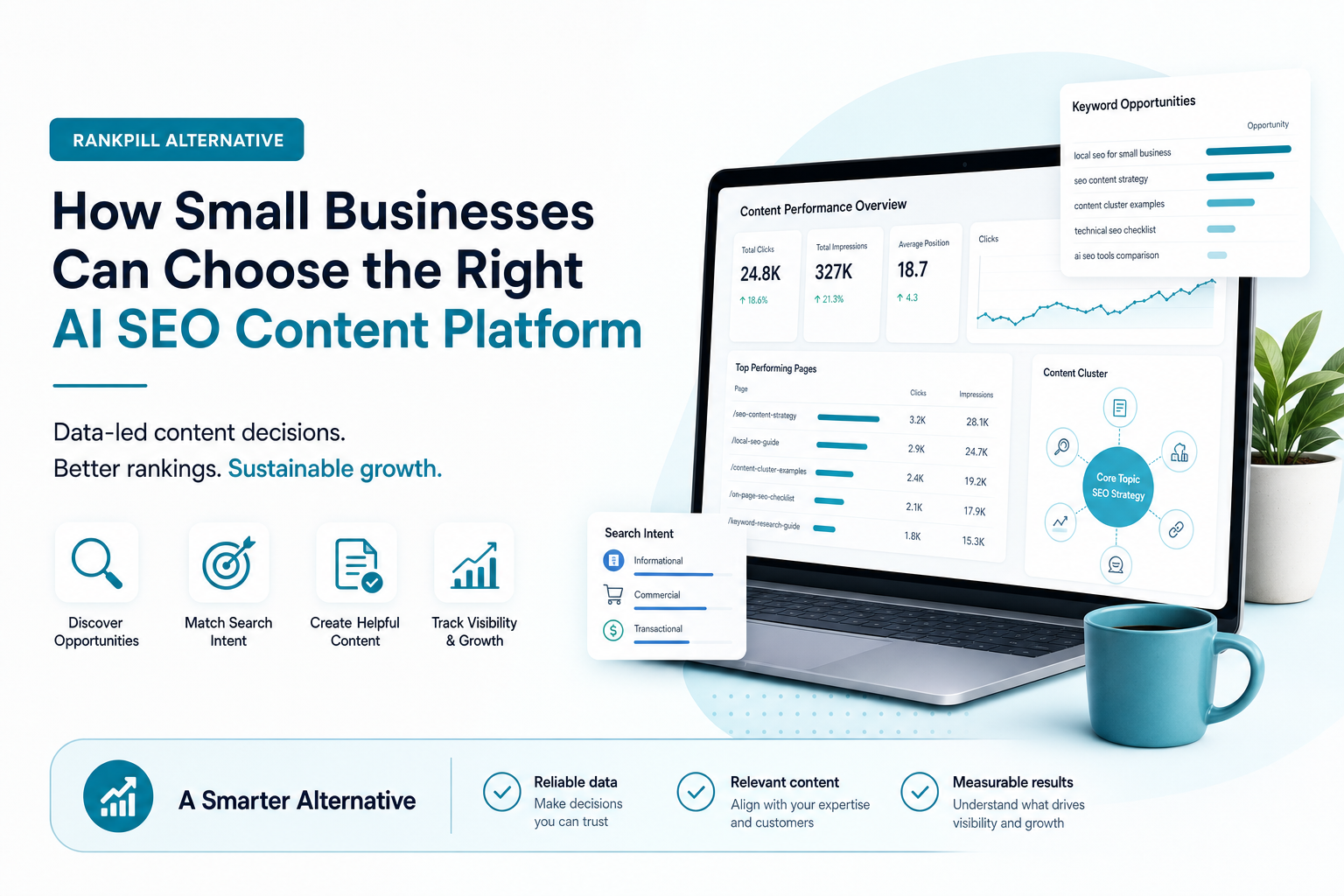
For small businesses, Ammpli offers a different route. Instead of beginning with a fixed publishing volume, it begins with the website’s actual search performance, competitor gaps, search intent and semantic relationships. That can help a lean team create fewer, more relevant pieces of content with a clearer role in the wider SEO plan.
Frequently Asked Questions
What is RankPill?
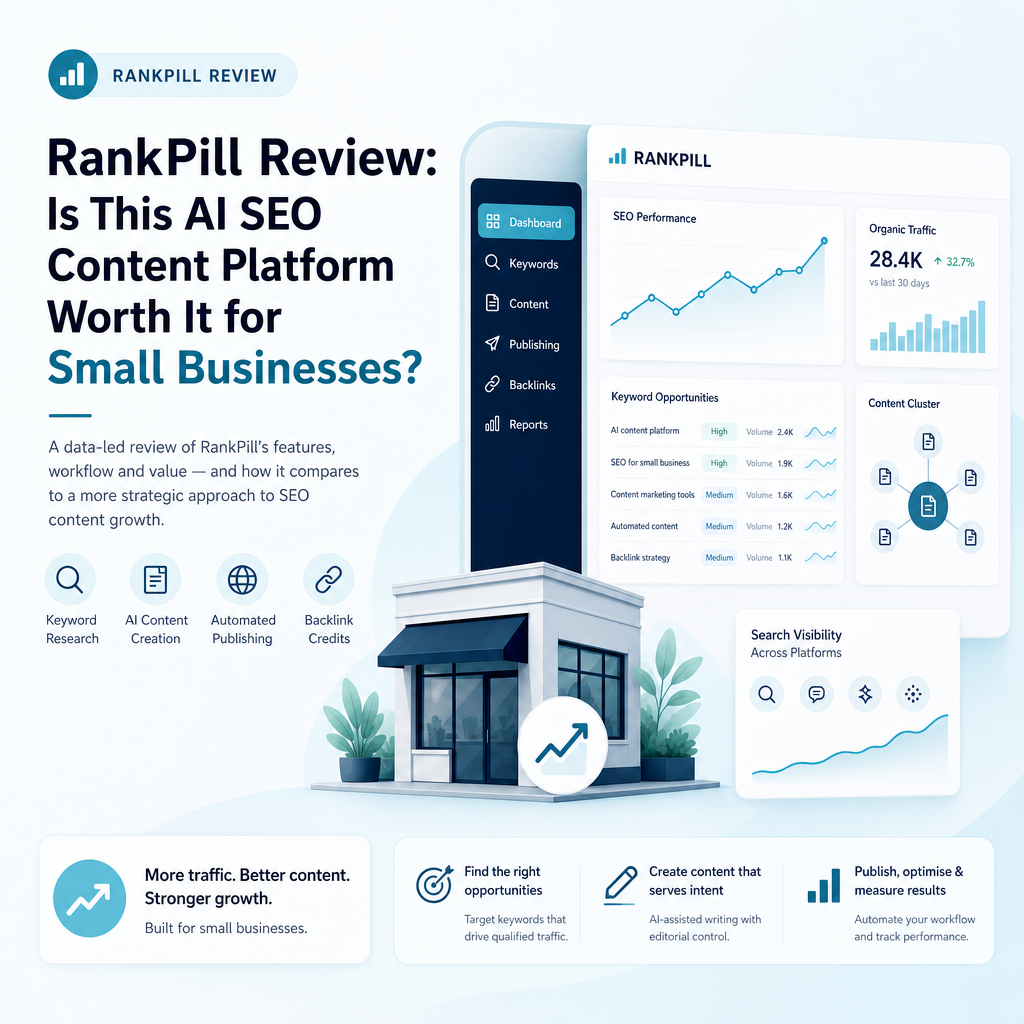
RankPill is presented as an AI SEO automation platform that combines keyword research, AI article generation, optimisation, publishing and backlink-related features. Its advertised purpose is to help businesses publish search-focused content with fewer manual steps.
How much does RankPill cost?
Information available for 2026 describes a Business plan at $99 per month with monthly billing, or an effective $82.50 per month when billed annually at $990. Additional backlink packages are described separately, so confirm current prices and inclusions directly before subscribing.
Does RankPill publish content automatically?
RankPill promotes automated publishing to several website platforms, including WordPress, Shopify, Webflow, Wix and Framer, as well as webhook-based setups. Buyers should confirm whether they can require approval before content is published and configure permissions carefully.
Is AI-generated SEO content suitable for a small business?
It can be suitable when the content is based on relevant search intent, checked by a knowledgeable person and connected to useful service or product pages. AI drafts should not replace factual review, brand guidance or subject expertise, especially for specialist or regulated topics.
What is an alternative to RankPill for data-led content planning?
Ammpli is an AI SEO content platform that uses Google Search Console and Analytics data with competitor research, search-intent analysis and semantic keyword mapping. It is designed for small and growing businesses that want to identify realistic ranking opportunities before creating and publishing content. We tested rankpill ourselves and found ourselves wanting for more and higher quality accurate content but also more niche content creation.
Final assessment
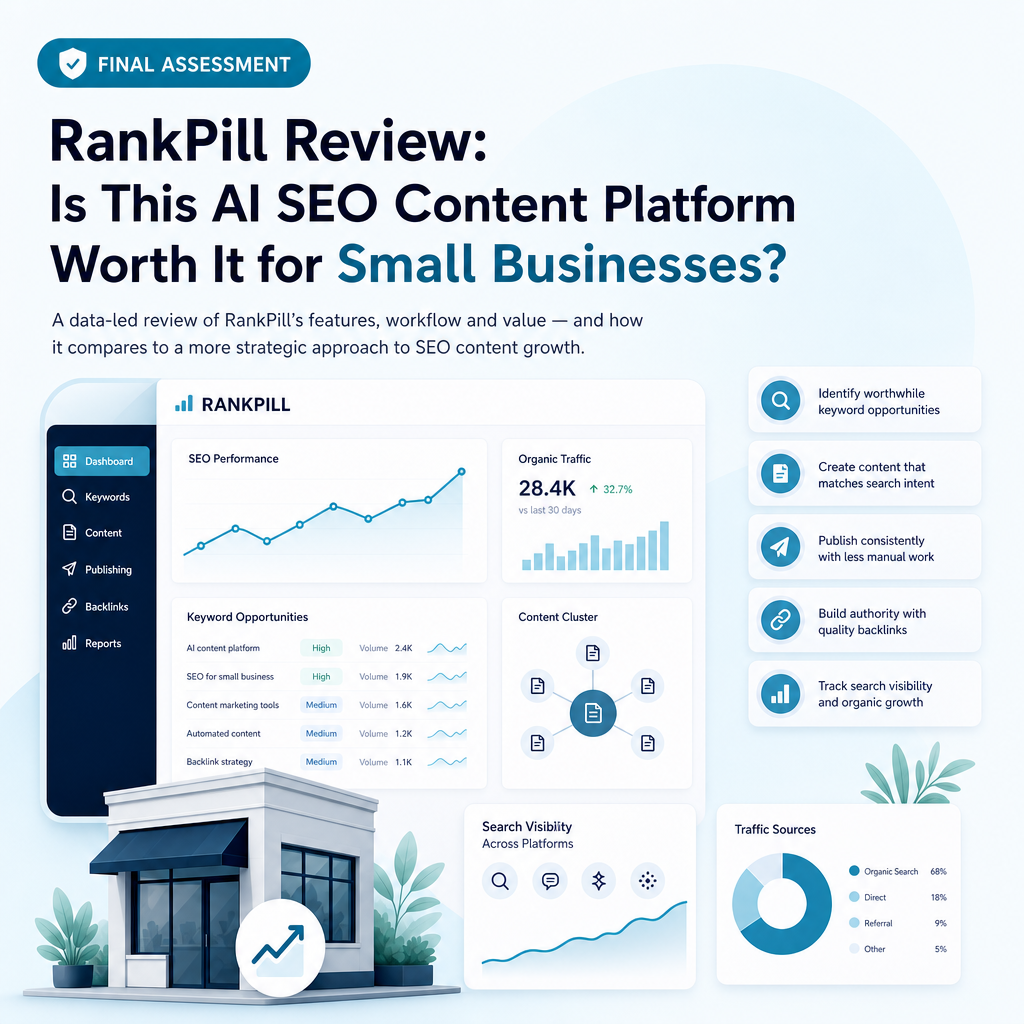
This RankPill review shows a product built around convenience, automation and publishing volume. Those qualities may help a small team reduce repetitive work, but they should be weighed against content quality, editorial control, data transparency, total pricing and the relevance of the recommended topics.
The strongest SEO content process is the one that connects real customer questions with credible information and measurable business goals. For some teams, RankPill may provide a practical automated workflow. For businesses that want to turn their existing search data into a focused content plan, Ammpli provides a more research-led alternative.
See how Ammpli can help you find your next ranking opportunity, create an SEO content plan and build organic visibility with less guesswork. Start your 14-day free trial today; no credit card is required.