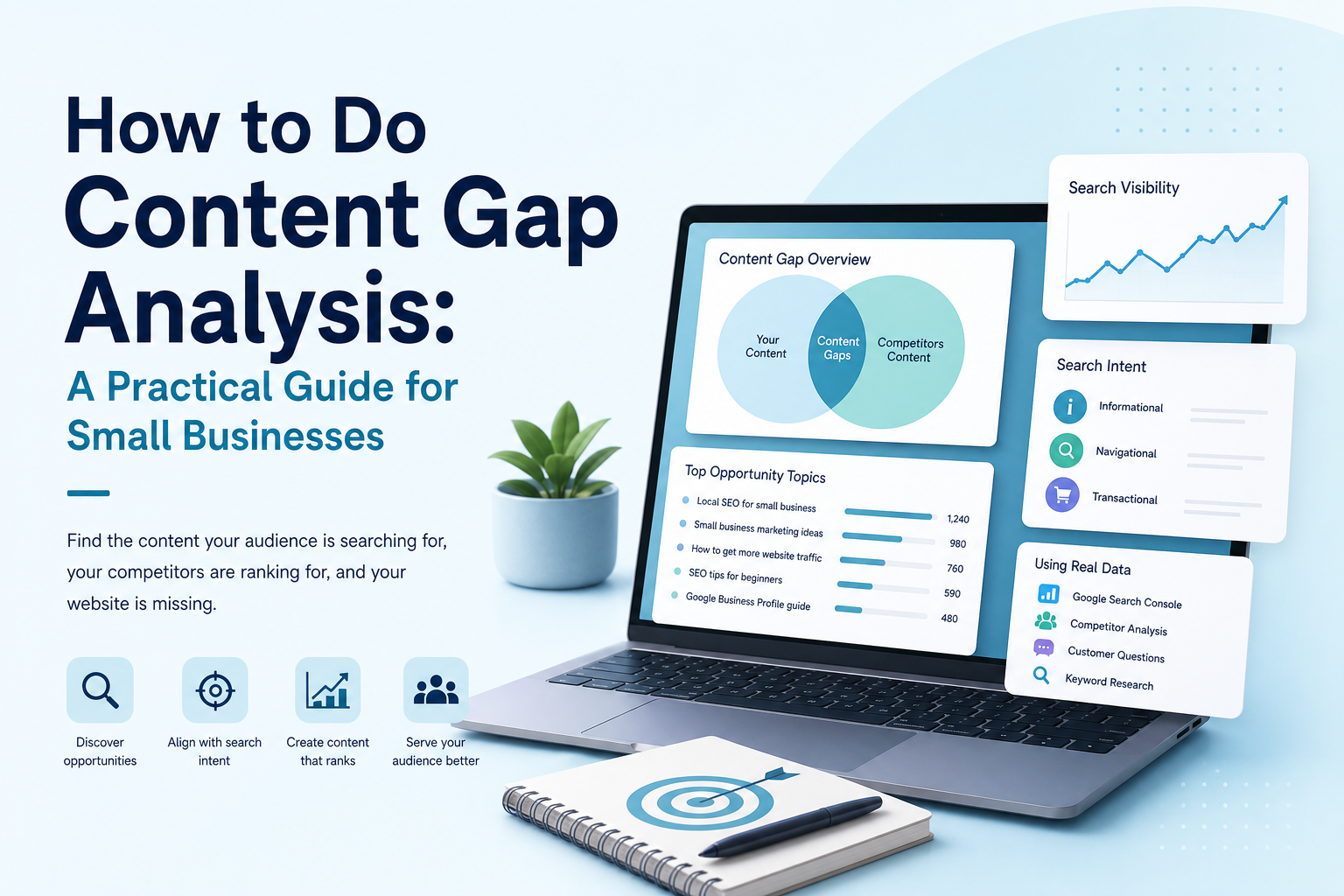
You are publishing content, but the results are inconsistent. Some pages receive impressions without clicks, important services are difficult to find, and competitors appear for searches your business has never targeted. The problem may not be a lack of effort. It may be a gap between what your audience wants to know and what your website currently provides.
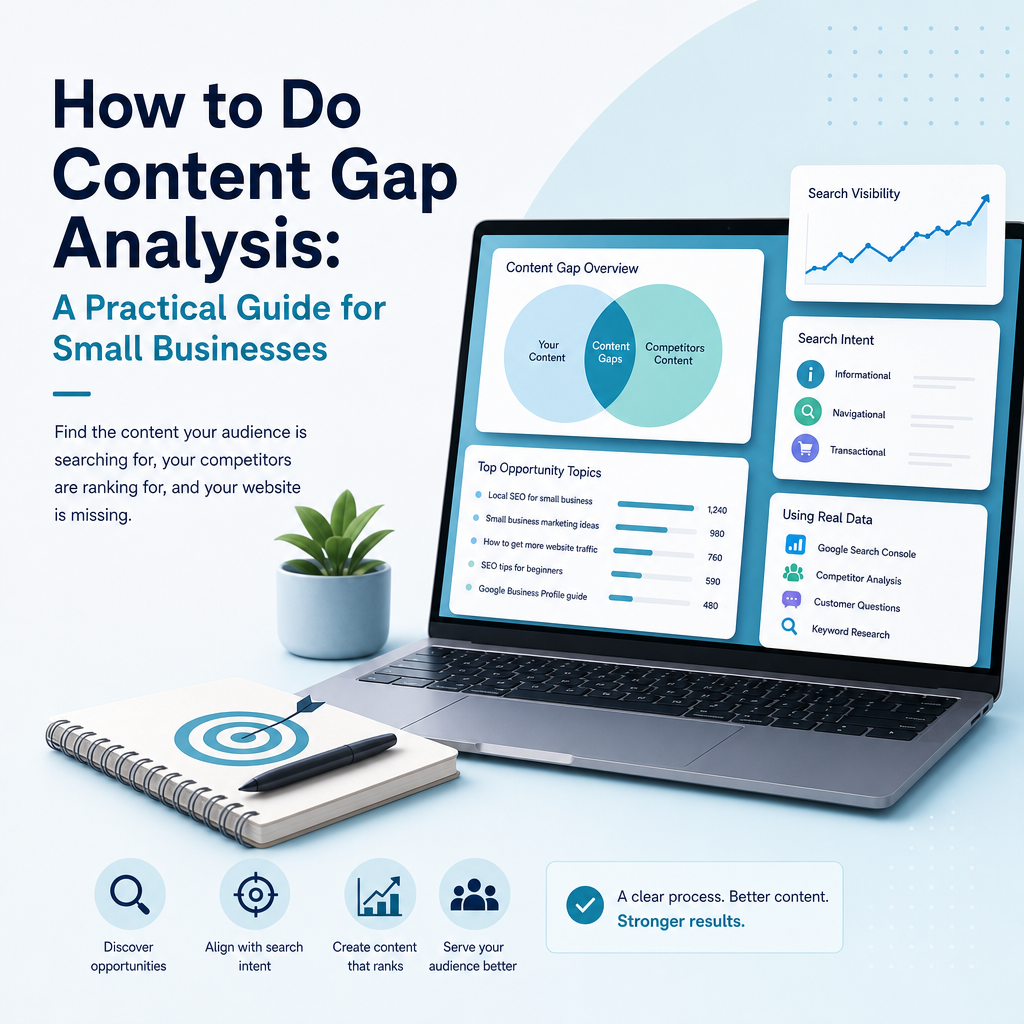
Learning how to do content gap analysis gives you a practical way to find those missed opportunities. Instead of choosing topics based on guesswork, you compare your existing content with real search behaviour, competitor coverage, customer questions and your business priorities.
This guide explains the process step by step, including how to use Google Search Console, competitor content-gap analysis, search intent, semantic keyword mapping and AI SEO tools. It is designed for small-business owners, founders and marketing managers in the United Kingdom and English-speaking international markets who want a focused, affordable approach to SEO content planning.
What Is A Content Gap Analysis?
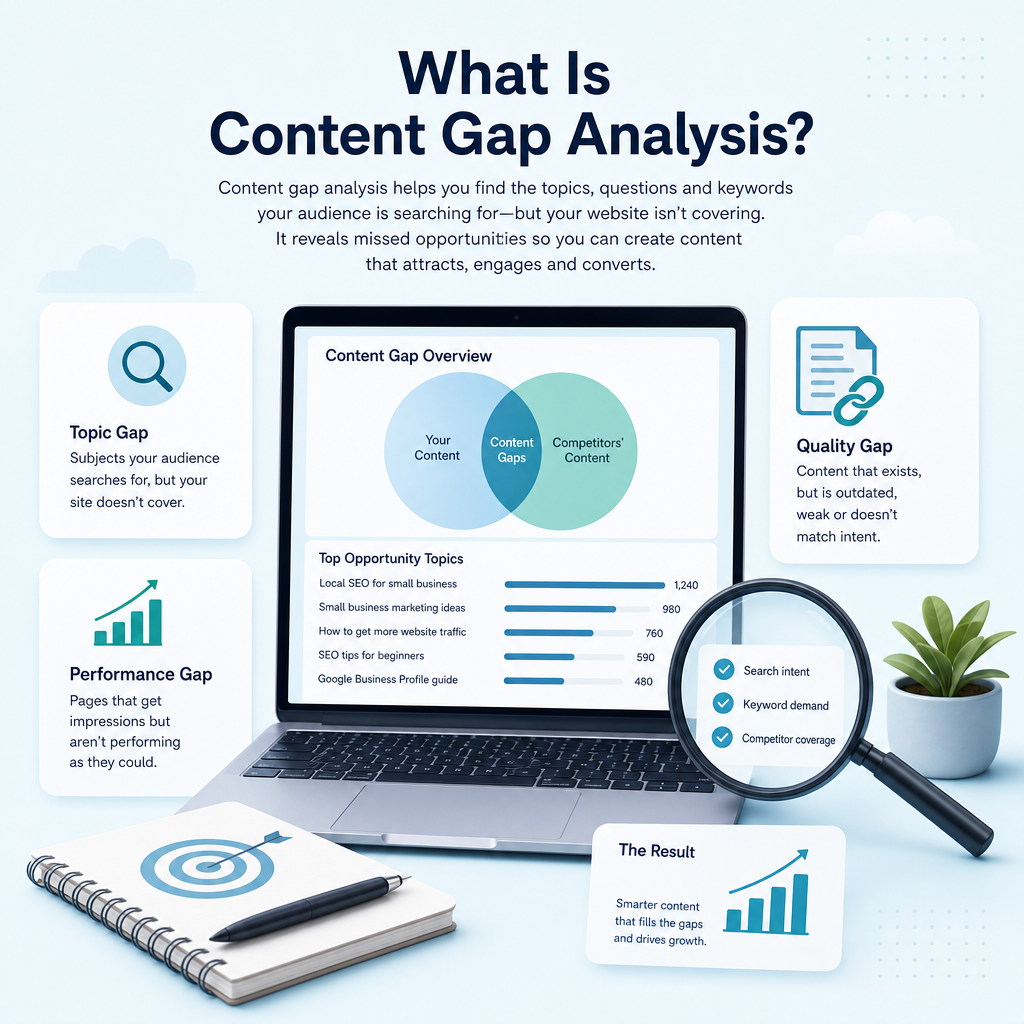
Content gap analysis is the process of finding topics, questions, keywords or content formats that your audience needs but your website does not cover well. A gap may be a completely missing page, an outdated article, a weak explanation, poor internal linking or content that does not match the searcher’s intent.
There are three useful ways to view a content gap:
- Topic gap: Your audience searches for a subject that your website does not address.
- Performance gap: You have a page, but it attracts impressions without enough clicks, engagement or enquiries.
- Competitor gap: Other relevant websites rank for queries where your business has little or no visibility.
Content gap analysis is broader than keyword research. Keyword research identifies search terms, while content gap analysis asks whether your website provides the right answer, at the right stage of the customer journey, in a useful format.
Why Content Gap Analysis Matters for SEO
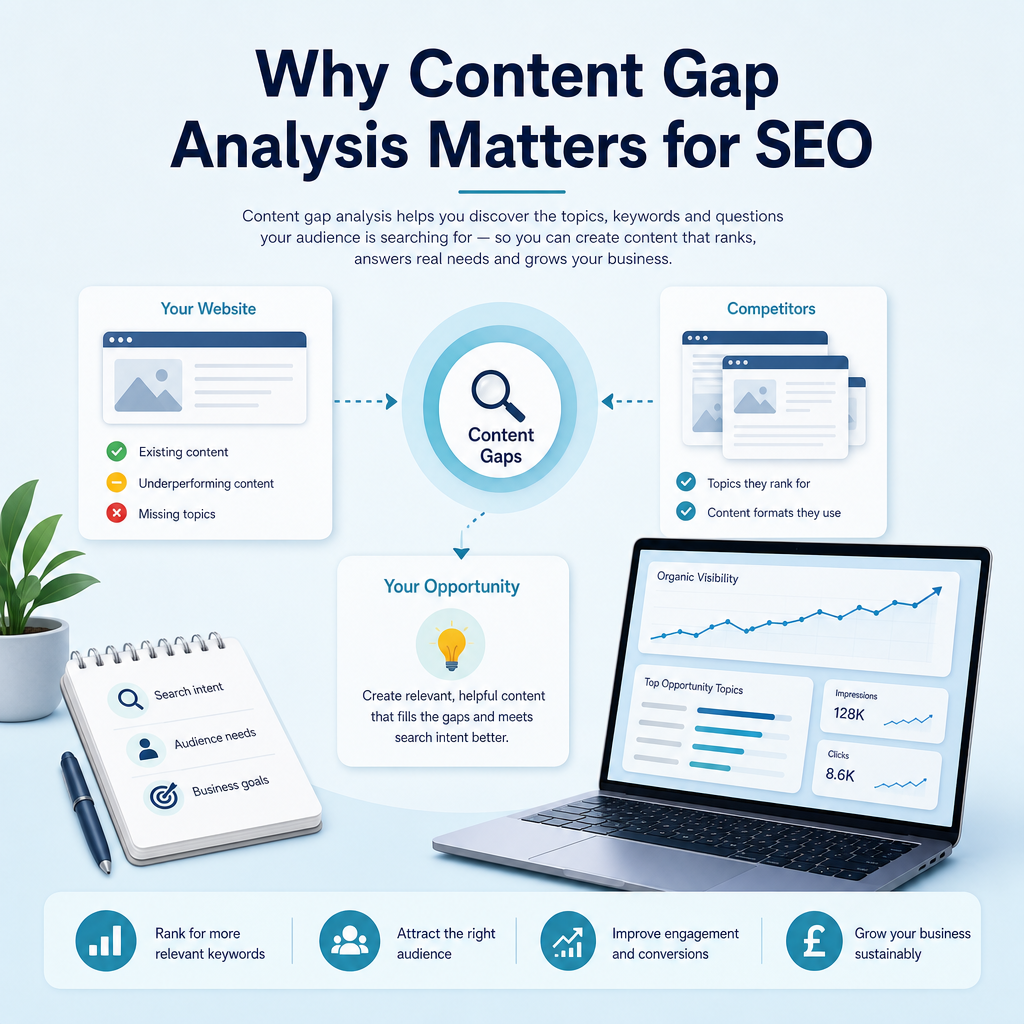
Small businesses cannot afford to spend limited time and budget creating articles that attract the wrong audience. A well-planned analysis helps you focus on realistic opportunities that relate to your services, customer needs and commercial goals.
It can help you:
- Find searches where your website already has impressions but needs stronger coverage.
- Identify topics competitors rank for that are relevant to your customers.
- Improve the experience for visitors who cannot find clear answers.
- Build topical authority through connected, useful content.
- Prioritise content that supports enquiries, sales or other business outcomes.
- Refresh pages that have become outdated or no longer match search intent.
The aim is not to publish more content for its own sake. The aim is to create the most useful next piece of content for a defined audience and business objective.
Content Gap Analysis vs Keyword Gap Analysis
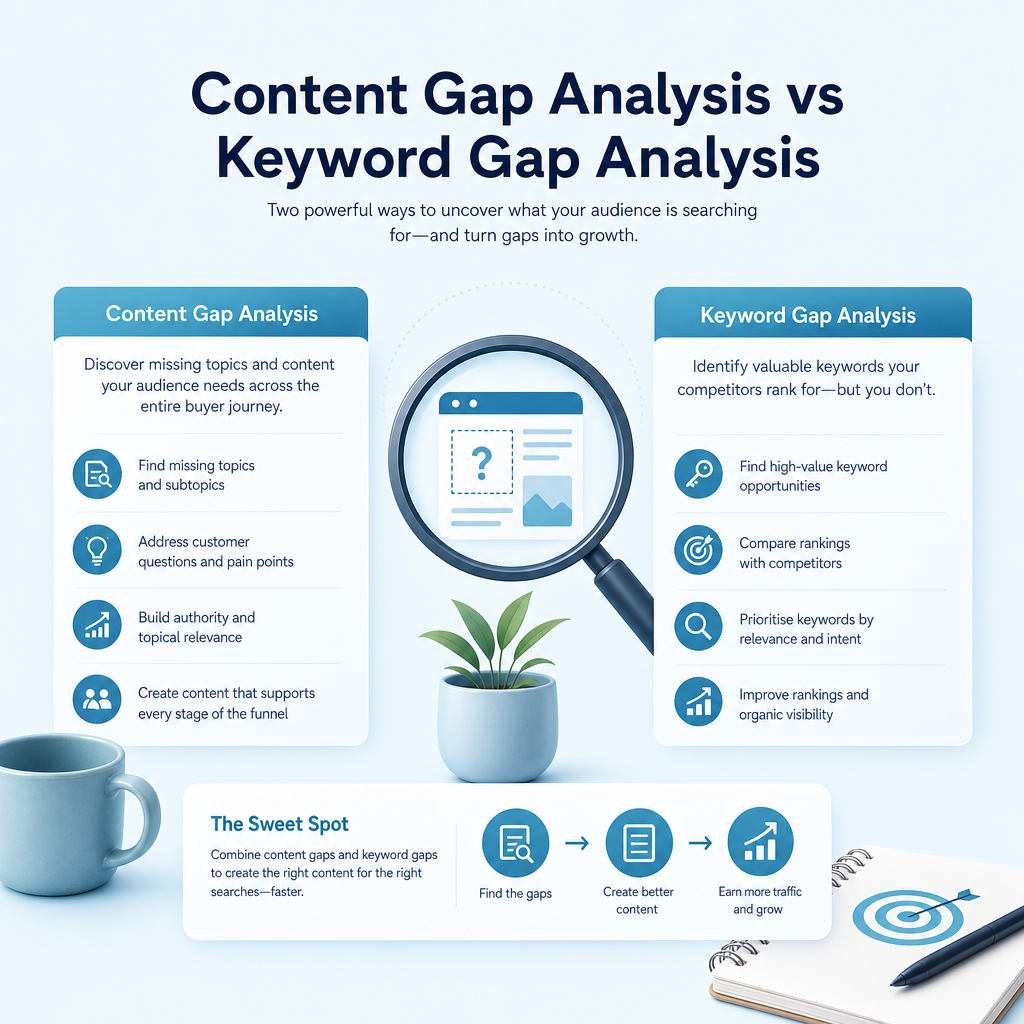
The terms are often used interchangeably, but they describe different levels of research. A keyword gap analysis usually compares the search terms your competitors rank for with the terms your website ranks for. It is useful for finding new SEO targets.
Content gap analysis looks at the wider customer experience. It asks what information is missing, unclear, outdated or difficult to access. The two methods work best together: competitor keyword data can reveal a possible opportunity, while search-intent and content review tell you what page should be created.
| Method | Main question | Useful output |
|---|---|---|
| Content audit | What content do we already have? | Pages to retain, improve, combine or remove |
| Keyword gap analysis | Which relevant searches do competitors target that we do not? | Potential keyword and topic opportunities |
| Content gap analysis | What information is missing from the customer journey? | Prioritised content plan |
| Search-intent analysis | What does the searcher expect to find? | Suitable page type, format and angle |
Common Types of Content Gaps
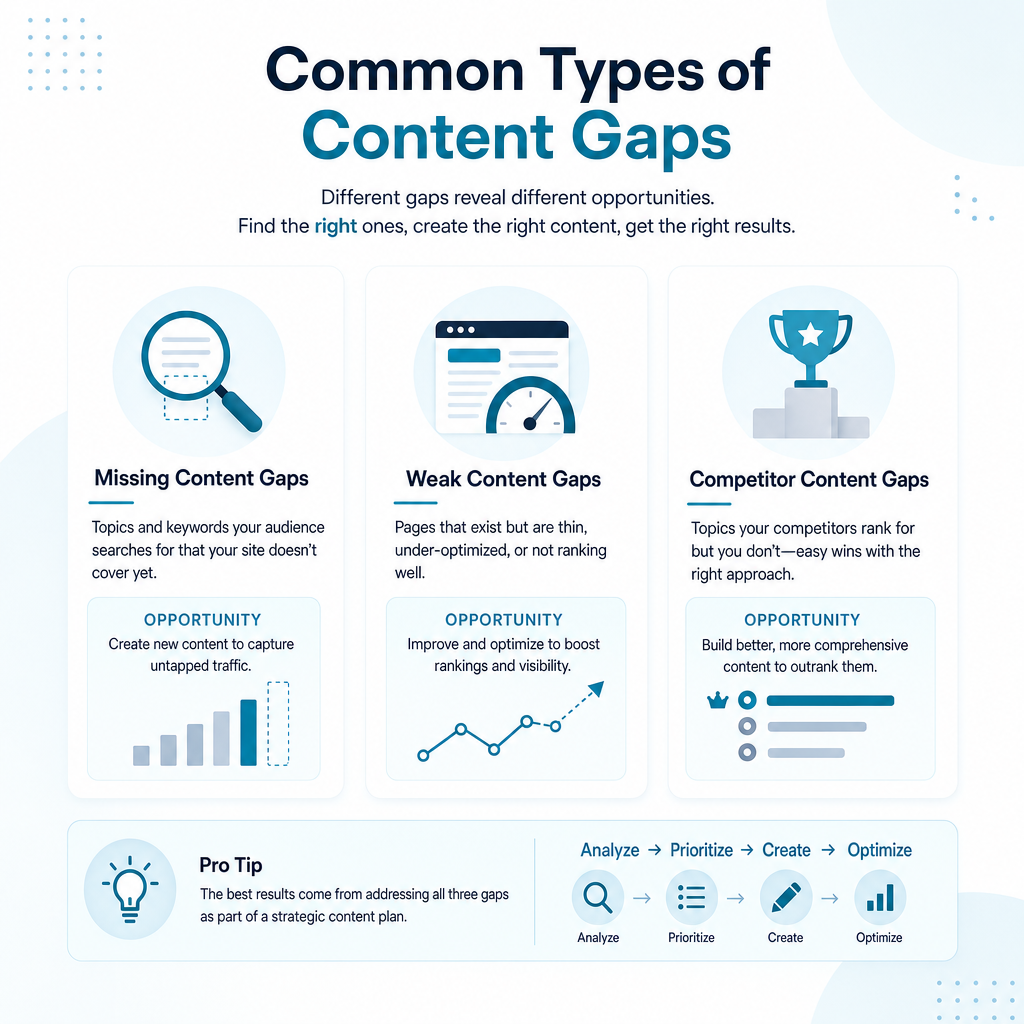
Not every gap means you need a brand new article. Sometimes the topic exists already, but the page is too thin, too outdated, too hard to read, or aimed at the wrong intent. Looking at gaps this way helps avoid publishing duplicate or low-value content.
These are some of the most common types of gaps to look for:
Missing Topic Gaps
Your audience is searching for a subject, but you have no page covering it. This is common when a business has strong service pages but little educational content.
Keyword and Search-Intent Gaps
You may have a page on a topic, but it does not match what users want. For example, a service page might try to rank for an informational keyword when searchers actually want a guide, checklist, or explanation.
Depth and Quality Gaps
Competitor pages may be more detailed, easier to understand, or more useful. They may include examples, pricing context, FAQs, visuals, or clearer structure that your page lacks.
Freshness Gaps
Older pages may no longer reflect current pricing, tools, processes, or user expectations. This often causes rankings to stall or decline over time.
Format Gaps
Sometimes users want a comparison table, step-by-step process, case example, or local variation, but your page only offers a wall of text. The topic is not missing, but the format is.
Journey Gaps
You may have bottom-of-funnel service pages but little content for early-stage questions like “do I need SEO content creation?” or “how does competitor content-gap analysis work?” That gap weakens your ability to attract top-of-funnel search traffic.
How to Do Content Gap Analysis in Seven Steps
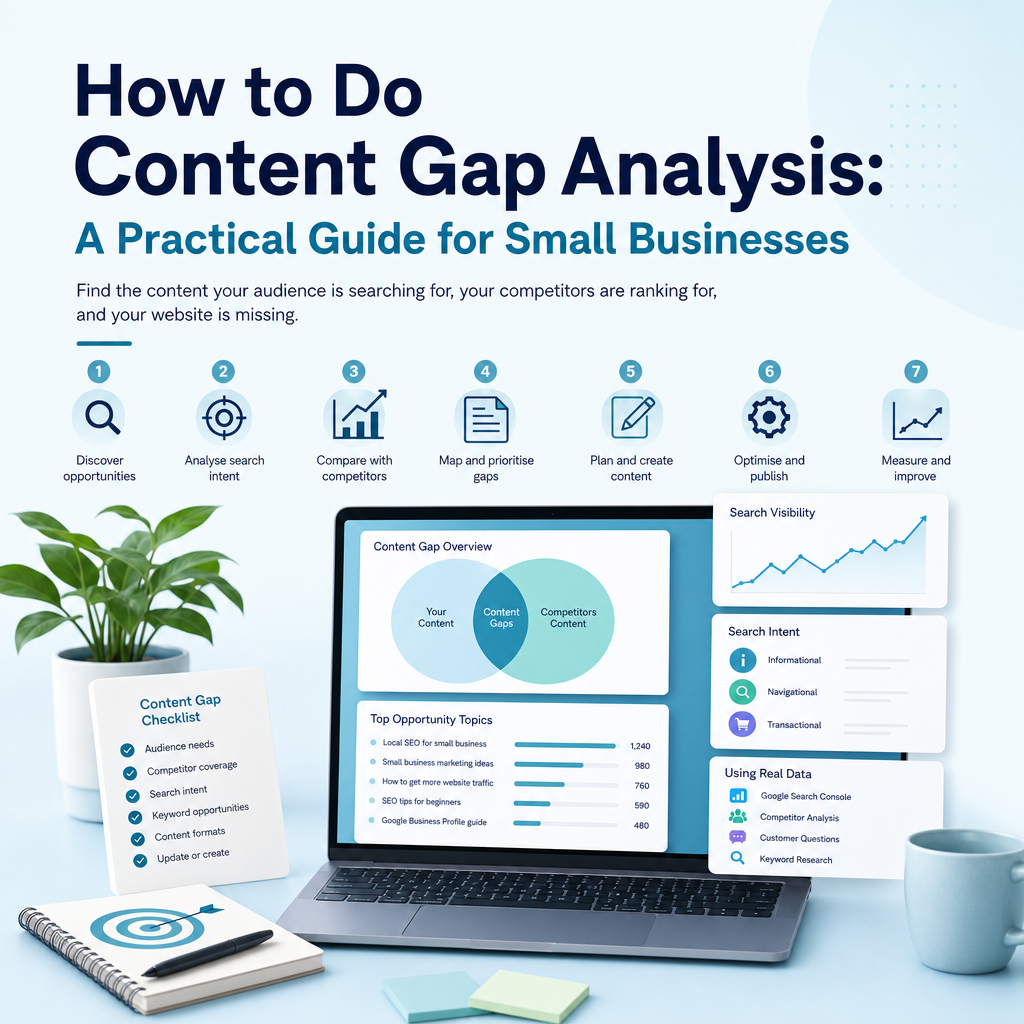
A useful process combines your business knowledge with evidence from search and website data. You do not need to audit every page at once. Start with a service area, customer segment or topic that matters commercially.
1. Define Your Business and Content Goals
Begin by deciding what the analysis needs to achieve. A goal might be to increase visibility for a new service, support local SEO, improve leads from an existing service page or build authority around a specialist subject.
Write down the audience, service and desired action. For example, a UK software provider may want to attract growing companies searching for practical SEO content software. A healthcare practice may want to answer questions about a specific treatment area. A property business may need content that supports people comparing locations or services.
Clear goals help you reject attractive but irrelevant topics. A keyword with high search demand is not automatically a good opportunity if it does not connect with your offer.
2. Map the Customer Journey and Search Intent
Next, identify what your audience needs at different stages. Someone discovering a problem needs an accessible explanation. Someone comparing options may need a guide, comparison or pricing information. Someone ready to act needs clear service details, proof and a direct next step.
Search intent generally falls into four groups:
- Informational: The searcher wants to learn or solve a problem.
- Commercial investigation: The searcher is comparing providers, tools or approaches.
- Transactional: The searcher is ready to purchase, enquire or sign up.
- Navigational: The searcher is looking for a specific business, page or resource.
Review the current search results for important topics. If the results are mainly guides, a sales page may not match the intent. If the results show comparison and pricing pages, a general educational article may not satisfy the audience.
3. Audit Your Existing Content
Create a list of your relevant pages, including service pages, landing pages, blog posts, FAQs and resource pages. Record the page title, URL, topic, target query, publication date, links, conversions and recent performance.
Use Google Search Console to review queries, impressions, clicks, click-through rate and average position. Look for pages that appear for related searches but do not receive many clicks. These pages may need a stronger title, clearer structure, better intent alignment or additional supporting content.
Google Analytics can add information about engagement and conversions. Internal search data, customer support messages, sales conversations and enquiry forms can reveal questions that external keyword tools may not show.
Mark each page as one of the following:
- Keep and monitor.
- Refresh and expand.
- Combine with another page.
- Improve internal links.
- Replace because the intent has changed.
- Create as a new page because no suitable content exists.
4. Research Competitor and SERP Gaps
Choose a small group of relevant competitors and search competitors. Direct competitors offer similar services, while search competitors may be publishers, directories or software companies that rank for the same queries.
Compare the topics and keyword groups each competitor covers. A competitor content-gap analysis can reveal:
- Relevant topics they cover that your website does not.
- Questions their pages answer more clearly.
- Service pages or use cases missing from your site.
- Outdated information you can improve with a current, accurate explanation.
- Content formats that better serve the audience, such as templates, checklists or comparison pages.
Do not copy competitor content. Use it to understand the expectations established in the results, then add value through clearer explanations, practical examples, stronger structure and accurate information about your own services.
5. Find Opportunities in Google Search Console
Google Search Console is particularly useful for small businesses because it shows how your website is already appearing in Google. Export queries and filter them by relevant service, topic or page.
Pay attention to:
- Queries with impressions but few clicks.
- Queries where the average position is close to the first page.
- Related questions that your current page only mentions briefly.
- Pages receiving visibility for several similar terms.
- Declining impressions or clicks that may indicate outdated content or changing intent.
These signals can point to realistic ranking opportunities. A page that already receives visibility may need a focused update rather than a completely new article. Ammpli combines Google Search Console and Analytics data with search-intent analysis to help identify these opportunities without requiring a large manual spreadsheet exercise.
6. Group Keywords Using Semantic Mapping
A single page can often address a group of closely related searches. Semantic keyword mapping helps you organise these terms around one central topic, rather than creating several thin pages that compete with each other.
Start with a primary topic, then group related questions, entities, use cases and modifiers. For example, a page about an AI SEO content platform might include related concepts such as Google Search Console content strategy, content planning, competitor research, search intent and SEO performance reporting.
Map each keyword group to the most suitable page type. A broad topic may require a pillar guide, while a specific question could become a supporting article, FAQ section or service page. This structure helps your audience move naturally from learning to evaluating and taking action.
7. Prioritise and Create the Content
Not every gap deserves immediate attention. Score each opportunity against business relevance, audience need, search demand, current visibility, competition, effort and conversion potential.
Give priority to topics that are closely connected to your services and can be addressed with genuine expertise. A lower-volume query from a highly relevant buyer may be more valuable than a broad topic that attracts visitors unlikely to enquire.
Use the findings to create a practical SEO content calendar. Include the target topic, intent, audience stage, proposed format, primary and related terms, internal links, owner, deadline and refresh date.
Where the Best Opportunities Often Come From
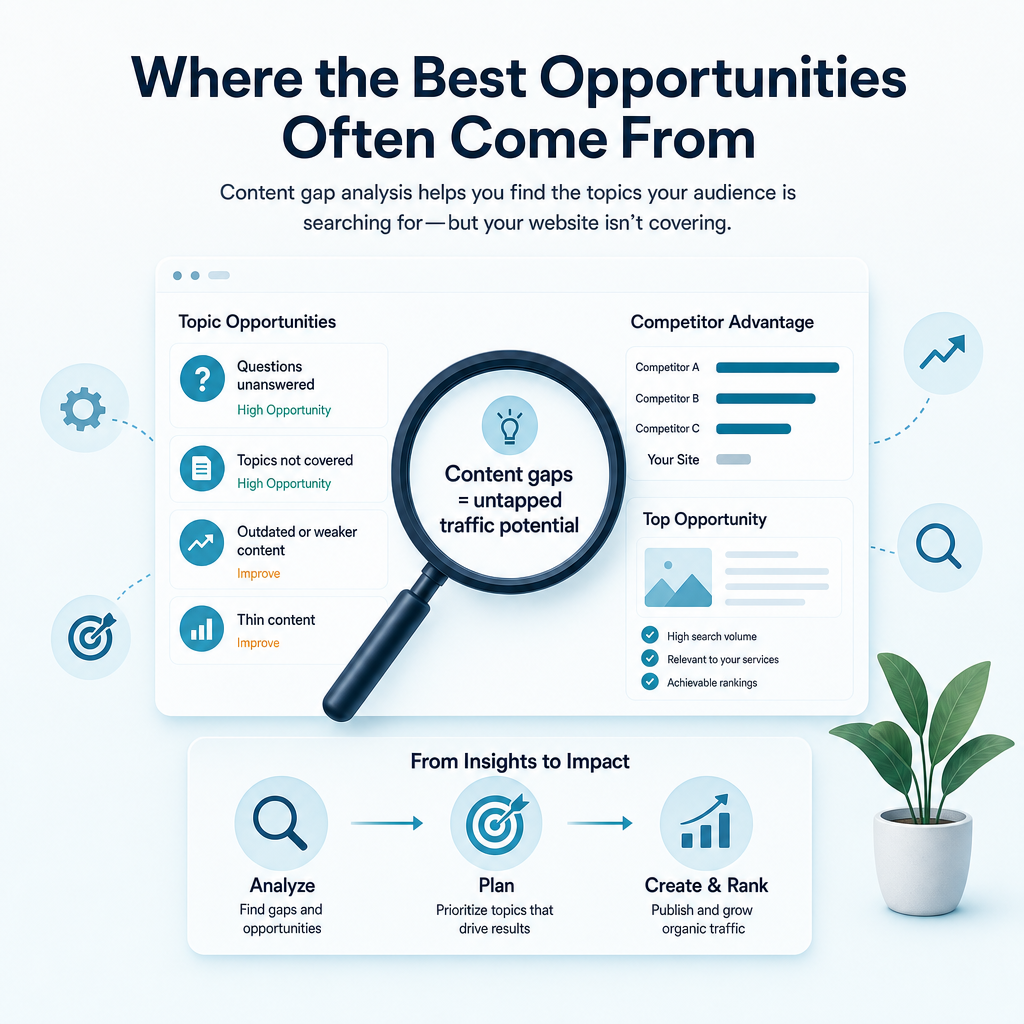
Many businesses assume the best SEO opportunities are high-volume keywords they have never touched. Sometimes that is true, but often the quickest gains come from pages that already exist. An underperforming page with some impressions can be easier to improve than a completely new page is to rank.
Useful opportunities often include:
- Pages ranking on page two or the lower half of page one
- Queries with impressions in Search Console but weak click-through rates
- Topics competitors cover poorly
- Local or niche variations of broader service topics
- Older blog posts that need a better structure, fresher examples, and stronger intent match
Which Content Formats Can Fill a Gap?
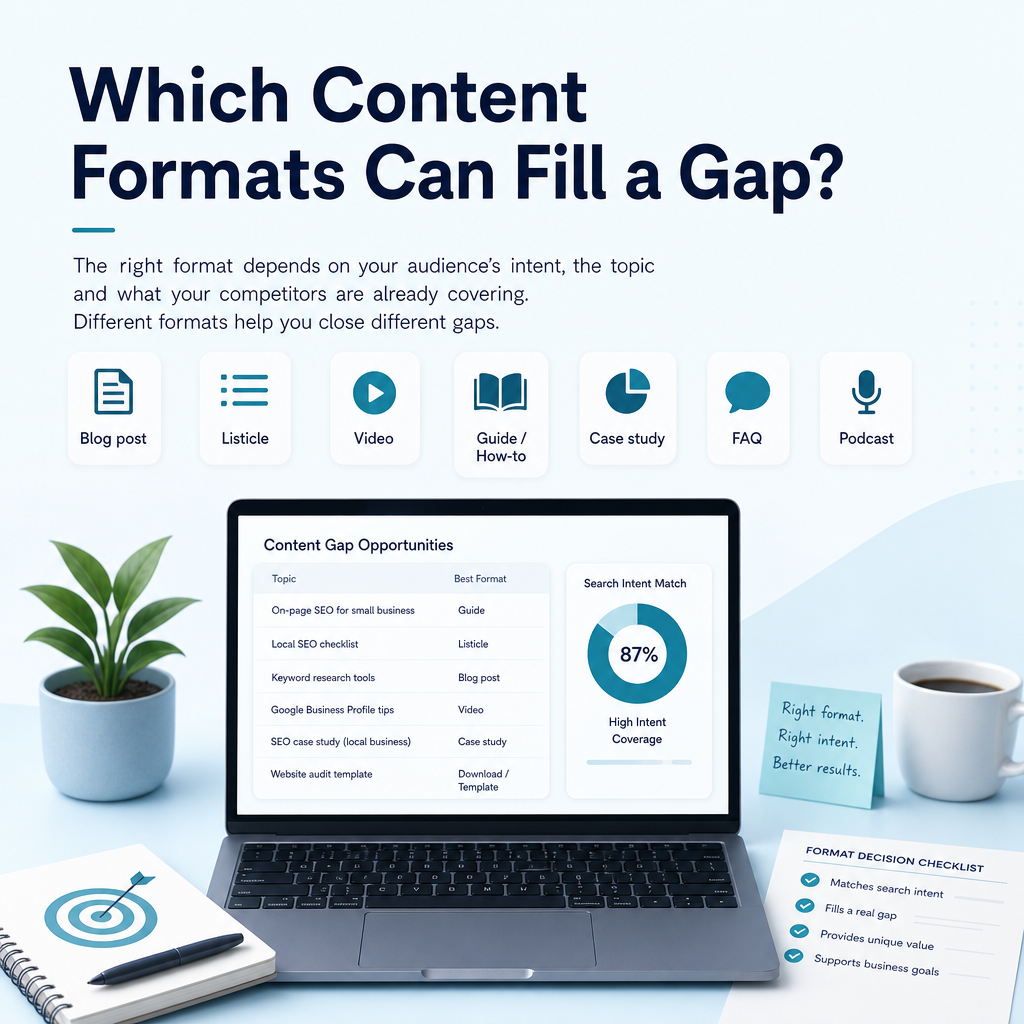
The right format depends on the question and the reader’s next action. A missing article is only one type of gap. Sometimes visitors need a clearer service page, a comparison, a checklist or a local landing page.
- How-to guides: Useful for problem-solving and informational searches.
- Service pages: Suitable for high-intent searches related to what you provide.
- Comparison pages: Helpful when buyers are weighing providers, tools or approaches.
- FAQs: Useful for recurring objections and specific questions.
- Case studies: Helpful when prospects need evidence of your process and expertise.
- Local SEO content: Relevant for businesses serving towns, regions or defined markets.
- Templates and checklists: Practical formats that make complex tasks easier.
For Ammpli, a gap might lead to a new SEO guide, a content-planning resource, a service explanation or a page showing how search data supports content decisions. The format should reflect the audience’s intent rather than a fixed publishing habit.
How AI SEO Tools Can Support Content Gap Analysis
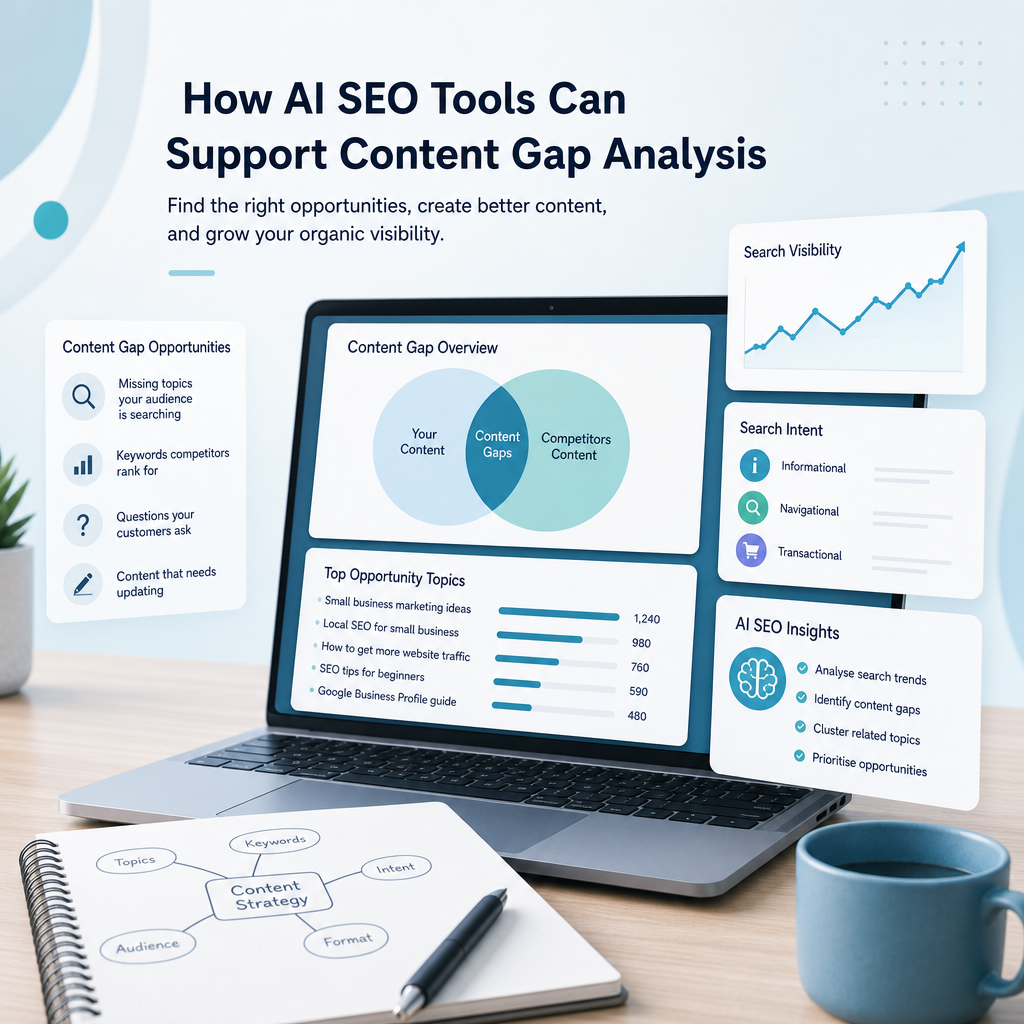
AI can speed up research, organise keyword groups and suggest questions you may have missed. It can also help turn a large export into themes for review. This makes AI SEO tools useful for small teams that lack the time for extensive manual analysis.
AI should support judgement, not replace it. Check every recommendation against your real services, customer needs, business priorities and available evidence. Generic AI writing tools may produce fluent text without understanding your existing search performance or the difference between a useful opportunity and an irrelevant topic.
Ammpli is built as an AI SEO content platform that connects opportunity analysis, competitor content-gap analysis, search-intent research, semantic keyword mapping, content planning and AI-powered SEO content creation. It can help small businesses turn data into a focused plan, with options including local SEO content creation, direct CMS publishing and SEO performance reporting.
How Much Does Content Gap Analysis Cost?
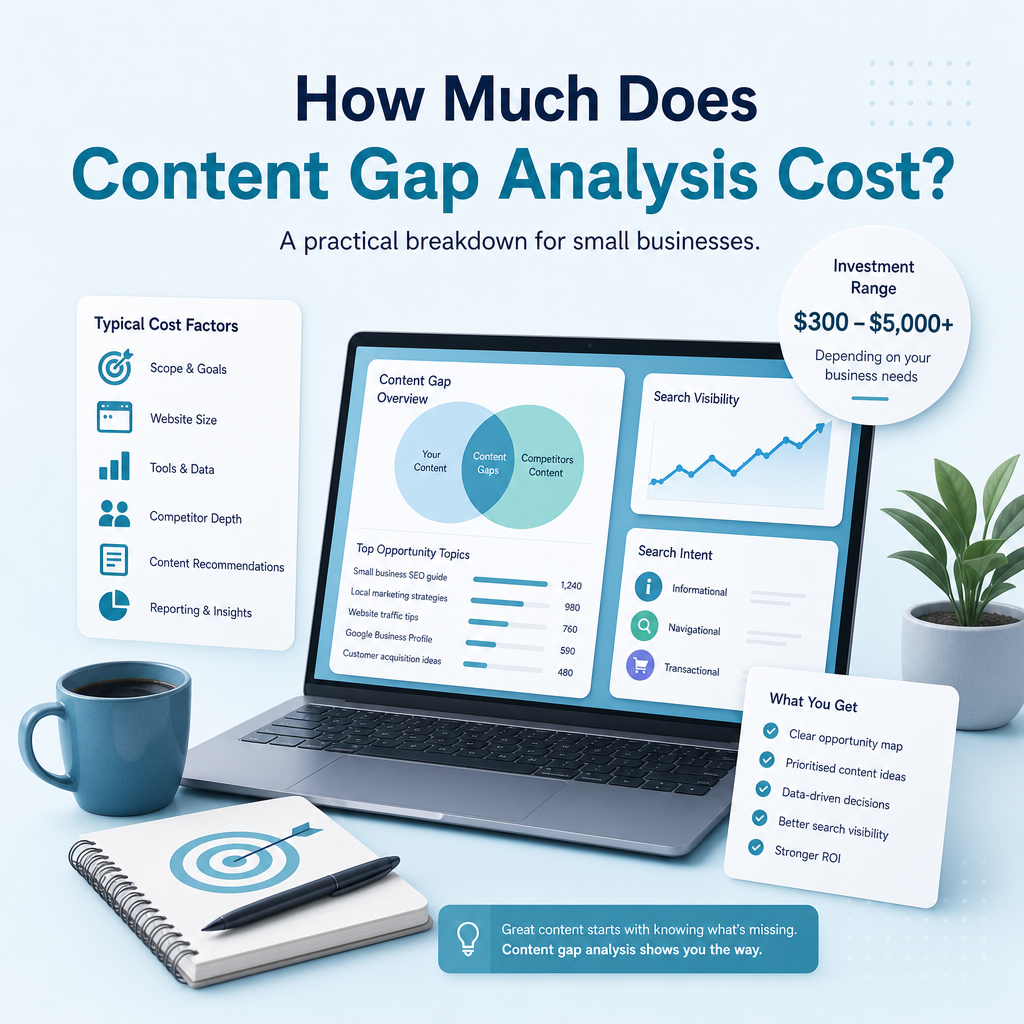
The cost depends on the size of the website, the number of competitors, the depth of the research and whether content creation is included. A small site may need a focused review of key service pages, while a larger business may require a sitewide audit, stakeholder input, topic mapping and an ongoing publishing plan.
There are three common approaches:
| Approach | What is included | Best suited to |
|---|---|---|
| DIY research | Search Console exports, competitor review and a spreadsheet | Teams with available time and SEO experience |
| Traditional specialist service | Research, strategy, recommendations and sometimes content delivery | Businesses seeking external expertise and hands-on support |
| AI SEO content platform | Data analysis, opportunity identification, planning and content workflows | Small teams seeking repeatable SEO automation with controlled costs |
Ask any provider what data they use, what deliverables you receive, how recommendations are prioritised and how results will be reviewed. Be cautious of promises of guaranteed rankings or fixed traffic increases. A trustworthy provider explains the process, limitations and decisions clearly.
How to Measure the Results
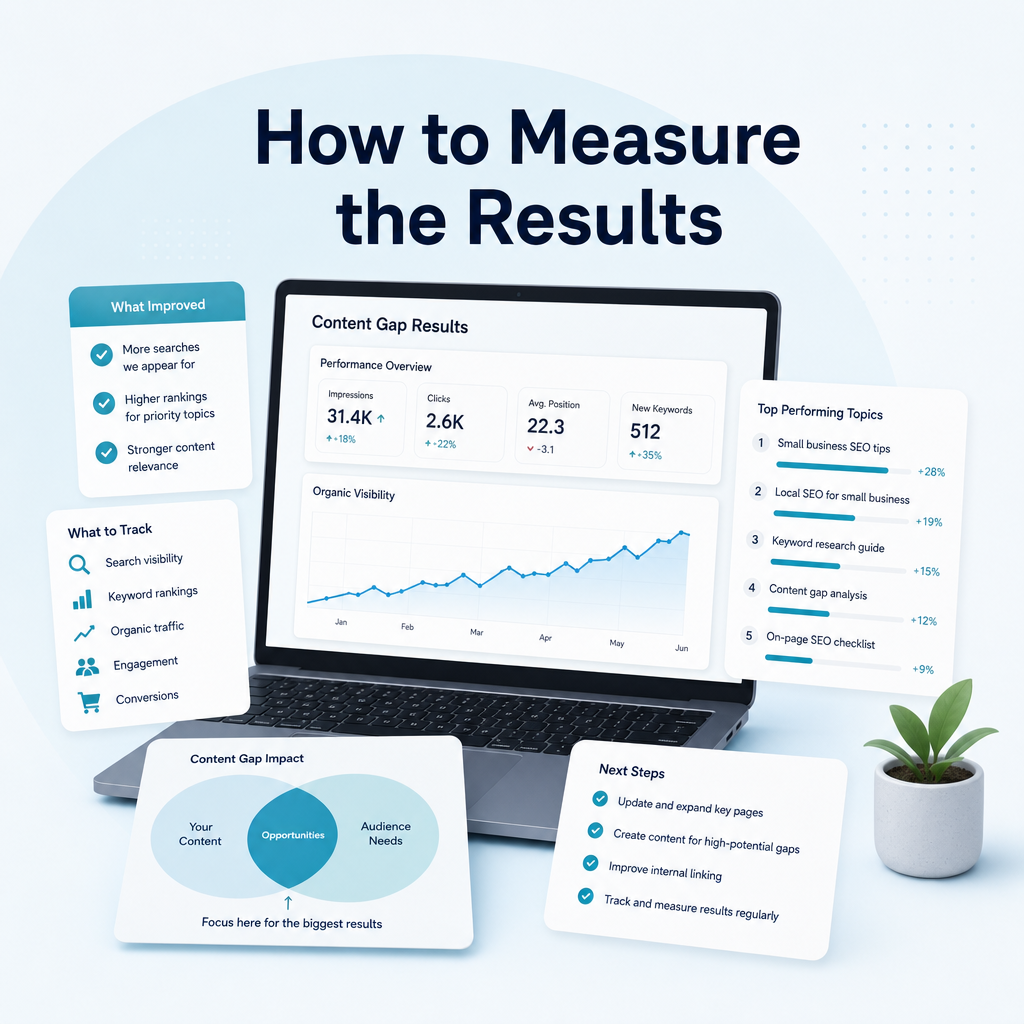
After publishing or improving content, measure whether it is reaching the intended audience and supporting the right business outcome. Allow enough time for meaningful patterns to develop, while checking early technical issues such as indexing, broken links and incorrect metadata.
Monitor:
- Impressions and clicks for target query groups.
- Click-through rate from search results.
- Average positions and relevant search features.
- Engagement with the page and related content.
- Enquiries, sign-ups or other agreed conversions.
- Internal searches and no-result searches.
- Visibility across local and international markets where relevant.
Review performance on a regular schedule, such as quarterly or twice a year. Refresh content sooner when services change, regulations develop, customer questions shift or search data shows a clear decline.
Common Mistakes in Content Gap Analysis
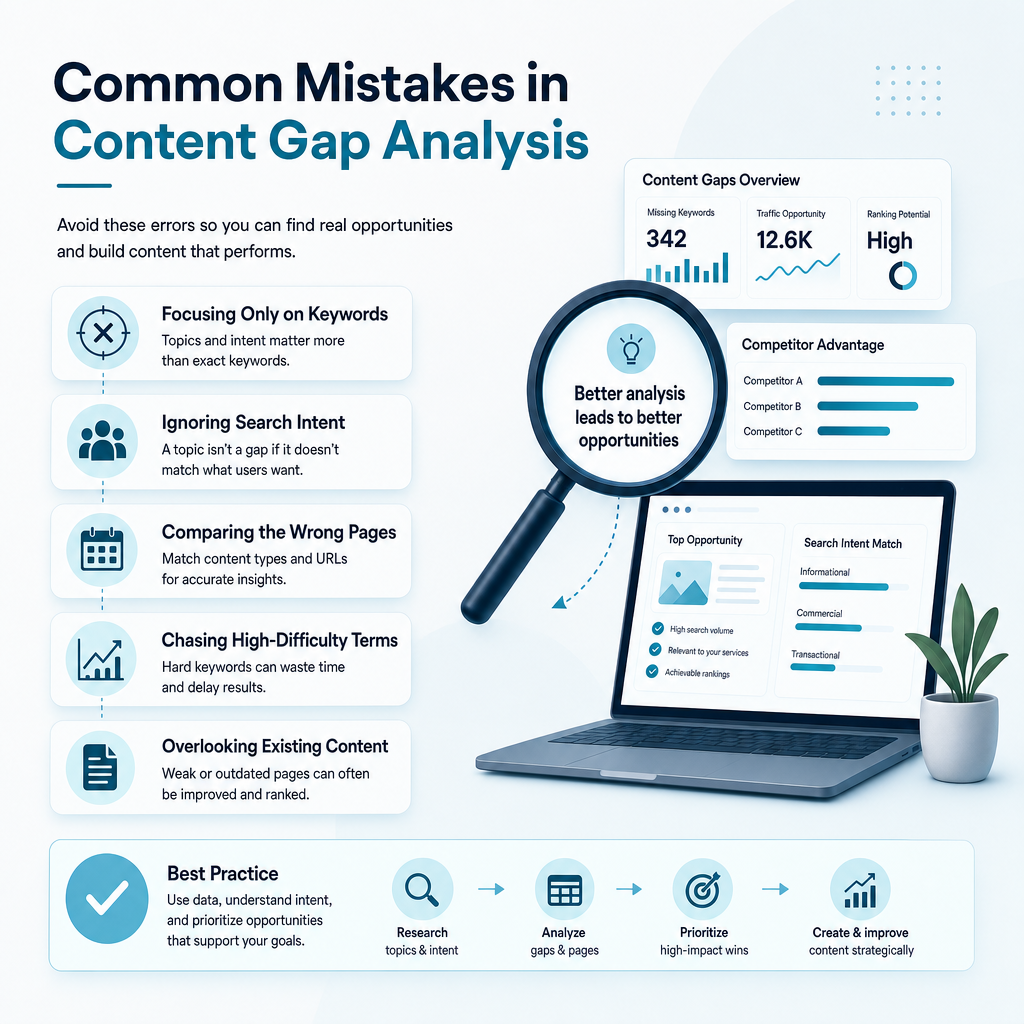
Content gap analysis sounds simple, but it is easy to do it badly. The biggest problem is focusing on volume without relevance. A site can publish a lot more and still not attract the right visitors.
Watch for these common mistakes:
- Copying competitors too closely: the goal is to find opportunities, not to clone their content.
- Ignoring search intent: ranking is harder when the page type does not match what users expect.
- Only chasing big keywords: smaller, more targeted topics are often more realistic for growing businesses.
- Skipping existing data: real Google Search Console data can reveal opportunities generic tools miss.
- Publishing without a plan: random articles rarely build topical authority.
- Using AI without strategy: AI-powered SEO content creation can speed up production, but it still needs real data, good briefs, and editorial review.
What Makes a Good Content Gap Analysis Provider?
A strong provider does more than deliver a list of keywords. They connect search data with your services, audience, competitors and capacity to publish. Recommendations should be specific enough to act on and realistic for your current website authority and resources.
Look for a provider that:
- Uses first-party performance data where available.
- Explains search intent in plain language.
- Separates relevant opportunities from attractive but unsuitable keywords.
- Includes existing-content improvements, not only new articles.
- Maps related topics into a coherent structure.
- Shows how content will be reviewed and measured.
- Offers a process that suits a small internal team.
Ammpli is designed for businesses that need practical SEO content planning without the cost or time commitment of a traditional SEO agency. It gives founders, marketing managers and small teams a way to turn Google Search Console and Analytics data into informed content decisions.
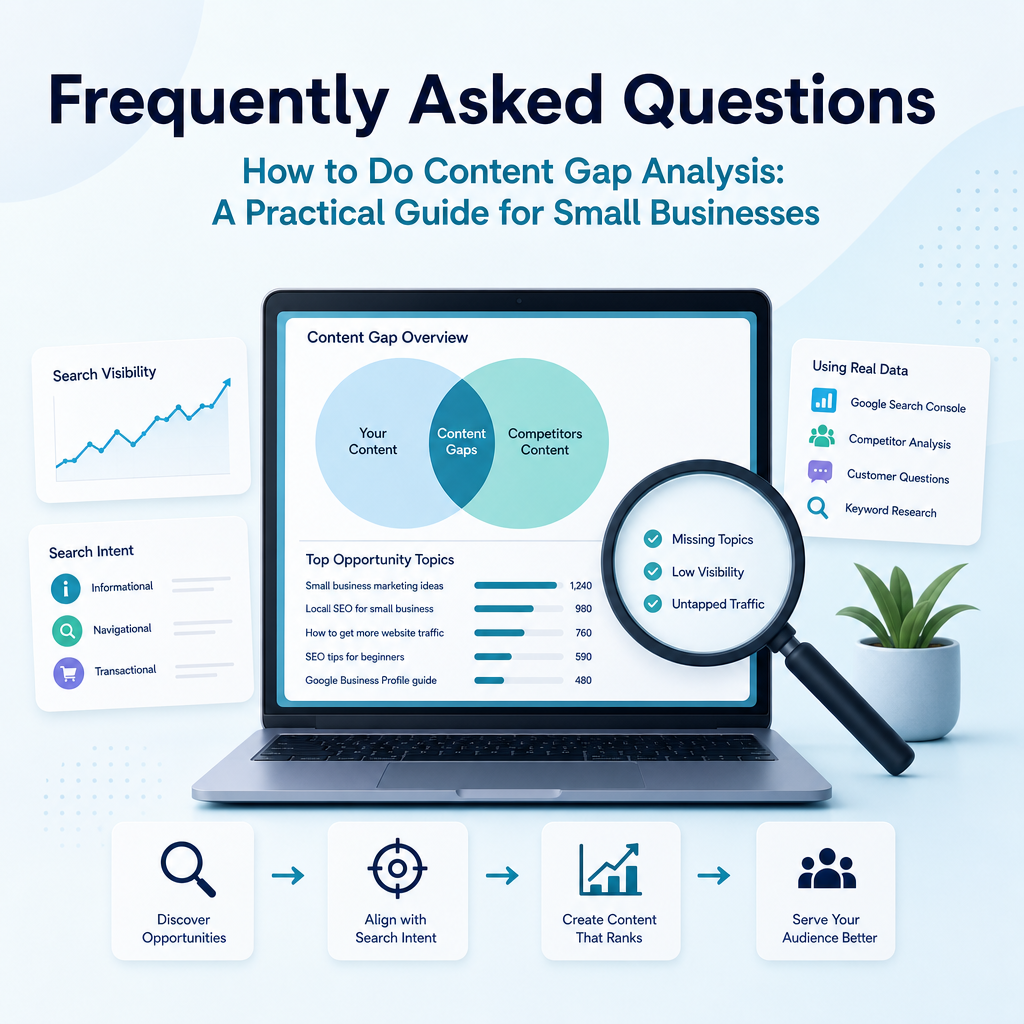
Frequently Asked Questions
How often should I do a content gap analysis?
Review priority topics quarterly or twice a year, depending on how quickly your market, services and search behaviour change. Run a focused review sooner after launching a service, redesigning a website or seeing a sustained performance decline.
What is the difference between a content gap and a keyword gap?
A keyword gap identifies search terms competitors rank for that your site does not. A content gap is broader and includes missing topics, weak explanations, outdated pages, poor intent alignment and unsuitable formats.
Can Google Search Console identify content gaps?
Yes. Search Console can reveal queries where your pages receive impressions but few clicks, along with related searches and pages that are gaining or losing visibility. Combine this data with competitor research and a review of user needs for stronger decisions.
Can AI perform a content gap analysis on its own?
AI can organise data, suggest related questions and speed up research, but it should not be the only source of insight. Human review is needed to confirm relevance, accuracy, service availability, search intent and business value.
Should every content gap become a new page?
No. Some gaps are best addressed by updating an existing page, improving internal links, adding an FAQ or changing the format. Create a new page only when the topic has a distinct purpose and cannot be covered clearly elsewhere.
When should a small business take action?
Start when you have enough data to identify a relevant opportunity and the capacity to create or improve the page properly. A focused analysis of one service area is often more useful than waiting until you can audit the entire website.
How is content gap analysis different from a content audit?
A content audit reviews your existing content library for quality, performance, and usefulness. A content gap analysis goes further by identifying what is missing, underdeveloped, or not matching user demand. The two often work best together.
What tools are used for content gap analysis?
Businesses often use a mix of SEO tools, competitor research platforms, and Google Search Console. The best setup depends on whether you are comparing single pages, whole websites, or trying to build a broader SEO content strategy.
Is content gap analysis only for large websites?
No. In fact, smaller service-based businesses often benefit a lot because they need to focus limited time and budget on the best opportunities. A targeted analysis can help them avoid wasting effort on content that is unlikely to rank or convert.
Turn Search Data Into Better Content
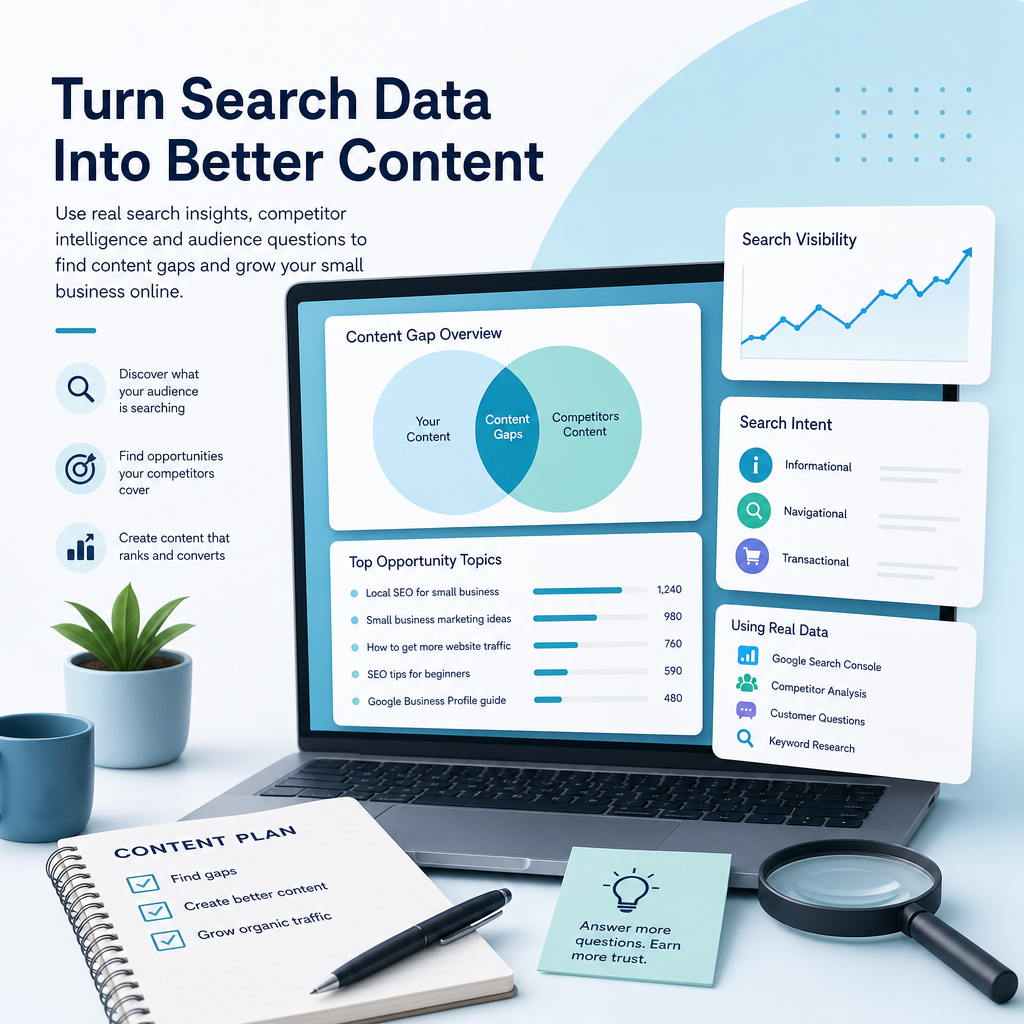
Knowing how to do content gap analysis helps you replace random publishing with a clear, evidence-led process. By combining your existing content audit with competitor research, Google Search Console, Analytics, search intent and semantic mapping, you can find opportunities that are relevant to both your audience and your business.
Ammpli brings these activities together in an AI SEO content platform for small and growing businesses. Use real search-performance data to find your next ranking opportunity, create your SEO content plan and publish useful content with less manual research.
Start your 14-day free trial with Ammpli and turn your search data into better content. No credit card required.