
Many small businesses know they need to publish useful content, but deciding what to write next can be difficult. Ideas may sit across spreadsheets, emails and documents, while writers work without clear priorities or deadlines. SEO content calendars bring those decisions into one practical plan, connecting business goals with search demand, audience needs and a realistic publishing workflow.
What Is an SEO Content Calendar?
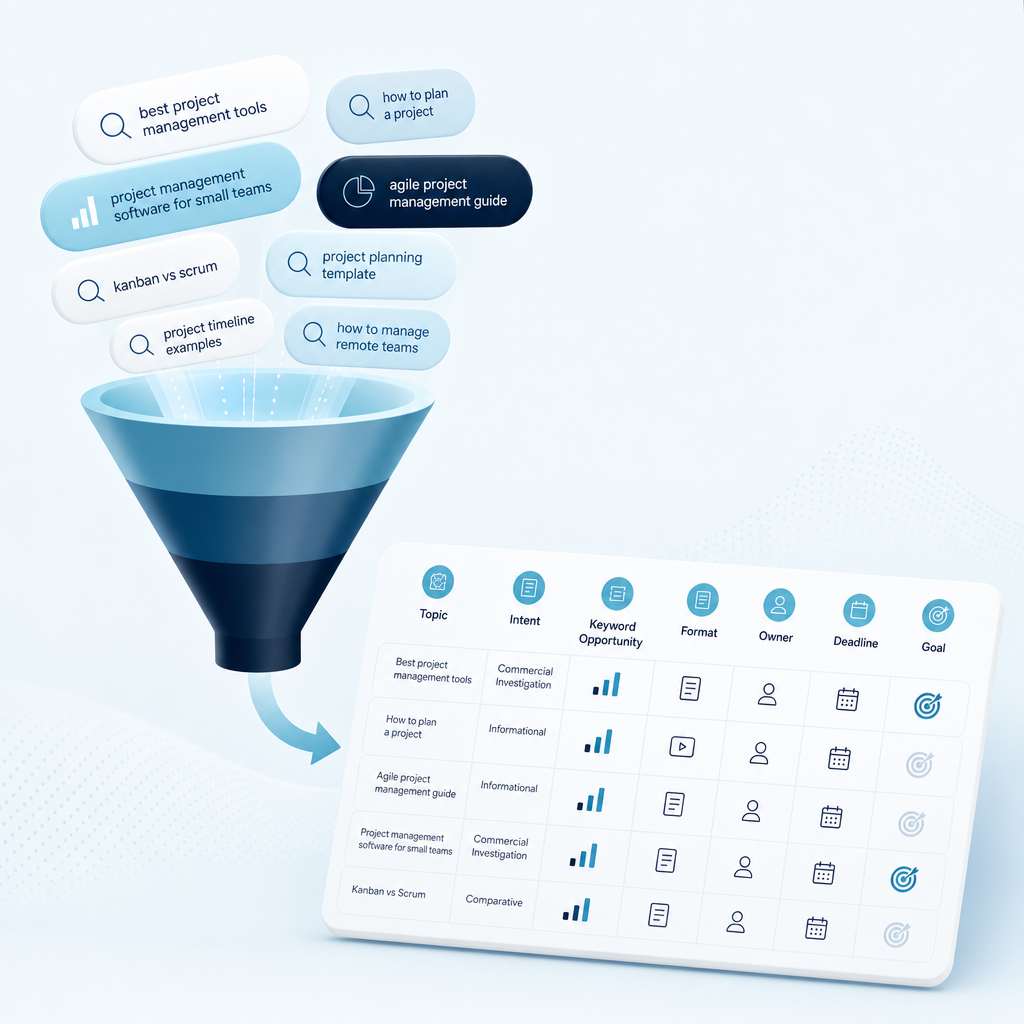
An SEO content calendar is a planning system for the content your business intends to research, create, optimise and publish. It can cover blog posts, service pages, landing pages, case studies, videos, email campaigns and social promotion.
Unlike a basic editorial schedule, an SEO content calendar records the reasoning behind each item. It links a topic to a target audience, search intent, keyword opportunity, content format, owner, deadline and performance goal. This creates a clear path from a search query to a useful page and, where appropriate, an enquiry.
The calendar does not need to be complicated. A shared spreadsheet may be enough for a small team, while a dedicated SEO content planning tool can reduce manual research and keep briefs, statuses and reporting together.
Why SEO Content Calendars Matter for Small Businesses

Publishing consistently is easier when everyone can see what is planned, what is being written and what requires approval. A calendar also helps prevent two common problems: repeatedly targeting the same subject and ignoring valuable topics that could strengthen topical authority.
It gives owners and marketing managers a better basis for decisions. Instead of choosing topics because they sound interesting, they can prioritise realistic ranking opportunities, questions customers ask, content gaps competitors have covered and pages that support commercial services.
A useful calendar also leaves room for improvement. Published content can be reviewed against Google Search Console and Analytics data, then refreshed when impressions grow, search intent changes or a page attracts visitors without supporting enquiries.
| Field | Purpose | Example |
|---|---|---|
| Topic and intent | Defines the reader’s need | Informational or commercial |
| Keyword opportunity | Guides optimisation | Primary and related terms |
| Owner and status | Keeps work moving | Brief, draft, review, published |
| Publish and review dates | Supports consistency | Monthly publishing cycle |
| Performance notes | Informs updates | Clicks, impressions, enquiries |
How to Build an Effective SEO Content Calendar

Start with the business outcome rather than a list of random keywords. Decide whether the next period should support organic visibility, lead generation, a service launch, local discovery or stronger coverage of an important subject.
1. Review your current position
Use Google Search Console and Analytics to identify pages receiving impressions, clicks and engagement. Existing visibility can reveal realistic opportunities, including relevant searches where a page is close to stronger positions. Review older content as well: an update may be more useful than another new article.
2. Research topics and competitors
Group related searches into themes, then examine the search results to understand intent. Competitor content-gap analysis can reveal questions or subtopics your site does not yet address. Do not copy competitors; use the findings to identify a distinct, more useful angle based on your expertise.
3. Map keywords and related concepts
Assign one primary search focus to each page and add closely related terms, questions and entities. Semantic keyword mapping helps a writer cover a subject naturally without forcing repeated phrases. It can also show where several planned pages overlap and may compete with one another.
4. Set a realistic workflow
Record the working title, content type, target reader, brief, owner, internal deadline, publication date, URL slug, metadata, internal links and promotion notes. Include stages such as research, writing, review, optimisation, approval and publication. A smaller team should choose a cadence it can maintain without reducing quality.
5. Review performance and adjust
Track impressions, clicks, rankings, engagement and relevant conversions at a sensible interval. Use the findings to refresh weak pages, expand successful themes, improve links to service pages or change the format when the current result does not match search intent.
Choosing the Right Planning Approach and Support

A spreadsheet is flexible and inexpensive, but it relies on manual research and consistent upkeep. Project management tools can improve task ownership and deadlines, while specialist SEO content software can connect opportunity analysis, keyword research, semantic mapping, content creation and reporting.
Generic AI writing tools may produce a draft quickly, but they do not automatically understand a business’s existing search performance or realistic opportunities. Traditional agencies can provide strategic support, yet their cost and process may not suit every growing business. The right option depends on internal capacity, the complexity of the website and how much research and production you want to handle.
Ammpli is an AI SEO content platform for small and growing businesses in the United Kingdom and English-speaking international markets. It combines Google Search Console and Analytics data with competitor research, search-intent analysis and semantic keyword mapping, helping teams turn evidence into SEO content calendars and search-optimised articles. It also supports local SEO content creation, performance reporting and direct CMS publishing.
Frequently Asked Questions
How often should I update an SEO content calendar?
Review the calendar whenever priorities or search data change, with a scheduled monthly or quarterly planning session. Check active tasks more frequently so deadlines remain realistic. Published content should be reviewed separately based on performance, freshness, business changes and whether the page still matches the search intent.
What should a small business prioritise first?
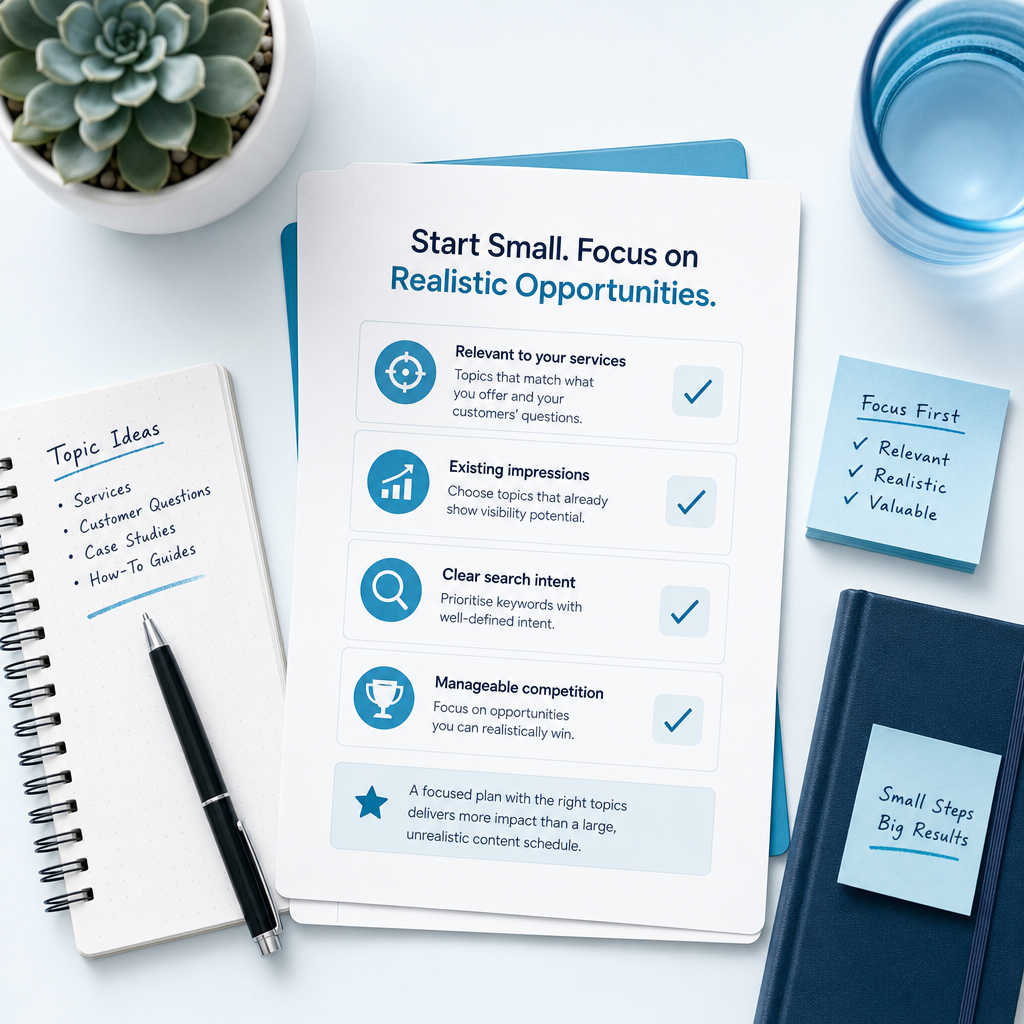
Begin with topics closely connected to your services and customers’ questions. Prioritise realistic opportunities shown by existing impressions, clear search intent and manageable competition. A focused set of useful pages is usually more practical than a large schedule filled with unrelated keywords or publishing targets your team cannot maintain.
Can AI create an SEO content calendar?
AI can help generate ideas, group topics and draft content, but quality depends on the data behind those decisions. A stronger process combines AI with Google Search Console performance, Analytics, competitor research and search-intent analysis. Human review is still needed to confirm accuracy, relevance, tone and commercial usefulness.
How do I know whether my calendar is working?
Measure progress against the purpose of each page. Review impressions and clicks for visibility, engagement for usefulness and relevant enquiries or conversions for business value. Also check whether content is published on schedule, supports service pages and develops stronger coverage around the subjects your audience searches.
Turn Search Data Into Your Next Content Plan
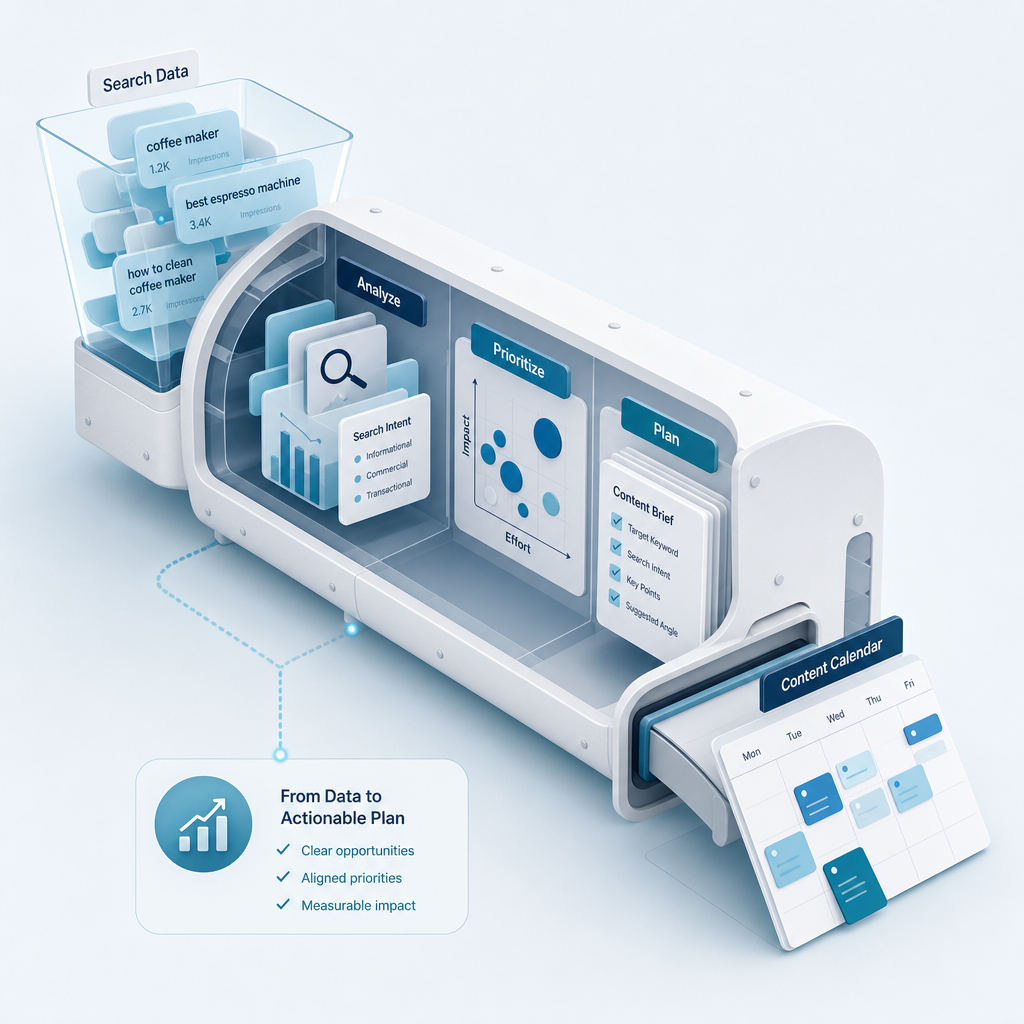
Effective SEO content calendars replace guesswork with priorities, ownership and measurable next steps. If your website already receives Google impressions but your team lacks time for research and production, Ammpli can help identify opportunities and turn them into a practical publishing plan. Start your 14-day free trial with no credit card required.