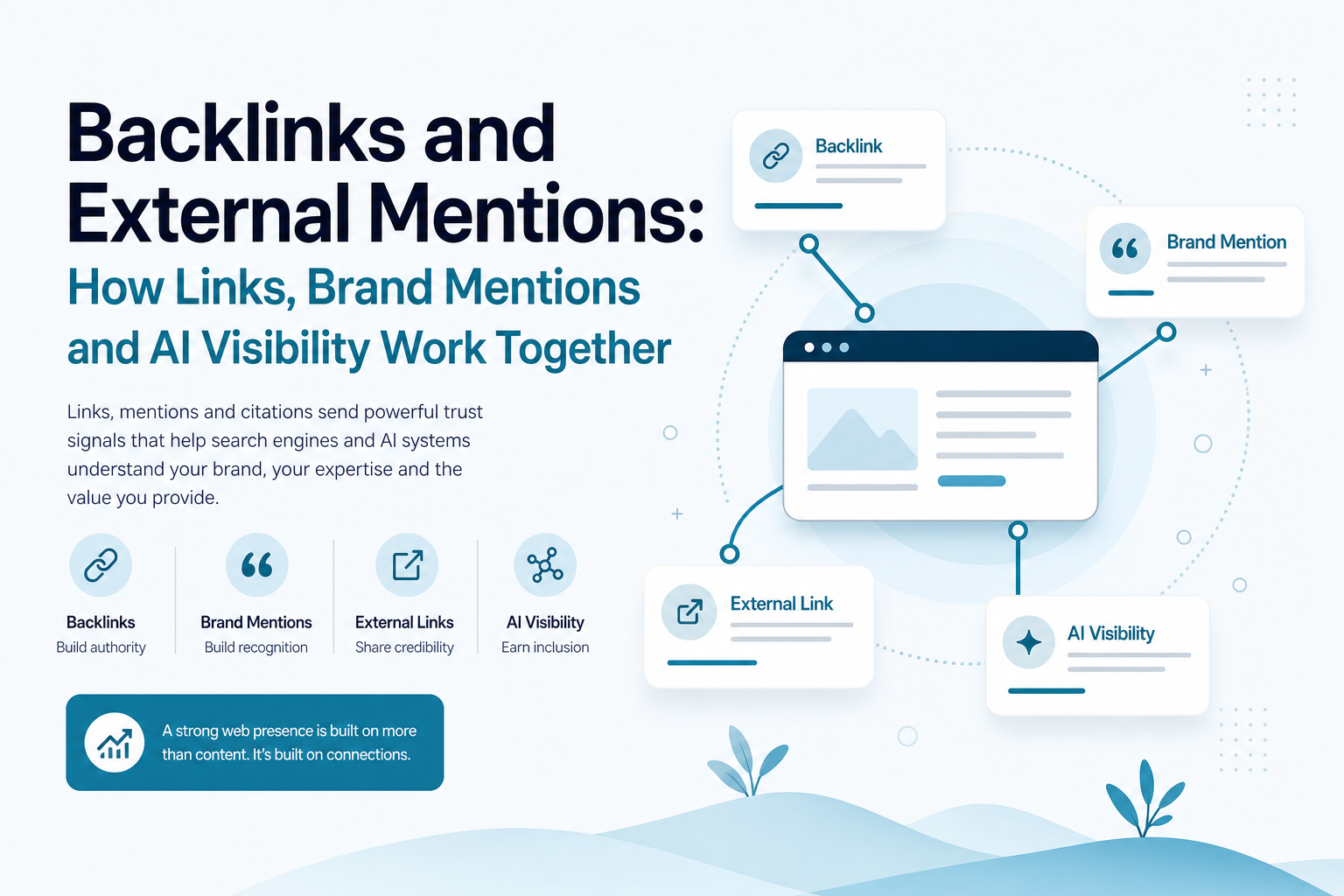
If your small business publishes useful content but still struggles to appear in Google results or AI-generated answers, the problem may not be the quality of your writing alone. Search visibility is shaped by how your website connects to other sources and how often trusted websites discuss your brand.
This is where backlinks and external mentions become relevant. A backlink is a clickable link from another website to yours. An external mention is a reference to your brand, product, service or expertise on another website, even when no hyperlink is included. External links are different again: they are links from your website to another domain.
These terms are often mixed together, but each has a separate role. Internal links organise your own content, external links support claims with useful references, backlinks strengthen authority and external mentions help search systems understand your reputation and subject relevance. A practical SEO strategy uses all four deliberately rather than chasing link volume.
What Are Backlinks, External Links and Brand Mentions?
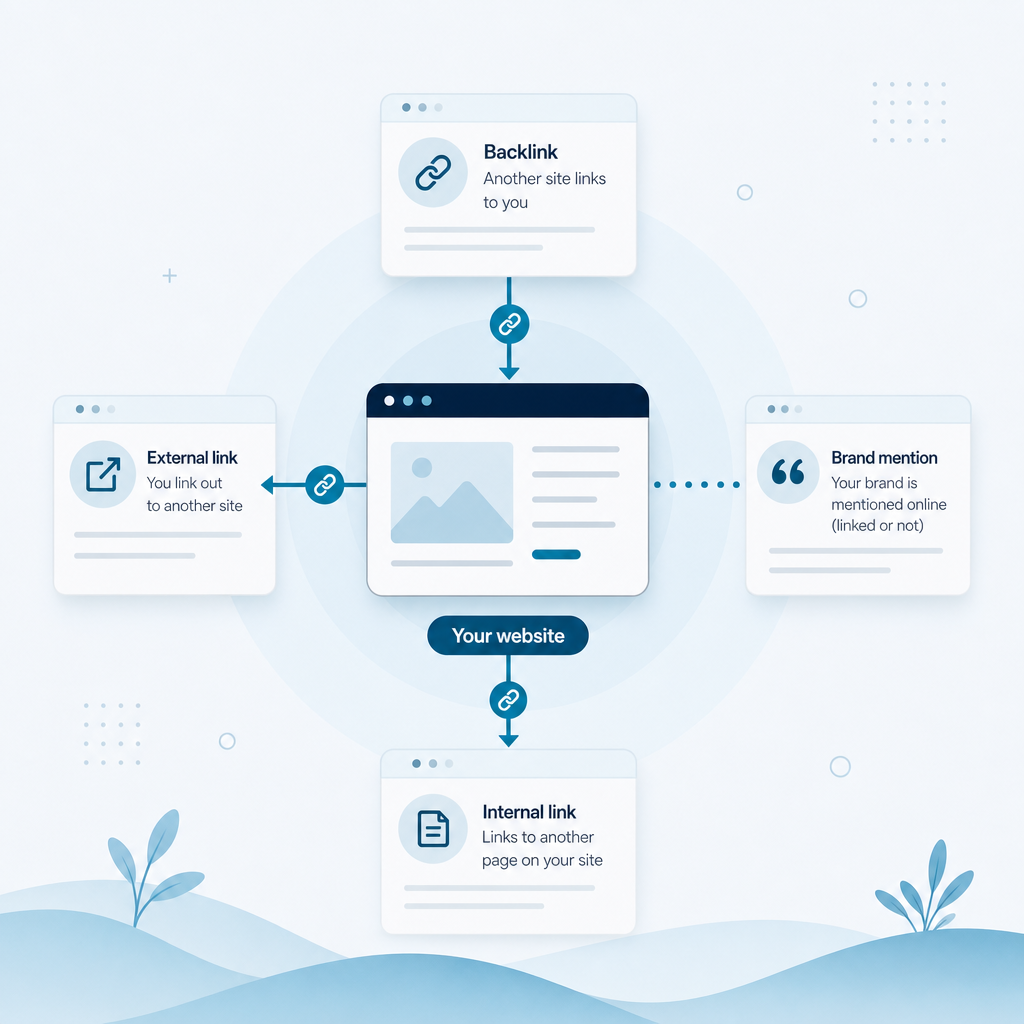
Backlinks, external links and brand mentions describe relationships between your website and the wider web. Understanding the direction and purpose of each link makes it easier to choose suitable SEO actions and avoid wasting time on low-value tactics.
A backlink points from another domain to your website. An external link, also called an outbound link, points from your website to another domain. A brand mention is a textual or visual reference to your business that may or may not contain a link.
- Internal link: connects two pages on the same website.
- External link: sends visitors from your website to another domain.
- Backlink: brings visitors from another domain to your website.
- Brand mention: references your business, product or expertise without requiring a hyperlink.
A linked brand mention counts as both a mention and a backlink. An unlinked mention does not pass link equity in the same way, but it can still provide context about what your business does and how it relates to a particular topic.
How the Different Link Types Compare
| Type | Direction | Main purpose |
|---|---|---|
| Internal link | Page to page on your site | Structure, navigation and topic relationships |
| External link | Your site to another domain | Evidence, citations and useful resources |
| Backlink | Another domain to your site | Authority, discovery and referral traffic |
| Brand mention | Another source references you | Recognition, context and reputation |
Why Backlinks Still Matter for SEO

Backlinks remain an important part of traditional SEO because they provide a connection between websites. When a relevant publication links to a useful page on your site, it gives search engines a reason to examine that page and understand its place within a wider topic.
A backlink can support several outcomes. It may help crawlers discover a page, send referral visitors, strengthen the authority of the target URL and improve the likelihood that the page competes for relevant searches. The value depends on the source, context and editorial purpose of the link, not simply on the number of links pointing to your domain.
For example, a United Kingdom accounting practice may benefit from a relevant link in a respected small-business finance publication. A software company may gain more from a link in a specialist technology review than from dozens of unrelated directories. Relevance and genuine editorial value provide stronger signals than a large but disconnected backlink count.
What Makes a Backlink Useful?
Useful backlinks tend to come from pages that are relevant to your subject, accessible to real readers and published by organisations with credible editorial standards. A link placed naturally within an explanation is usually more meaningful than one hidden in a footer, sidebar or generic directory.
- Topical relevance: the referring page discusses a related subject.
- Source quality: the website has a credible purpose and a real audience.
- Editorial context: the link helps readers understand or explore a point.
- Natural anchor text: the clickable words describe the destination without forced repetition.
- Referring-domain diversity: links come from several suitable websites rather than one network.
Do not treat third-party authority scores as absolute truth. They can help compare prospects, but they should be reviewed alongside relevance, traffic quality, content standards, history and the reason the website is linking.
What External Links Add to Your Content
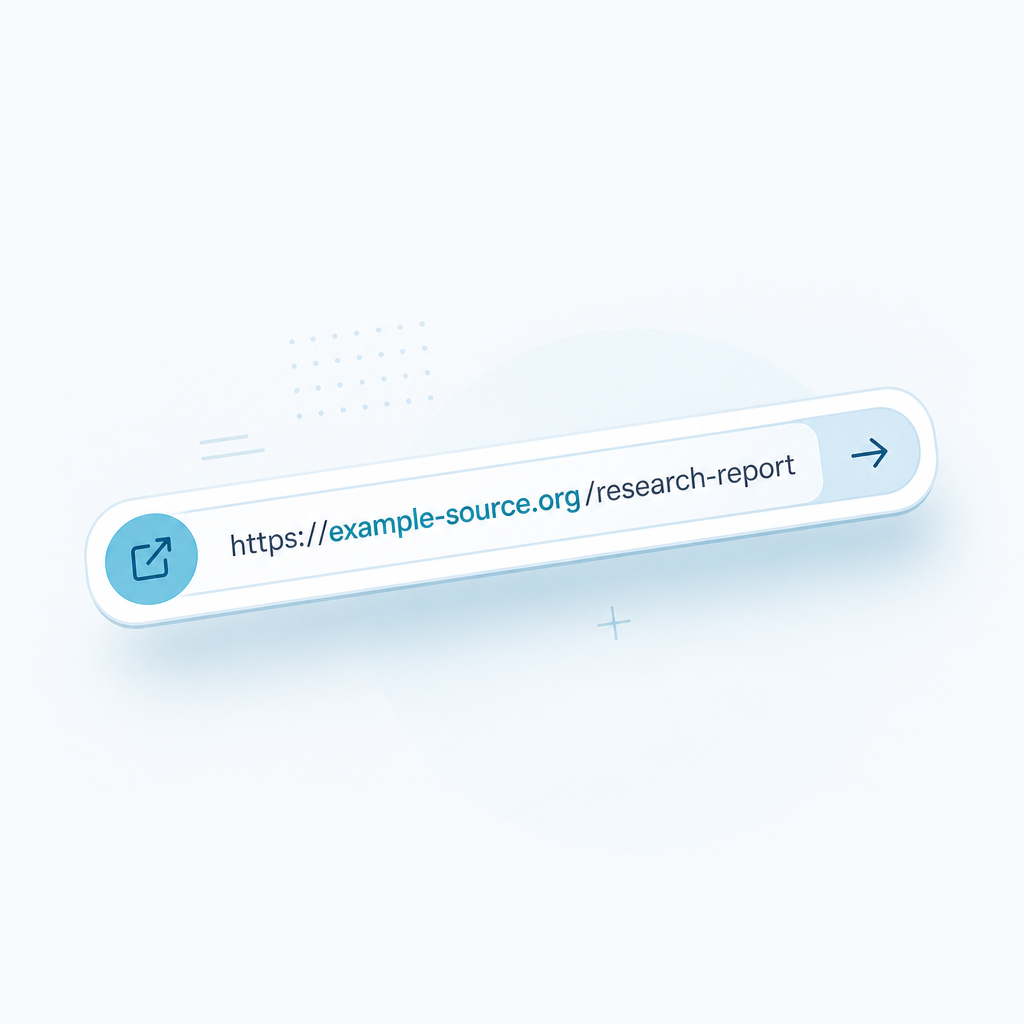
External links are links from your website to another domain. They are useful when they help readers verify a claim, find primary information or explore a subject that your page cannot cover fully.
A service business might link to official government guidance, a professional body, a recognised research organisation or a primary technical resource. A technology company could cite Google Search Console documentation when explaining search data. A healthcare practice may reference an appropriate public health authority rather than an anonymous article repeating unsupported claims.
Good outbound linking shows that your content is researched and connected to reliable information. It can also help search engines interpret the subject of a page. However, adding links merely to appear authoritative can weaken the reading experience. Each external link should have a clear reason to exist.
Choosing Reliable External Sources
Review the destination before linking to it. Check who publishes the information, whether the page is current, whether the content supports your statement and whether the website has a clear purpose. A polished design alone does not prove that a source is reliable.
Use the most direct source available when making factual claims. If a report, regulator, university or government department published the original information, link to that source instead of a page that summarises it without adding value.
Keep outbound links focused. A few well-chosen references can support a page effectively; a long list of loosely related links may distract readers and make the content feel assembled rather than written for a specific question.
How Brand Mentions Support SEO and AI Visibility
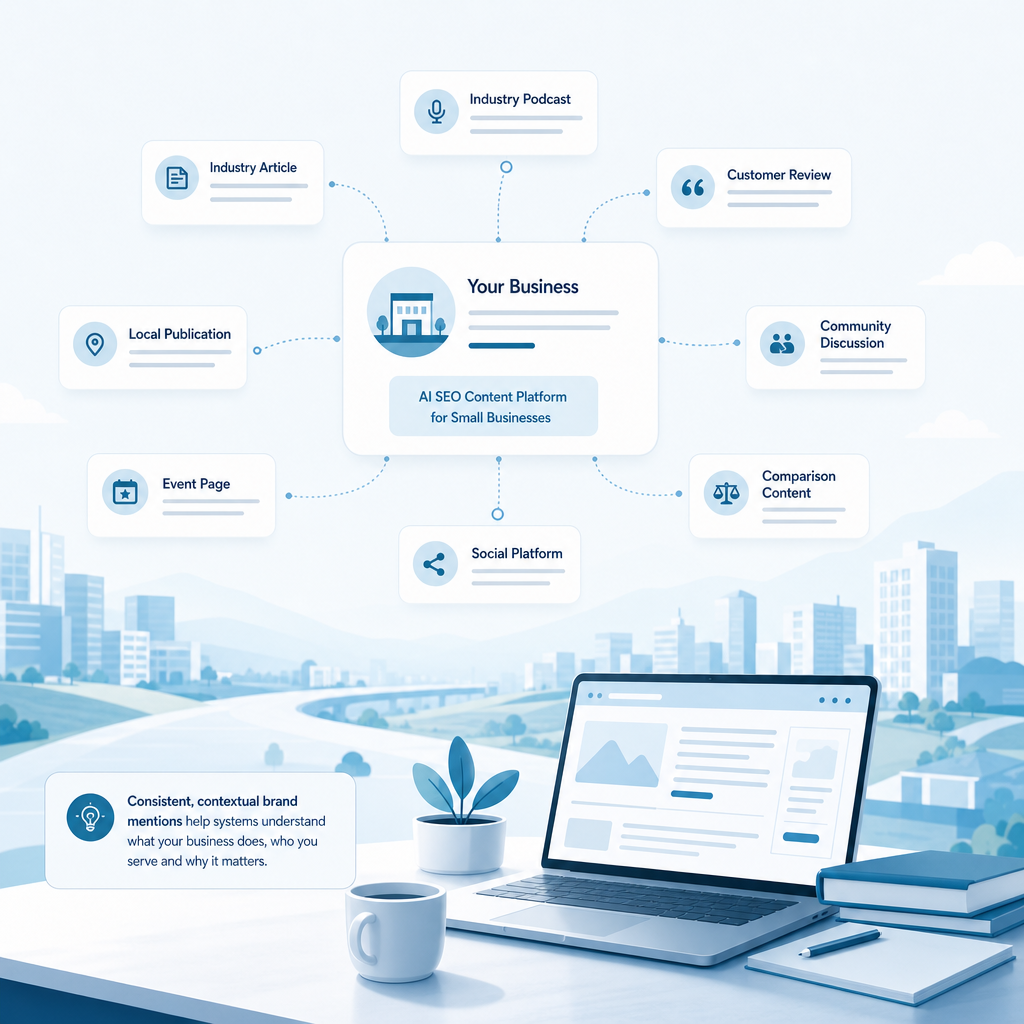
Brand mentions help search systems connect your business with topics, services, locations and customer needs. They can appear in industry articles, local publications, reviews, podcasts, community discussions, event pages, comparison content and social platforms.
An unlinked mention does not work like a standard backlink. It does not create the same clickable path or pass link equity through the link graph. Even so, repeated references from relevant, independent sources can reinforce entity recognition and help systems interpret what your business is known for.
This matters as people use conversational tools and AI search features to ask for recommendations. These systems need to identify businesses and associate them with categories and problems. A consistent description of your company across credible sources can support that understanding.
Context Matters More Than Name Repetition
A bare company name provides limited information. A useful mention explains what the business does, who it serves or why its expertise is relevant. For example, a reference to an AI SEO content platform for small businesses is more informative than a name appearing in an unrelated list.
Consistency also matters. If your website describes the business as an SEO content platform, while directory listings describe it as an unrelated marketing agency, search systems may receive mixed signals. Keep your business category, service descriptions, location and brand name reasonably consistent across profiles and third-party pages.
Positive and neutral mentions can support reputation, but negative coverage should not be ignored. Respond professionally, correct inaccurate information where appropriate and improve the underlying customer experience. External mentions are part of a wider reputation picture, not a shortcut around service quality.
Backlinks Versus Mentions: When Should You Prioritise Each?
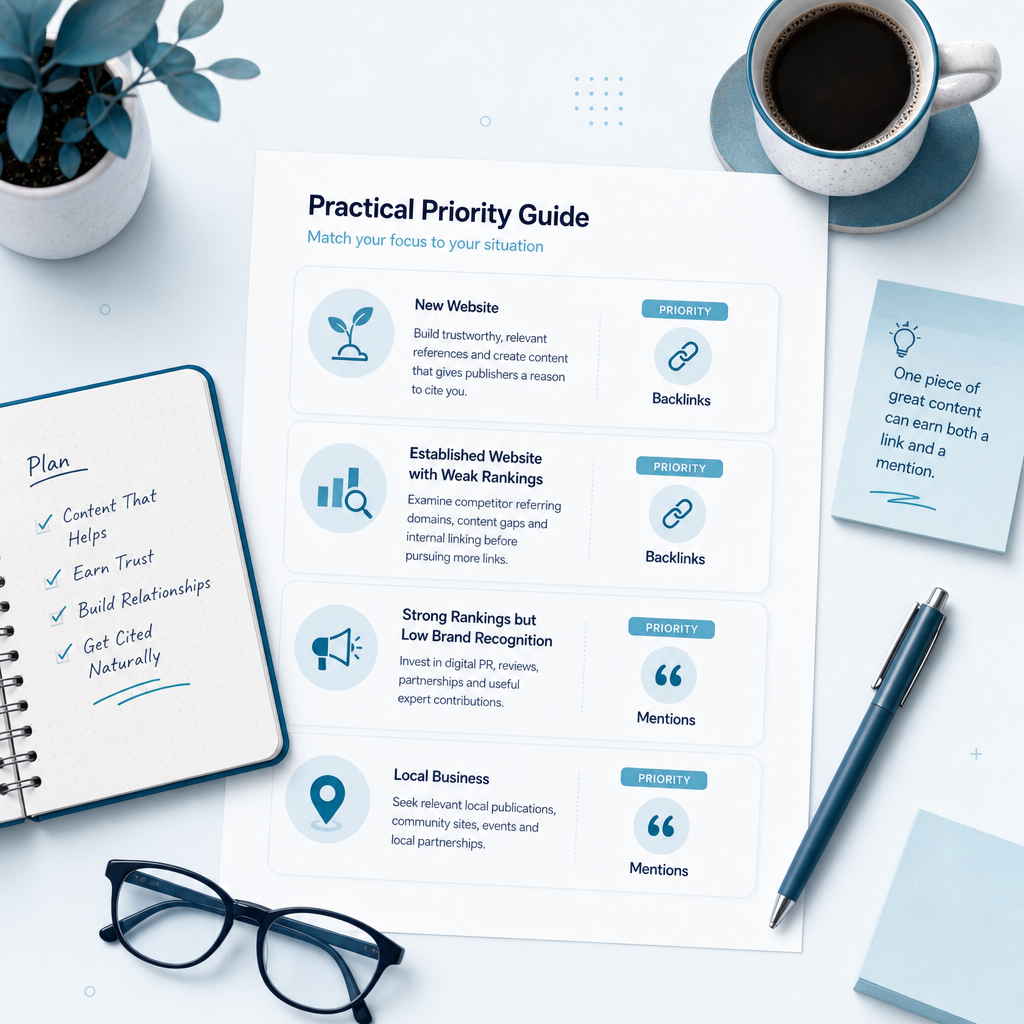
The right priority depends on your current website, market and business objective. A new domain competing for difficult commercial searches usually needs strong technical foundations and relevant backlinks, while an established business trying to appear in AI recommendations may need broader third-party recognition.
Backlinks are generally the stronger focus when you need to improve traditional organic rankings, support important commercial pages or help search engines discover newer content. Mentions become especially useful when your brand is rarely named in relevant discussions, reviews and publications despite having useful content on its own website.
Most small businesses should not treat this as an either-or decision. A useful research report, practical guide or original business insight can earn both a backlink and a mention. A local event, partnership or expert contribution may produce a mention even when no link is added.
Practical Priority Guide
- New website: build trustworthy, relevant references and create content that gives publishers a reason to cite you.
- Established website with weak rankings: examine competitor referring domains, content gaps and internal linking before pursuing more links.
- Strong rankings but low brand recognition: invest in digital PR, reviews, partnerships and useful expert contributions.
- Local business: seek relevant local publications, community organisations, professional directories and customer reviews.
- B2B technology company: publish original research, explain specialist topics clearly and build relationships with industry publishers.
How to Earn Quality Backlinks and External Mentions
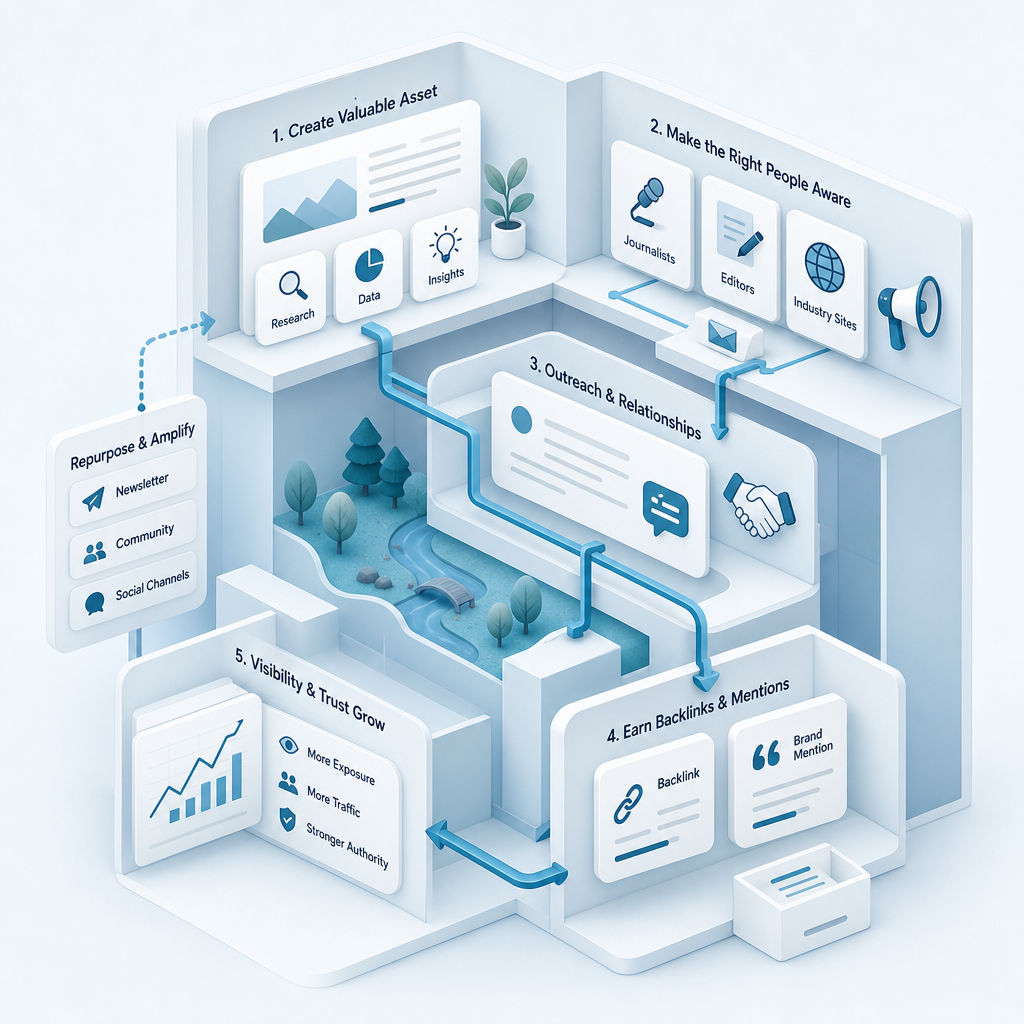
Backlinks and external mentions are earned more reliably when your business creates something genuinely useful and makes the right people aware of it. Publishing a page and waiting passively can work occasionally, but consistent visibility normally requires distribution, relationships and follow-up.
Start with content that solves a specific problem. Original research, clear benchmark reports, practical templates, calculators, expert commentary, detailed comparisons and well-supported guides are more likely to be referenced than generic summaries. A small business does not need a large campaign if the asset answers a question that publishers and customers already have.
Practical Outreach Ideas for Small Businesses
- Offer a subject specialist for a relevant journalist request.
- Share original findings from customer or website data without exposing private information.
- Contribute a genuinely useful expert explanation to a professional publication.
- Collaborate with a partner on a webinar, report or educational resource.
- Ask satisfied customers to leave honest reviews on suitable platforms.
- Find existing unlinked mentions and politely suggest the most relevant page.
- Promote useful content through newsletters, professional communities and social channels.
When requesting a link, focus on reader benefit rather than link value. Identify the exact mention, explain which resource supports it and make the request easy to act on. One concise, personalised message is more appropriate than repeated mass emails.
Common Mistakes With Backlinks and External Mentions
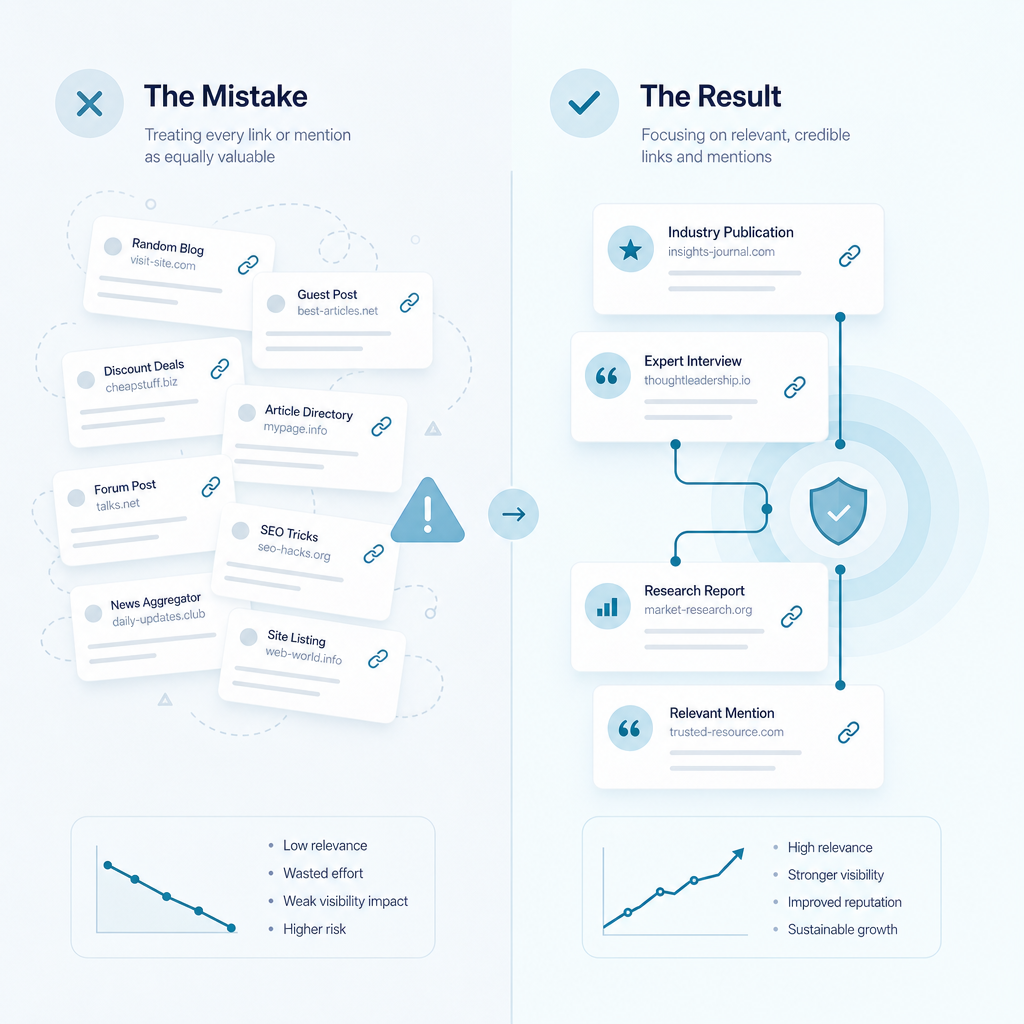
The biggest mistake is treating every link or mention as equally valuable. A large number of irrelevant, low-quality placements can create operational work without improving visibility, while a smaller number of credible references may support both discovery and reputation.
Another mistake is using the same commercial anchor text repeatedly. Natural backlink profiles contain brand names, page titles, descriptive phrases, URLs and varied wording. You cannot fully control how independent publishers link to you, and trying to force identical anchors can make a profile look artificial.
- Do not buy bulk link packages or participate in automated link schemes.
- Do not place links on irrelevant websites solely because a metric looks high.
- Do not add external links that fail to support the surrounding sentence.
- Do not assume a nofollow, sponsored or user-generated link has no audience value.
- Do not ignore broken links, changed destinations or outdated references.
- Do not measure success only through link counts or domain scores.
Paid placements should be identified with the appropriate link attributes, such as sponsored, where relevant. User-generated contributions may require a user-generated content attribute. These labels help search engines understand the relationship and protect editorial clarity.
How to Measure Backlinks, Mentions and Results
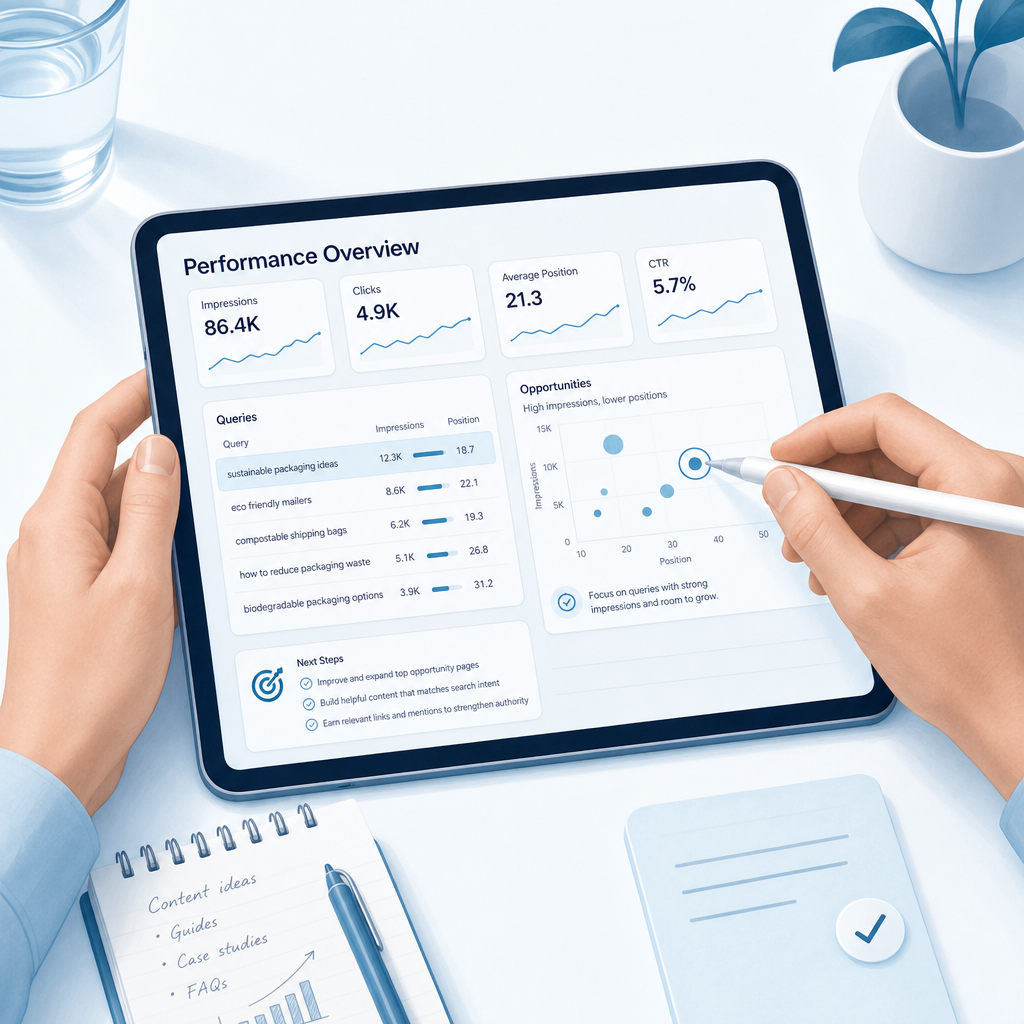
Measurement should connect activity to business outcomes. Track whether useful pages are discovered, whether relevant queries gain impressions, whether referral visitors engage and whether enquiries or sales come from the visibility you are building.
Google Search Console can show impressions, clicks, queries and page positions. Analytics data can help identify referral traffic and conversions. A backlink tool can reveal referring domains, destination pages, anchor text and new or lost links. Mention monitoring can identify where your brand appears, which subjects surround it and whether the tone is positive, neutral or negative.
For AI visibility, test a consistent set of relevant prompts over time rather than relying on one isolated answer. Record whether your business appears, how it is described, which sources are cited and which competitors are included. AI outputs can change, so treat this as directional evidence rather than a guaranteed ranking report.
Using Data to Plan Better Content
Small teams often struggle because they do not know which content is realistic to create or promote. Google Search Console data can reveal queries where a website already receives impressions but has not yet earned a strong position. Competitor research can show subjects and formats that are attracting links and mentions in the same market.
Combining those findings with search-intent analysis and semantic keyword mapping creates a more practical content plan. Instead of publishing broad articles with no clear audience, you can prioritise pages that answer a defined question, support a service and have a plausible path to visibility.
Ammpli helps small and growing businesses analyse search performance, identify content opportunities, study competitor gaps and turn those findings into SEO content plans and articles. As an AI SEO content platform, it is designed to reduce manual research while keeping content connected to real business and search data.
When Professional SEO Support Makes Sense
Professional support can help when link activity is inconsistent, competitors are earning visibility faster or your team cannot connect content production with measurable search opportunities. You may also benefit from specialist input if your backlink profile contains suspicious patterns, important pages are not being supported or your brand appears inconsistently across external sources.
A suitable provider should explain the process clearly, show how opportunities are selected and distinguish earned authority from paid or artificial placements. Ask how they evaluate relevance, how they handle sponsored relationships, what they measure and what work remains under your control.
For a small business in the United Kingdom or an English-speaking international market, the best approach may combine local SEO content creation with broader industry content. Local publications and professional communities can support regional recognition, while specialist publications and useful research can build authority beyond one location.
Ammpli can support this process through SEO opportunity analysis, Google Search Console data analysis, competitor content-gap analysis, semantic keyword mapping, topical authority planning, SEO content calendars, local SEO content creation and SEO performance reporting. It is not a substitute for genuine expertise or relationships, but it can help a small team decide where to focus limited time and budget.
Frequently Asked Questions
What is the difference between a backlink and an external link?
A backlink points from another website to your website. An external link points from your website to another domain. The same hyperlink can be described differently depending on which website’s perspective you use, so direction is the easiest way to tell them apart.
Do unlinked brand mentions help SEO?
Unlinked mentions do not pass link equity like hyperlinks, but they can support brand recognition, topical context and reputation. Their value is stronger when relevant, independent sources describe what your business does clearly. They should complement, not replace, useful content and relevant backlinks.
How can a small business earn quality backlinks?
Create resources worth citing, such as original research, practical guides, tools, expert commentary or useful comparisons. Promote them to relevant publishers, partners and professional communities. Personalised outreach and genuine relationships are more sustainable than large-scale requests or low-quality placement packages.
Should I focus on backlinks or brand mentions first?
Focus on backlinks when you need stronger traditional rankings, discovery or support for competitive pages. Focus on mentions when your business lacks recognition in relevant conversations, reviews or publications. Most established businesses should combine both, using useful content and digital PR to earn links and credible references together.
Build a More Reliable Visibility Strategy
Backlinks and external mentions serve different purposes, but they work best as part of one clear content strategy. Backlinks support discovery and traditional authority, external links strengthen research and usefulness, internal links organise your site, and brand mentions build recognition across the wider web.
Start by reviewing your existing search data, important pages, competitor content gaps and current references. Then create a small number of useful assets that answer real customer questions and give relevant publishers a reason to discuss your business. Start your 14-day free trial with Ammpli and turn your search data into a practical content plan. No credit card is required.