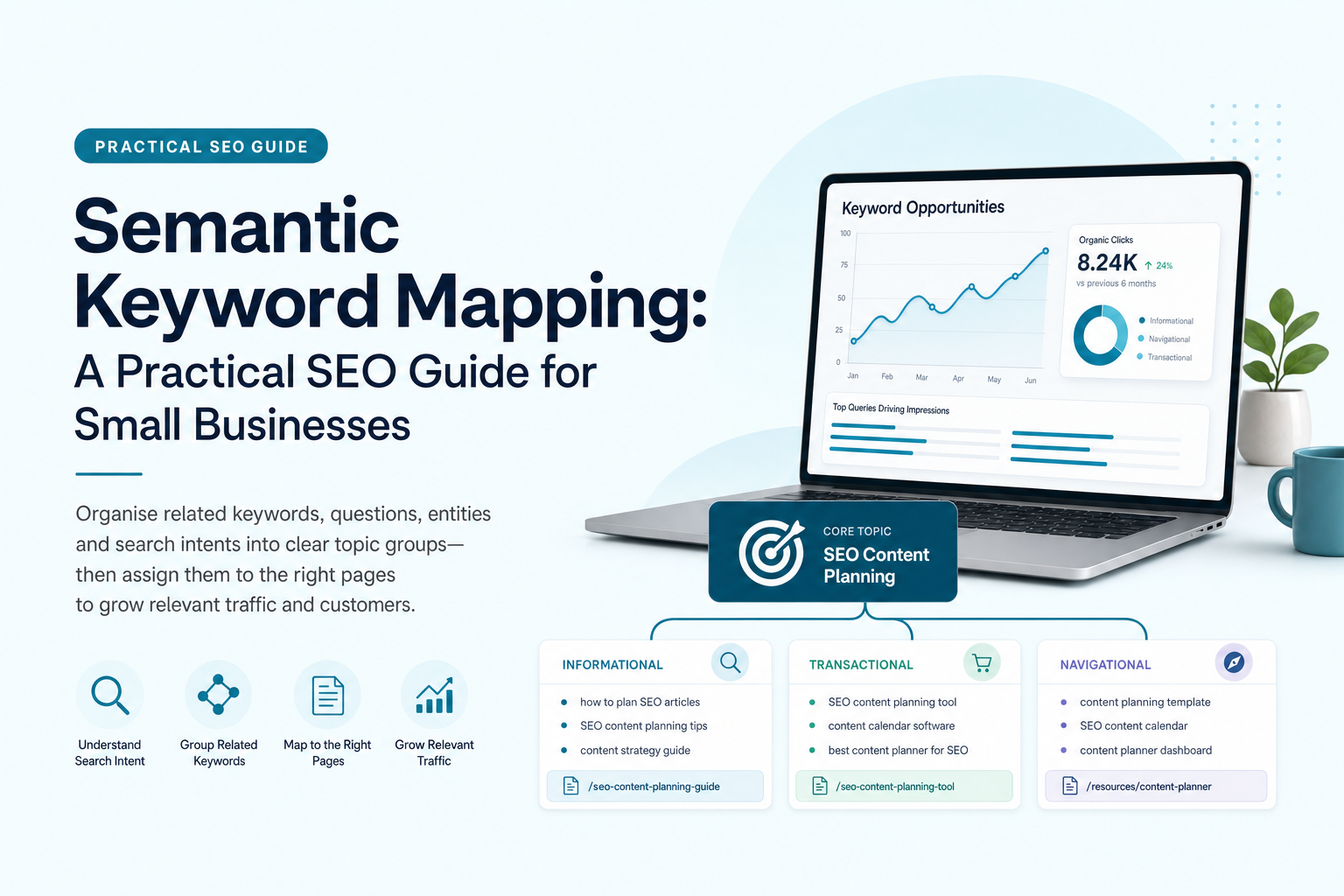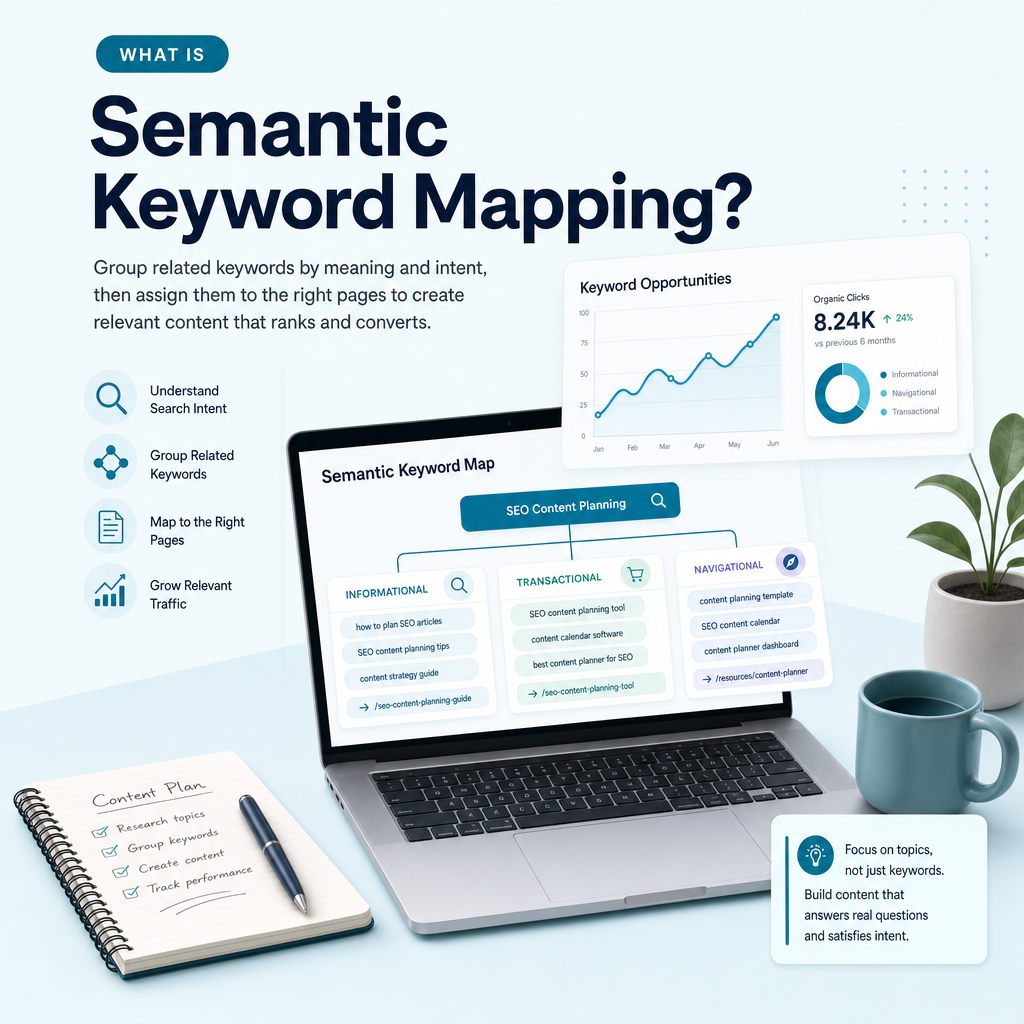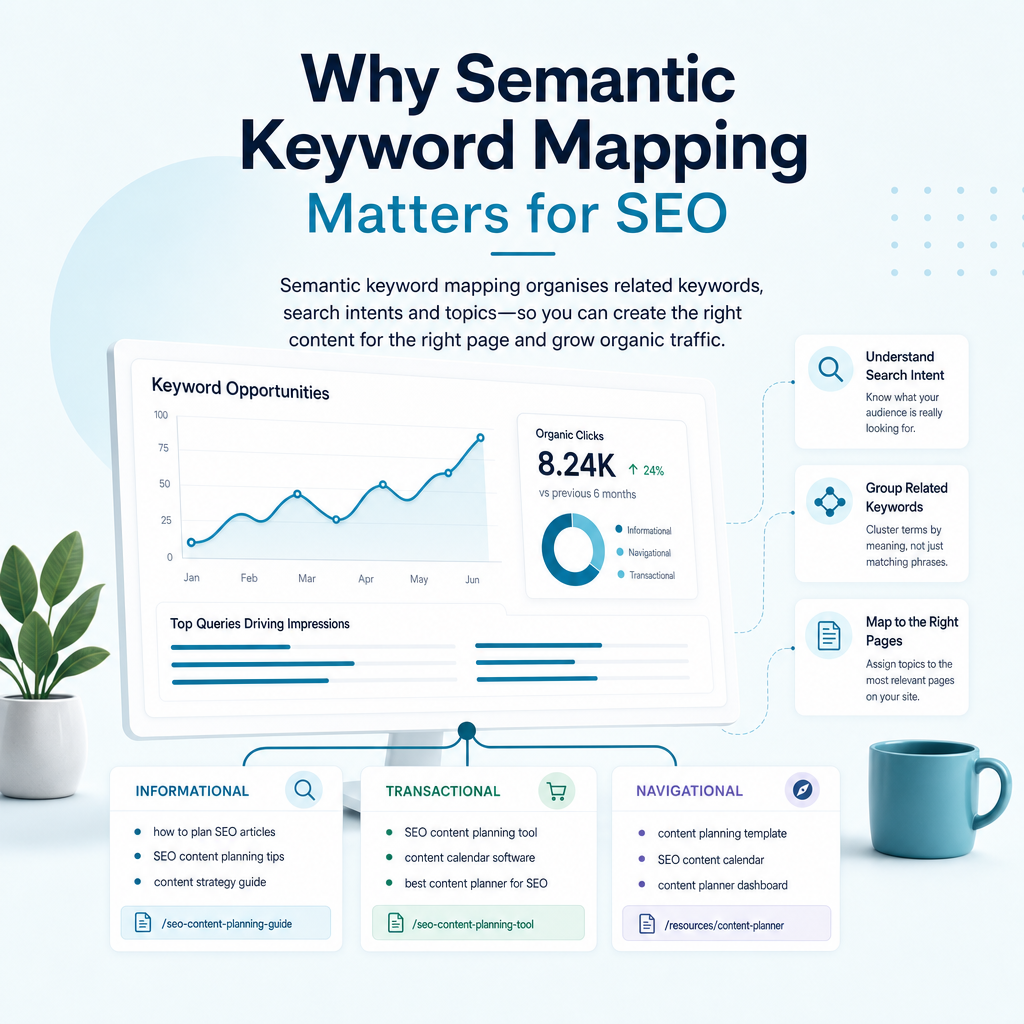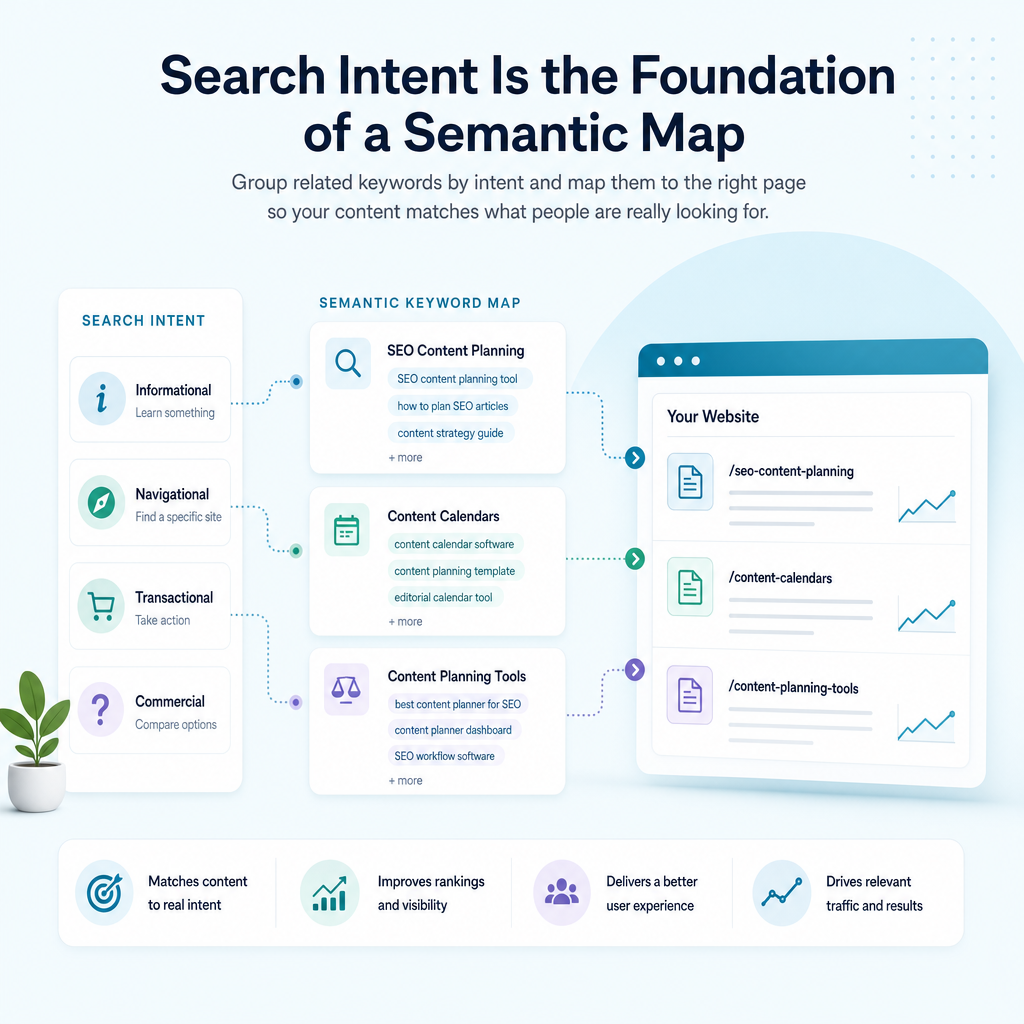
You may already publish blog content, yet still struggle to rank consistently. The problem is often not a lack of effort or writing quality. It is that individual pages are created without a clear relationship to one another, leaving search engines and readers to work out what your website is truly known for.
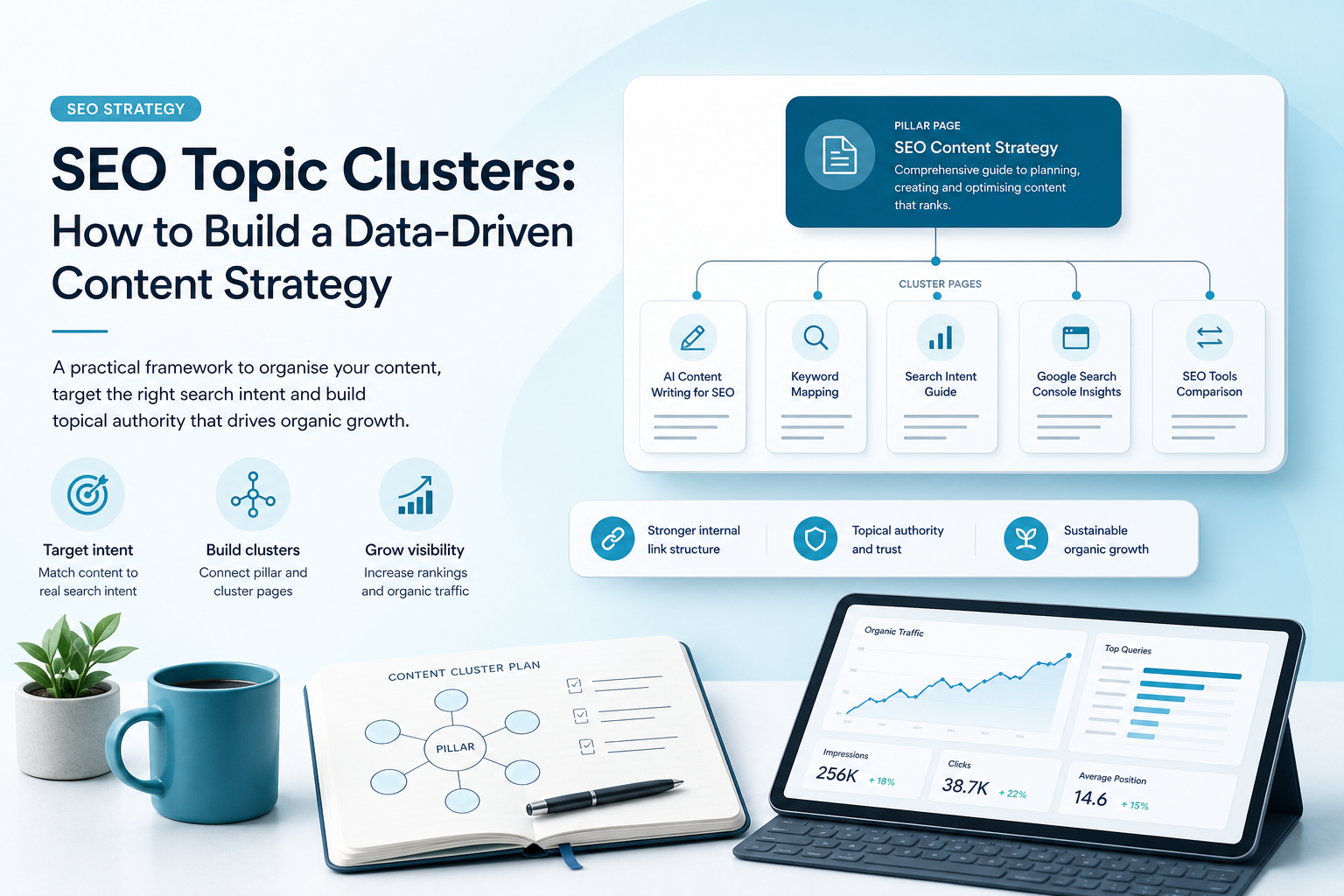
An SEO topic cluster gives your content a practical structure. It connects one broad pillar page with focused supporting pages, links those pages together and maps each article to a specific search intent. For small businesses, this approach can turn scattered publishing into a focused plan for building organic visibility and topical authority.
This guide explains what SEO topic clusters are, how to create them, how to choose realistic opportunities and how an AI SEO content platform such as Ammpli can reduce the research and planning required.
What is an SEO topic cluster?
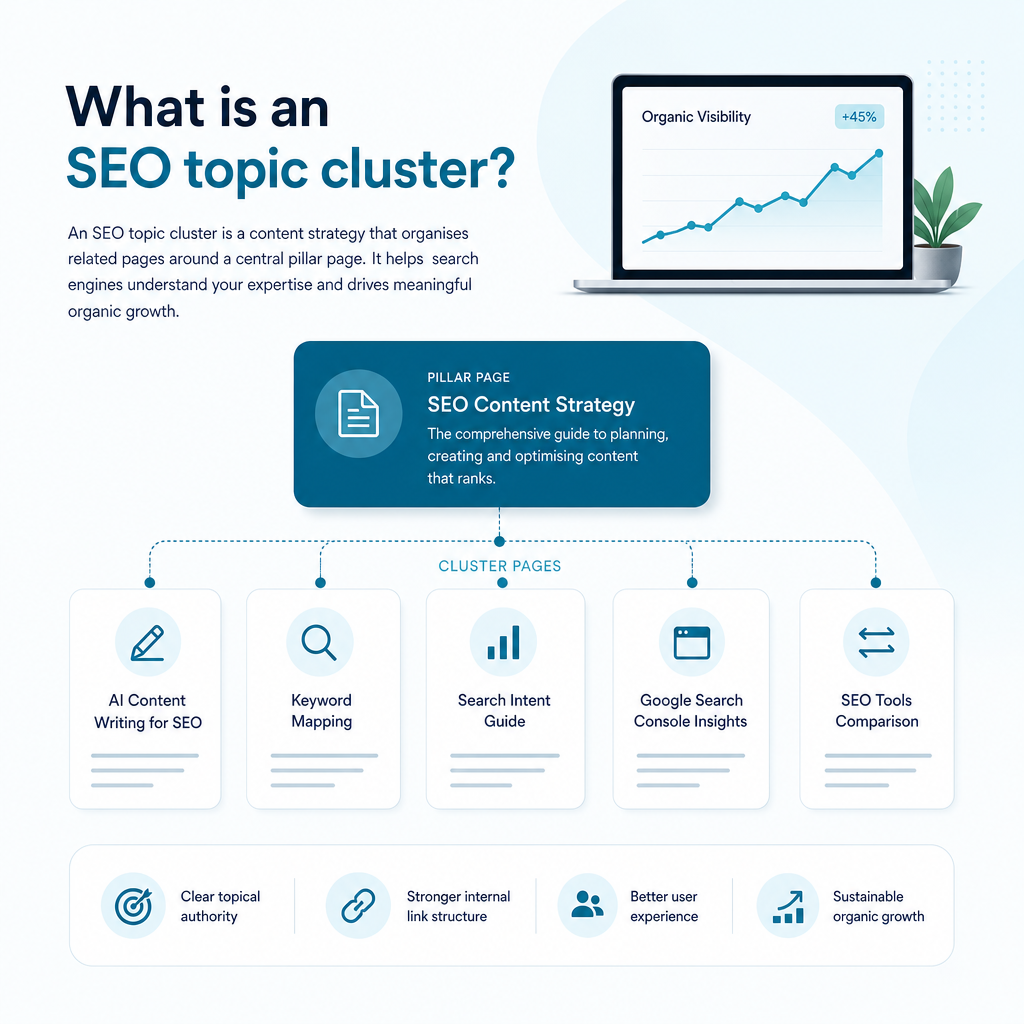
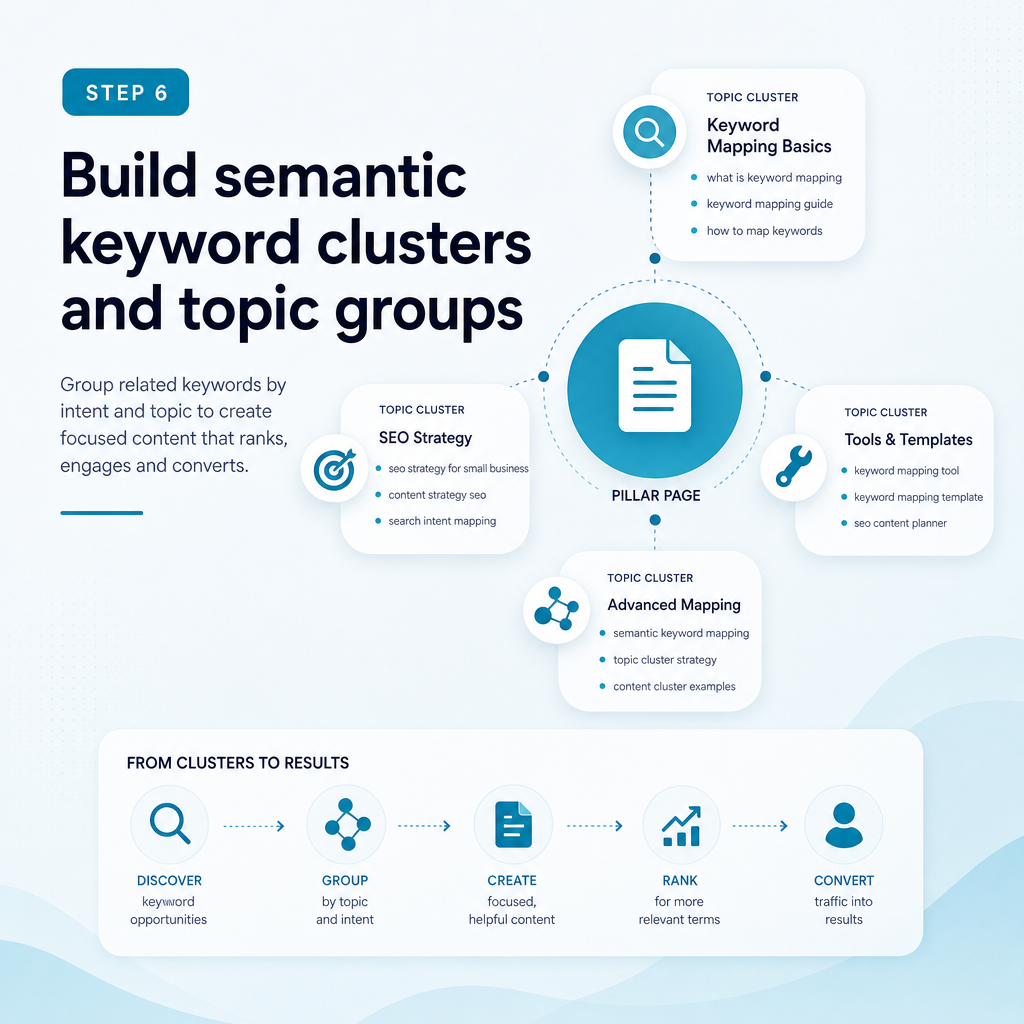
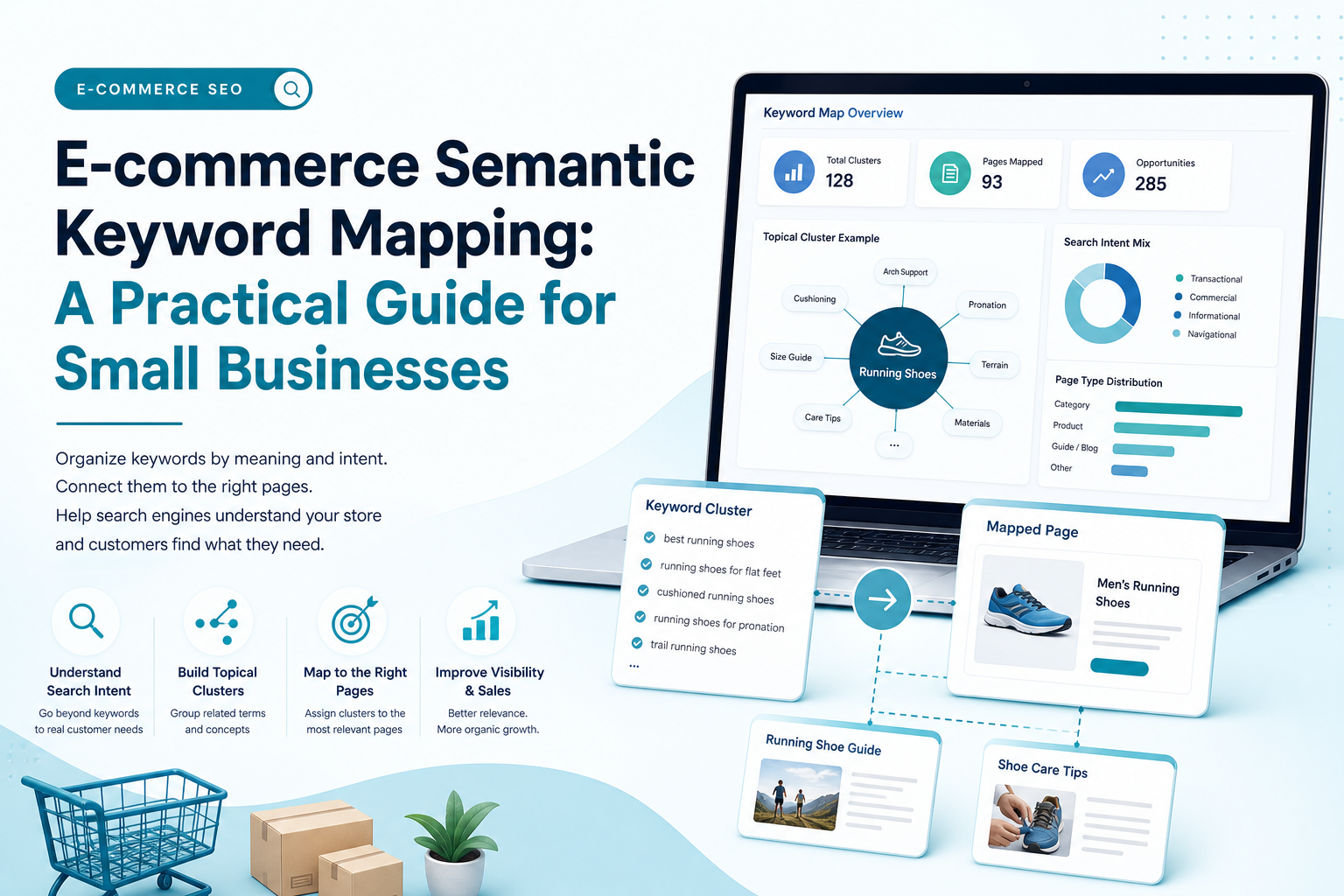
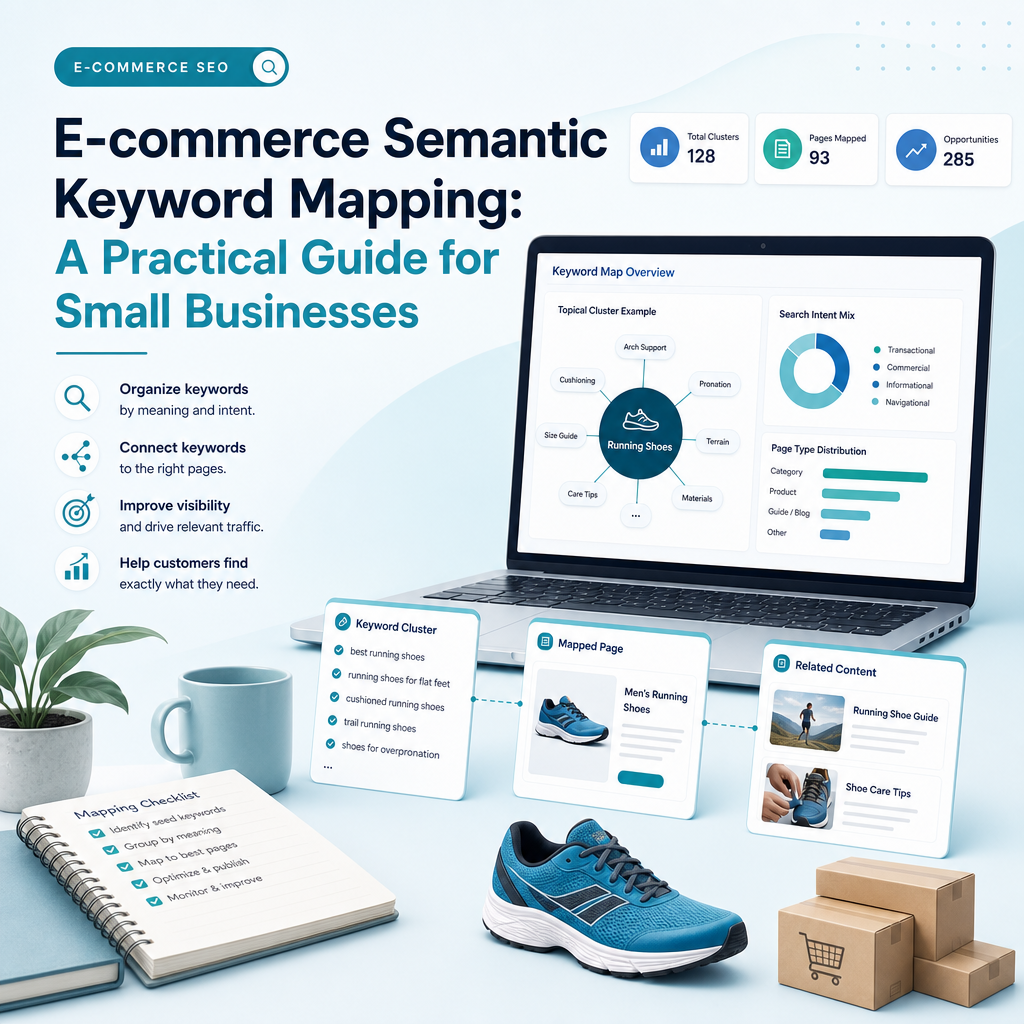
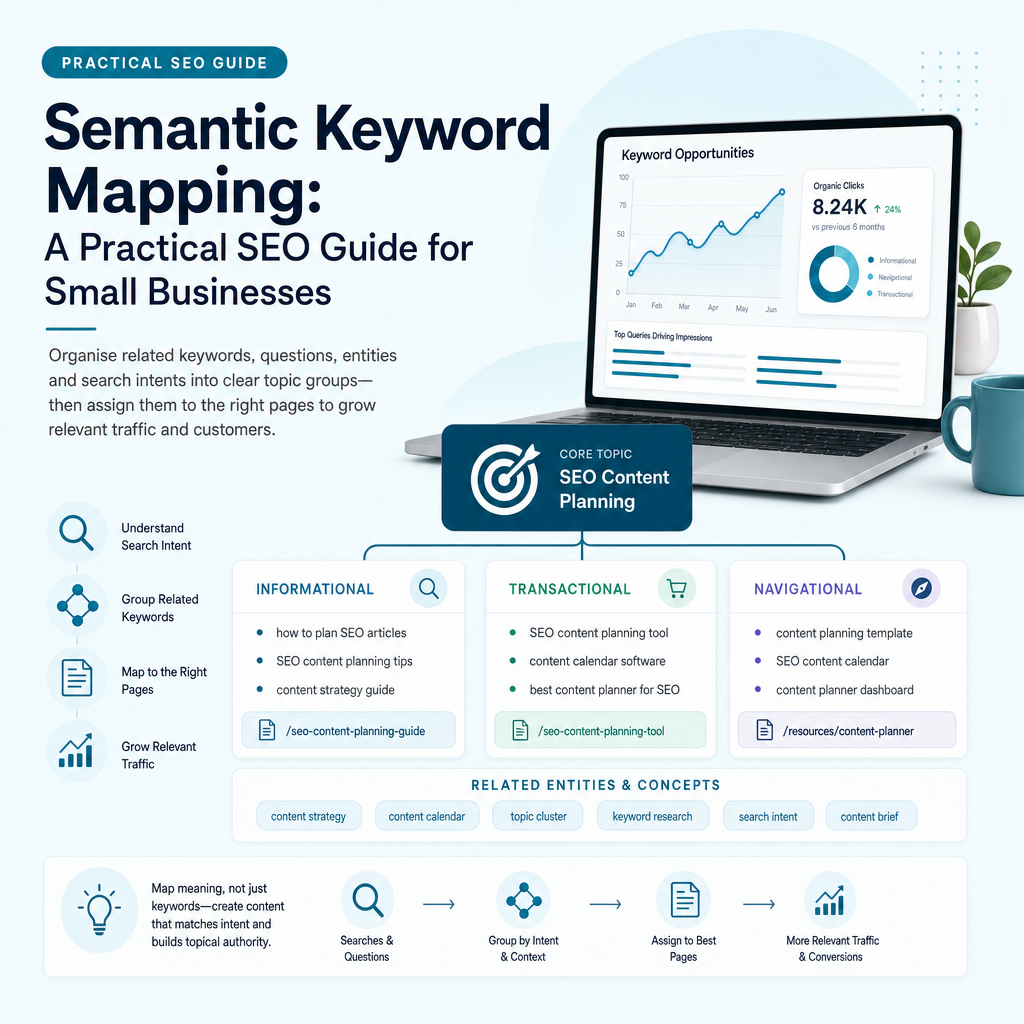
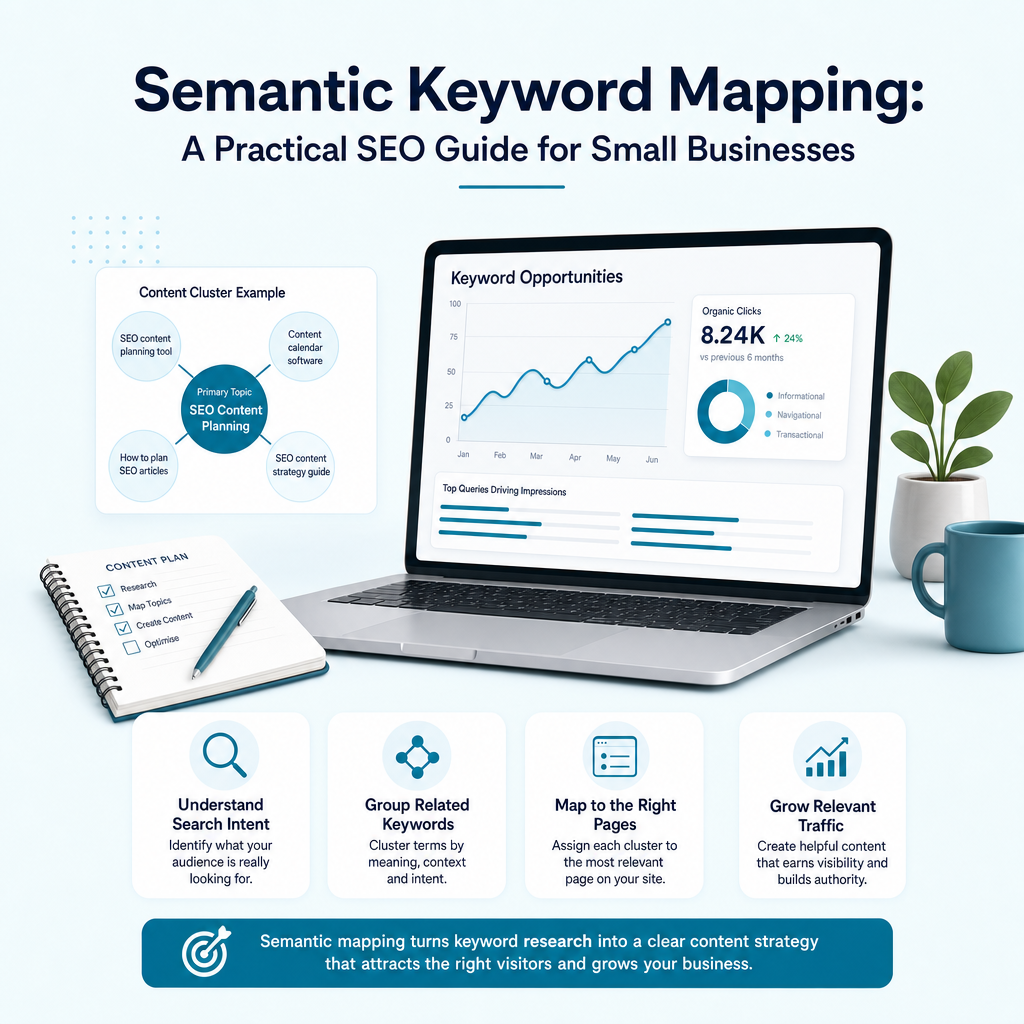
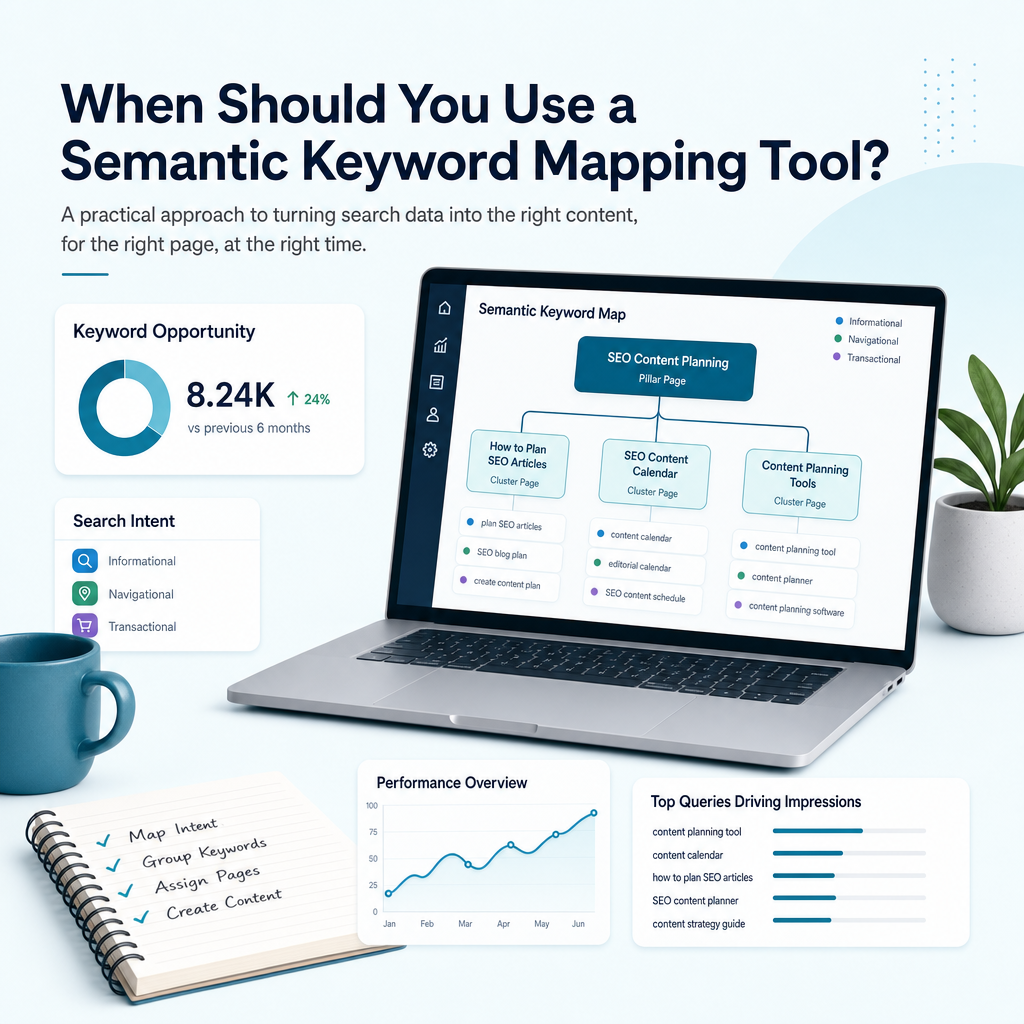
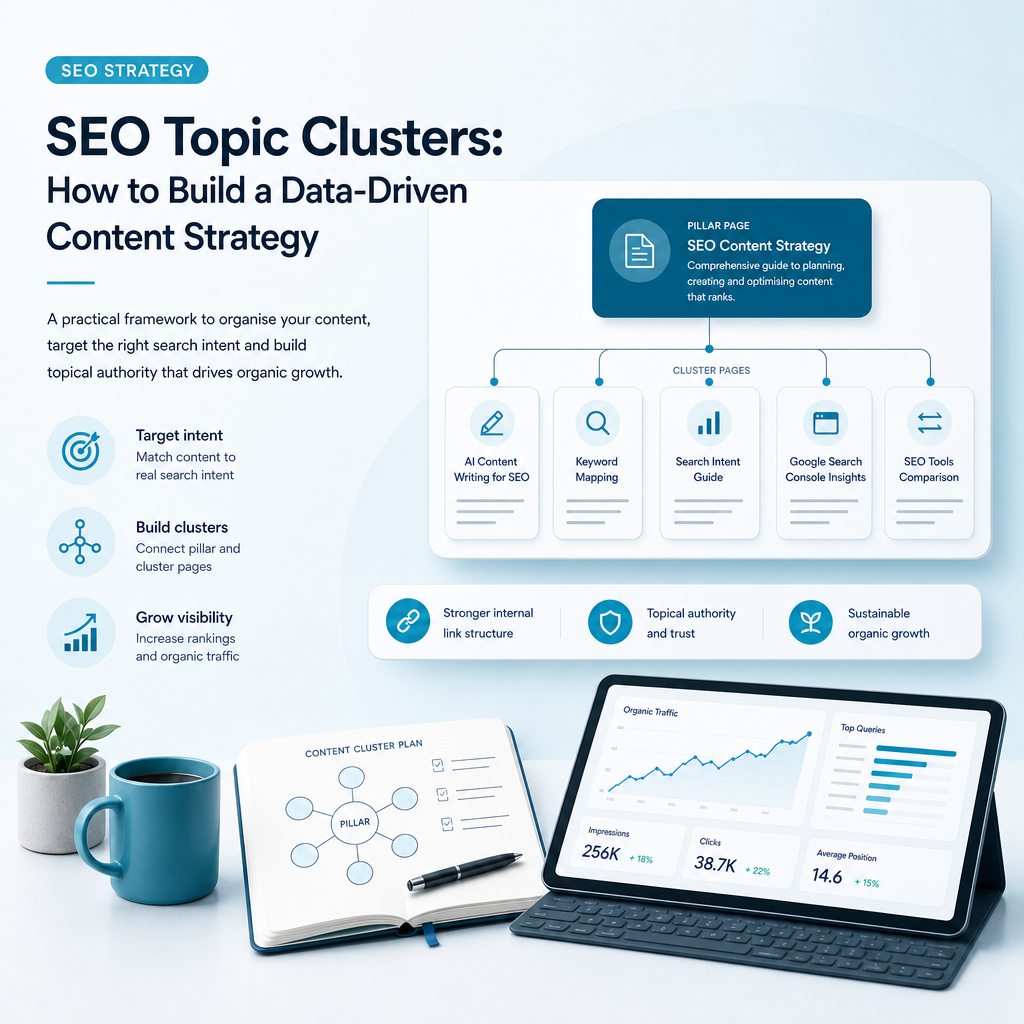
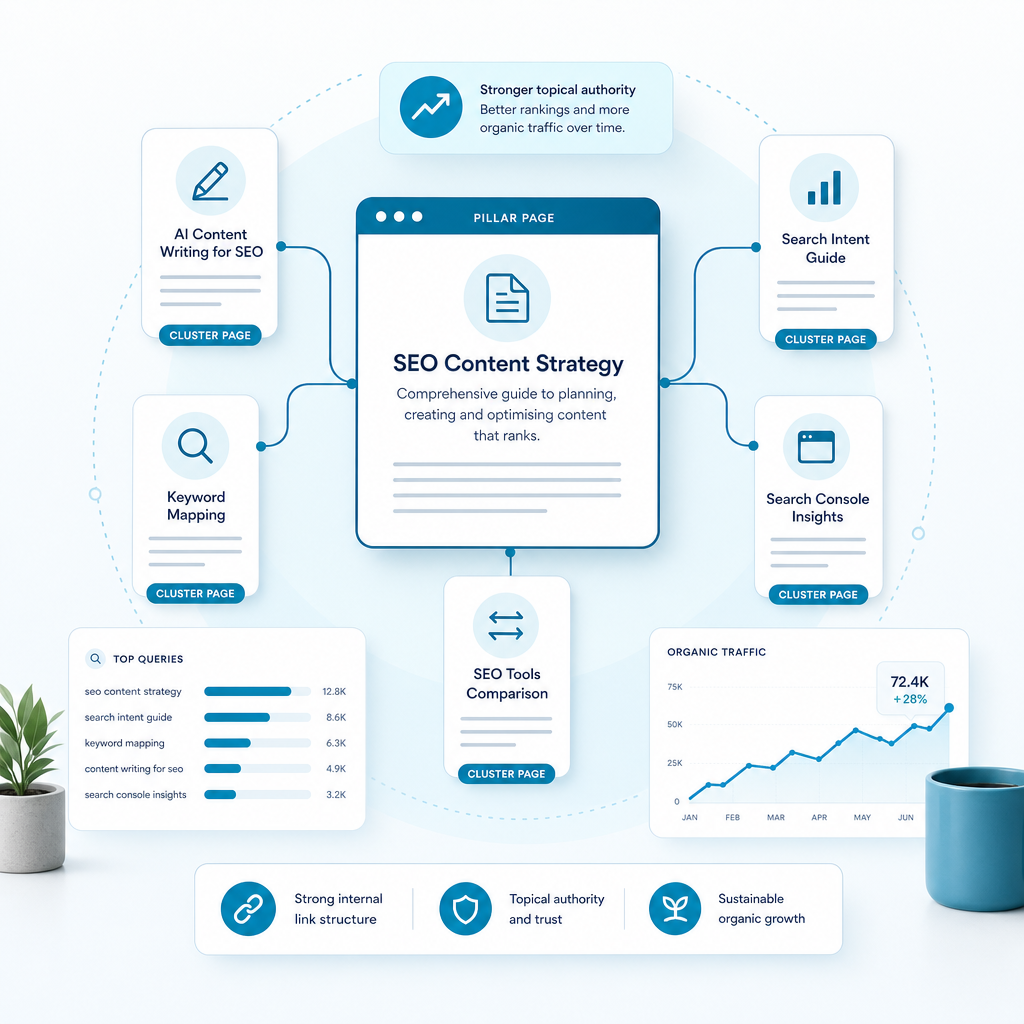
An SEO topic cluster is a group of related pages organised around one central subject. The central page is usually called a pillar page, while the supporting articles are known as cluster pages. Internal links connect the pages so users and search engines can understand how the information fits together.
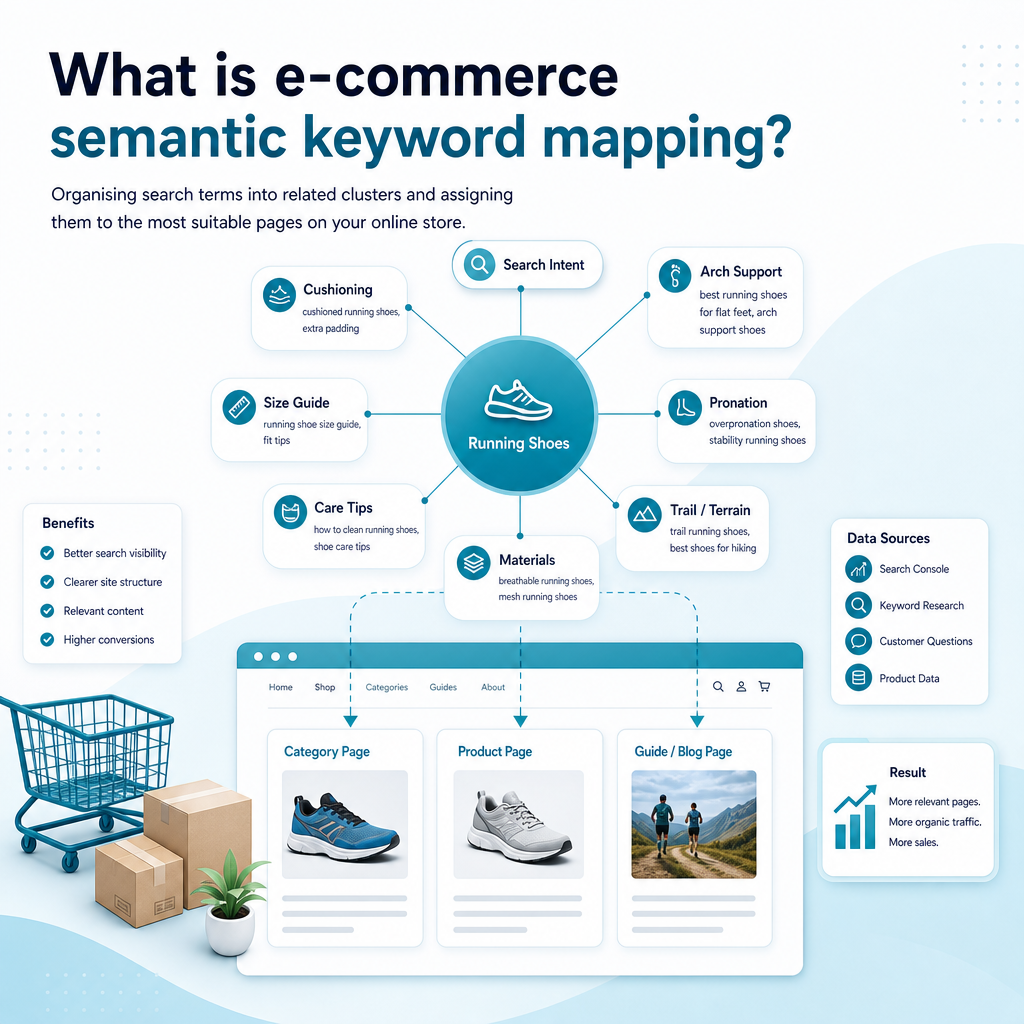
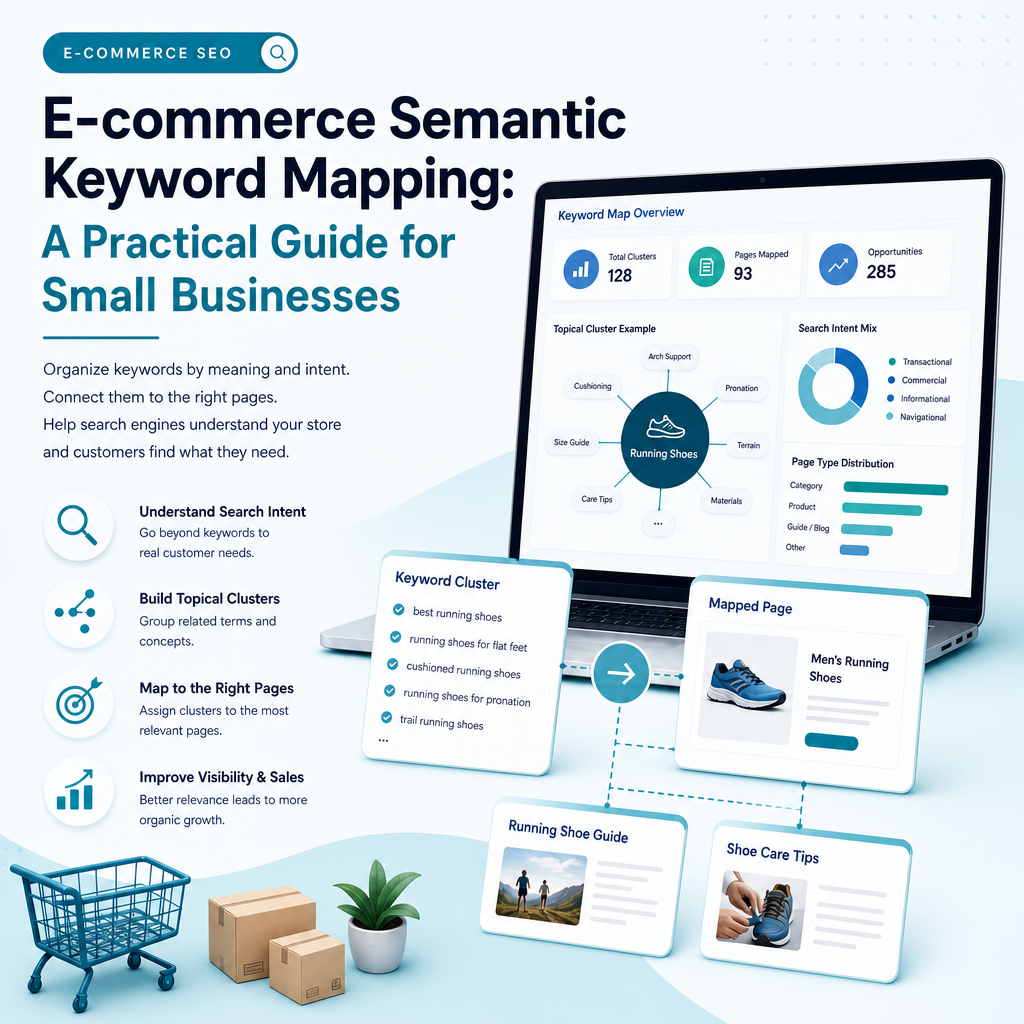
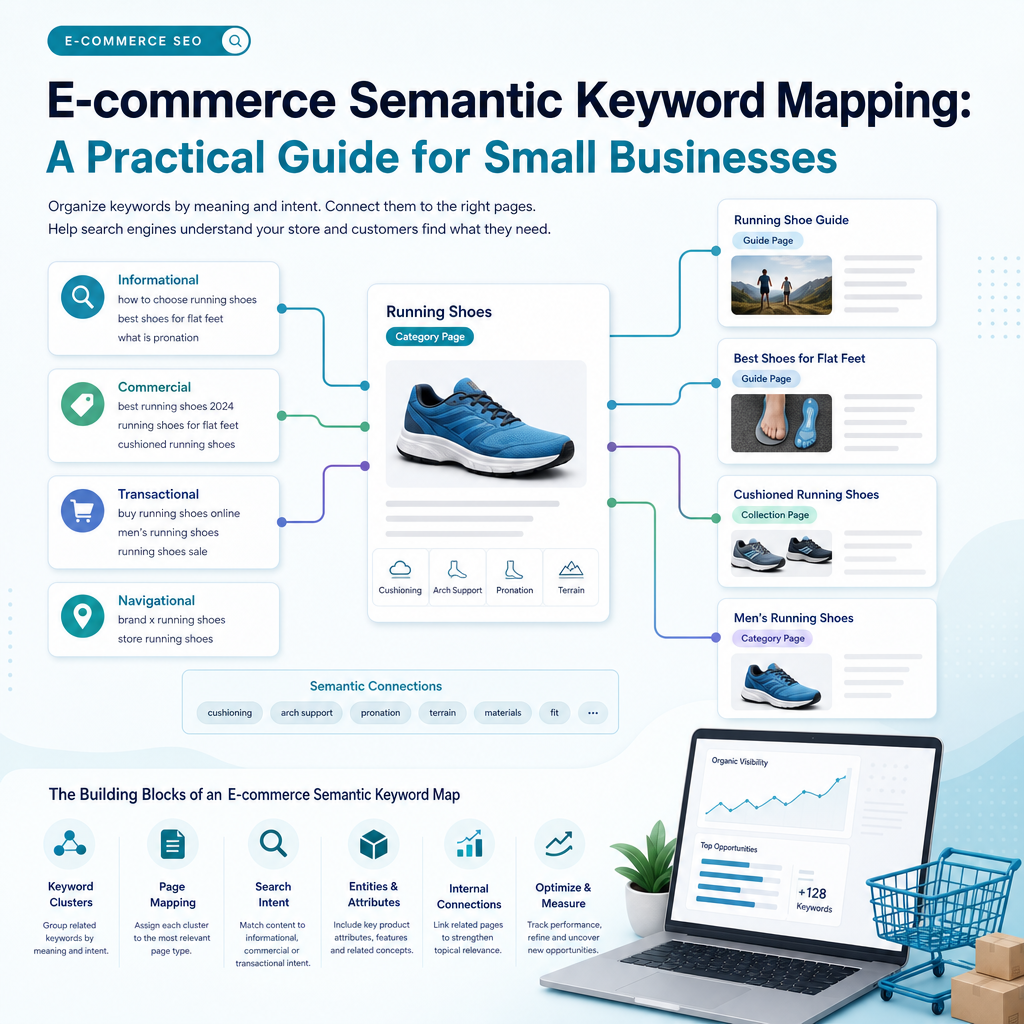
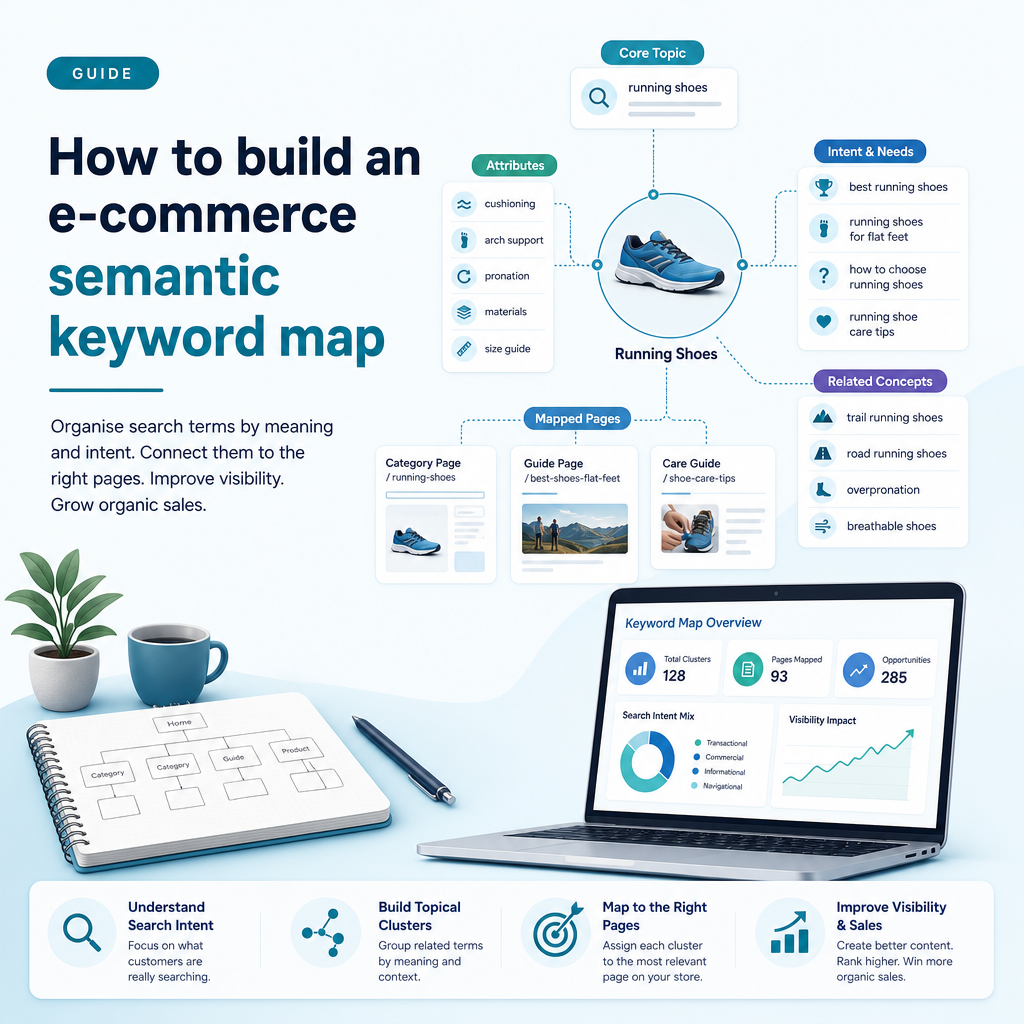
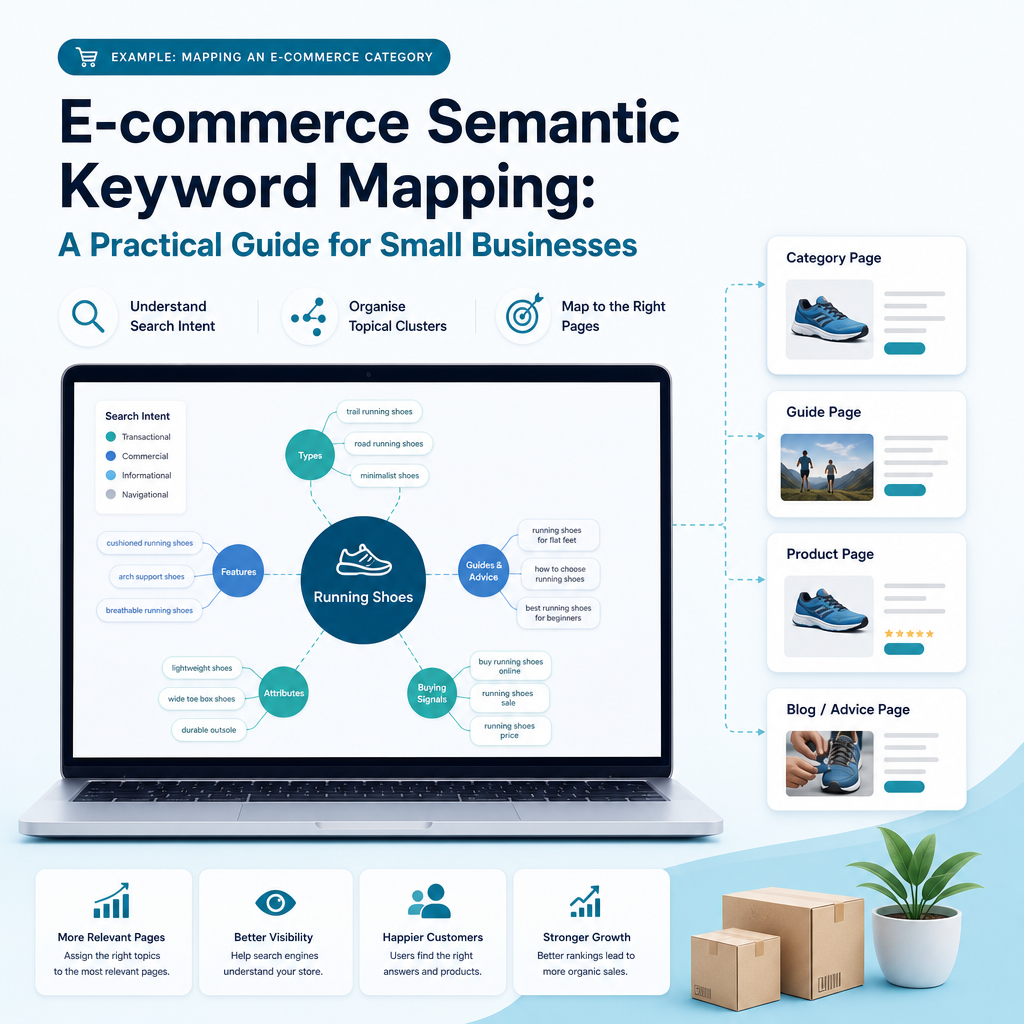
The pillar page provides a broad overview. Each cluster page explores one specific question, use case, comparison or subtopic in greater detail. For example, a technology business could create a pillar page about SEO content software, supported by pages about AI content writing for SEO, semantic keyword mapping, Google Search Console content strategy and local SEO content creation.
The model is also called the hub-and-spoke approach. The hub is the central page, and the spokes are the supporting pages that expand coverage around it.
How a topic cluster is structured
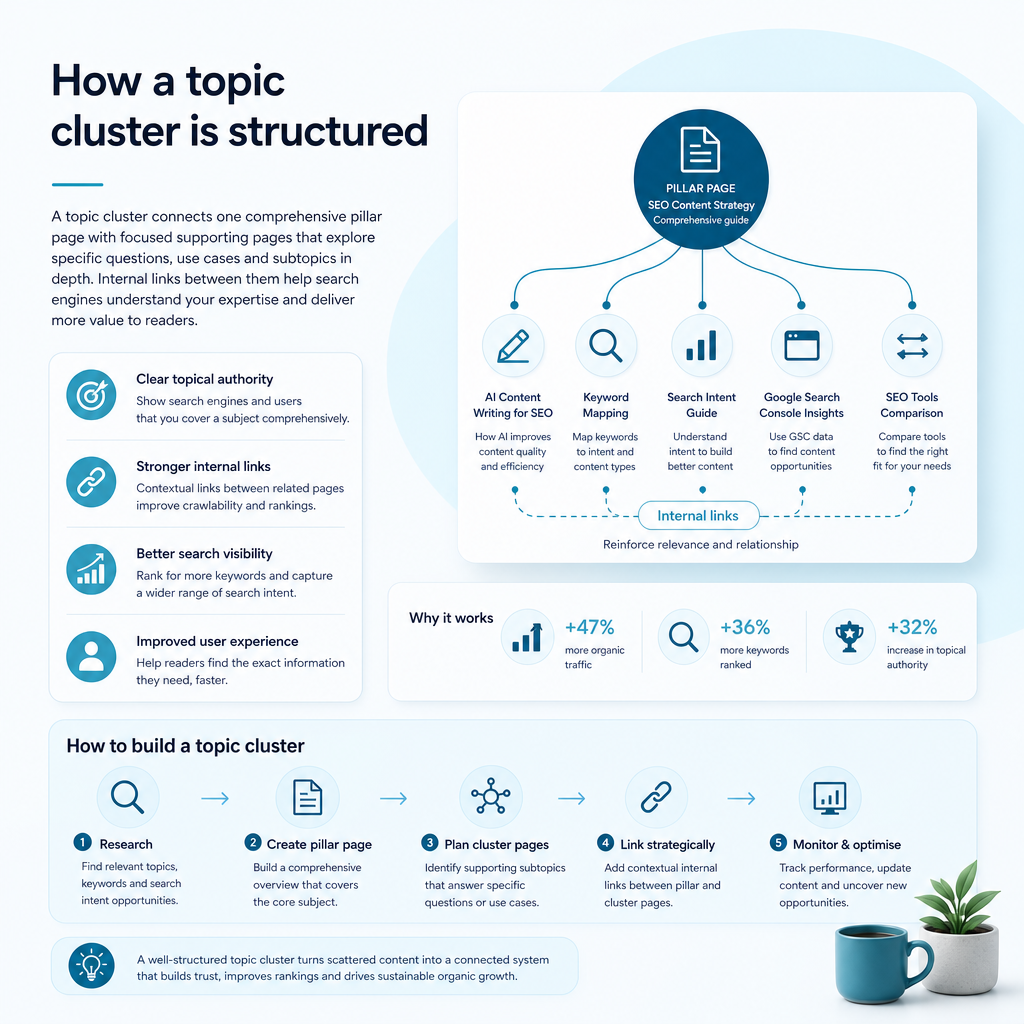
A useful cluster has three core components: a clear pillar topic, focused supporting content and intentional internal linking. Each part has a different job, but the value comes from how they work together.
| Component | Purpose | Example |
|---|---|---|
| Pillar page | Explains the main topic broadly and links to relevant supporting pages. | SEO content strategy for small businesses |
| Cluster page | Answers a focused question or addresses a specific search intent. | How to use Google Search Console for content planning |
| Internal links | Connect pages and clarify their relationship. | Descriptive links between the pillar and supporting articles |
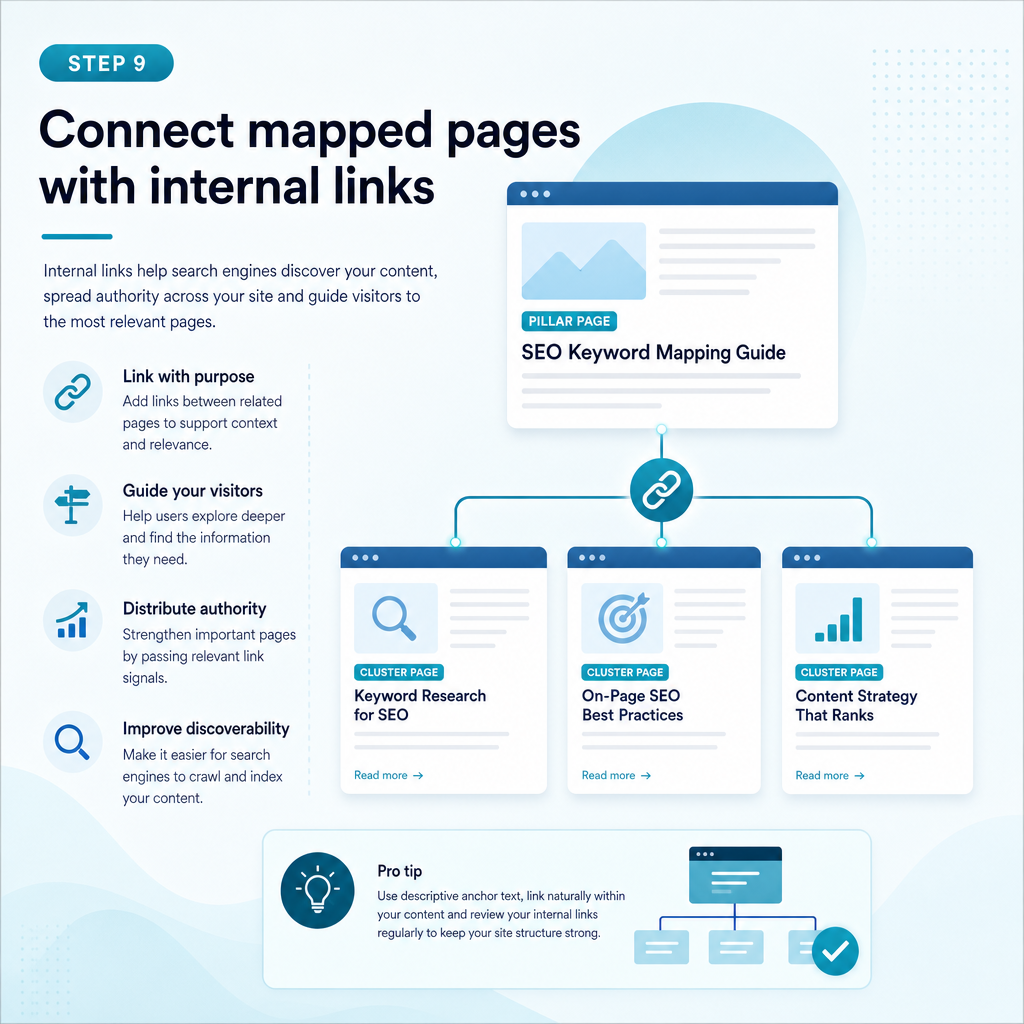
Every cluster page should link back to the pillar page where it is relevant. The pillar should link to its main supporting pages, and related cluster pages can link to one another when the connection helps the reader. Links should be natural and use descriptive wording rather than repetitive, forced phrases.
Why SEO topic clusters matter for small businesses
Small businesses rarely have unlimited time, budget or content resources. Publishing random articles can consume those resources without creating a clear path towards stronger visibility. Topic clusters help you prioritise content that supports your services and addresses the questions your prospective customers actually ask.
Search engines increasingly interpret meaning, context and relationships between subjects. A connected group of useful pages gives clearer evidence that your website covers a topic in depth. It can also help readers move from an educational question to a commercial decision without returning to the search results.
Topic clusters can support:
- Stronger topical authority across relevant subjects.
- Better internal linking and site structure.
- More visibility for broad and long-tail searches.
- Clearer content planning and fewer overlapping articles.
- More relevant journeys from informational content to enquiries.
- Improved opportunities to appear in traditional and AI-assisted search experiences.
How to choose the right topic cluster
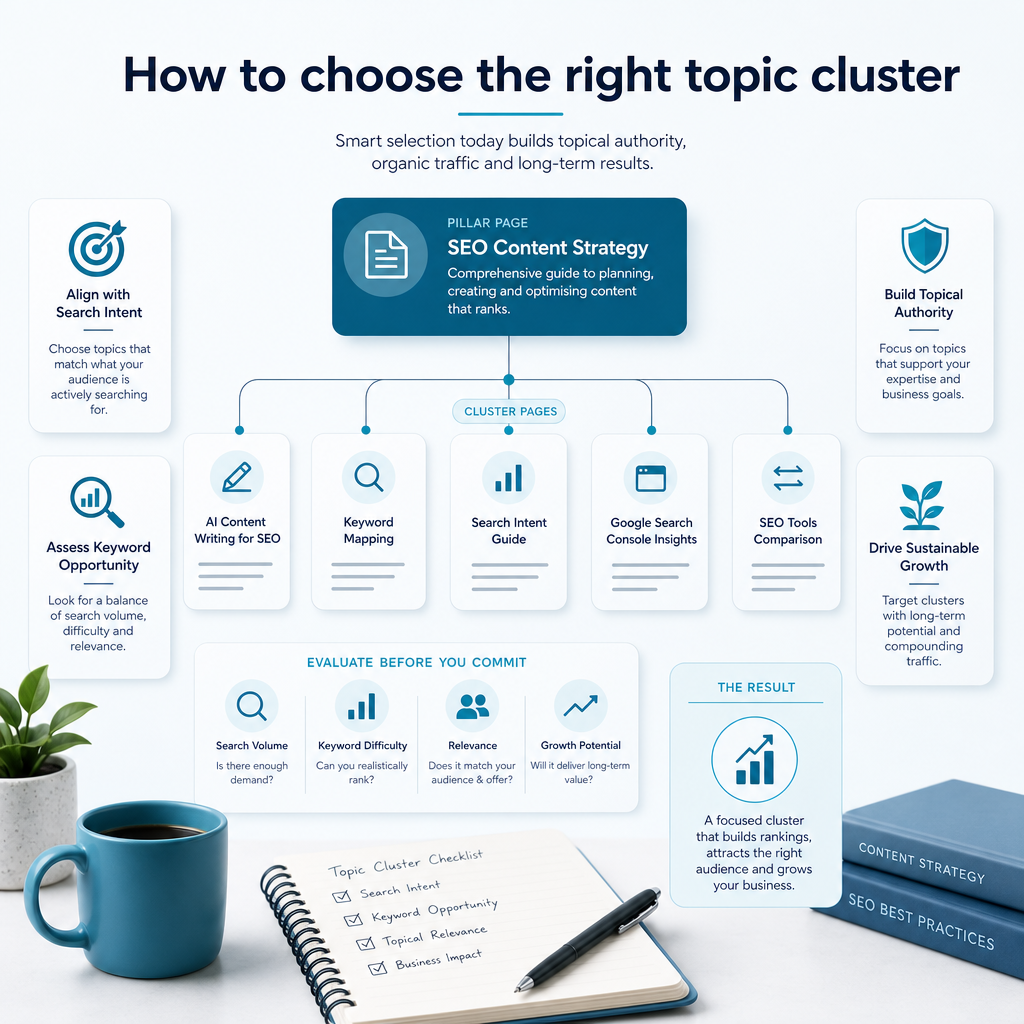
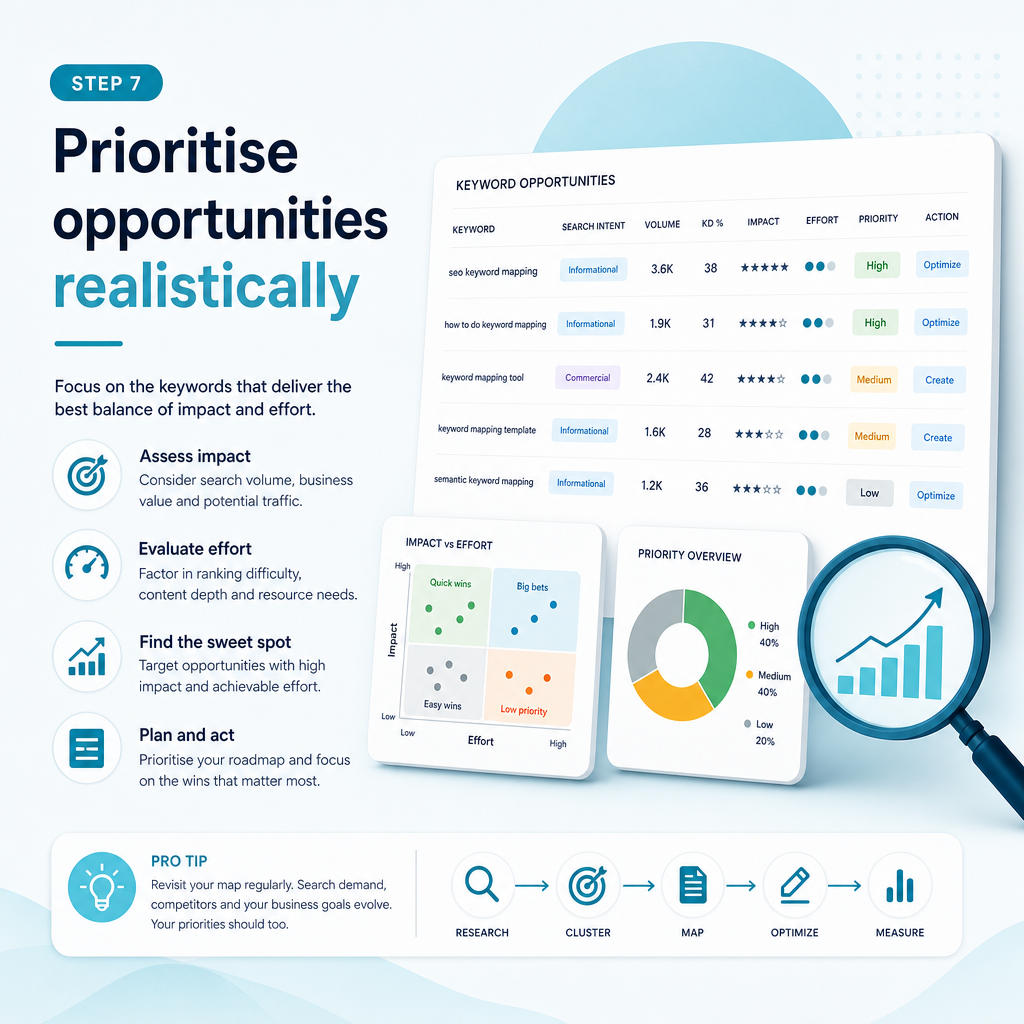
The strongest cluster is not always the topic with the highest search volume. A broad keyword may attract attention but still be difficult to rank for or poorly aligned with your services. A more specific topic with clear business relevance can attract fewer searches while producing more qualified visitors.
Start with the problems your business solves. For Ammpli, relevant cluster themes could include SEO for small businesses, AI SEO tools, SEO content planning, keyword opportunity discovery and topical authority software. These subjects connect directly to the needs of founders and marketing managers who want better visibility without the cost of a traditional agency.
Use the following checks before committing to a cluster:
- Does the topic relate directly to your services and ideal customers?
- Can you identify several meaningful subtopics?
- Do the subtopics represent different search intents?
- Does your website already receive impressions or clicks around the subject?
- Are there content gaps competitors cover that your website does not?
- Can the cluster support useful commercial next steps?
Use Google Search Console to find realistic opportunities
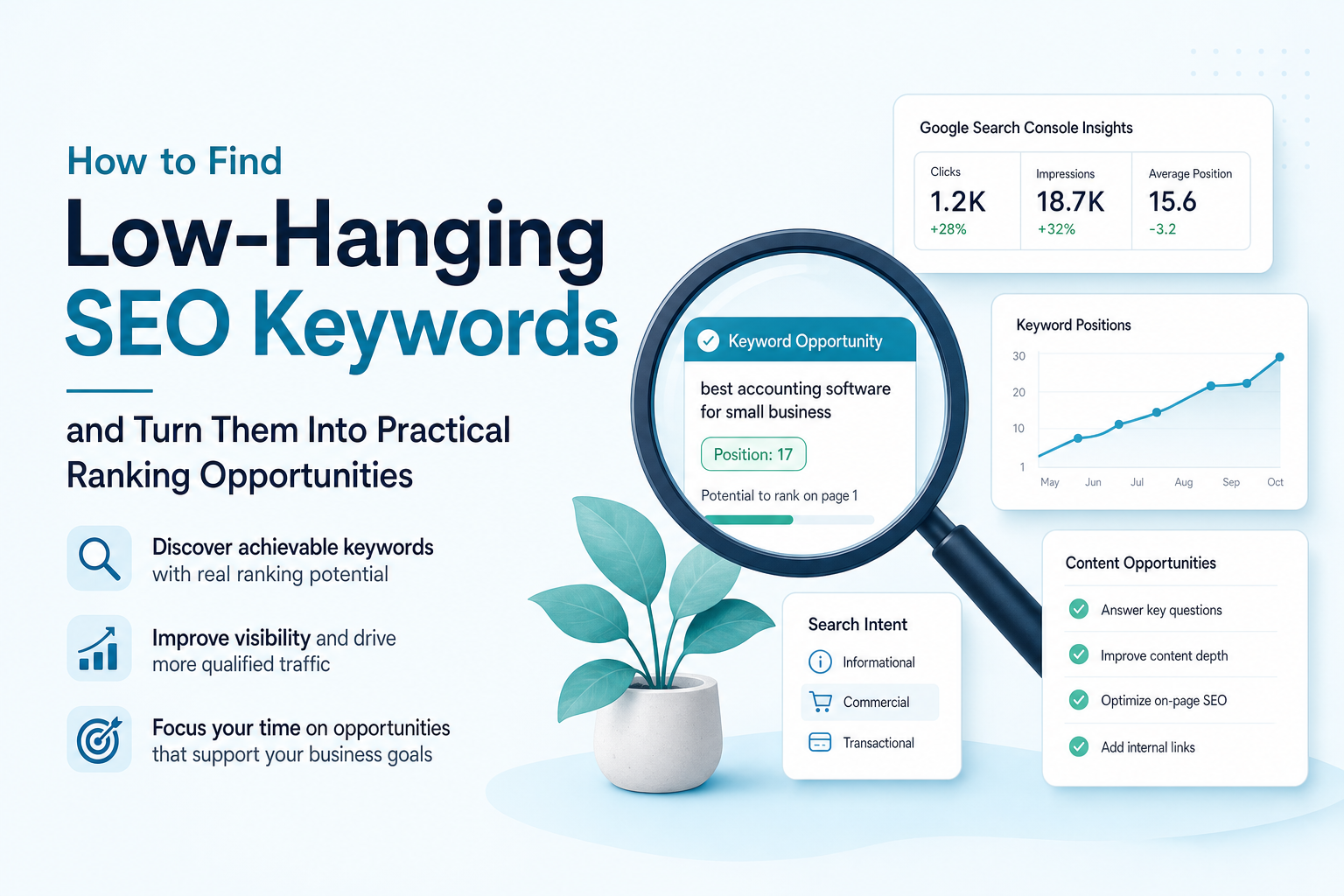
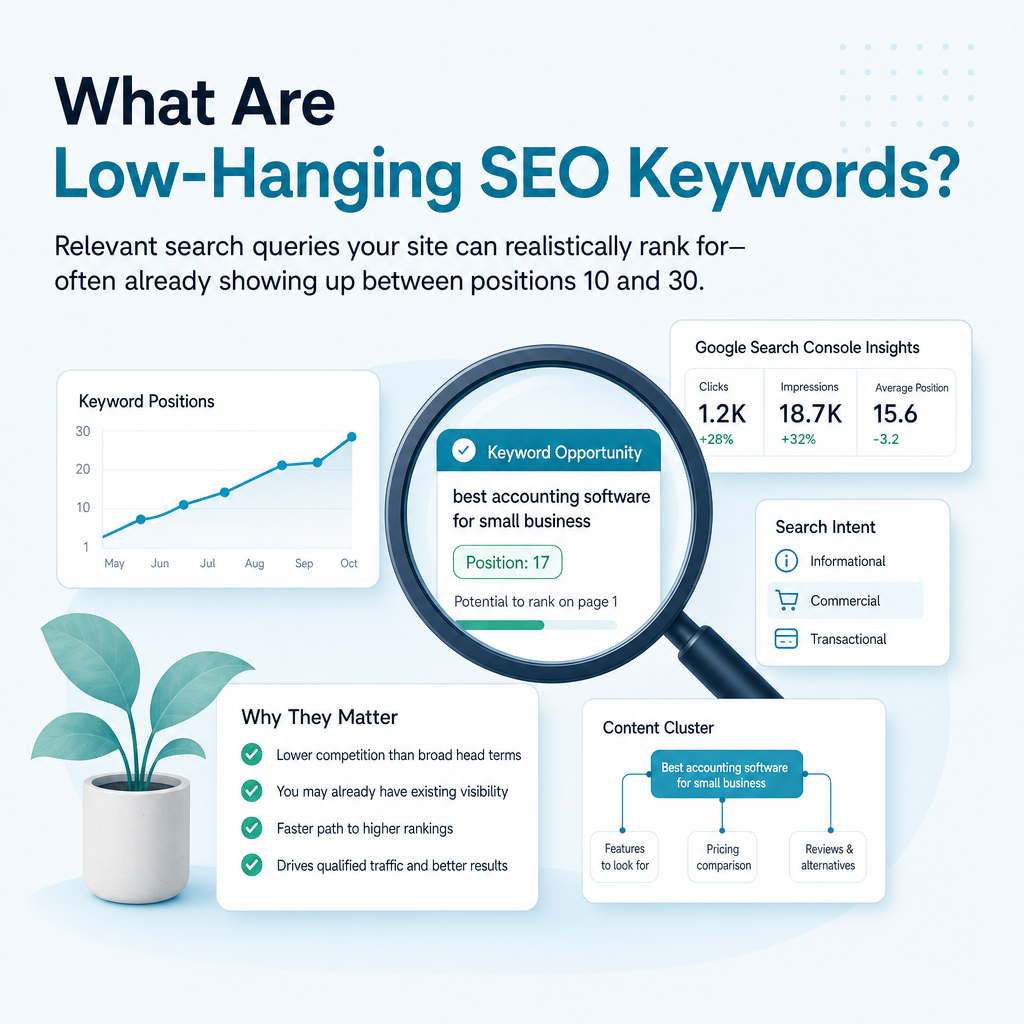
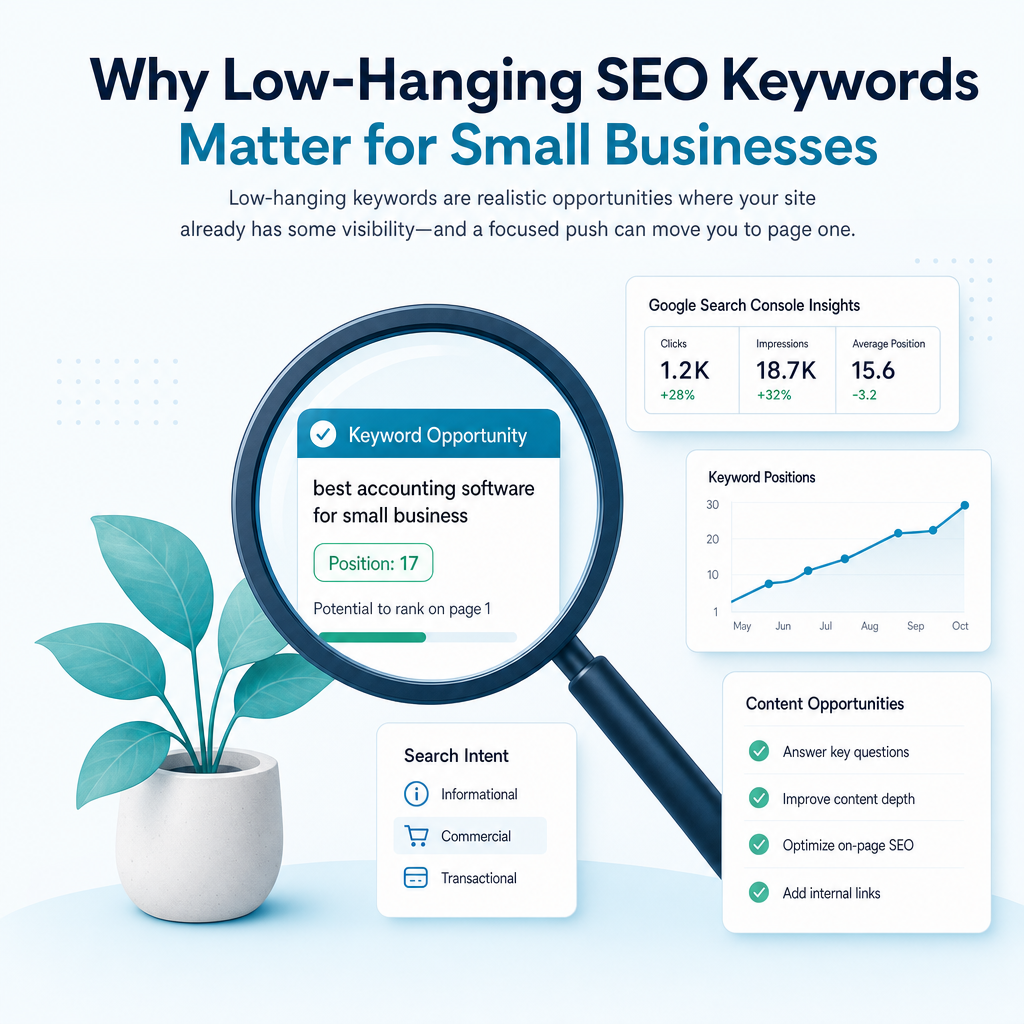
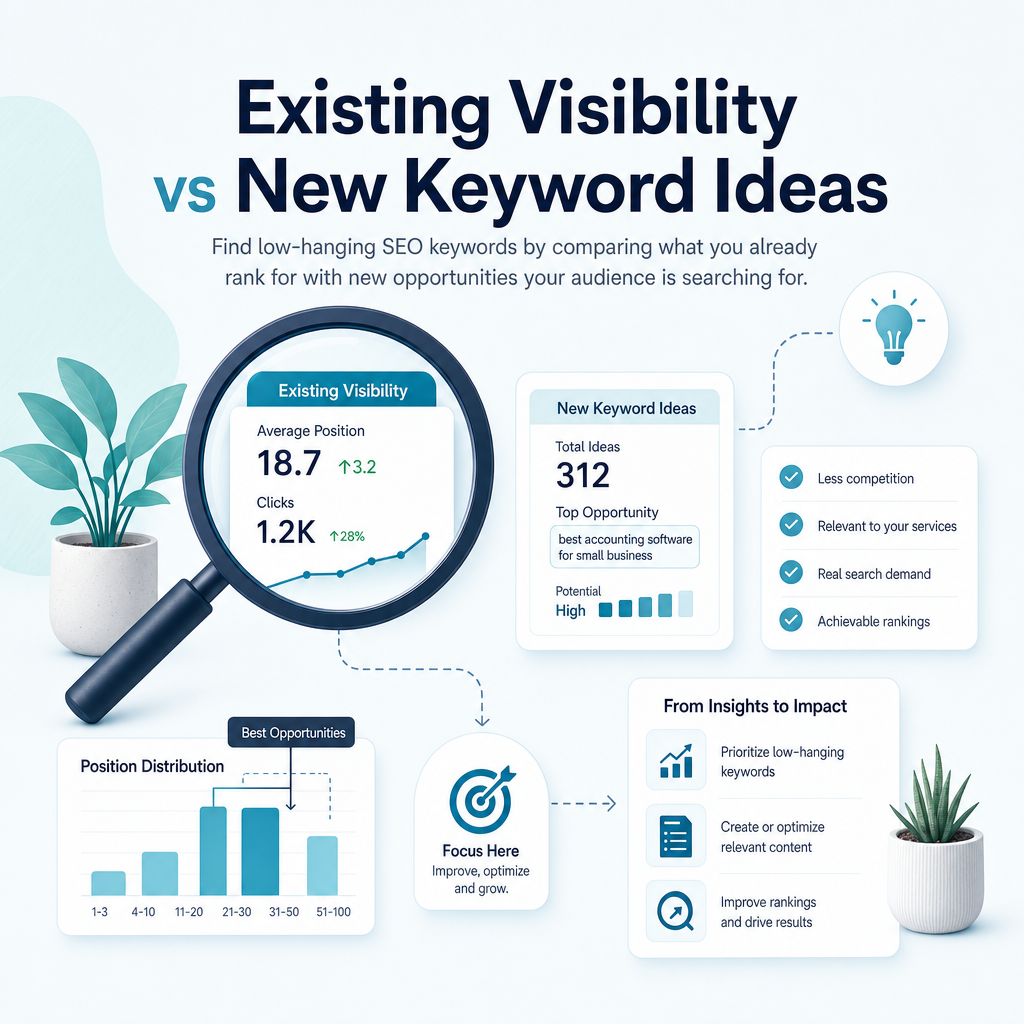
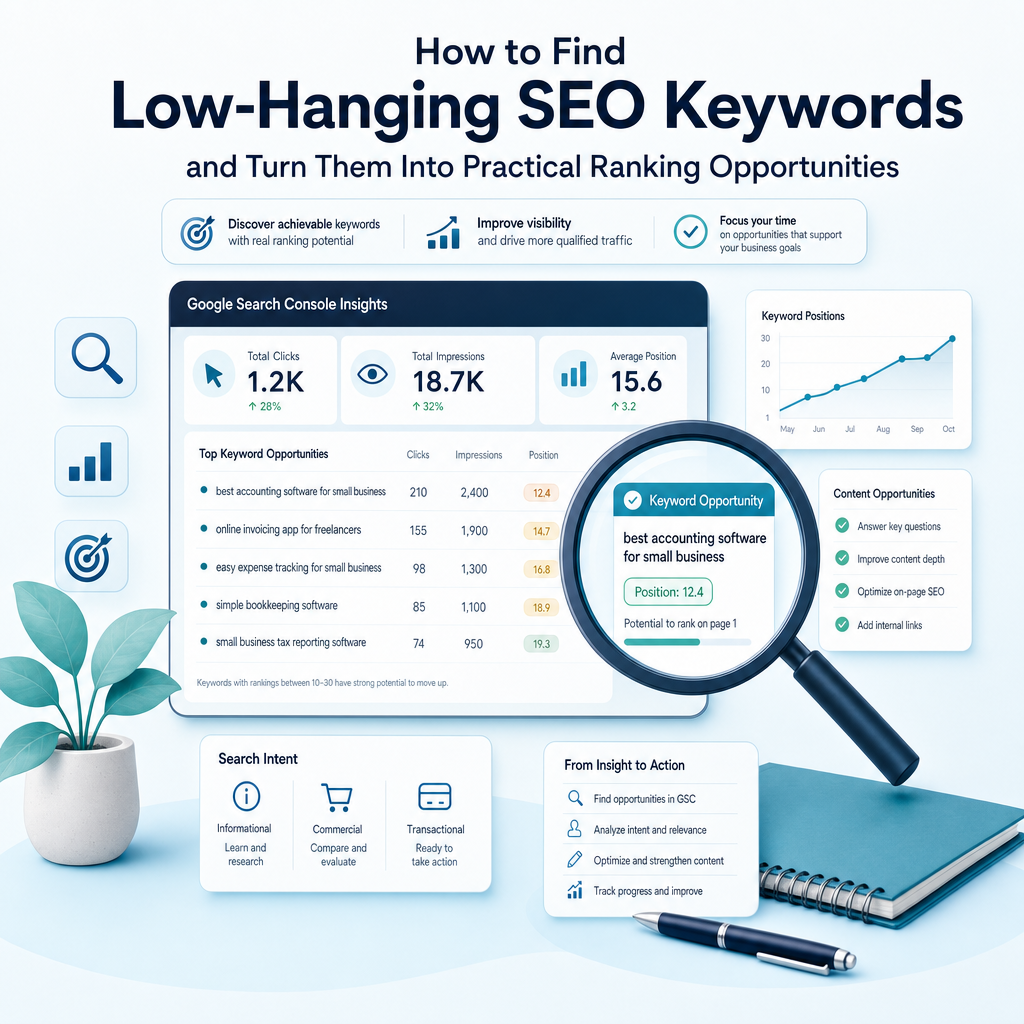
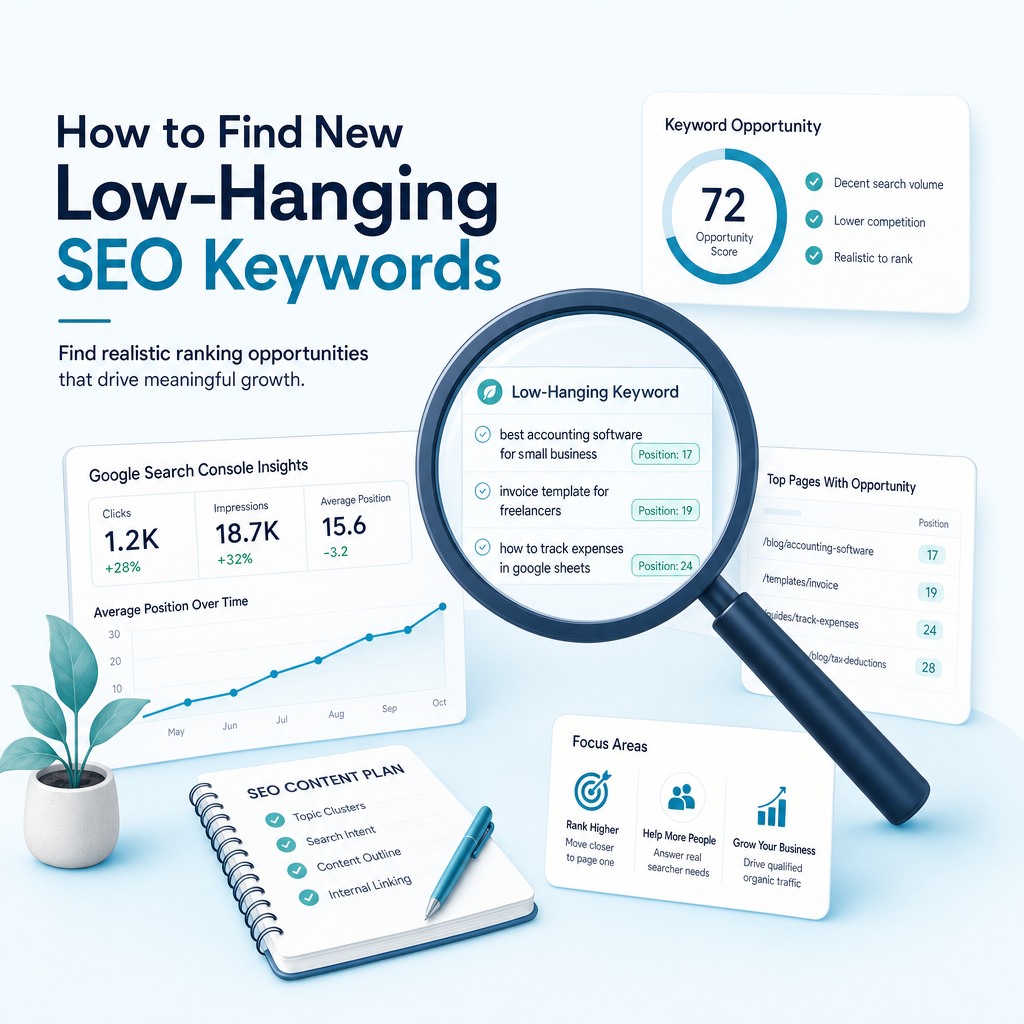
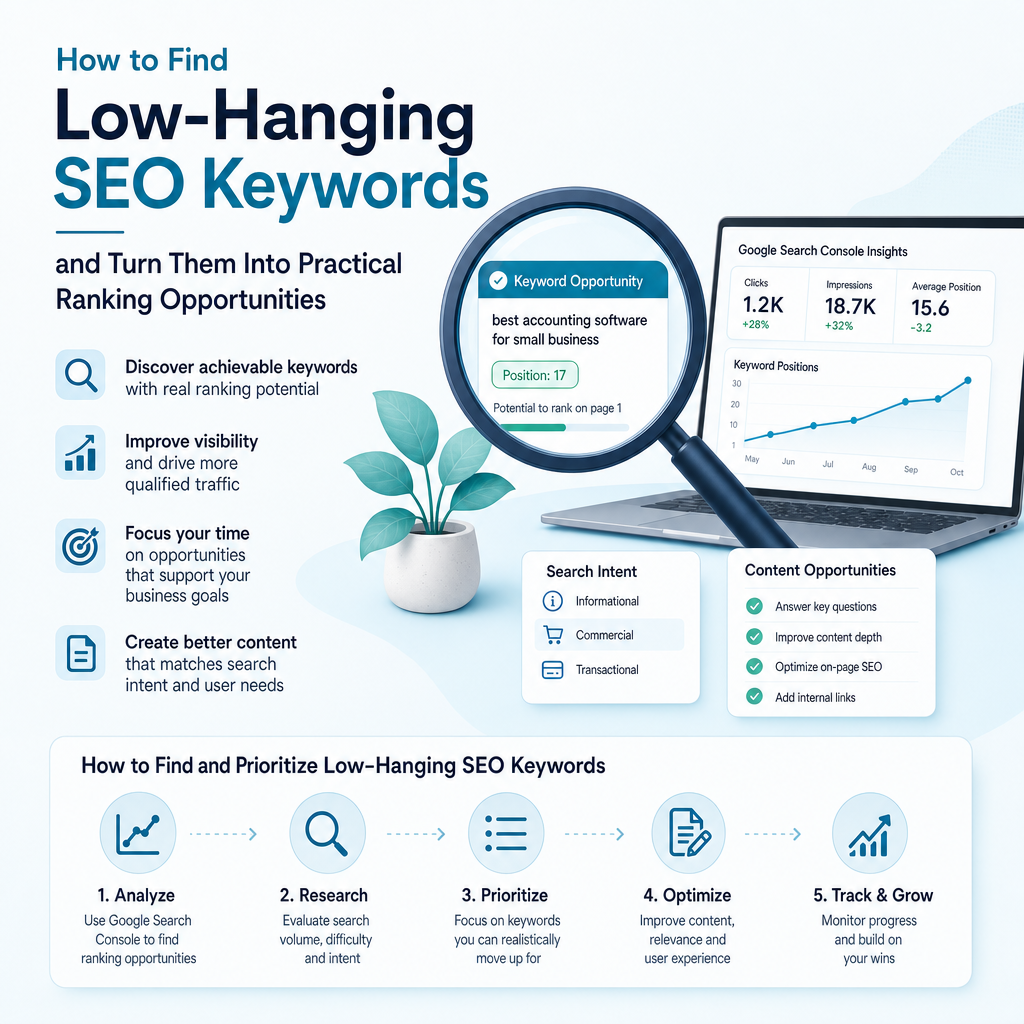
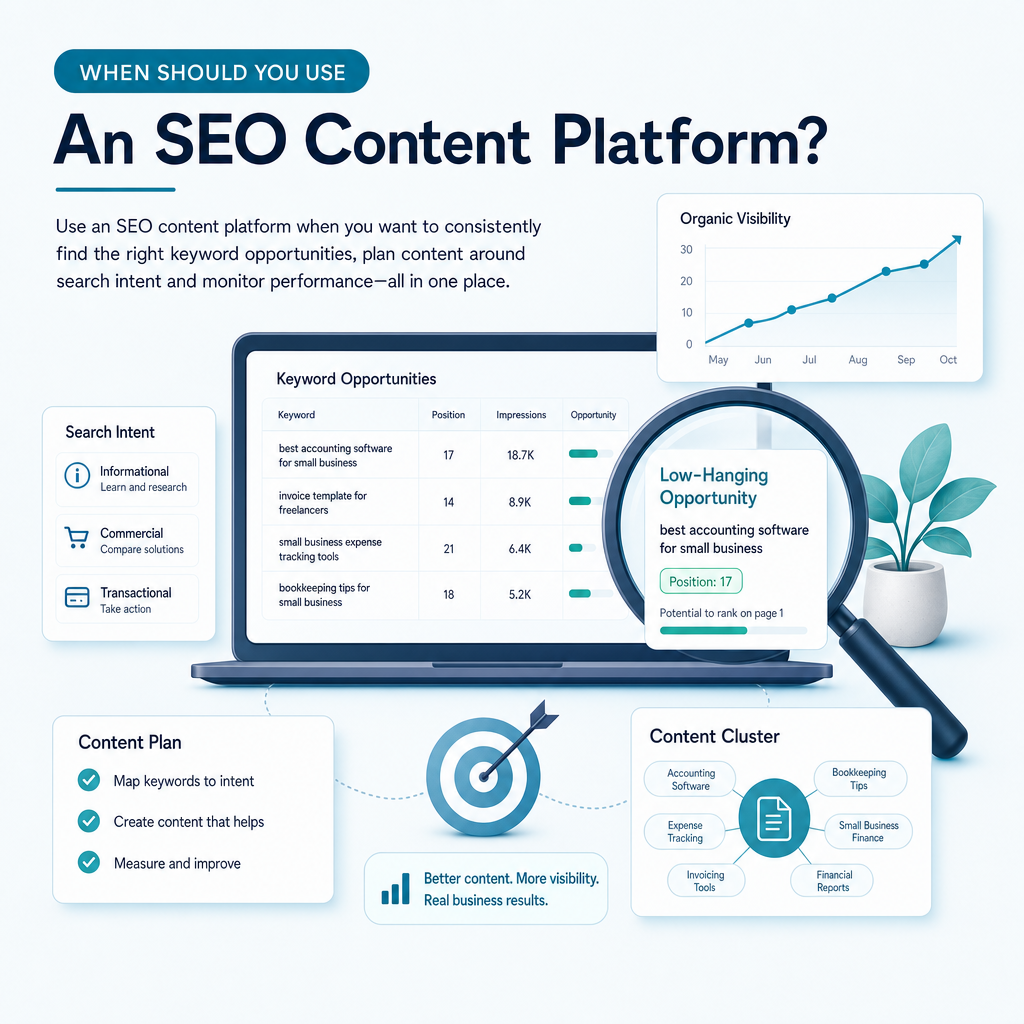
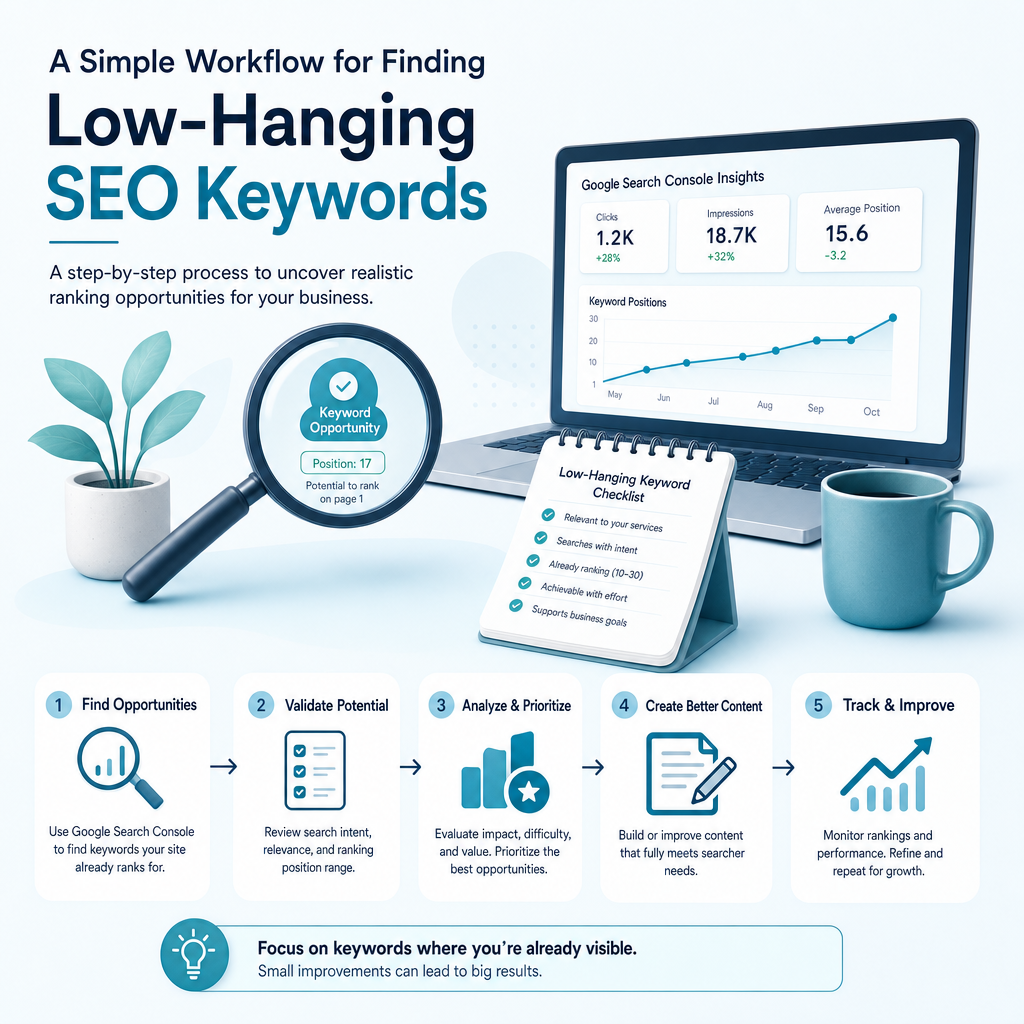
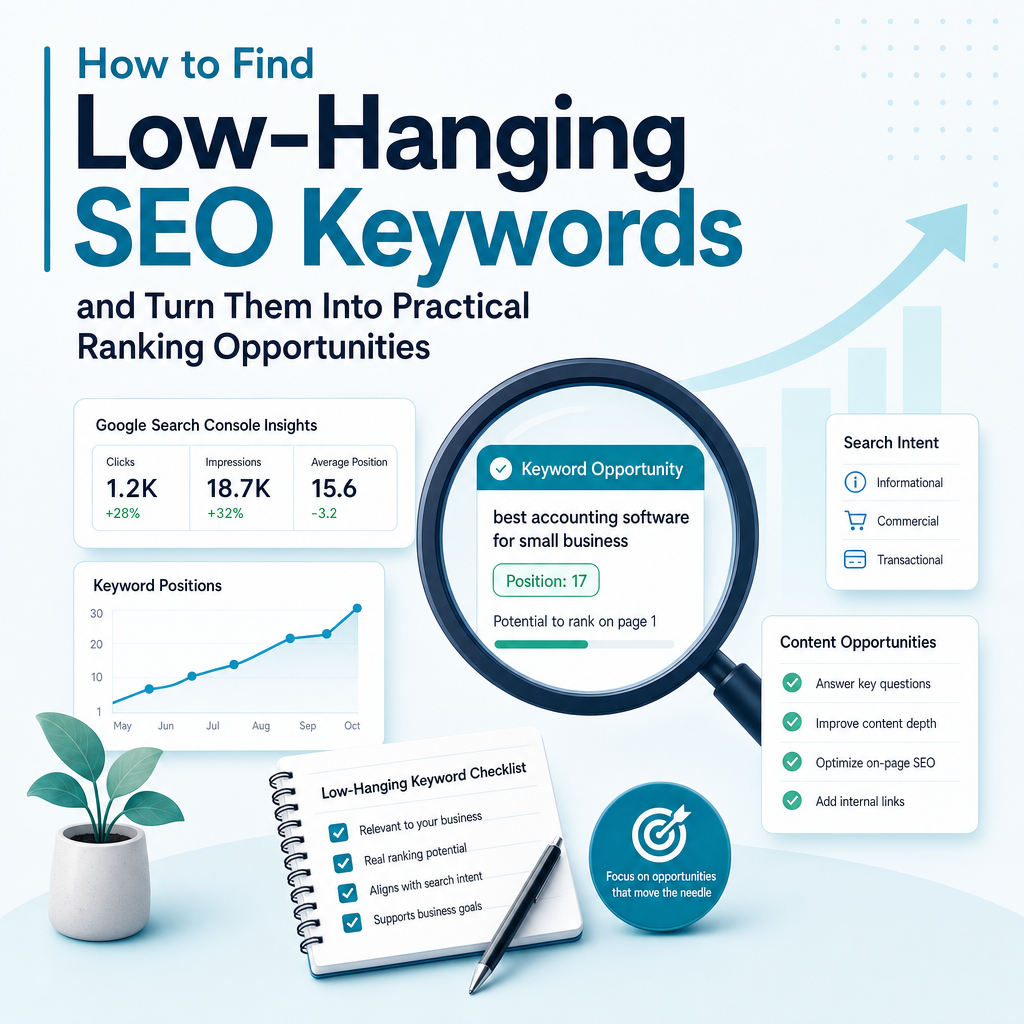
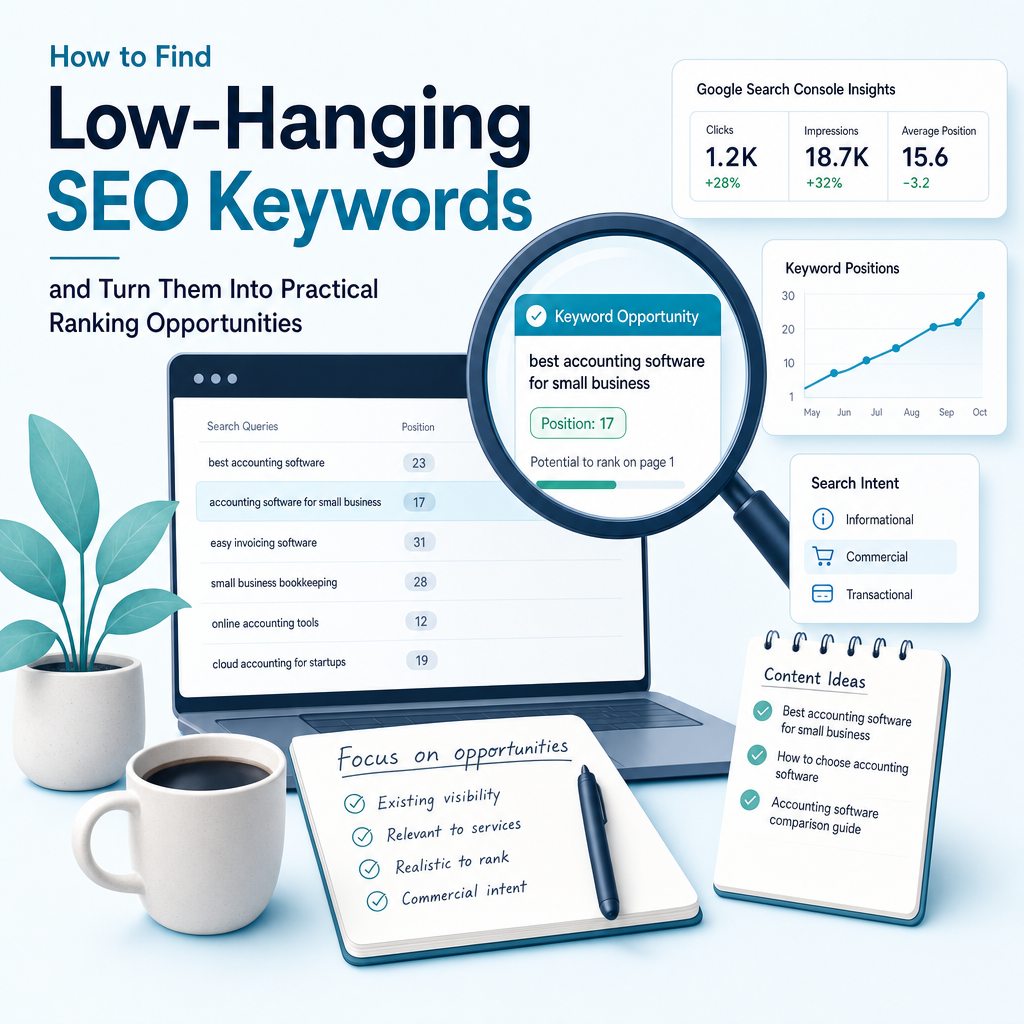
Google Search Console can reveal opportunities that generic keyword research may miss. Look for queries where your website already receives impressions but has limited clicks or sits outside the strongest positions. These searches show that Google already associates your website with the topic, giving you a useful starting point for a cluster.
Review the pages and queries together. Several queries may relate to one broader subject, or one existing page may be attracting impressions for questions it does not answer fully. That can indicate an opportunity to improve the current page, create supporting content or build a new pillar page.
Google Search Console analysis can help you identify:
- Queries where your website has visibility but weak click-through.
- Pages ranking for related terms that are not covered in depth.
- Search themes generating impressions across multiple pages.
- Content that could become a pillar or supporting resource.
- Topics where new content may strengthen existing rankings.
This data-led approach is more practical than starting with a blank keyword list. It focuses your resources on opportunities connected to your current search performance.
Map search intent before creating content
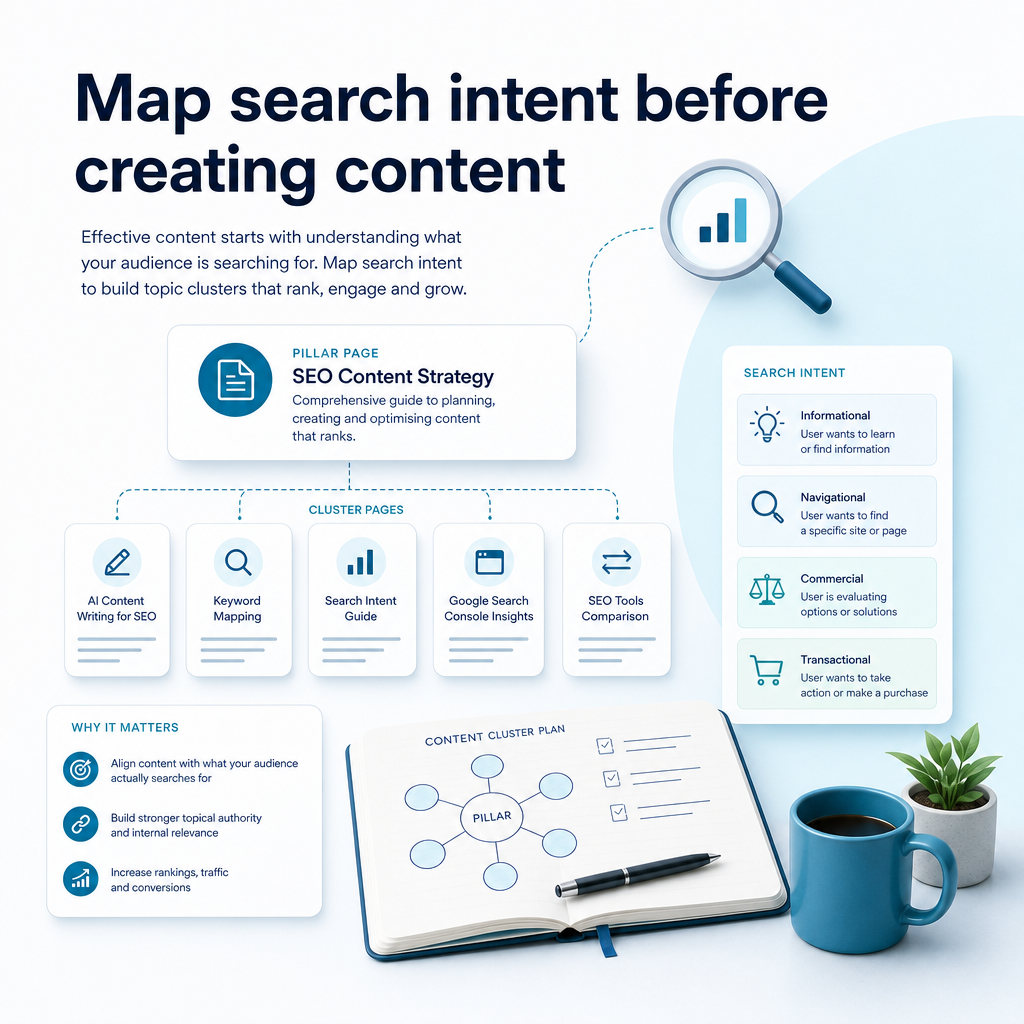
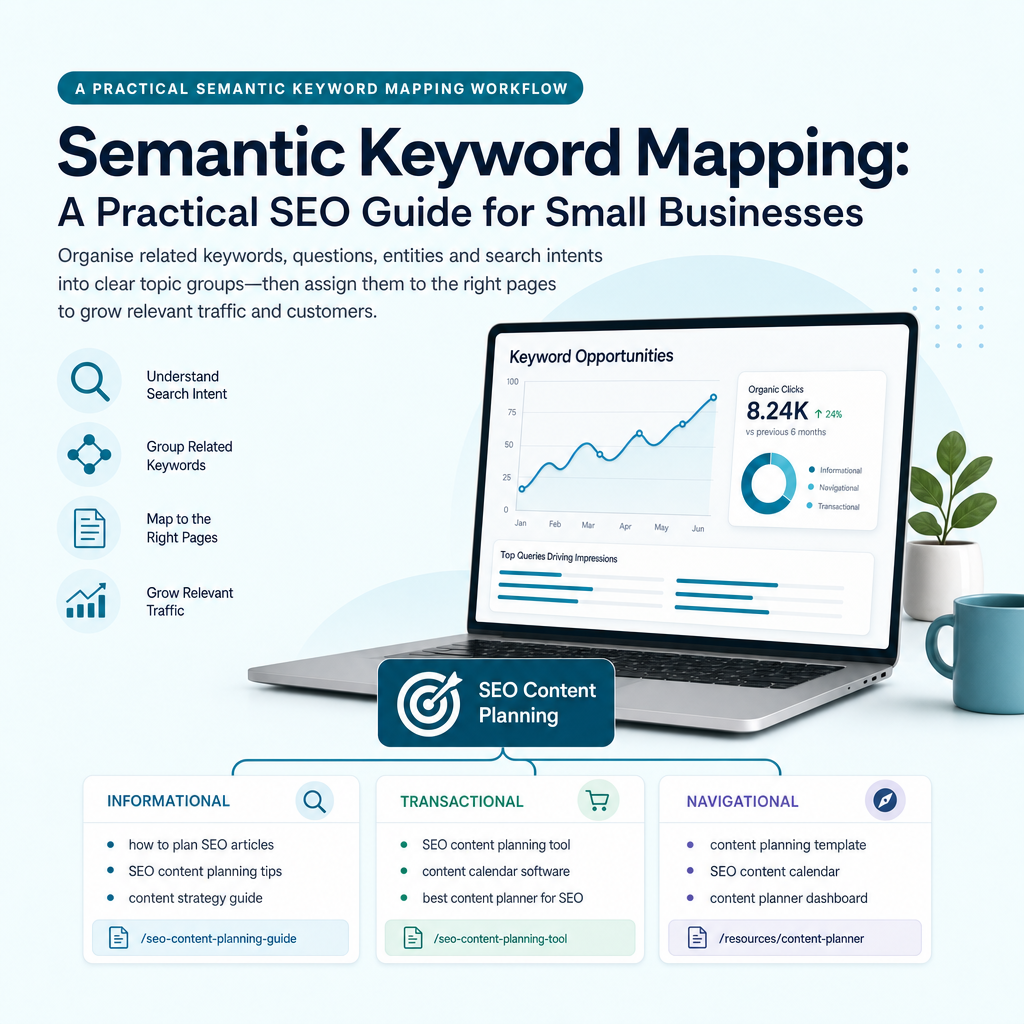
Search intent describes what a person wants to accomplish with a search. Two keywords may appear similar but require very different pages. Understanding intent before writing helps prevent thin content, mismatched formats and pages that compete with one another.
Informational intent
The searcher wants to understand a subject. Suitable content includes definitions, explainers and educational guides, such as “what is semantic keyword mapping?”
Commercial investigation intent
The searcher is comparing options or deciding whether a solution is suitable. Useful formats include comparison guides, feature breakdowns and pricing explanations.
Transactional intent
The searcher is close to taking action. Service pages, product pages, free trials and clear next steps are suitable for this intent.
Local intent
The searcher wants a relevant provider or solution in a particular area. Local SEO content creation can address location-specific needs for businesses serving the United Kingdom or English-speaking international markets.
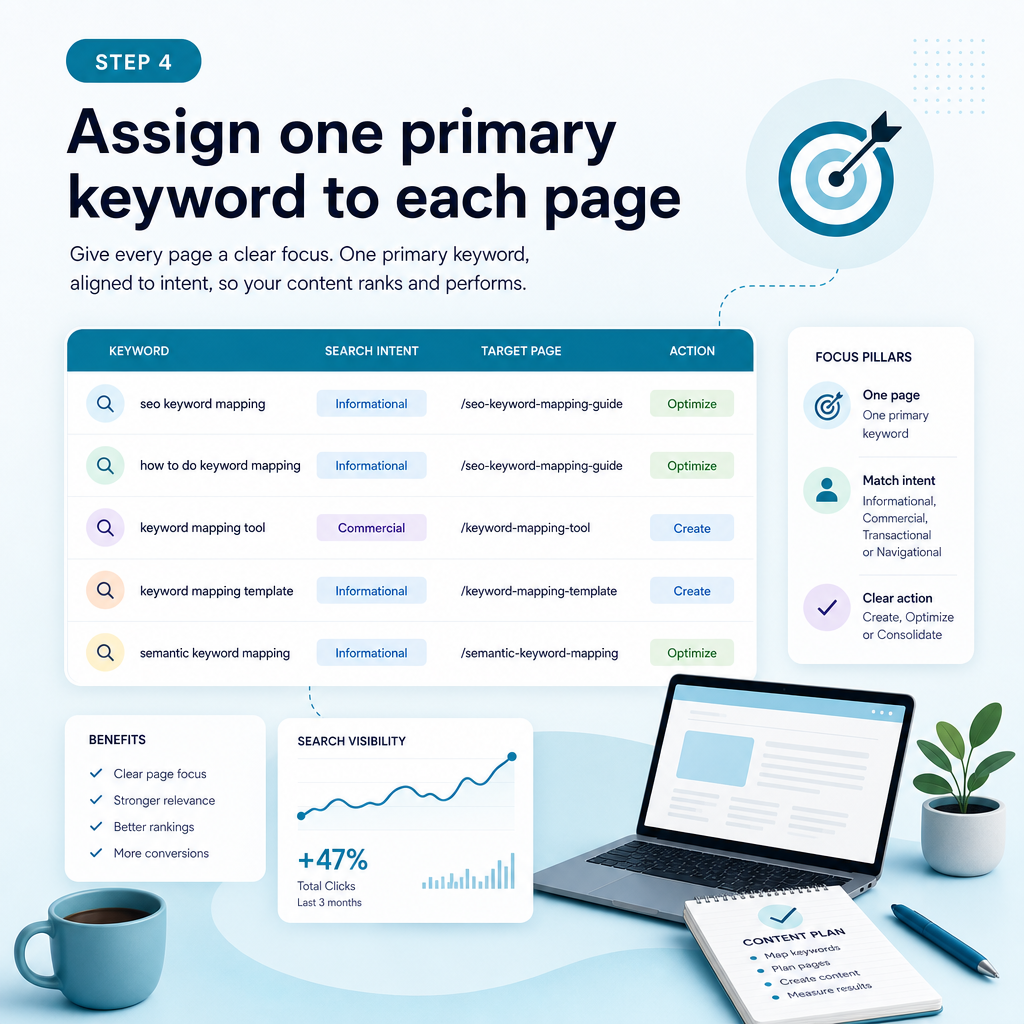
A good cluster includes a mix of intents, but every page should have one clear primary purpose.
How to create an SEO topic cluster step by step
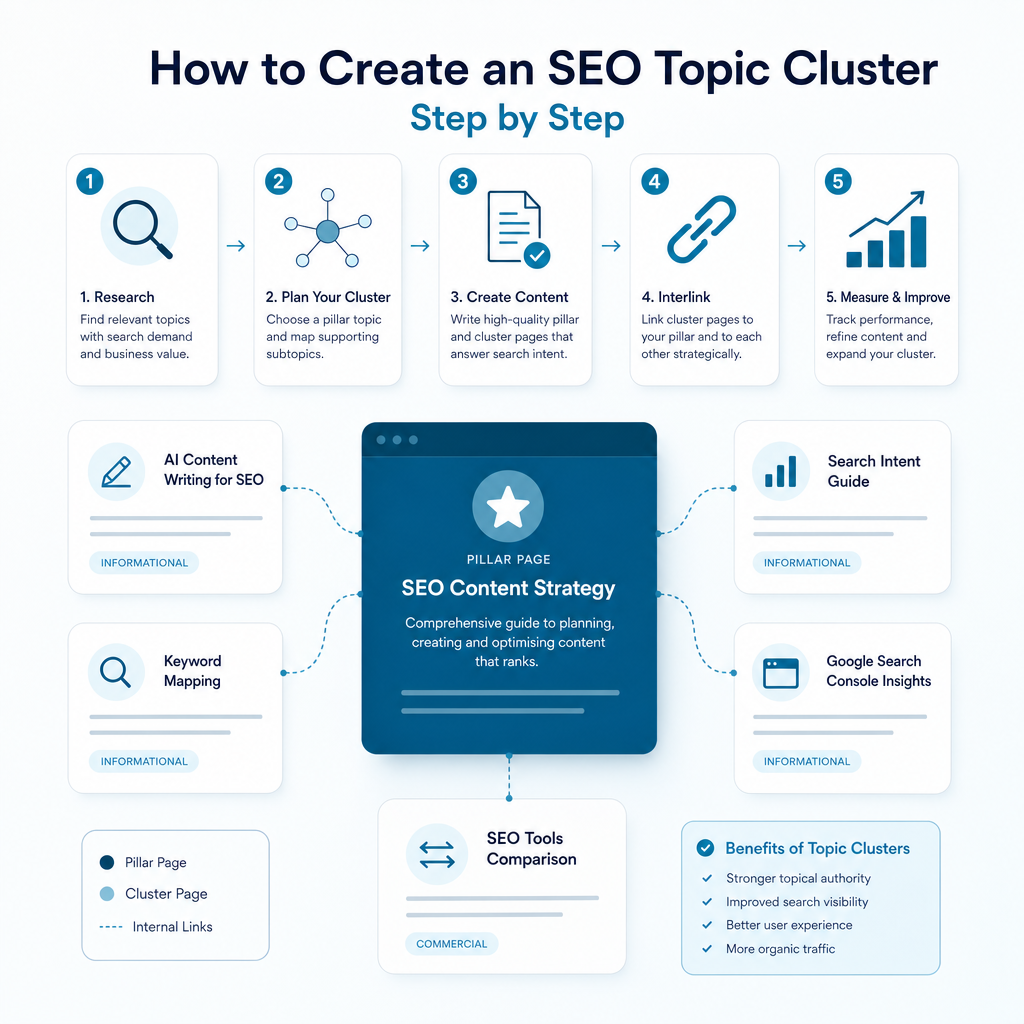
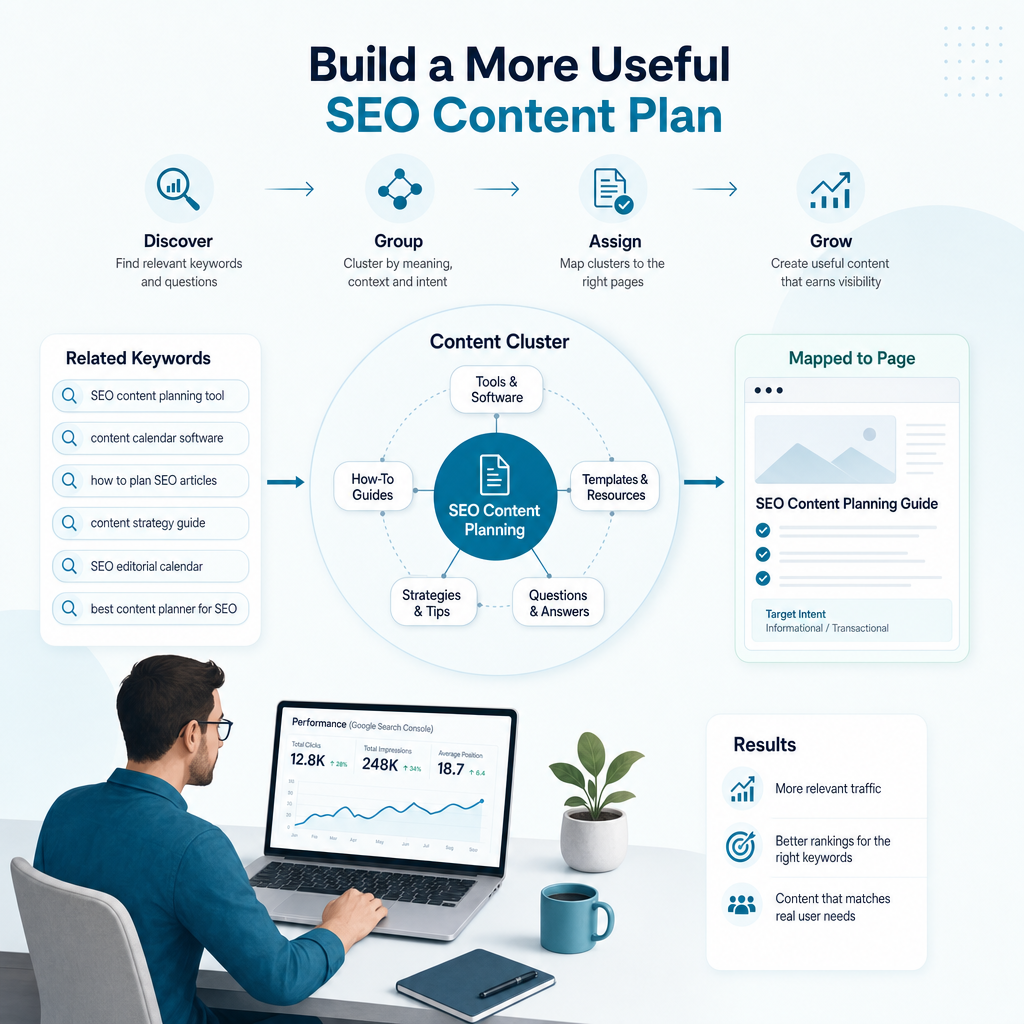
Creating a cluster becomes easier when planning, writing, linking and measurement are treated as one process. You do not need to publish every page at once. A small business can begin with one pillar and a handful of high-value supporting pages.
1. Select the pillar topic
Choose a broad subject that aligns with your expertise and services. It should be specific enough to have a clear audience but broad enough to support several related pages.
2. Audit existing content
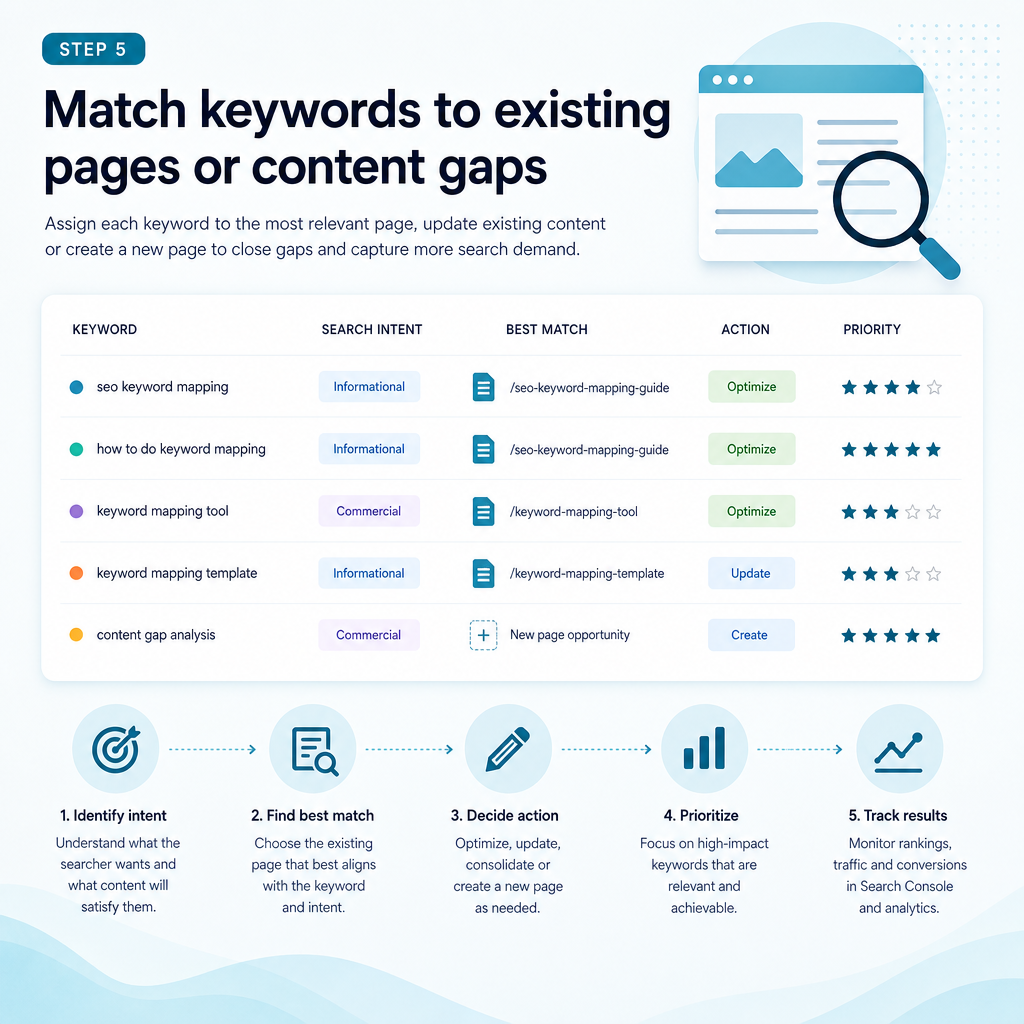
Review current articles, service pages and landing pages. Identify pages that already address part of the topic, pages that overlap and gaps that require new content. Updating and connecting existing content can be more efficient than starting again.
3. Find supporting subtopics
Use Google Search Console data, competitor content-gap analysis, customer questions and keyword research to identify supporting pages. Include practical guides, FAQs, comparisons, use cases and objection-handling content.
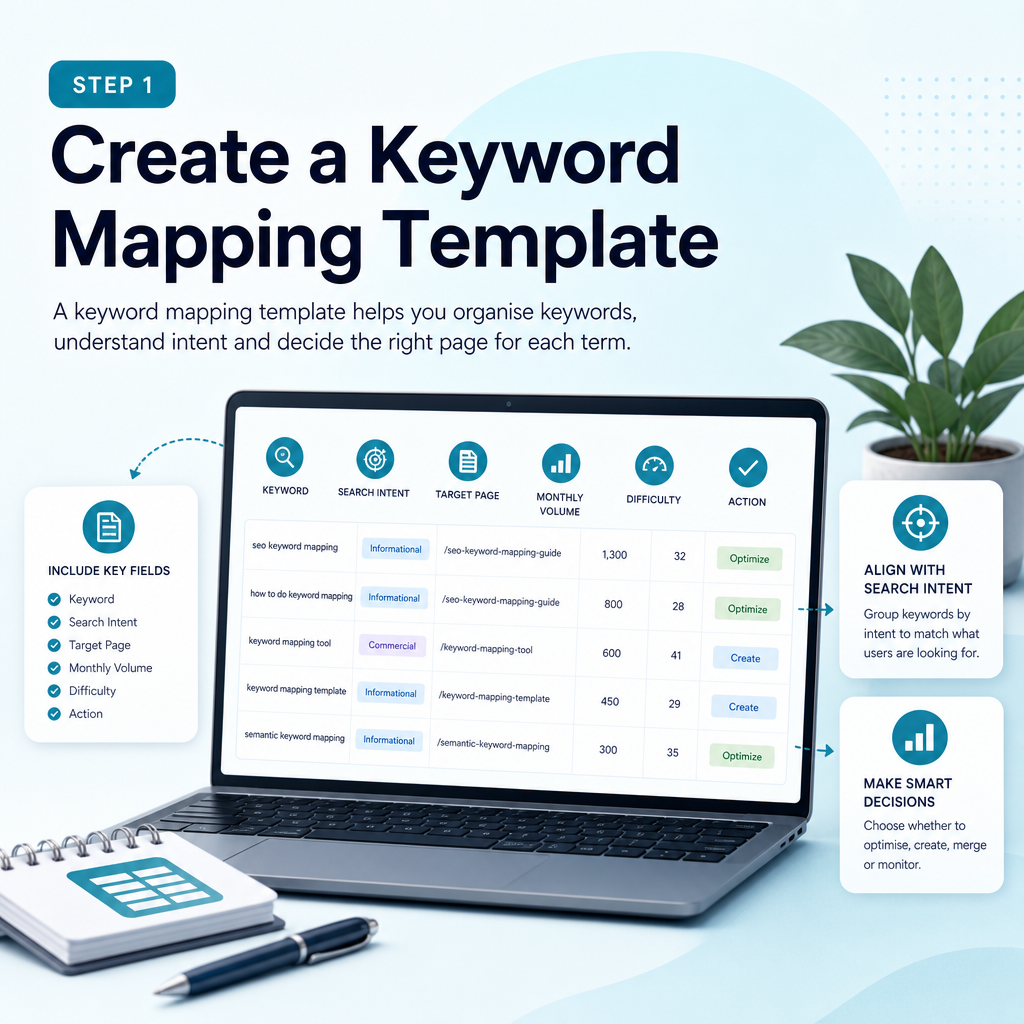
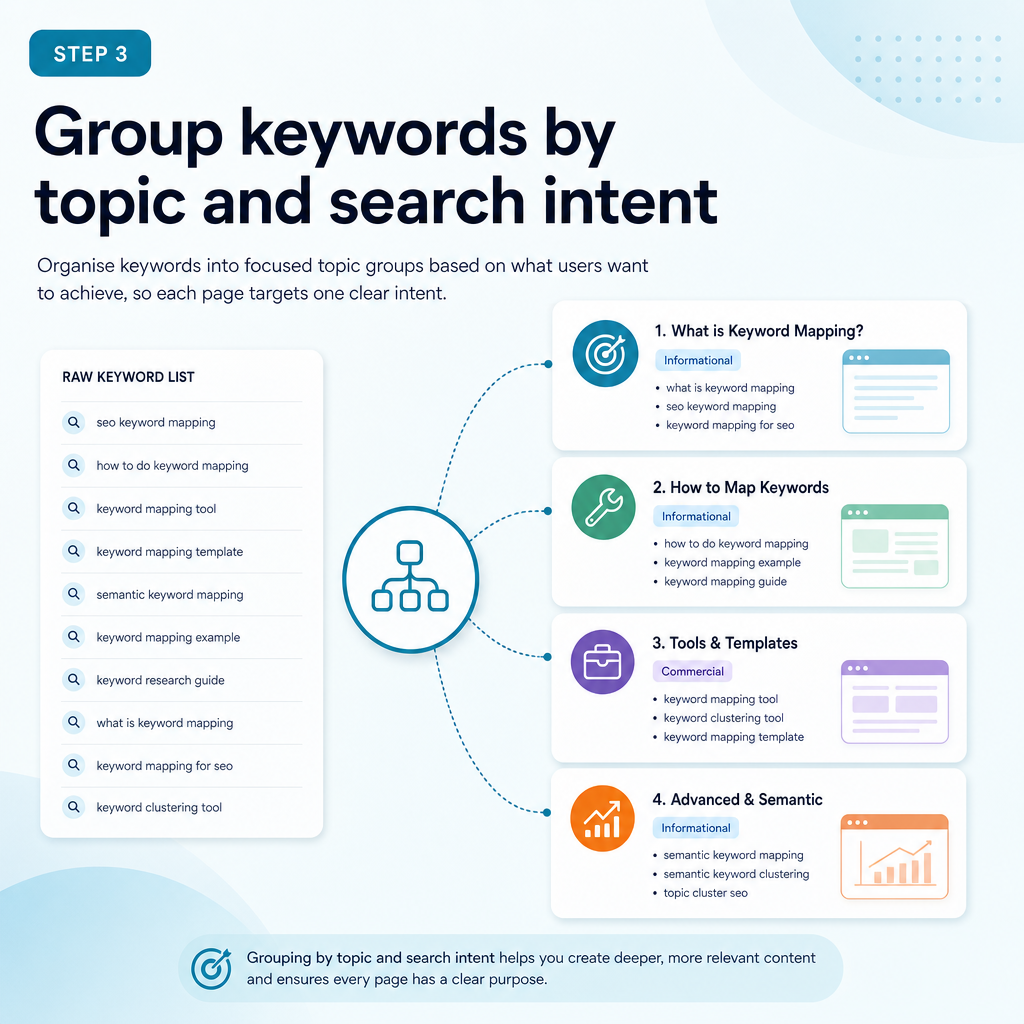
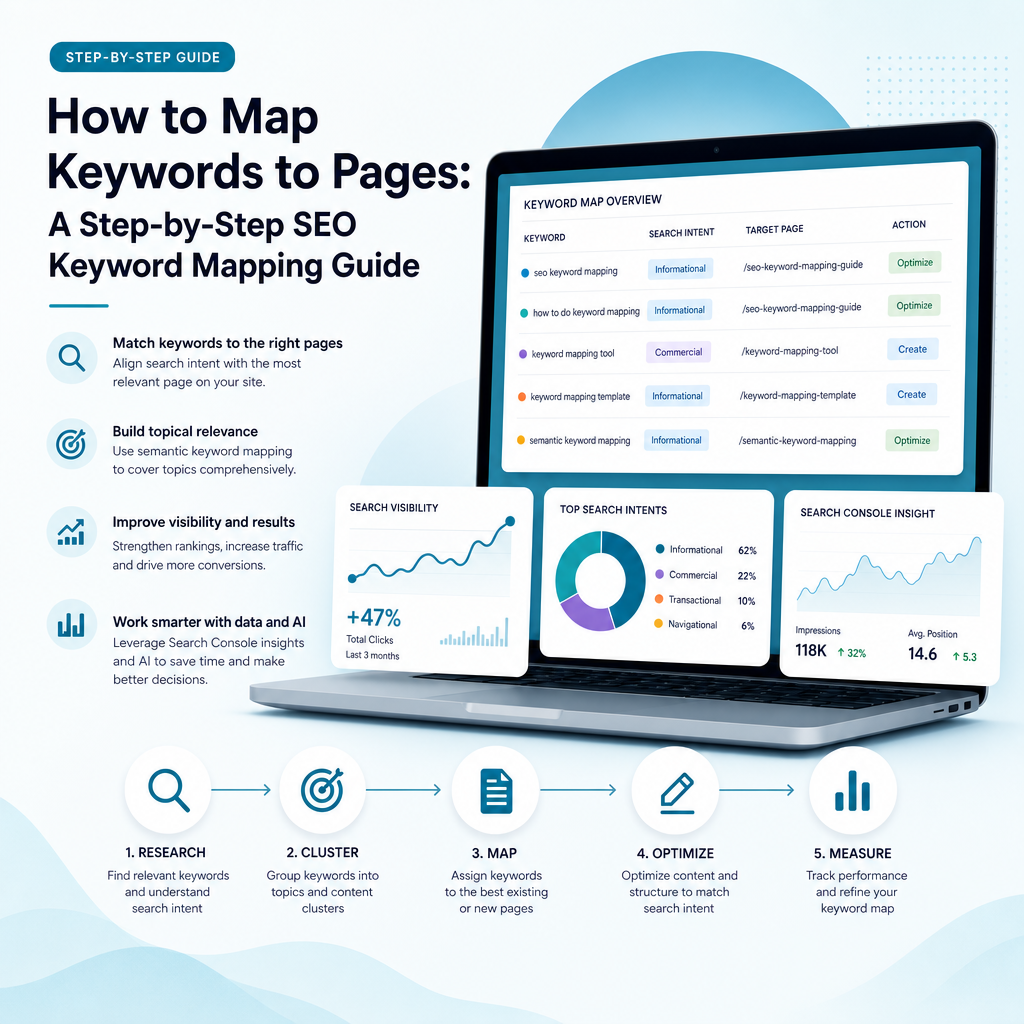
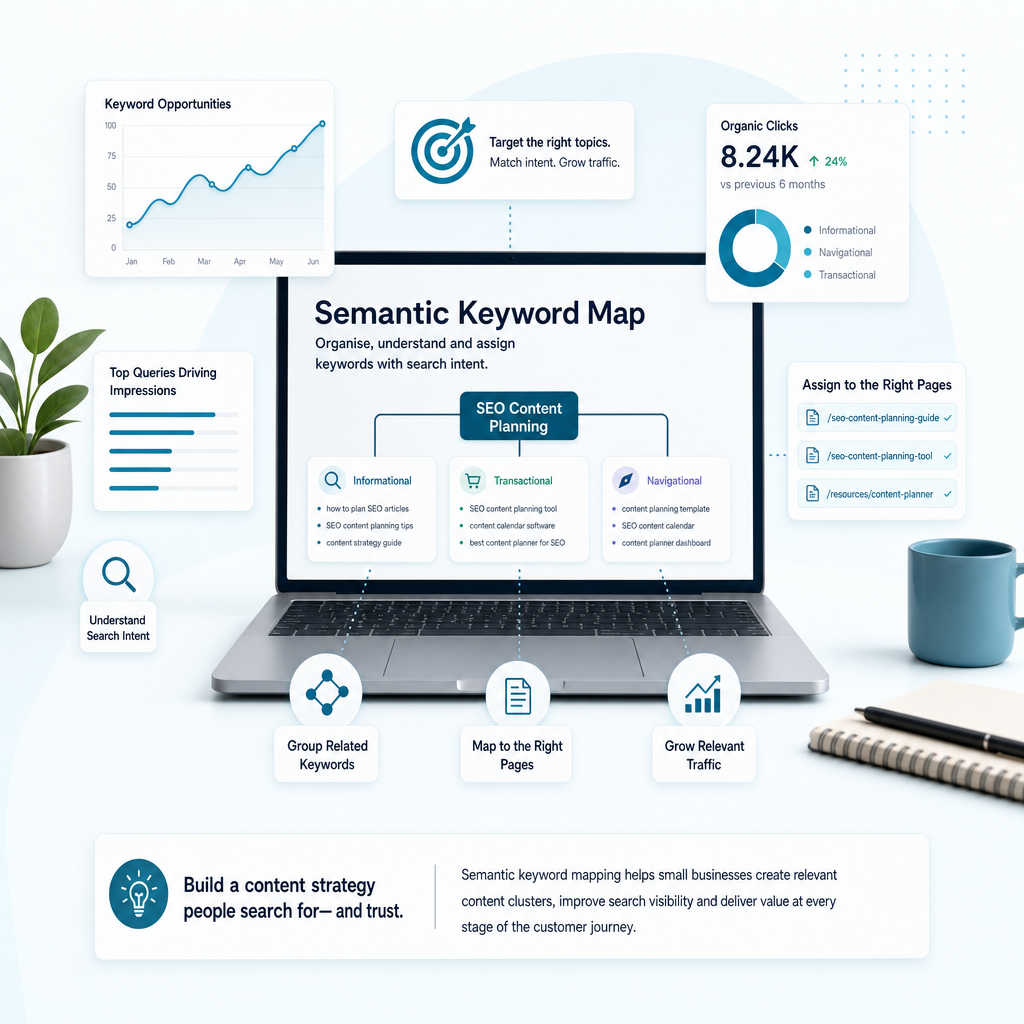
4. Group keywords by shared intent
Several related keywords may belong on one page if Google shows similar results for them. Separate pages are usually more appropriate when the searcher’s goal, format or expected answer differs.
5. Write useful, focused content
The pillar should provide a clear overview without attempting to answer every subtopic in full. Cluster pages should add genuine depth, examples and practical guidance. Automated SEO content should still be reviewed for accuracy, clarity, brand fit and usefulness.
6. Add internal links
Link the pillar to important cluster pages and link each supporting page back to the pillar. Add cross-links where they help the reader continue their research. Avoid adding links simply to increase the number of links on a page.
7. Publish and measure
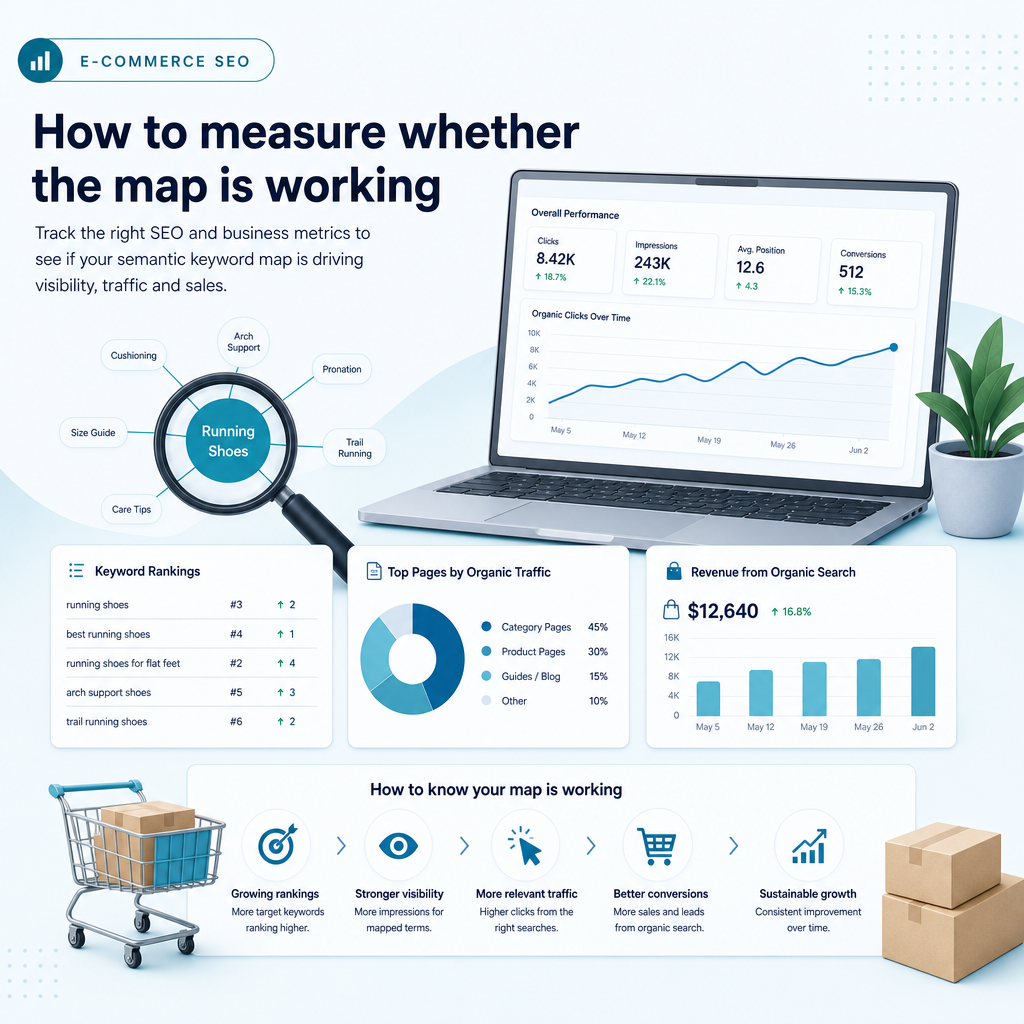
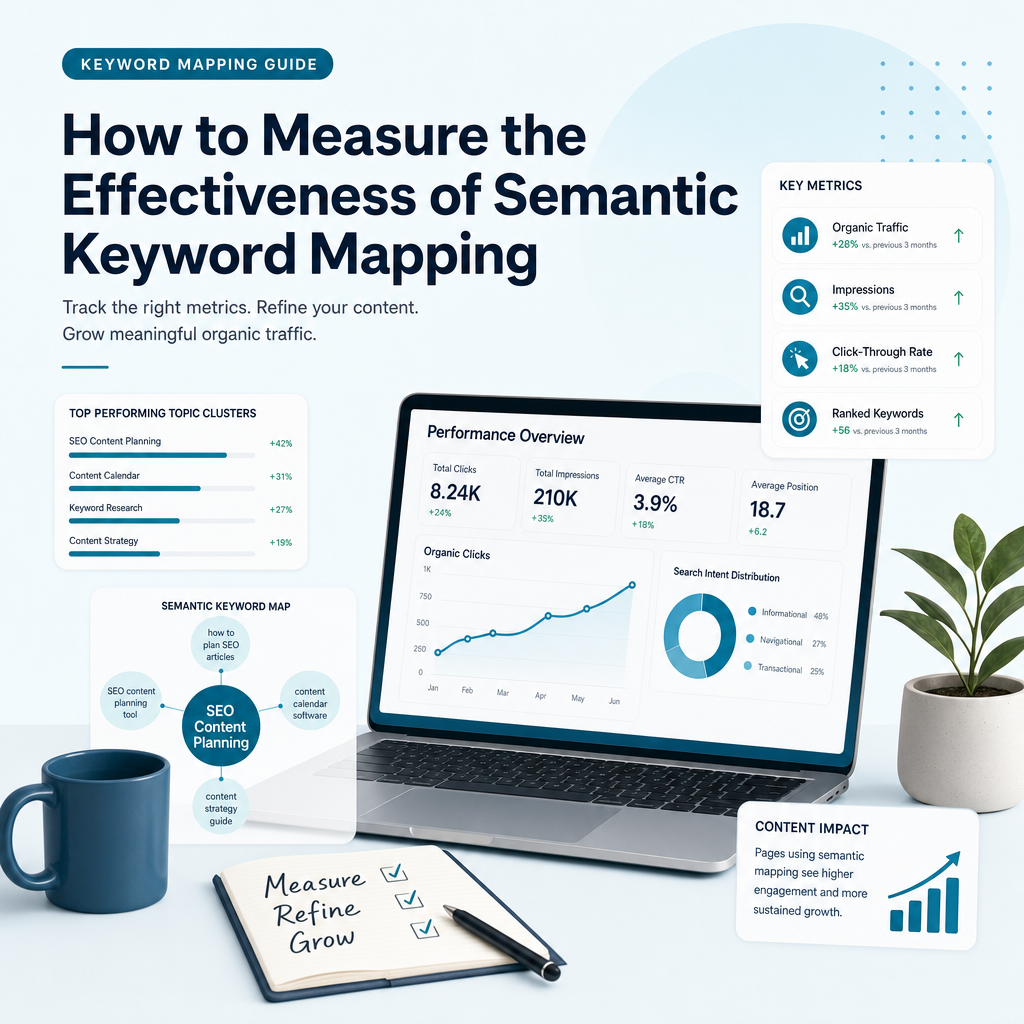
Track impressions, clicks, rankings, engagement and enquiries at both page and cluster level. Review which pages are gaining visibility, which questions remain unanswered and where content needs to be expanded or consolidated.
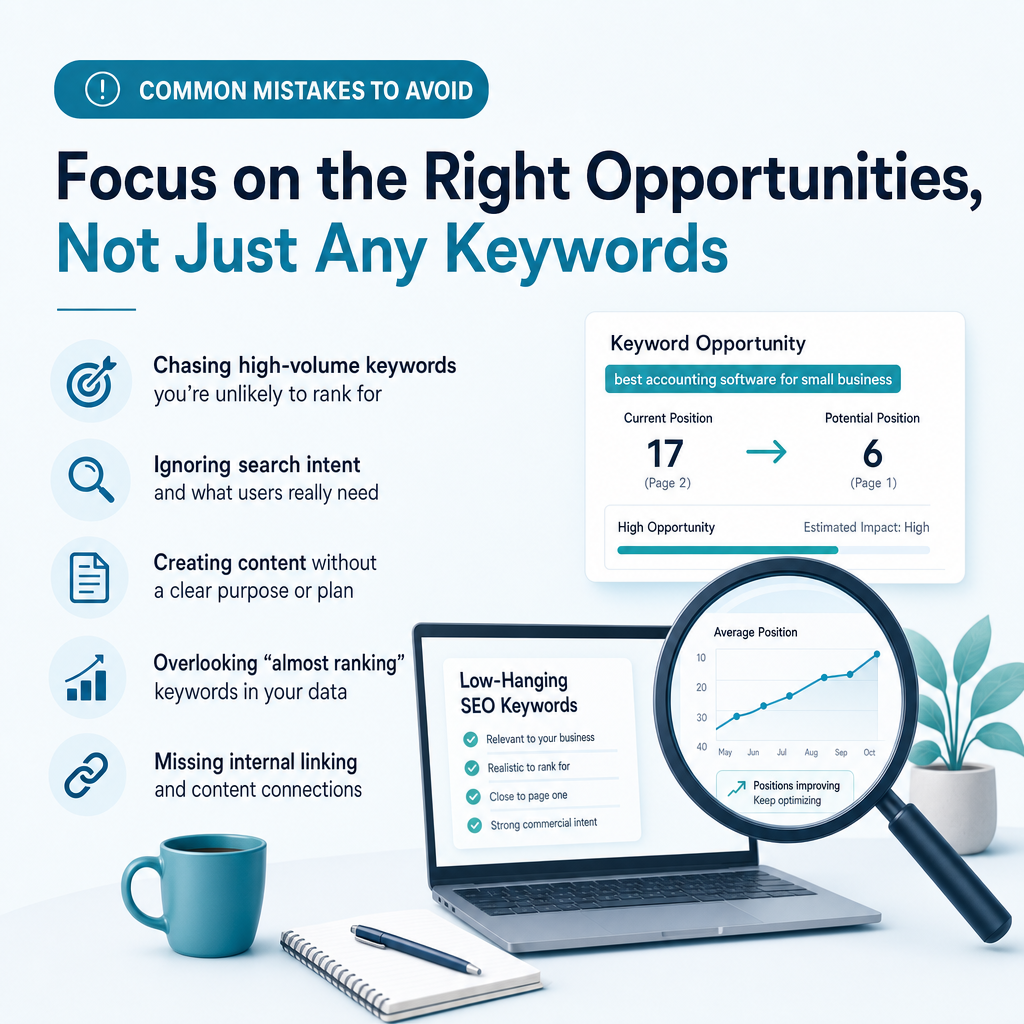
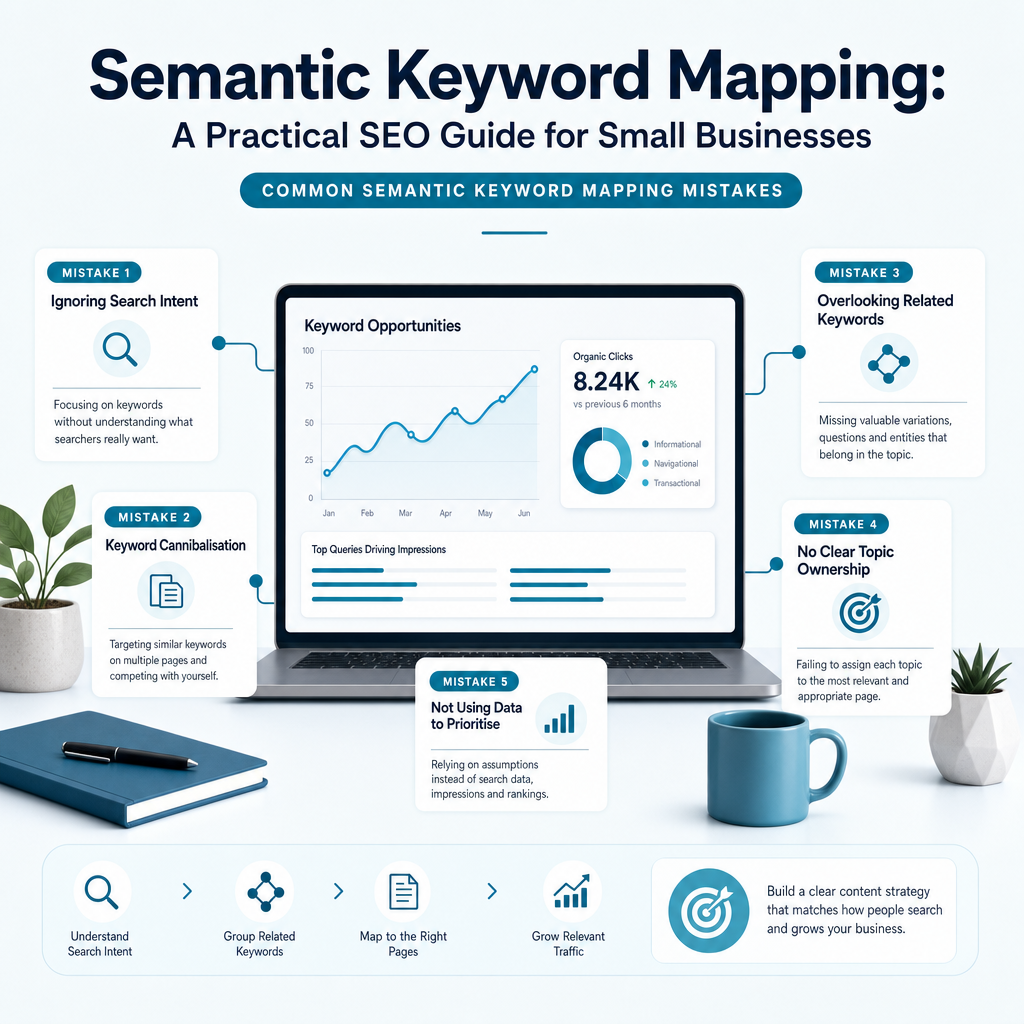
Common SEO topic cluster mistakes
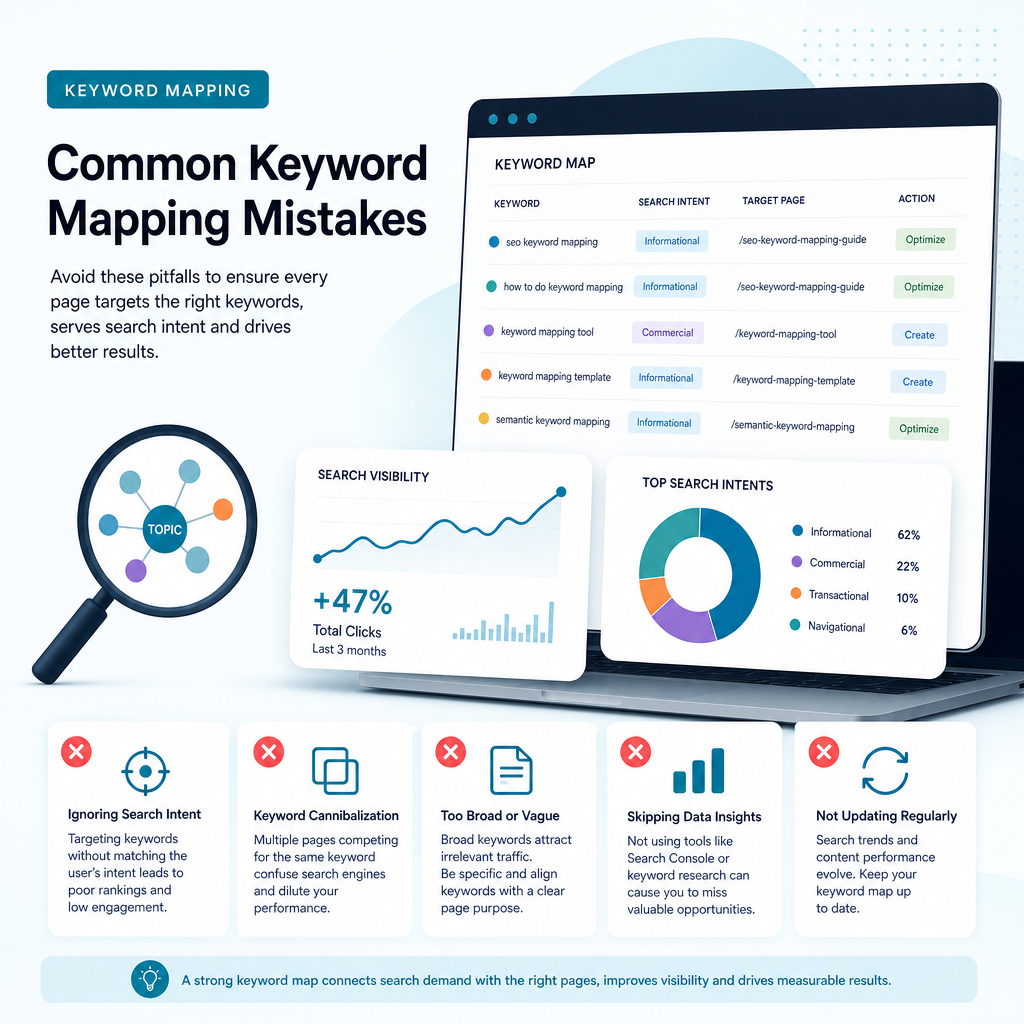
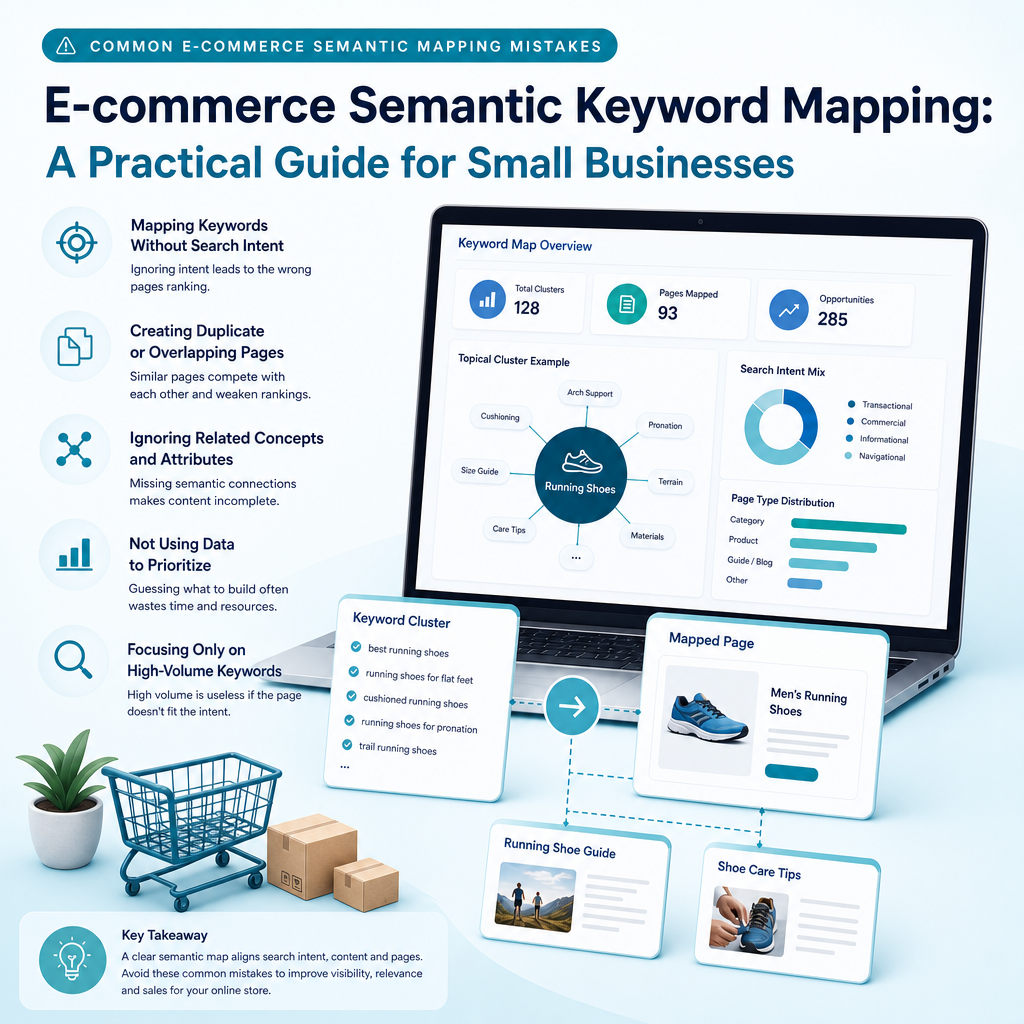
A topic cluster can lose value when the structure is created without clear editorial decisions. More pages do not automatically create more authority. Each page needs a distinct role and a reason to exist.
Choosing a topic unrelated to your services
High-volume traffic is not useful if it comes from people who will never need your solution. Build clusters around problems your business can genuinely help solve.
Creating overlapping pages
Multiple pages targeting the same intent can compete with one another. Combine similar content or give each page a clearly different purpose.
Publishing thin supporting articles
A cluster page should answer a specific question properly. Short filler pages can weaken the overall quality of the cluster and provide little value to readers.
Adding internal links as an afterthought
Plan links during content creation. A simple content map can show which page is the pillar, which pages support it and where relevant cross-links belong.
Ignoring updates
Search behaviour, competitors and business priorities change. Review important clusters regularly, update outdated information and add new pages when meaningful gaps appear.
In-house planning, generic AI tools or an AI SEO content platform?
Small businesses often compare manual research, generic AI writing tools and specialist SEO software. Each approach can have a place, but they provide different levels of insight and control.
| Approach | Strength | Common limitation |
|---|---|---|
| Manual research | Offers direct control and useful business context. | Can take considerable time and may miss patterns in search data. |
| Generic AI writing | Can produce drafts quickly. | May not understand existing rankings, search intent or content gaps. |
| Traditional specialist provider | Can provide strategic expertise and ongoing support. | May be beyond the budget of a small or growing business. |
| AI SEO content platform | Combines data analysis, planning and content production in one workflow. | Still requires business review and editorial judgement. |
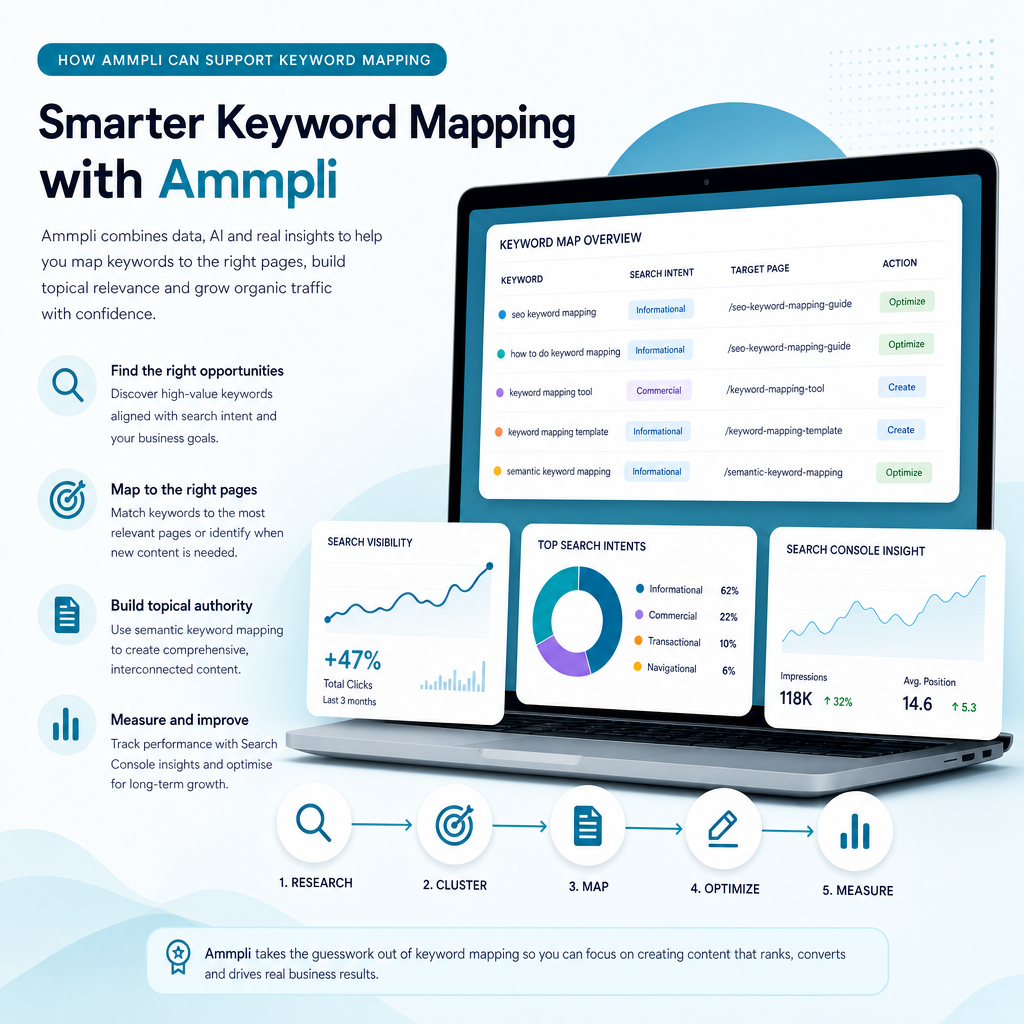
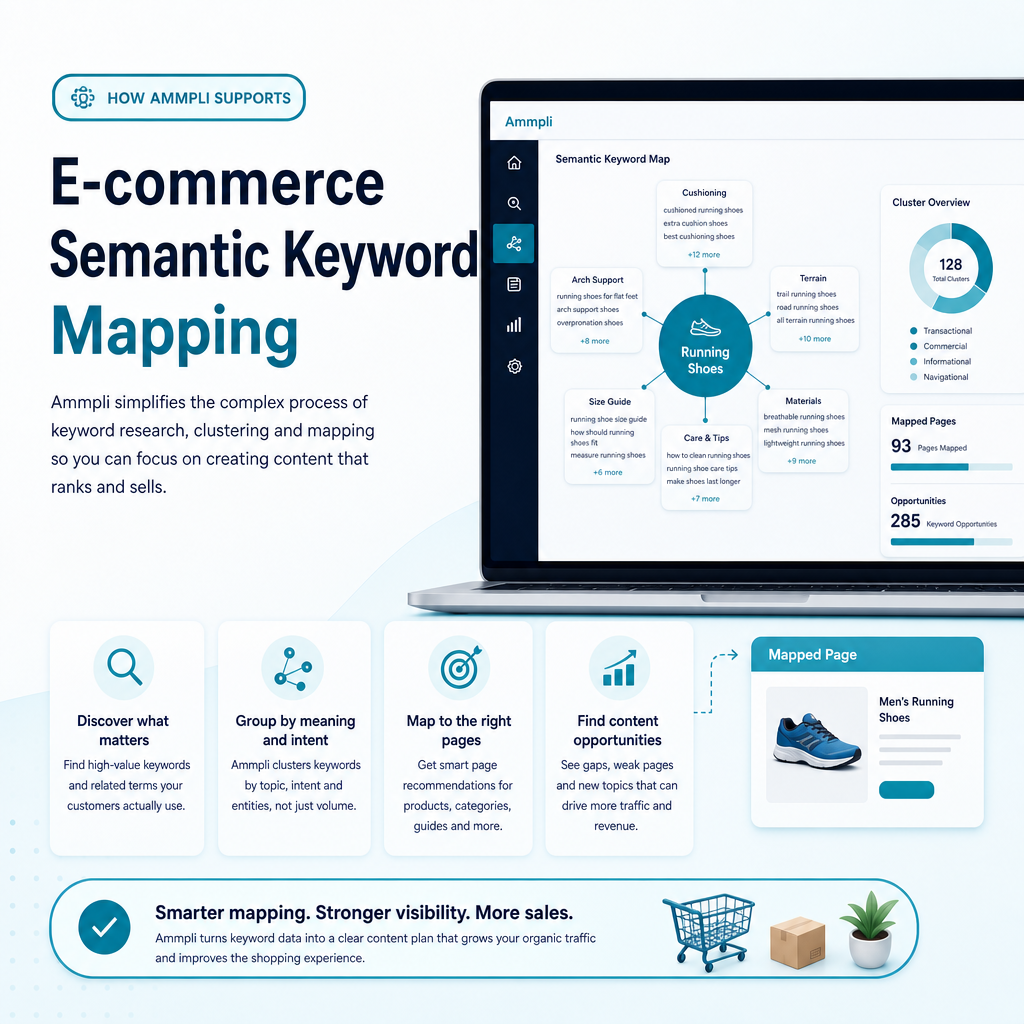
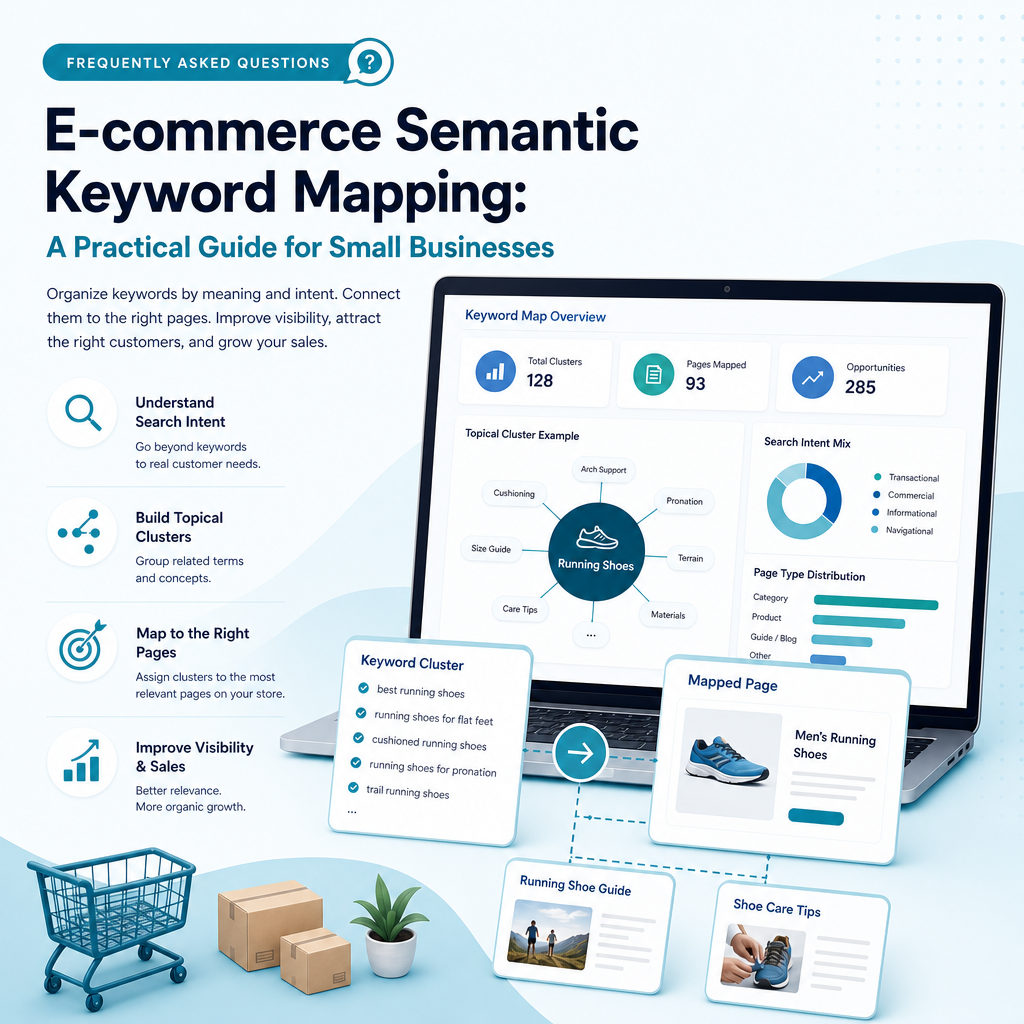
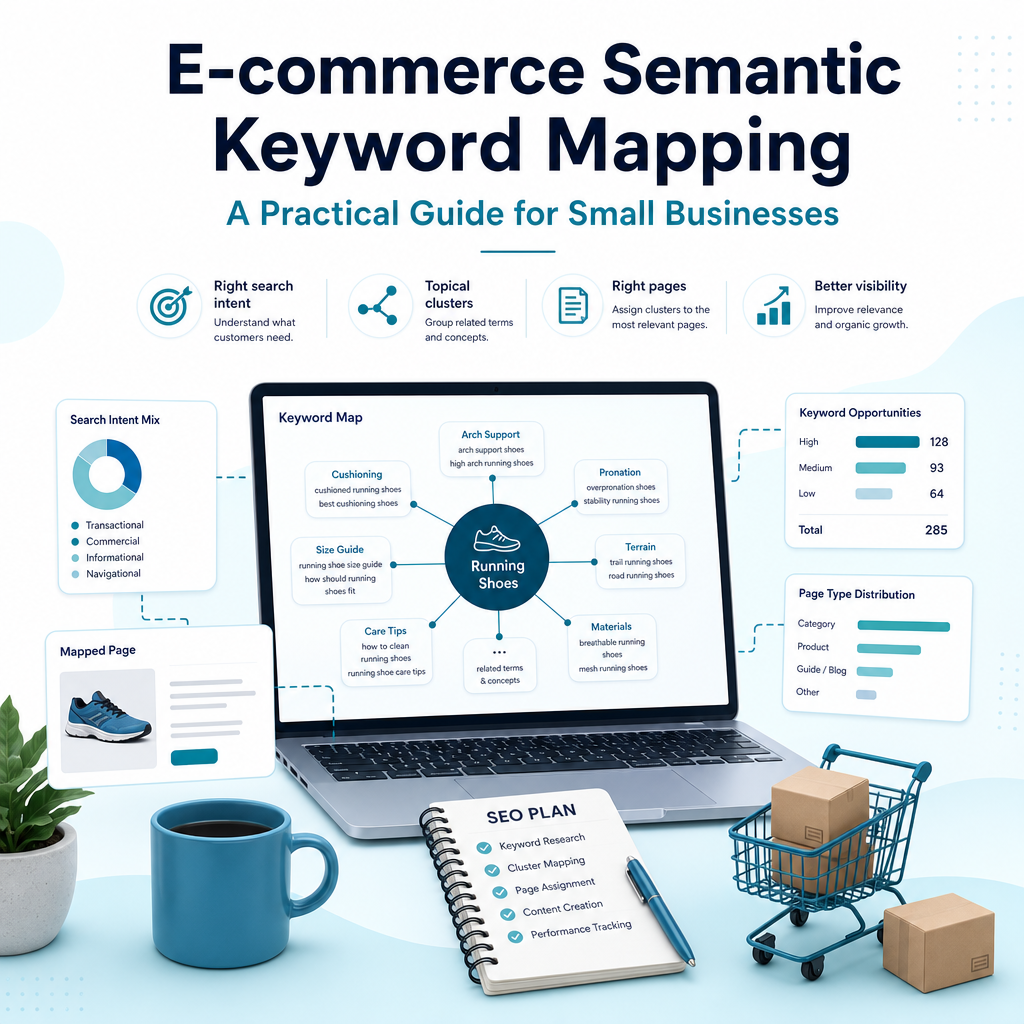
Ammpli is designed for businesses that need a practical middle ground. It combines Google Search Console and Analytics data with competitor research, search-intent analysis and semantic keyword mapping. This helps identify realistic ranking opportunities and turn them into a usable content calendar.
Its services include SEO opportunity analysis, AI-powered SEO content creation, competitor content-gap analysis, topical authority planning, local SEO content creation, SEO performance reporting and direct CMS publishing. The aim is to reduce guesswork without removing the human understanding needed to represent a business accurately.
How Ammpli supports an SEO topic cluster strategy
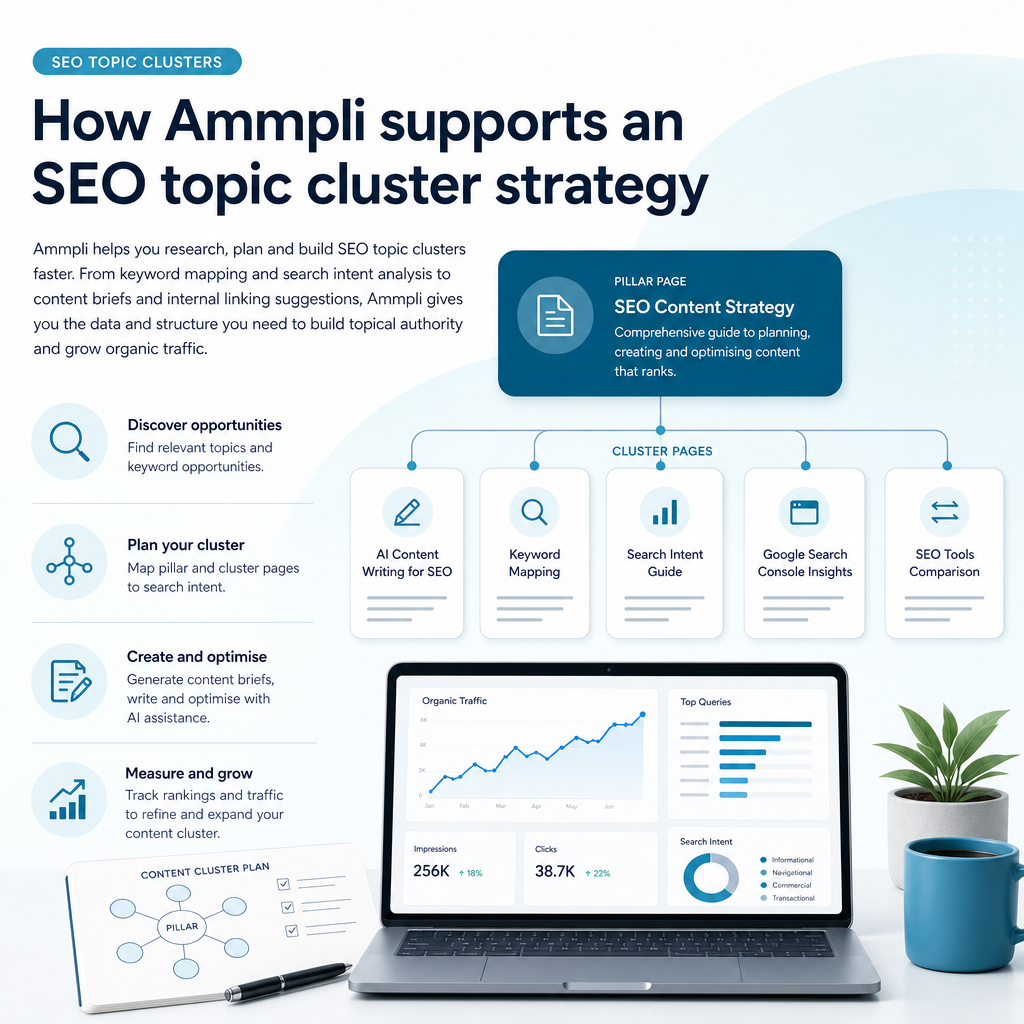
Ammpli helps you move from “we should publish more content” to a clearer decision about what to create next. The platform can surface queries where your website is already gaining visibility, identify gaps against competitors and organise related terms through semantic keyword mapping.
It can then turn those findings into data-driven SEO content and a practical publishing plan. For a small service business, this means less time spent moving between spreadsheets, keyword tools, analytics reports and writing platforms.
Ammpli is suitable for small-business owners, founders and marketing managers across service businesses, B2B SaaS, e-commerce, healthcare, education and property. It supports customers in the United Kingdom and English-speaking international markets who want to build organic visibility without committing to the cost or complexity of a traditional SEO agency.
Frequently Asked Questions
How many pages should an SEO topic cluster include?
There is no fixed number. Begin with one useful pillar page and several supporting pages that answer distinct, relevant questions. Add pages when they provide meaningful coverage, not simply to reach a target count.
Do topic clusters guarantee higher Google rankings?
No. Topic clusters improve structure, relevance and content planning, but rankings depend on many factors, including content quality, competition, technical performance, authority and search intent. A cluster creates a stronger foundation without guaranteeing a particular position.
Can a small business create topic clusters without an SEO agency?
Yes. A small business can start with Google Search Console, existing content and a simple content map. An AI SEO content platform such as Ammpli can reduce manual research and help identify realistic opportunities when internal time or expertise is limited.
Should every cluster page link to every other page?
No. Cluster pages should link to the pillar and to related pages when the connection is useful. Excessive or forced linking can make content harder to read. Relevance and context should guide the linking decisions.
How does Google Search Console help with topic clusters?
Google Search Console shows the queries and pages already generating impressions and clicks. This data can reveal content gaps, emerging themes and pages that may benefit from stronger supporting content or internal links.
When should a business start building an SEO topic cluster?
Start when you have a clear business topic, an established website and enough customer insight to identify useful questions. If your site already receives Google impressions, that data can help you choose a realistic first cluster rather than relying on guesswork.
Build your next SEO topic cluster with Ammpli
SEO topic clusters work best when they connect genuine customer needs with realistic search opportunities. The right process combines search data, competitor research, search intent, semantic relationships, useful content and consistent internal linking.
Ammpli brings those activities into one AI SEO content platform, helping small businesses plan and create content with less manual research. Start your 14-day free trial, find your next ranking opportunity and turn your search data into better content. No credit card is required.