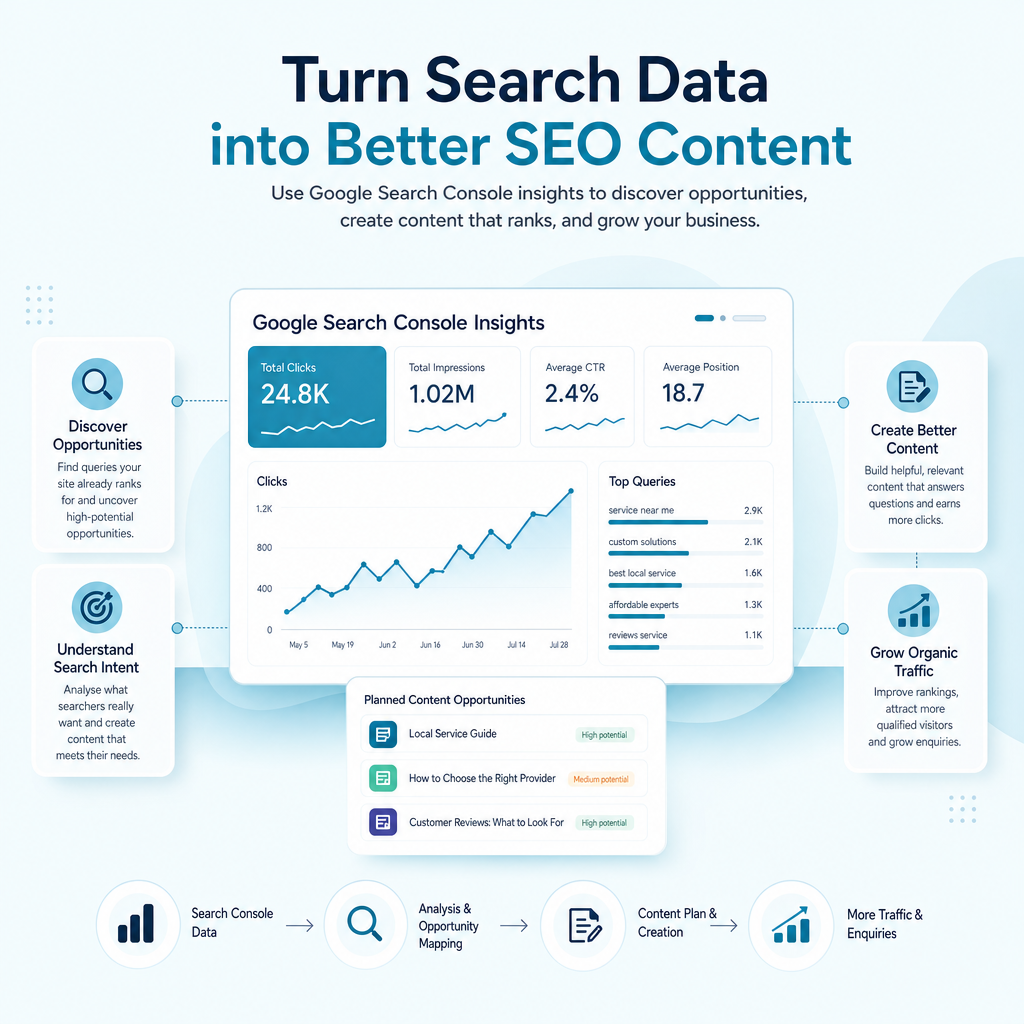
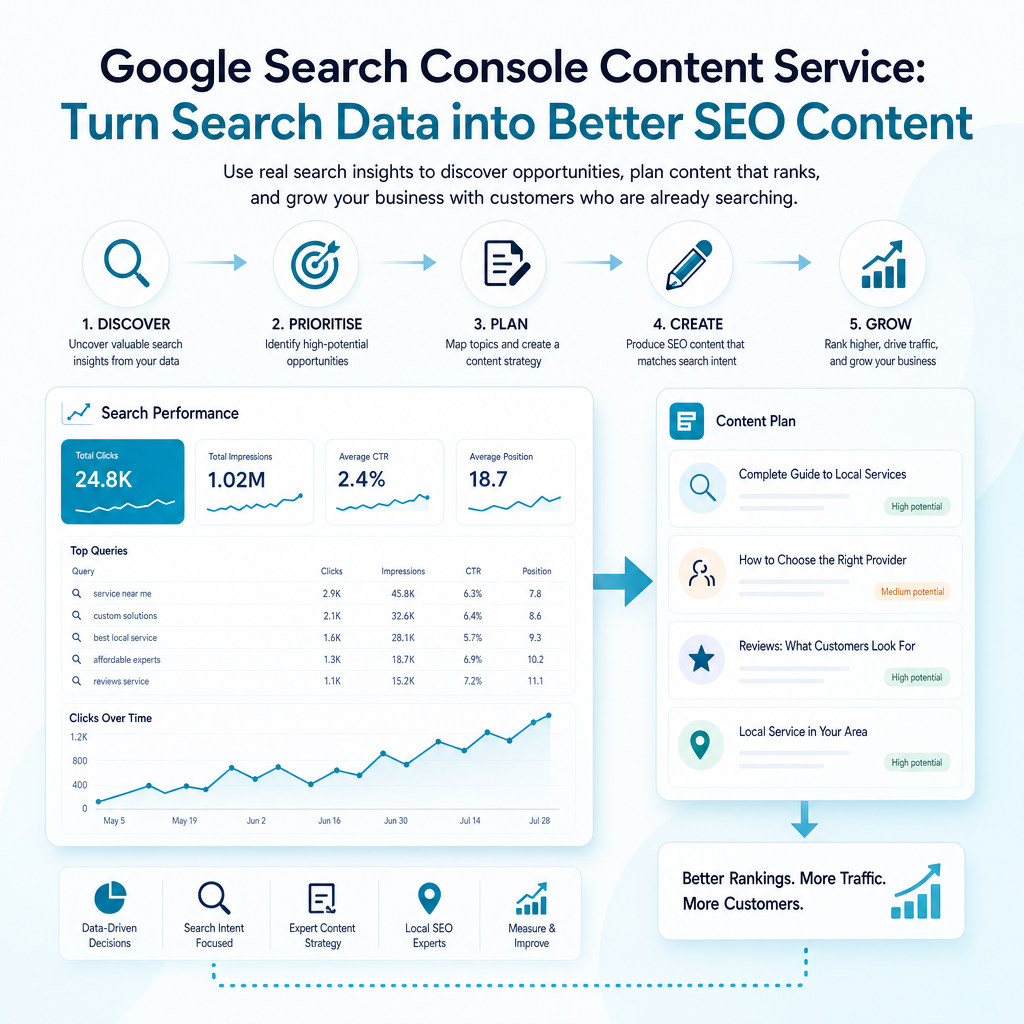
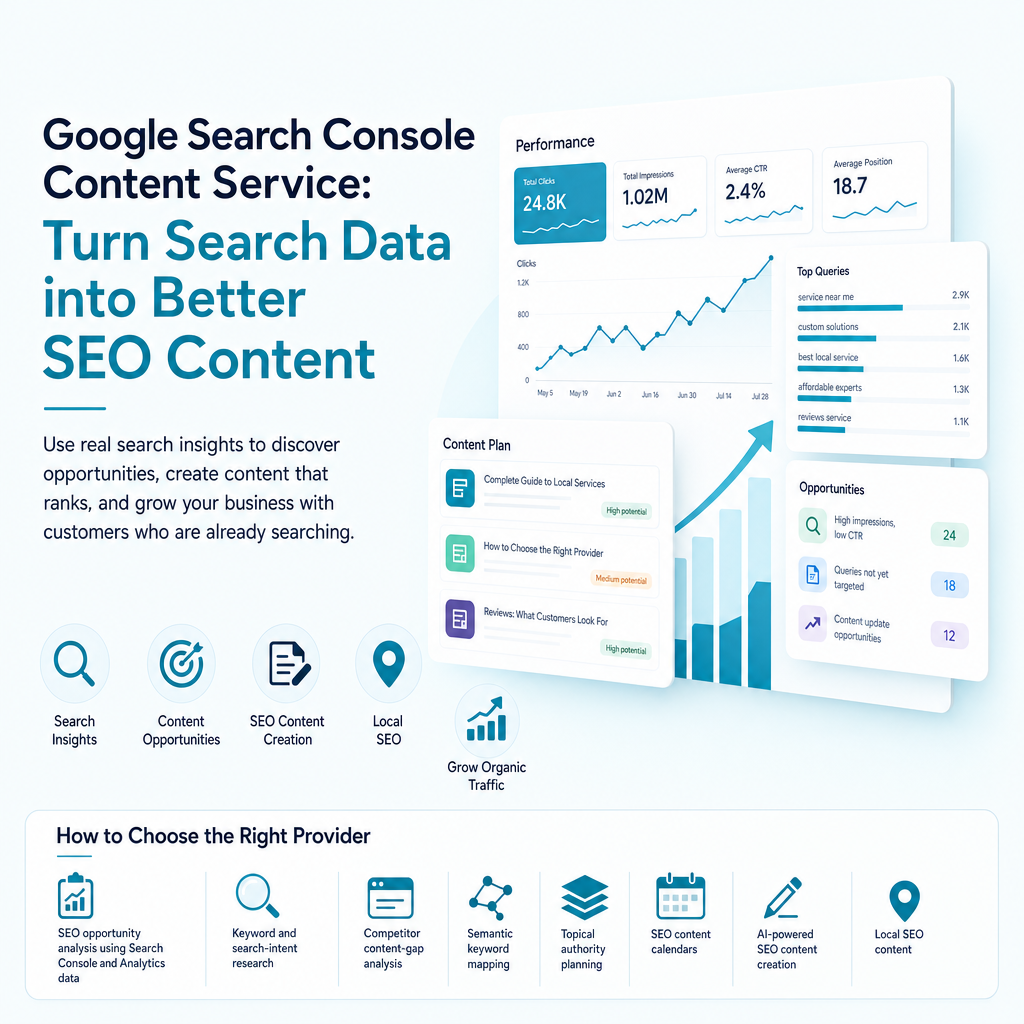
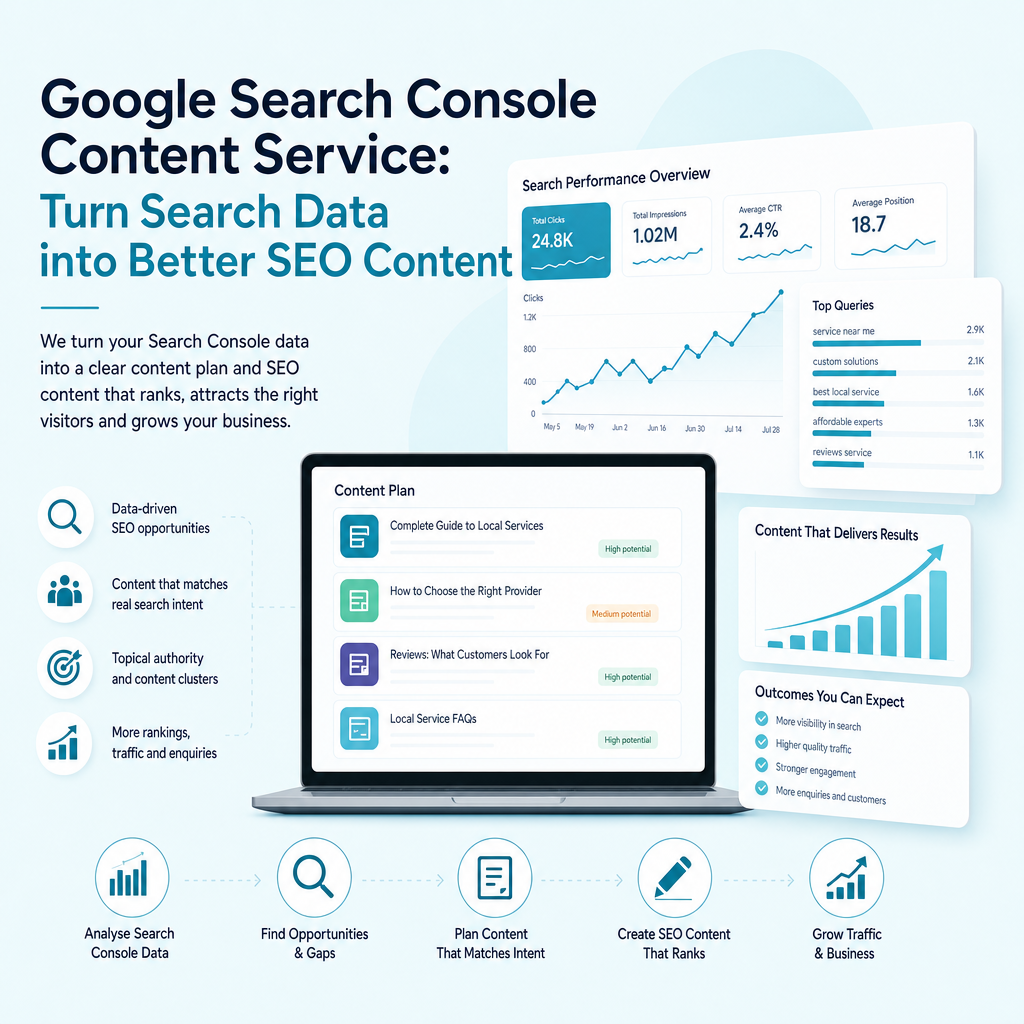
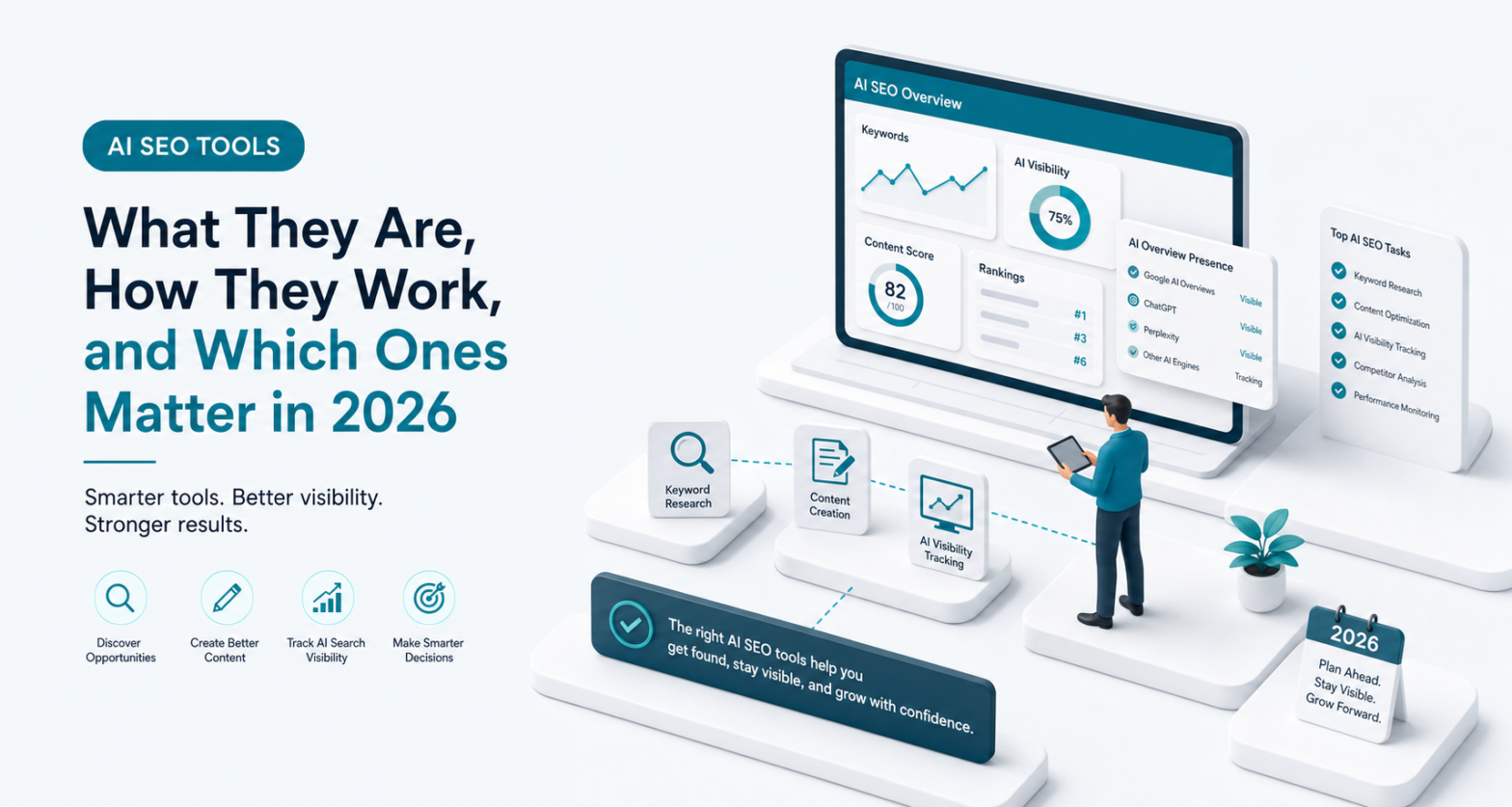
AI SEO tools have become a regular part of search marketing, but many business owners are still trying to work out what they actually do. Some tools help with keyword research. Some help with writing and improving content. Others track whether your brand appears in Google AI Overviews, ChatGPT, Perplexity, Gemini, and similar answer engines. That range is exactly why the topic can feel confusing at the start.
For small and medium sized service businesses, the real question is not whether AI exists in SEO. It is whether these tools can help you attract the right people, answer common customer questions, and grow visibility without wasting time on software that looks clever but changes very little. That matters even more in competitive markets such as London, where local firms are often competing against larger brands with bigger budgets, stronger websites, and internal marketing teams.
This guide explains what AI SEO tools mean, why they matter, where they help, where they fall short, and how different types of businesses can use them sensibly. It is written for people at the research stage, whether you run a plumbing company in London, a law firm in Manchester, a clinic in Birmingham, a local trades business, an ecommerce store, or a small agency serving UK clients across several regions.
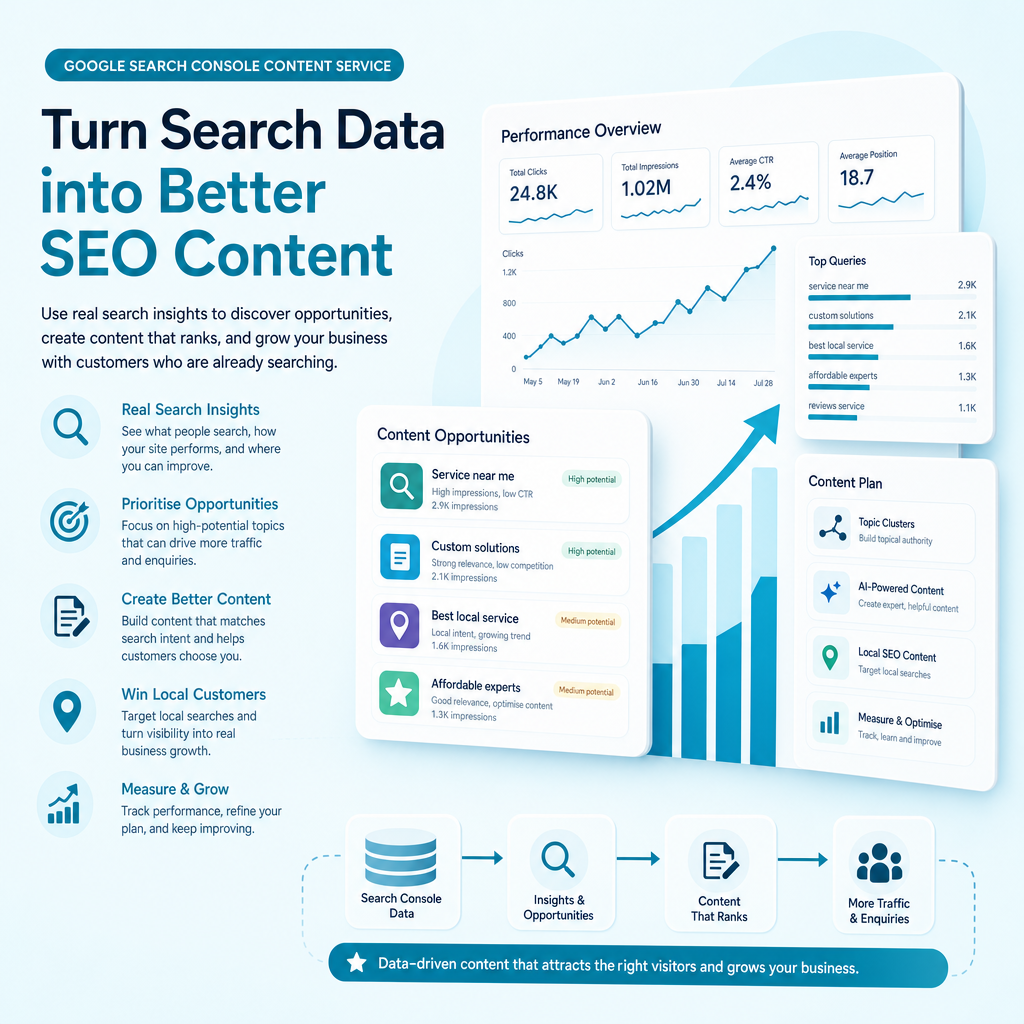
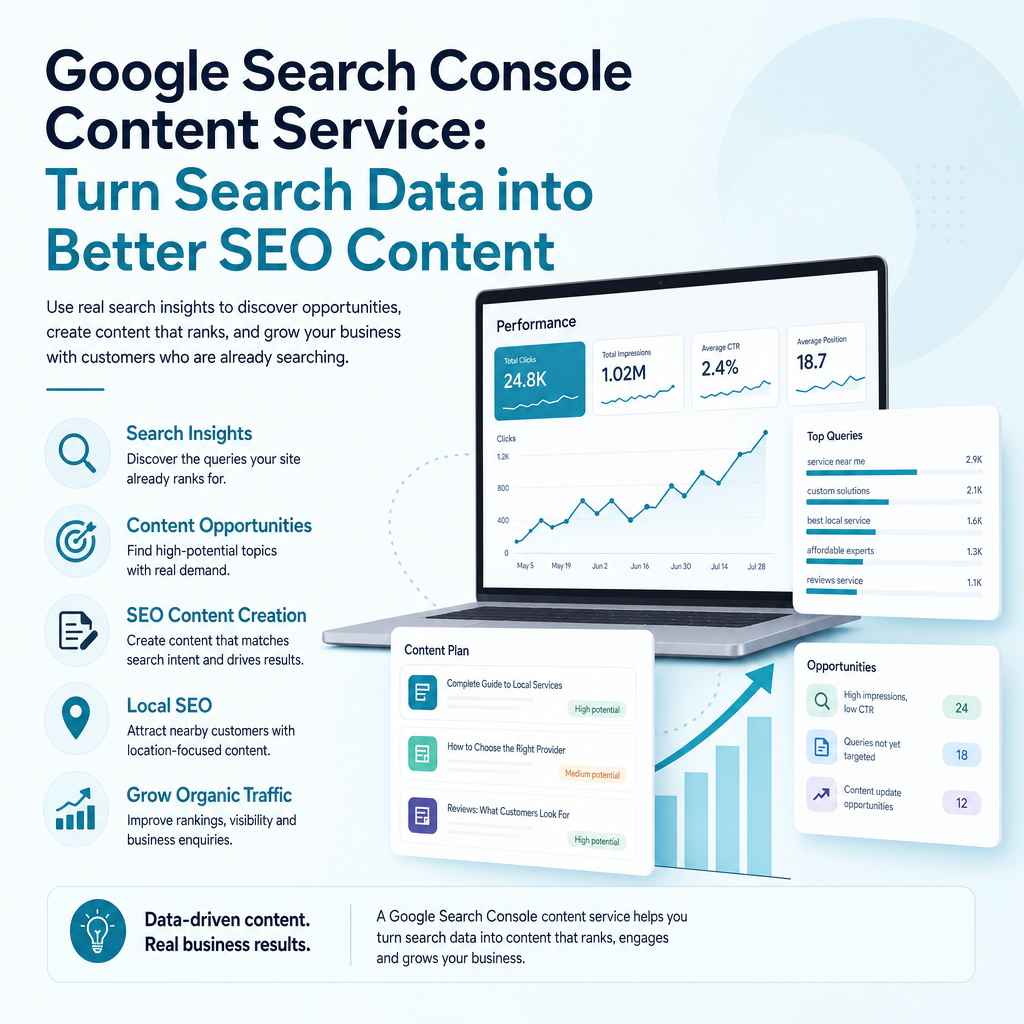
It also explains where Ammpli fits into the wider AI SEO tools landscape. Ammpli is designed for businesses that want SEO content to be based on real search opportunity rather than guesswork. Instead of starting with a blank page and asking AI to write something generic, Ammpli connects content planning to search data, helping businesses identify the keywords and topics where they already have ranking potential.
What Are AI SEO Tools?
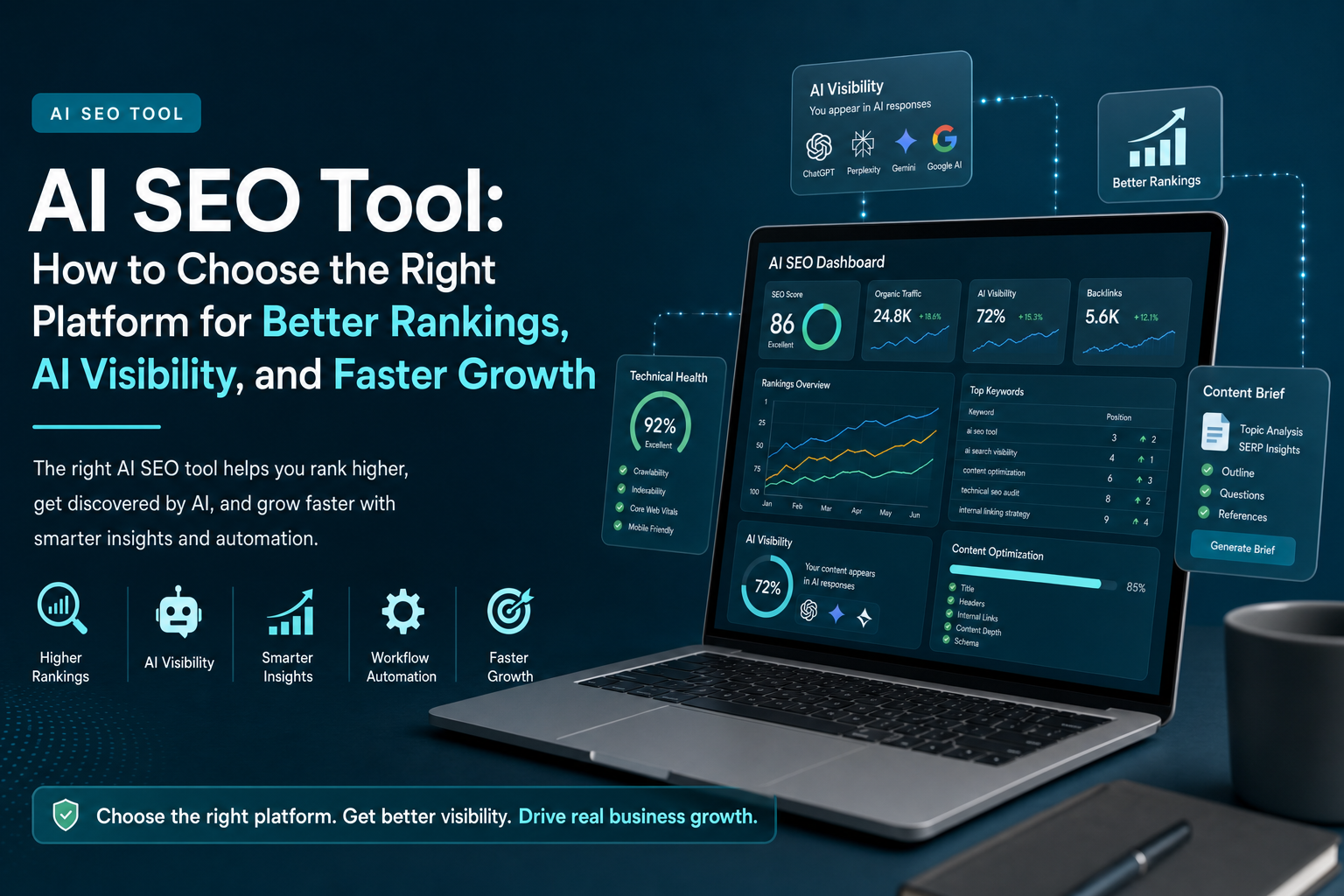
AI SEO tools are software platforms that use artificial intelligence to support search engine optimisation work. In practice, that can mean analysing search results, suggesting keywords, spotting content gaps, clustering related topics, improving page copy, generating outlines, monitoring rankings, tracking AI mentions, or speeding up reporting. The category is broad, which is why two tools with “AI SEO” in the label may do very different jobs.
A useful way to think about AI SEO tools is that they are assistants, not substitutes for strategy. They can speed up research, make patterns easier to spot, and reduce repetitive manual work. They cannot automatically know your customer concerns, local market reality, legal requirements, service nuances, or what makes your team more credible than a nearby competitor in London or elsewhere in the UK.
Most businesses do not need every type of AI SEO tool. A local service provider may need content planning, page optimisation, local keyword targeting, and simple reporting. A larger agency may also need AI visibility tracking, automation workflows, client reporting, and content operations support. Picking the right category matters far more than chasing the longest feature list.
Ammpli is an example of a more focused AI SEO content platform. Rather than trying to replace every part of SEO, it is built around a clear content workflow: connect your search data, identify ranking opportunities, create optimised content, and publish consistently. That makes it especially relevant for small businesses, marketers, and agencies that want a practical way to improve organic visibility without managing several disconnected tools.
Main types of AI SEO tools
- Content optimisation tools: These analyse top ranking pages and suggest related terms, questions, structure, and coverage improvements. Examples often mentioned include Surfer, Clearscope, Frase, NeuronWriter, and Ahrefs AI Content Helper.
- Content creation tools: These help generate briefs, outlines, drafts, metadata, and sometimes complete articles. Examples include Writesonic, AirOps, Scalenut, Outrank, Search Atlas, and Ammpli.
- Opportunity led SEO content tools: These help businesses identify what to write based on existing search performance, keyword opportunity, and content gaps. Ammpli fits strongly into this category because it is designed to turn search data into focused SEO content.
- AI visibility or GEO tools: These track how often your brand appears in AI generated answers across platforms such as ChatGPT, Perplexity, Gemini, and Google AI Overviews. Examples include AIclicks, Rankscale, SE Ranking AI tracking, KIME, and OtterlyAI.
- Technical and indexing tools: These help surface technical issues, indexing problems, crawling gaps, or AI readiness issues. Examples include SE Ranking, Indexly, and broader SEO suites.
- Keyword and topic research tools: These group related search terms, identify content opportunities, and map search intent. Examples include Semrush, Ahrefs, Keyword Insights, and Search Atlas.
- Reporting and analytics tools: These pull together Google Search Console, GA4, rank data, and sometimes AI referral or visibility data to make reporting easier. Whatagraph is often discussed in this area.
- Link building and outreach tools: These help with backlink prospecting, outreach, and relationship workflows. Pitchbox and community based options like Ranking Raccoon fit here.
Why AI SEO Tools Matter for UK Service Businesses
Many service businesses in the UK still rely heavily on referrals, repeat work, and local reputation. That remains valuable, but it no longer removes the need for search visibility. People who need a service often start by searching a question, a symptom, a problem, a price range, or a comparison. They may search “best accountant for contractors London,” “how much does emergency boiler repair cost,” “do I need a conveyancing solicitor for a leasehold flat purchase,” or “best AI SEO tools for small business.”
AI SEO tools matter because they can help a small team spot those opportunities faster. Instead of guessing what to write, they can show what people ask, what topics competitors cover, which pages are missing key information, and where your site is not matching search intent. That is useful if you do not have a full marketing department.
They also matter because search itself is changing. Google still drives a huge amount of demand, but users are also getting answers from AI Overviews and external AI tools. For some service businesses, especially advice led or research led ones, appearing in those answers may become part of brand discovery. A London based immigration solicitor, for example, may find that prospective clients read AI summaries before clicking through to law firm sites. A tool that helps track or improve visibility across these search journeys can add another layer of insight.
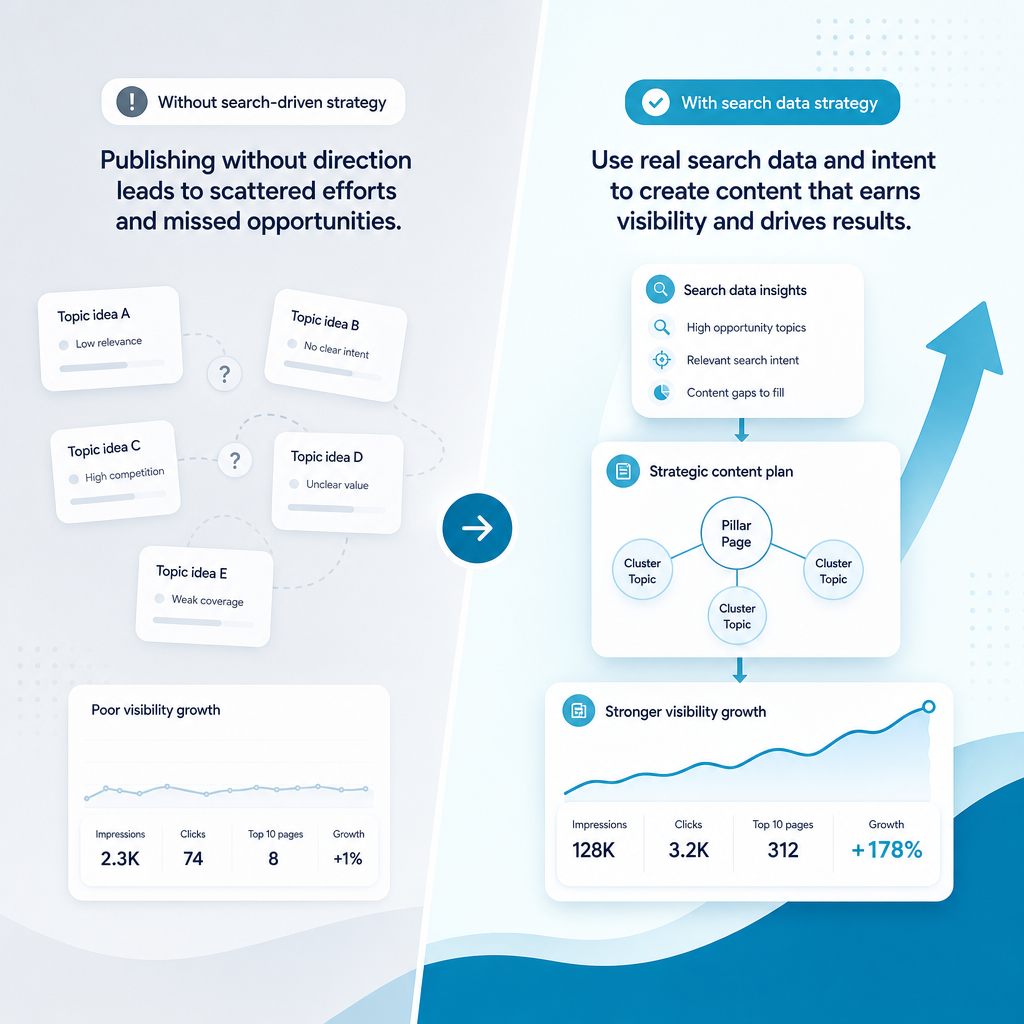
For many small businesses, the biggest challenge is knowing where to focus. They may have a website, a few service pages, and some old blog posts, but no clear view of which keywords are already close to performing. This is where a platform such as Ammpli becomes useful. Ammpli is built around the idea that SEO content should be connected to existing search data. It helps identify keyword opportunities where a website already has visibility, then supports the creation of content designed to improve those positions.
That matters because many businesses do not need more random content. They need more useful content. A business that is already appearing around certain topics may be much closer to ranking than it realises. By identifying these near miss opportunities, an AI SEO platform can help teams prioritise the pages and articles most likely to make a difference.
Common business situations where these tools help
- A small London agency needs to create better service pages without hiring a large in house content team.
- A multi location service business wants to understand which local pages are underperforming and why.
- A consultant wants to publish educational content that answers early stage customer questions and builds trust.
- A business owner is paying for SEO but wants clearer reporting on what is improving and what is not.
- A marketing team wants to refresh old pages that have lost traffic after a Google update.
- A local business wants to create content for specific services and locations without sounding generic.
- An agency wants a more repeatable process for turning keyword data into articles, landing pages, and content plans.
How AI SEO Tools Work in Practice
Most AI SEO tools work by combining data sources with pattern recognition. They look at search results, page structure, keyword usage, question formats, headings, competitor content, internal links, or analytics signals. The tool then turns that information into recommendations, such as “cover this topic,” “expand this section,” “improve the heading structure,” or “track this prompt across AI search tools.”
Some tools work mainly inside the writing process. You enter a target keyword, the tool analyses top pages, and you get a live content score as you write. Others work at a broader level, such as identifying topic clusters, finding content gaps across a full website, or showing which AI models mention your brand and cite your pages. A few combine several of these jobs inside one system.
What matters most is not the AI label. It is the quality of the underlying data, the usefulness of the recommendations, and whether the outputs fit your workflow. A smart looking dashboard is not much help if your team still has to export everything into spreadsheets and rewrite every recommendation manually.
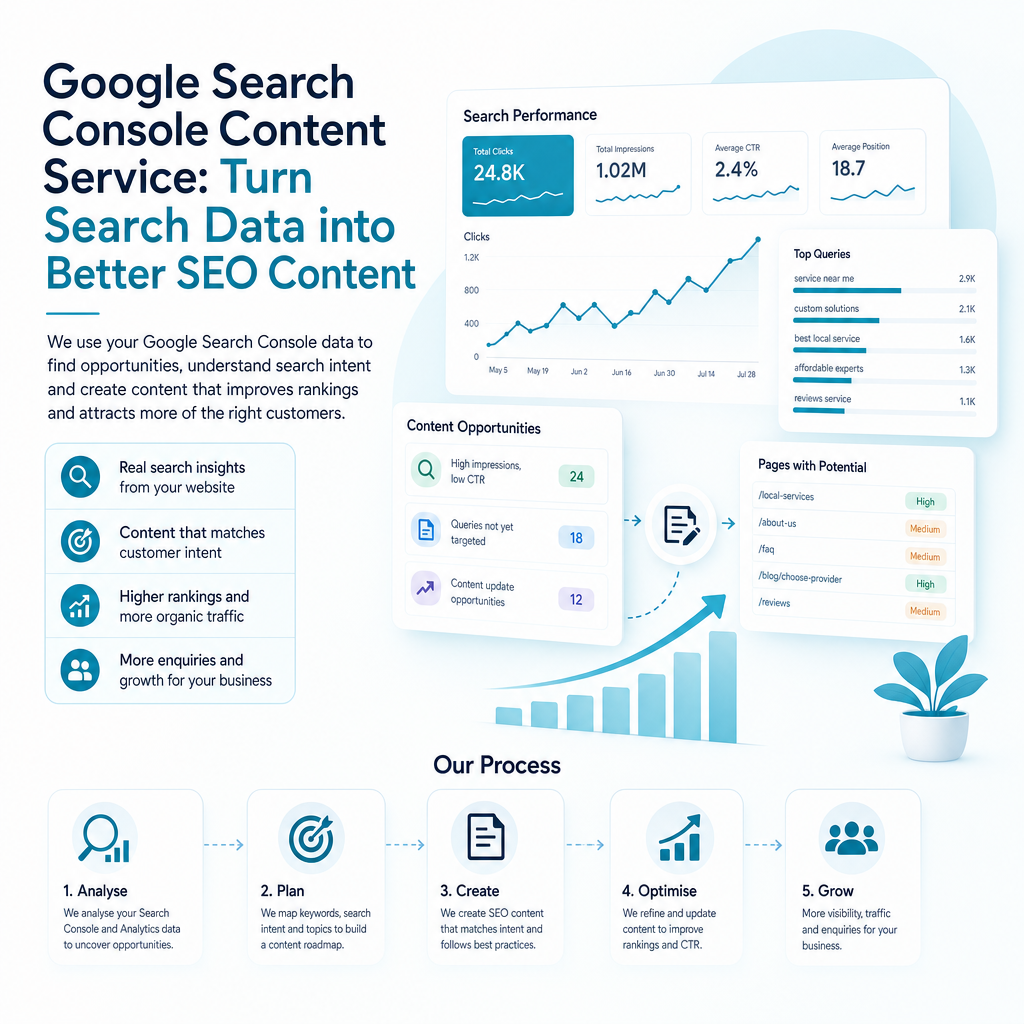
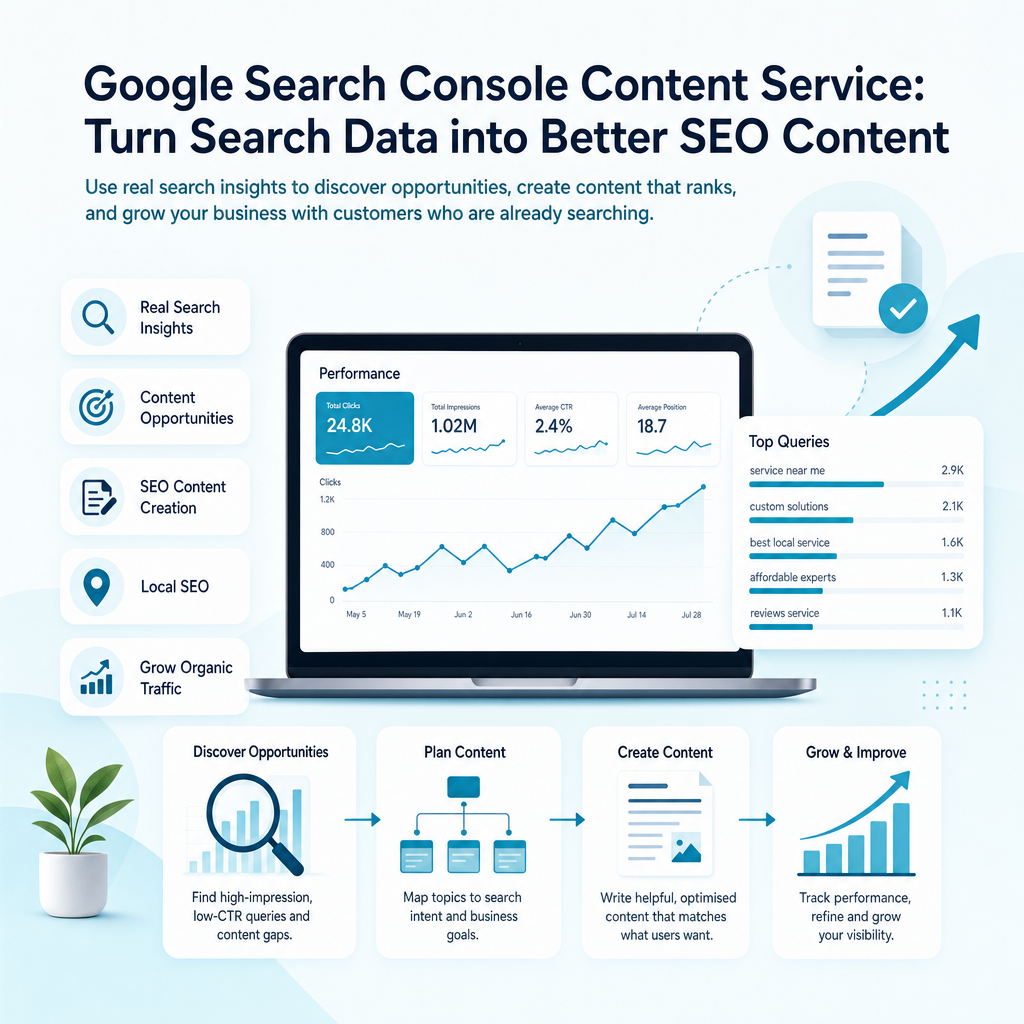
A practical Ammpli style workflow looks different from simply opening an AI writing tool and asking for an article. First, the business connects its search data. Then the platform identifies keywords and topics where there is already ranking potential. From there, it helps turn those opportunities into structured content ideas, optimised articles, and a clearer publishing plan. For businesses that struggle to keep SEO content moving, this creates a more useful process than relying on disconnected keyword lists, generic AI drafts, and manual guesswork.
Typical workflow for using AI SEO tools
- Choose a target topic, service, location, or keyword.
- Review related search terms, user questions, and competitor pages.
- Identify whether the website already has impressions or ranking potential for that topic.
- Build a page brief or content outline.
- Write or improve the page with optimisation feedback.
- Add real examples, local relevance, service detail, and proof points.
- Publish and track rankings, traffic, impressions, and conversions.
- Refresh ageing pages when they lose performance.
- For some businesses, monitor AI mentions and cited sources across answer engines.
What AI SEO Tools Can Help With
Used well, AI SEO tools can make a small marketing function more efficient. They can reduce the time spent manually reviewing competitor pages, pulling questions from search results, comparing headings, clustering keywords, or checking content gaps. They can also give business owners more visibility into why a page may not be performing.
The biggest win is usually speed with structure. Instead of starting from a blank page, you start from a research backed brief. Instead of reviewing ten competing pages line by line, you get a structured view of recurring themes, questions, and terms. Instead of waiting months to notice a content issue, you get audit signals earlier.
That said, “can help” is different from “can solve everything.” If your service offer is unclear, your site is slow, your pages are weak, or your content sounds interchangeable with every competitor in London, software alone will not fix the problem.
This is where Ammpli’s approach is useful. It focuses on strategic SEO content rather than content volume for its own sake. For many small businesses, the commercial benefit is not publishing daily generic articles. It is creating a manageable number of targeted pieces that answer real search demand, support local visibility, and help the website build topical authority over time.
For example, a small business may not need fifty articles about broad industry topics. It may need five strong service pages, three location focused guides, and a set of articles that answer the questions customers ask before they enquire. Ammpli is designed to help businesses find those opportunities and create content around them more consistently.
Useful outcomes AI SEO tools may support
- Better content planning based on real search demand
- Improved service page structure and topical coverage
- Faster first drafts and stronger briefs for writers
- Clearer reporting for clients or internal stakeholders
- Faster identification of technical or indexing issues
- Smarter content refreshes for existing pages
- More insight into AI visibility and citations
- More consistent publishing without relying on guesswork
- Better local SEO content for specific services, cities, and regions
What AI SEO Tools Usually Cannot Do Well on Their Own
There is a lot of marketing noise around AI SEO tools, and that can create false expectations. Many tools can produce a draft in minutes, but speed is not the same thing as quality. Generic AI writing often lacks practical detail, local knowledge, lived experience, and a persuasive understanding of how real customers think.
This is especially relevant for service businesses. If you are a London roofer, a family solicitor, a mortgage broker, a physiotherapist, or a security company, customers want signs of credibility. They want clear information, not stitched together summaries that sound like every other page online. Search engines and AI systems are also getting better at surfacing content with real expertise and stronger trust signals.
AI tools also struggle when the job needs judgment. They do not truly know which customer objections matter most, what local regulations affect your service, how your process differs from competitors, or which proof points will help someone enquire. They need guidance, editing, and commercial context.
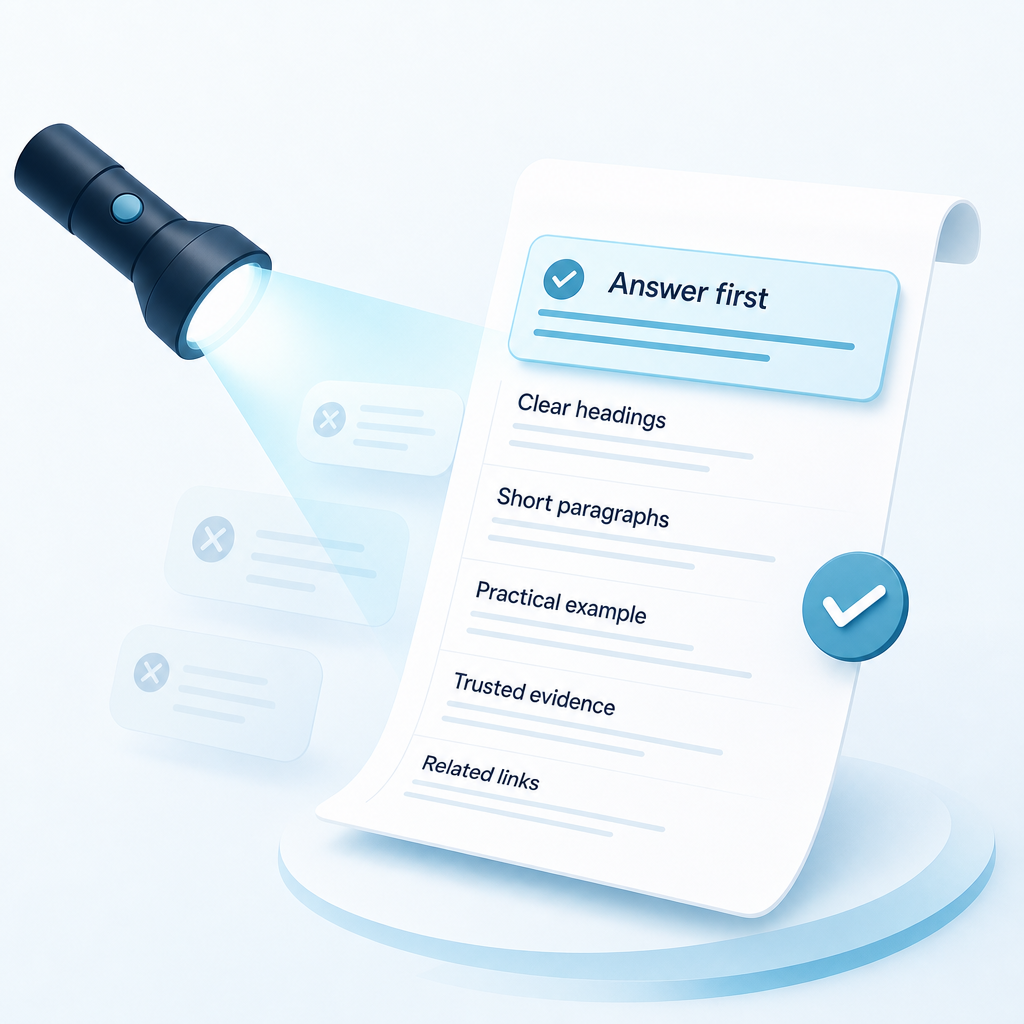
This is why the strongest AI SEO workflows still involve human input. A platform such as Ammpli can help identify opportunities and create a more structured content process, but the final content should still reflect the business behind it. That means adding service specific detail, real customer questions, local context, accurate claims, internal links, calls to action, and examples that demonstrate experience.
Common weak spots
- Generic tone of voice
- Thin local relevance for UK or London audiences
- Shallow advice that misses customer worries
- Repetition of what competitors already say
- Over optimised content that reads awkwardly
- Weak judgment about what should be a page, a section, or a FAQ
- Missing proof, case studies, reviews, or examples
- Weak calls to action that do not move the reader towards an enquiry
Different Types of AI SEO Tools and Who They Suit
Not every business needs the same toolset. A one person consultant in London has very different needs from a digital agency managing twenty client sites. One of the biggest mistakes people make is buying an advanced platform built for large content operations when they really need a simpler writing and optimisation workflow.
It helps to choose by use case rather than by hype. If your team struggles to create content consistently, a content workflow tool may help most. If your problem is measuring performance across channels, reporting matters more. If you already publish regularly but do not know what to cover next, keyword clustering or content strategy tools may be the better fit.
Ammpli is particularly relevant for businesses that know SEO content matters but do not have a clear system for deciding what to write. It can support small business owners, marketers, agencies, and service based companies that want content ideas to come from search opportunity rather than opinion.
The table below simplifies the picture.
| Business type or need |
Most useful AI SEO tool type |
Why it fits |
| Local UK service business with limited content |
Content optimisation and keyword research |
Helps create clearer service pages and educational articles around real search demand |
| Small business that wants SEO content without a large agency retainer |
Opportunity led AI SEO content platform such as Ammpli |
Connects search data, identifies content opportunities, supports niche and local targeting, and helps create consistent optimised content |
| Small agency managing multiple websites |
All in one SEO suite, reporting, and content tools |
Supports planning, optimisation, tracking, and client reporting in one workflow |
| Advice led consultant or specialist |
Briefing and writing tools |
Speeds up research while keeping expert insight central to the final content |
| Large content team or publisher |
Workflow automation, inventory tools, and AI visibility tracking |
Helps scale production, refresh old content, and monitor search changes |
| Business focused on AI answer visibility |
AI visibility or GEO tools |
Tracks mentions, citations, prompts, and competitor presence in AI search systems |
| Technical SEO or indexing issues |
Site audit and indexing tools |
Surfaces crawl, indexing, and page health problems that block visibility |
Examples of Popular AI SEO Tools in 2026
The market changes quickly, and many tools now overlap. A few are known for content optimisation, a few for all in one SEO, a few for AI visibility tracking, and a few for automation. Rather than thinking about one “best” tool, it is better to ask which one best matches your process, budget, and content standard.
Tools often mentioned for content optimisation include Surfer, Clearscope, Frase, NeuronWriter, and Ahrefs AI Content Helper. These are usually most relevant when you already have a human led writing process and want stronger guidance on structure, topical coverage, and on page improvement.
For AI assisted content workflows, businesses often look at platforms such as Writesonic, AirOps, Scalenut, Outranking, Search Atlas, and Ammpli. Ammpli sits in this category with a more opportunity led focus, using search data to help identify what a business should write about before content is created.
For broader SEO platforms with AI elements, Semrush One, SE Ranking, and Ahrefs remain major names. For AI visibility tracking, tools such as AIclicks, Rankscale, KIME, OtterlyAI, Indexly, and SE Ranking’s AI tracking features are getting more attention.
The important point is that these tools are not interchangeable. A content scoring platform, a rank tracker, an AI visibility monitor, and an opportunity led SEO content platform may all use AI, but they solve different problems. If your issue is “we do not know what to write,” then a tool focused on search opportunity and content planning may be more useful than a technical dashboard. If your issue is “we cannot prove results,” then reporting and tracking may matter more.
A simple way to group well known options
- Content optimisation: Surfer, Clearscope, Frase, NeuronWriter, Ahrefs AI Content Helper
- AI assisted content workflows: Writesonic, AirOps, Scalenut, Outranking, Search Atlas, Ammpli
- Opportunity led SEO content: Ammpli, Search Atlas, Keyword Insights, Semrush content tools
- All in one SEO platforms with AI features: Semrush One, SE Ranking, Ahrefs, Search Atlas
- AI visibility tracking: AIclicks, Rankscale, KIME, OtterlyAI, Indexly
- Reporting and analytics: Whatagraph and broader reporting layers connected to Google Search Console, GA4, Ahrefs, Semrush, or rank tracking tools
Where Ammpli Fits in the AI SEO Tools Market
Ammpli is best understood as an AI SEO content platform for businesses that want to stop guessing what to write. Its purpose is not simply to generate more content. It is to help businesses create SEO content around the keywords, services, and topics that are most likely to support organic growth.
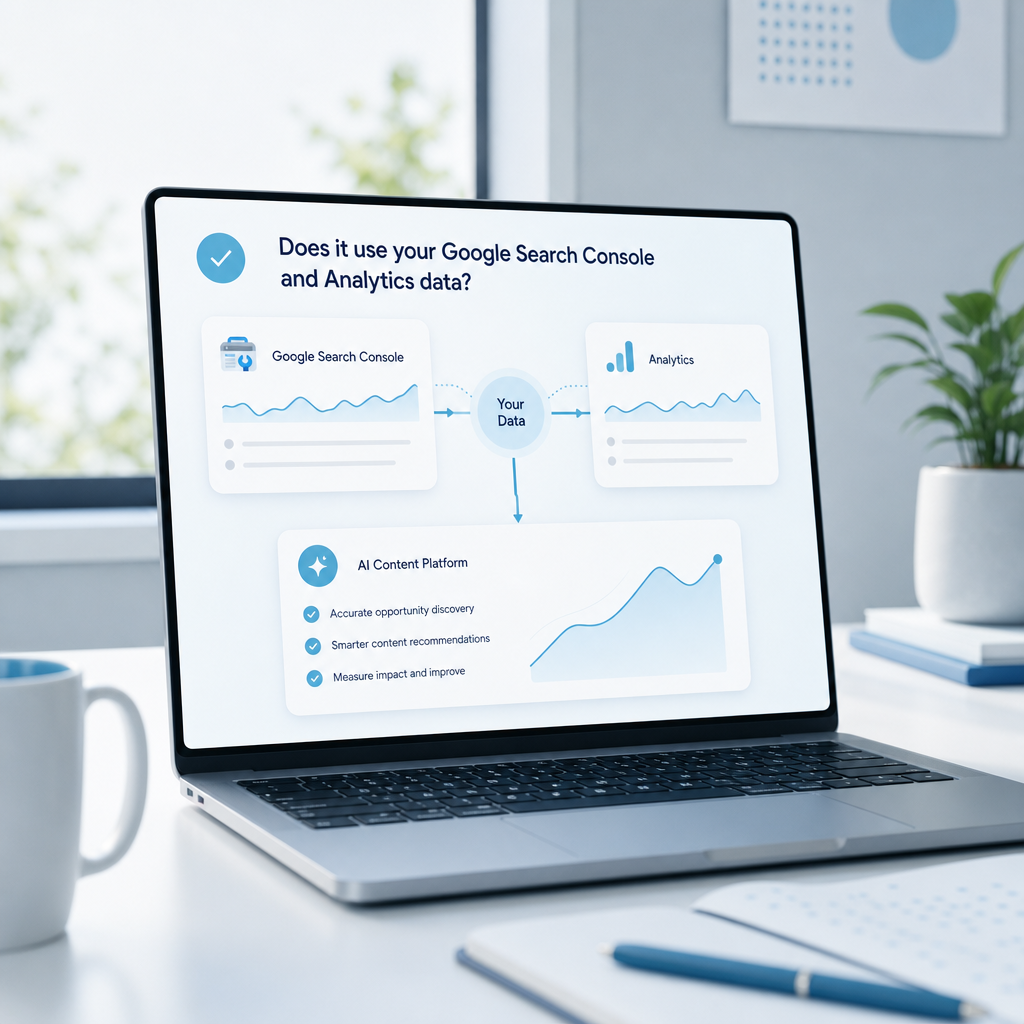
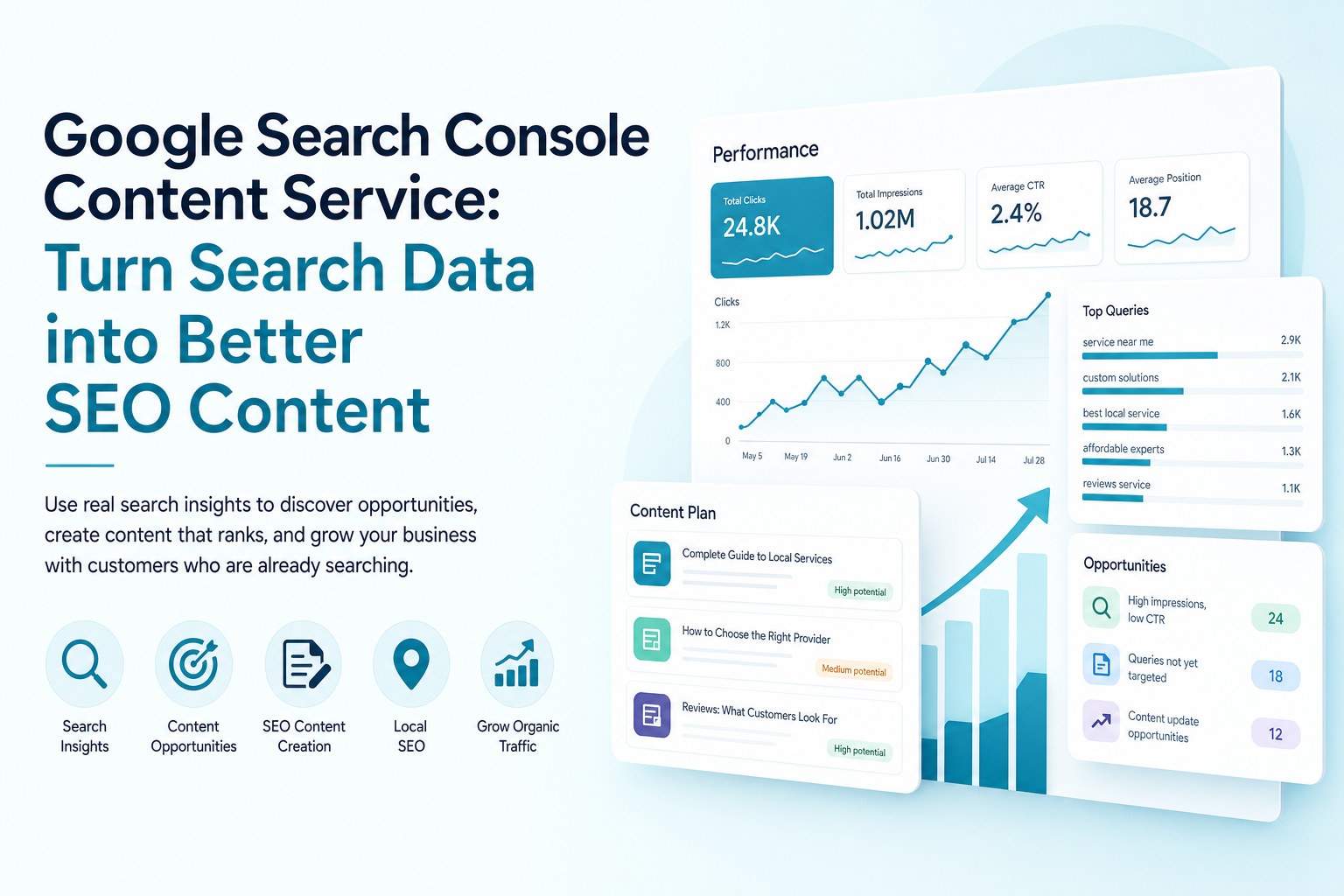
That distinction is important. Many AI writing tools start with a prompt. Ammpli starts with search opportunity. By connecting with data sources such as Google Search Console, the platform can identify areas where a website already has impressions or ranking potential. That gives the content process a more strategic foundation.
For example, a business may already be appearing on page two or three for relevant searches. Those keywords may not be bringing in much traffic yet, but they show that Google has already started to associate the website with the topic. Ammpli is designed to help surface these opportunities, then create content that can improve topical coverage, relevance, and ranking potential.
This can be useful for small businesses because it creates a more manageable SEO process. Instead of trying to build a full SEO department, the business can use a structured platform to identify content opportunities, produce optimised articles, support local or niche targeting, and maintain a more consistent publishing rhythm.
Ammpli is also relevant for agencies and marketers who need to create SEO content for clients. Rather than treating every article as a standalone writing task, the platform supports a repeatable process: find the opportunity, build the content, publish consistently, and review performance over time.
Ammpli is most useful for businesses that want to:
- Find content ideas based on real search data
- Identify keywords where they already have ranking potential
- Create SEO articles without relying on generic AI drafts
- Support local SEO content for specific services and locations
- Plan content visually across the month
- Publish more consistently without building a large content team
- Connect content creation more closely to organic traffic growth
How Much Do AI SEO Tools Cost?
Pricing varies widely. Budget tools may start below £30 or £40 per month. Mid range tools often sit between roughly £75 and £250 per month depending on users, tracked keywords, content limits, prompts, or reporting features. Higher tier products for agencies or larger teams can run well beyond that.
The cost question matters because many businesses end up paying for several overlapping tools. For example, a company might have one tool for keyword research, one for content scoring, one for reporting, and one for AI visibility. Before long, the monthly spend becomes substantial without a clear return.
For a UK service business, a good pricing decision comes down to commercial value. If a tool helps you create better pages that bring in qualified enquiries, it may justify itself quickly. If it mainly produces more dashboards and more noise, it is a cost without much outcome.
Ammpli is positioned for businesses that want SEO content support without the complexity of a large software stack or the cost of a traditional agency process. That does not mean every business should use it. It means it is worth considering if your main problem is content consistency, keyword prioritisation, and turning search data into useful articles.
What affects pricing
- Number of tracked keywords or prompts
- Number of users or workspaces
- How many articles, briefs, or audits you can create
- Whether AI visibility tracking is included or sold separately
- Access to integrations such as WordPress, Shopify, Google Docs, Google Search Console, or GA4
- Level of reporting, white label, or agency support
- Whether the tool is an add on inside a wider SEO platform
- Whether the platform supports direct publishing or only provides exported content
Common Misunderstandings About AI SEO Tools
A lot of confusion comes from assuming that AI SEO tools are either miracle workers or complete nonsense. In reality, most sit somewhere in the middle. They can help a lot when used with good judgment. They become disappointing when people expect them to replace strategy, expertise, or editing.
One common misunderstanding is that AI written content automatically ranks. It can rank, but not because it is AI written. It ranks when it is genuinely useful, well structured, accurate, and more helpful than competing pages. Another misunderstanding is that content scoring tools reflect quality in a meaningful business sense. A page can receive a decent score and still fail to persuade real customers.
There is also a misconception that AI search visibility is a separate discipline from SEO. In practice, strong fundamentals still matter. Clear site structure, useful pages, good technical health, trust signals, and expert led content remain the foundation.
Another misunderstanding is that SEO content should be created in large volumes. For most small businesses, that is not true. Publishing more weak content rarely creates strong results. A more effective approach is to identify the right opportunities and create content that properly addresses them. This is one reason Ammpli focuses on data driven content planning, rather than simply encouraging businesses to produce as many AI articles as possible.
Misunderstandings to watch for
- “If I buy the tool, rankings will improve automatically.”
- “A high content score means the page is good.”
- “AI can replace expert input for service pages.”
- “Tracking AI prompts matters more than improving the website.”
- “More features always mean better value.”
- “More content always means better SEO.”
- “Any AI article is good enough as long as it has keywords.”
Common Mistakes People Make When Choosing AI SEO Tools
Many businesses buy based on a comparison article, a social post, or a feature they saw in a demo. That is understandable, but it often leads to paying for the wrong product. A London business with a small team may not need enterprise workflow automation. A one person consultancy probably does not need multiple AI visibility dashboards before it has built out its core service pages.
Another common mistake is picking a tool based on how much content it can generate, rather than how useful that content is after editing. Fast content is only valuable if it still matches your brand, your audience, and your expertise. The same goes for automation. A faster poor process is still a poor process.
A final mistake is ignoring adoption. If your team will not actually use the tool, or if the workflow feels clunky, the software will sit idle. Good fit beats impressive complexity.
Businesses should also be careful not to separate content from search data. If a tool produces articles without any clear connection to keyword opportunity, existing rankings, customer intent, or commercial value, it may create activity without progress. A better workflow starts by asking where the opportunity is, then uses AI to help build content around that opportunity. This is the problem Ammpli is designed to address.
What to avoid
- Buying a tool before defining your SEO goal
- Paying for overlapping platforms that do the same job
- Choosing AI writing over customer insight
- Ignoring reporting and measurement
- Skipping free trials or short tests
- Assuming a US focused workflow will naturally fit UK local search needs
- Publishing AI content without adding local detail, examples, and proof
- Choosing a tool that creates content but does not help prioritise what should be written first
How to Choose the Right AI SEO Tool for Your Business
The best way to choose an AI SEO tool is to start with the problem, not the platform. Ask what is slowing your SEO down. Is it not knowing what topics to target? Is it weak service page copy? Is it inconsistent publishing? Is it poor reporting? Is it no visibility into whether your brand is mentioned in AI answers? Once the problem is clear, the shortlist becomes much easier.
You should also think about who will use the tool day to day. If the person using it is the business owner, the learning curve matters a lot. If the person using it is an agency or in house marketer, deeper features may be worthwhile. If several people need access, user limits and collaboration features matter.
For UK businesses, especially those targeting local markets such as London, check whether the tool supports local intent properly. Some tools are strong on broad content topics but less useful when the real need is creating location pages, tracking local search behaviour, or writing content that sounds natural to a UK audience.
If your main challenge is deciding what to write, look closely at whether the tool uses your own search data. A platform such as Ammpli may be useful because it helps identify content opportunities from existing performance, rather than relying entirely on broad keyword databases or generic AI prompts. That can make the content process feel more connected to growth.
A practical checklist
- What exact SEO problem are we trying to solve?
- Do we need content help, technical help, reporting, or AI visibility tracking?
- Who on the team will use it every week?
- Does it fit our CMS and existing workflow?
- Can it support UK spelling, local examples, and regional targeting?
- Does it connect to useful data sources such as Google Search Console?
- Can it help us prioritise content opportunities?
- Can we measure whether it improves enquiries, leads, or useful traffic?
- Will we still need expert editing after the tool does its part?
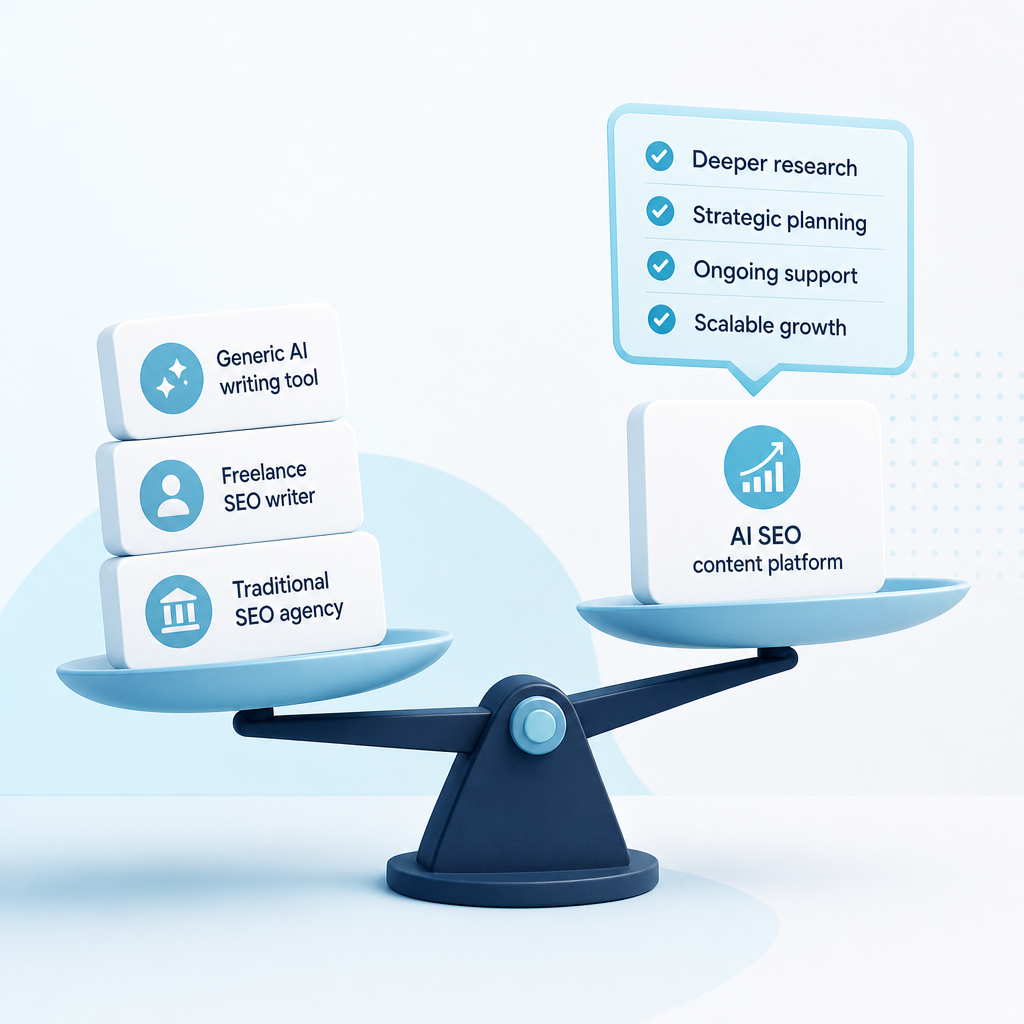
Do You Need an AI SEO Tool or an SEO Provider?
This is a common early stage question, especially for small service businesses. A tool can help if you already have someone capable of using it well. That might be an owner with SEO knowledge, an in house marketer, a freelancer, or a small agency. The tool speeds up work, but it still needs someone to interpret the recommendations and turn them into pages that persuade real customers.
You may need a provider rather than just software if the issue is broader than production. For example, if your service positioning is unclear, your site structure is weak, your local SEO is poor, your pages do not convert, or your reporting is disconnected from business outcomes, a tool alone will not solve the real problem. In those cases, strategy and implementation matter more than automation.
For many businesses, the answer is a mix. A provider uses tools behind the scenes, while you focus on running the business. That is often the most practical route for firms in London and across the UK that want growth but do not want to build an internal SEO process from scratch.
Ammpli can sit between a basic DIY AI writing tool and a traditional SEO provider. It gives businesses a more structured way to plan and create SEO content, while still keeping the process accessible. For some companies, that may be enough to build momentum. For others, especially those with technical SEO issues, weak site structure, or unclear positioning, expert support may still be needed alongside the tool.
When It Makes Sense to Speak to a Professional
There is a point where experimenting with software becomes less useful than getting direct help. If your traffic has dropped after an update, if your content is not bringing in leads, if you are unsure which pages to build, or if you are paying for tools you barely use, that is usually a sign that expert input would save time.
The same applies if you operate in a high trust or regulated service sector. Legal, financial, healthcare, and technical professional services need more than content volume. They need accuracy, careful claims, trust signals, and content shaped by real expertise. AI can support the workflow, but a qualified human should still drive the message.
If you are a London business competing in a crowded local market, a professional can also help spot where local intent, review signals, conversion issues, or service page gaps are being missed. Those are often bigger commercial wins than simply publishing more blog posts.
However, if your main issue is that you know you should be publishing more SEO content but do not know where to start, a platform such as Ammpli may provide the structure you need. It can help turn search data into content ideas, support a more consistent publishing rhythm, and reduce the amount of manual research needed before each article is created.
Using Ammpli to Make SEO Content More Practical
For many small businesses, the challenge is not understanding that SEO matters. It is knowing what to write, where to focus, and how to keep content moving without wasting time on disconnected tools. Ammpli is built to make that process more practical.
By connecting search data with AI assisted content planning, Ammpli helps businesses identify real ranking opportunities, create useful SEO content, and build visibility in a more structured way. It is not about replacing strategy or expertise. It is about giving small teams a clearer path from keyword opportunity to published content.
This is especially useful for businesses that have some existing website visibility but are not yet turning that visibility into consistent traffic or enquiries. If your site is already appearing for relevant searches, even in lower positions, there may be opportunities to improve those pages or build supporting articles. Ammpli helps bring those opportunities to the surface.
It can also support local and niche content. For example, a London service business may need content around specific services, boroughs, customer questions, and comparison searches. A generic AI writing tool may produce a broad article, but it will often miss the local nuance. Ammpli’s focus on niche specific and local content makes it more relevant for businesses that need content to reflect how their real customers search.
Frequently Asked Questions
People researching AI SEO tools often ask broad questions before they decide whether to handle SEO internally, use software, or speak to a specialist. The answers below cover common early stage concerns in a clear and practical way.
What are AI SEO tools used for?
AI SEO tools are used for tasks such as keyword research, topic clustering, content briefs, page optimisation, technical audits, AI visibility tracking, reporting, and content refreshes. Some tools focus on just one of these jobs, while others try to cover several in one platform.
Can AI SEO tools write website content for me?
Yes, many can produce drafts, outlines, and metadata. The better question is whether that content is ready to publish. In most cases, it still needs human editing, stronger examples, local relevance, and clearer commercial messaging before it reflects your business properly.
Do AI SEO tools help with local SEO in London?
They can help, especially with content planning, local page optimisation, technical audits, and reporting. They are most useful when combined with a local SEO strategy that covers service areas, Google Business Profile work, reviews, local links, and pages built around how London customers actually search.
How much do AI SEO tools cost?
Some entry level tools start around the cost of a low monthly software subscription, while more advanced platforms for agencies or larger teams can cost hundreds per month. The final price often depends on users, tracked keywords, prompts, reports, integrations, and content limits.
Can AI SEO tools improve rankings on their own?
Not on their own. They can support better decisions and faster execution, but rankings still depend on page quality, technical health, search intent match, trust signals, links, and how well your content serves real users.
Should a small business buy an AI SEO tool or hire an SEO specialist?
If you already have time and internal skill, a tool may be enough to support execution. If you need strategy, implementation, local SEO direction, or clearer lead generation outcomes, speaking to a specialist is often the better investment.
Where does Ammpli fit among AI SEO tools?
Ammpli fits into the AI SEO content workflow category. It is designed to help businesses identify content opportunities using search data, create optimised articles, support local and niche SEO targeting, and publish more consistently. It is most relevant for small businesses, marketers, and agencies that want a clearer system for SEO content without relying only on generic AI writing tools.
Is Ammpli just an AI writing tool?
No. Ammpli is better understood as an AI SEO content platform. A standard AI writing tool usually starts with a prompt. Ammpli is designed to start with search opportunity, helping businesses understand what content may be worth creating before the writing process begins.
Can Ammpli help with content ideas?
Yes. Ammpli is designed to help identify keyword and content opportunities based on website search performance. This can be especially useful for businesses that know they need to publish more SEO content but are unsure which topics, services, or locations to prioritise.
Who is Ammpli best suited to?
Ammpli is best suited to small businesses, marketers, agencies, and service based companies that want a more structured way to create SEO content. It is particularly useful for teams that want to move away from guesswork and build content around real search demand.
Final Thoughts
AI SEO tools are now part of the search marketing landscape, but they are not all trying to solve the same problem. Some help with optimisation. Some help with writing. Some track rankings. Some monitor AI visibility. Others, like Ammpli, focus on turning search data into practical content opportunities.
For small and medium sized businesses, the best tool is usually not the one with the longest feature list. It is the one that helps you take the next useful step. That may be improving weak service pages, creating local content, refreshing old articles, finding near ranking keywords, or publishing more consistently.
The businesses that benefit most from AI SEO tools will not be the ones that publish the most content. They will be the ones that use AI to make better decisions, create more useful pages, and connect their content strategy to genuine customer demand.
If your business wants to stop guessing what to write and start building content around real search opportunity, Ammpli offers a focused way to make AI SEO more useful, more manageable, and more connected to growth.
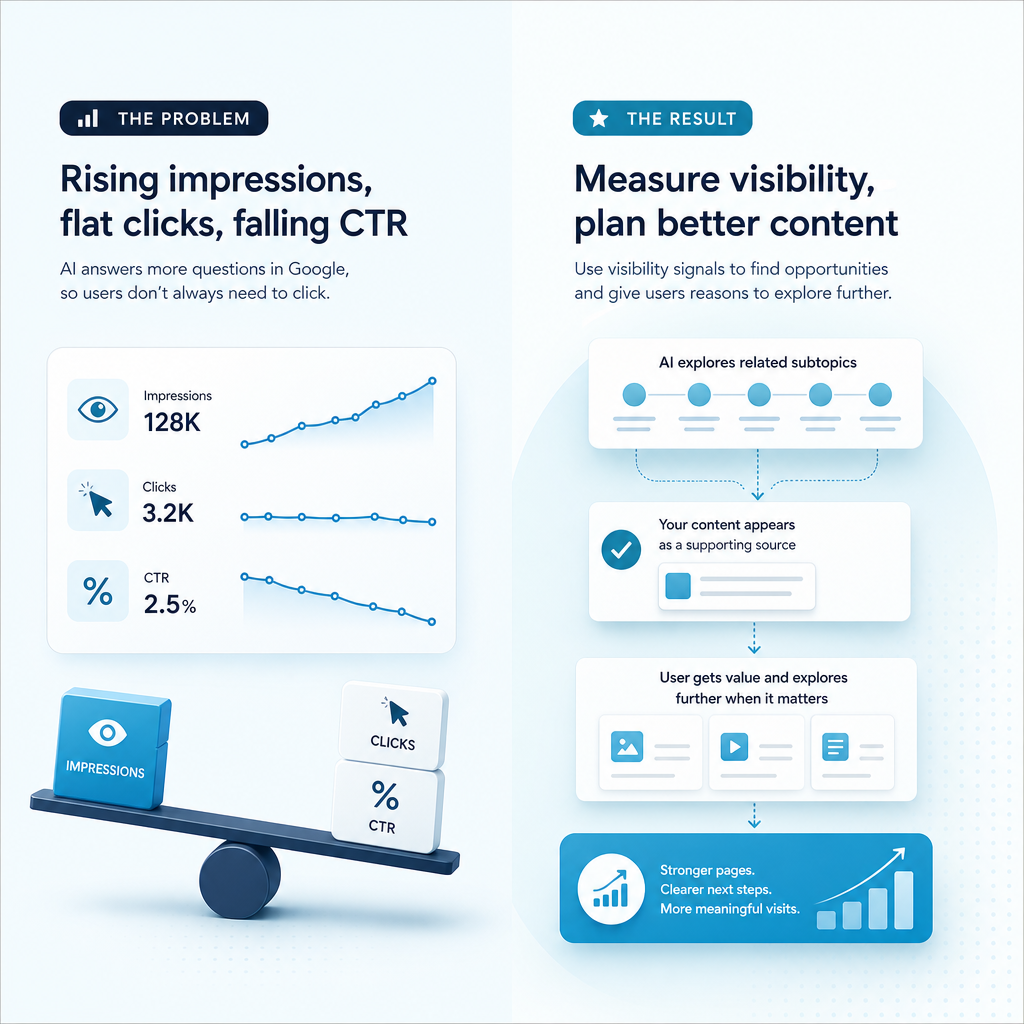
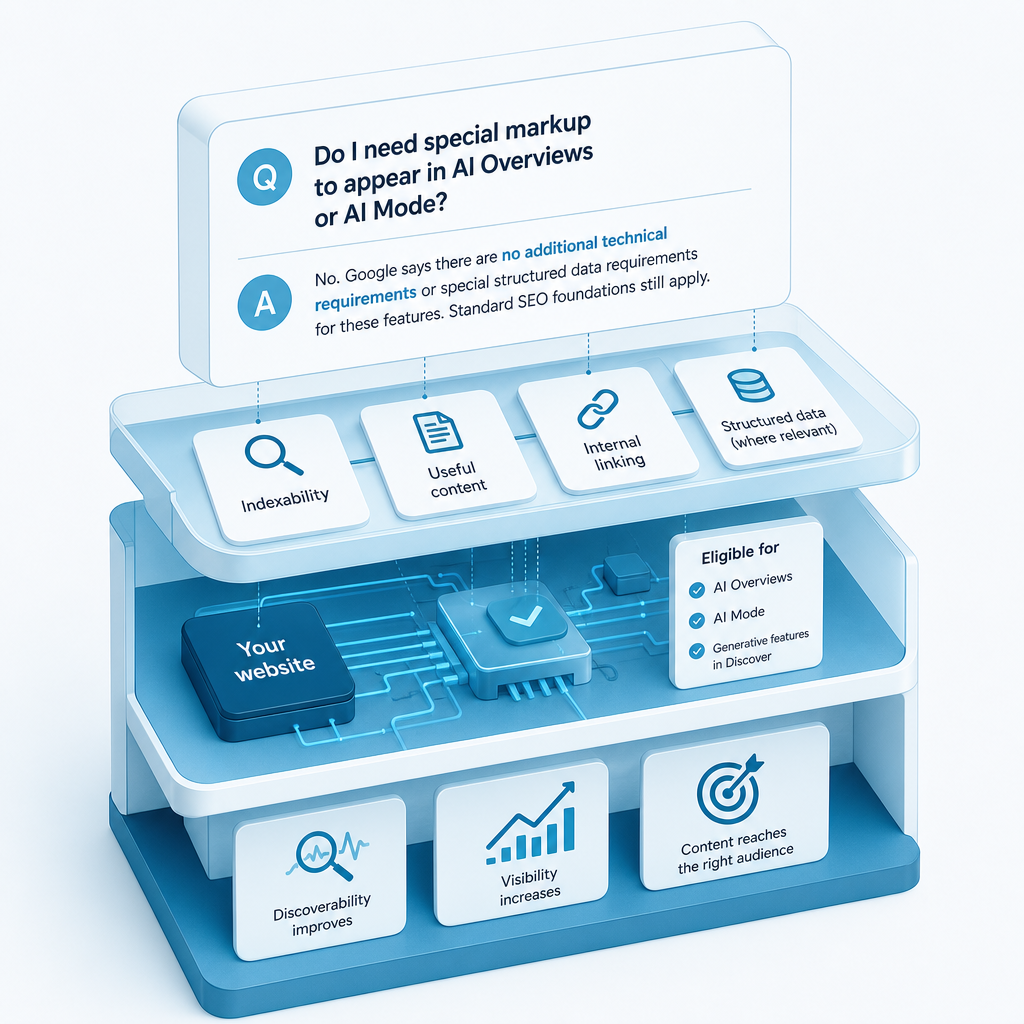
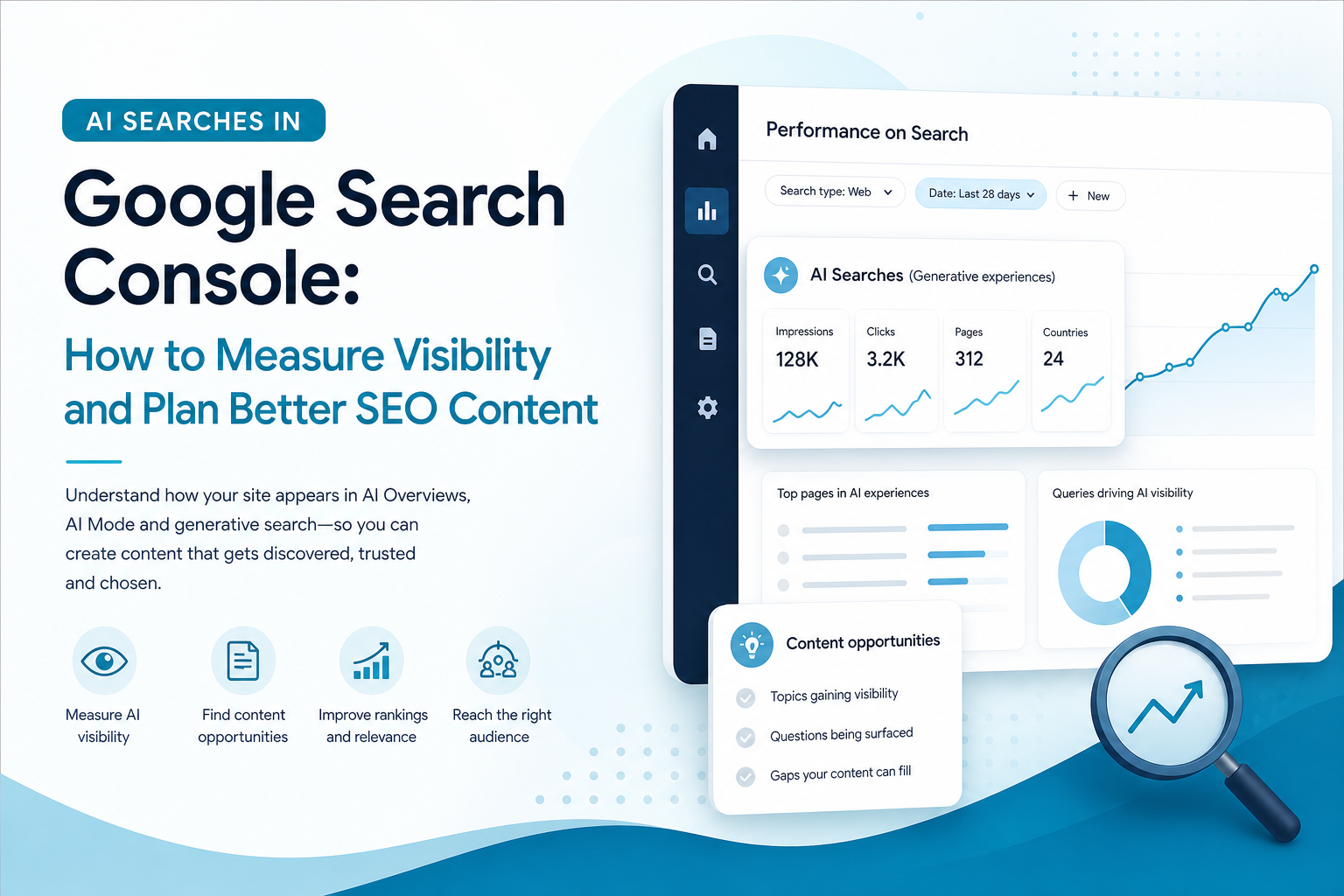 Small businesses are beginning to appear in AI Overviews, AI Mode and other generative search experiences, but many owners still cannot tell what that visibility means for their website. You may see more impressions without a matching rise in clicks, or notice that traditional ranking reports no longer explain how customers discover your content.Understanding AI searches in Google Search Console gives you a clearer way to interpret these changes. Google is adding dedicated reporting for generative AI features, while its guidance confirms that the same sound SEO principles remain relevant: crawlable pages, useful content, clear structure and strong relevance to the searcher’s needs.This guide explains what the data includes, how to use it for SEO content planning and what to look for when choosing an AI SEO content platform such as Ammpli.