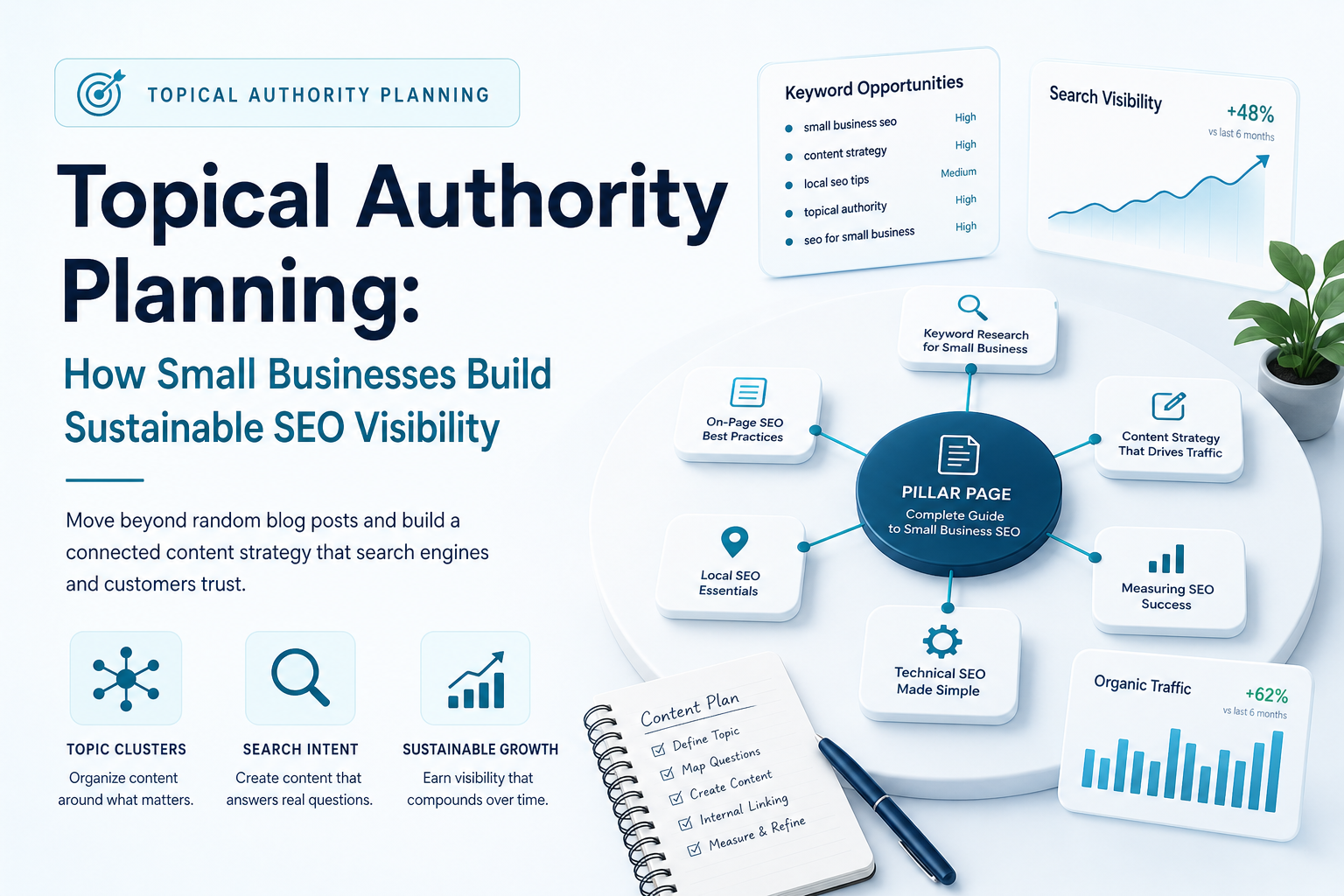
 Publishing regular blog posts is not enough if every article targets a different subject, repeats an existing page or reflects a keyword chosen without evidence. Small businesses often have useful expertise, yet struggle to turn it into organic visibility because they lack a clear plan for what to publish, how each page should connect and which opportunities are realistic.
Topical authority planning provides that structure. It helps you choose a focused subject, map related questions, group keywords by intent and create content that works as a connected system rather than a collection of isolated posts. The aim is not to publish the most articles or promise a position at the top of Google. The aim is to become a consistently useful source on topics that matter to your customers and your business.
This guide explains what topical authority means, how topic clusters and semantic keyword mapping work, which approaches are available and how to decide whether software, internal work or professional support is the right fit.
What topical authority planning actually means
Topical authority describes the level of confidence search engines such as google and readers can develop in a website’s knowledge of a defined subject. A site builds that confidence by covering a topic thoroughly, answering related questions and connecting its pages in a logical way.
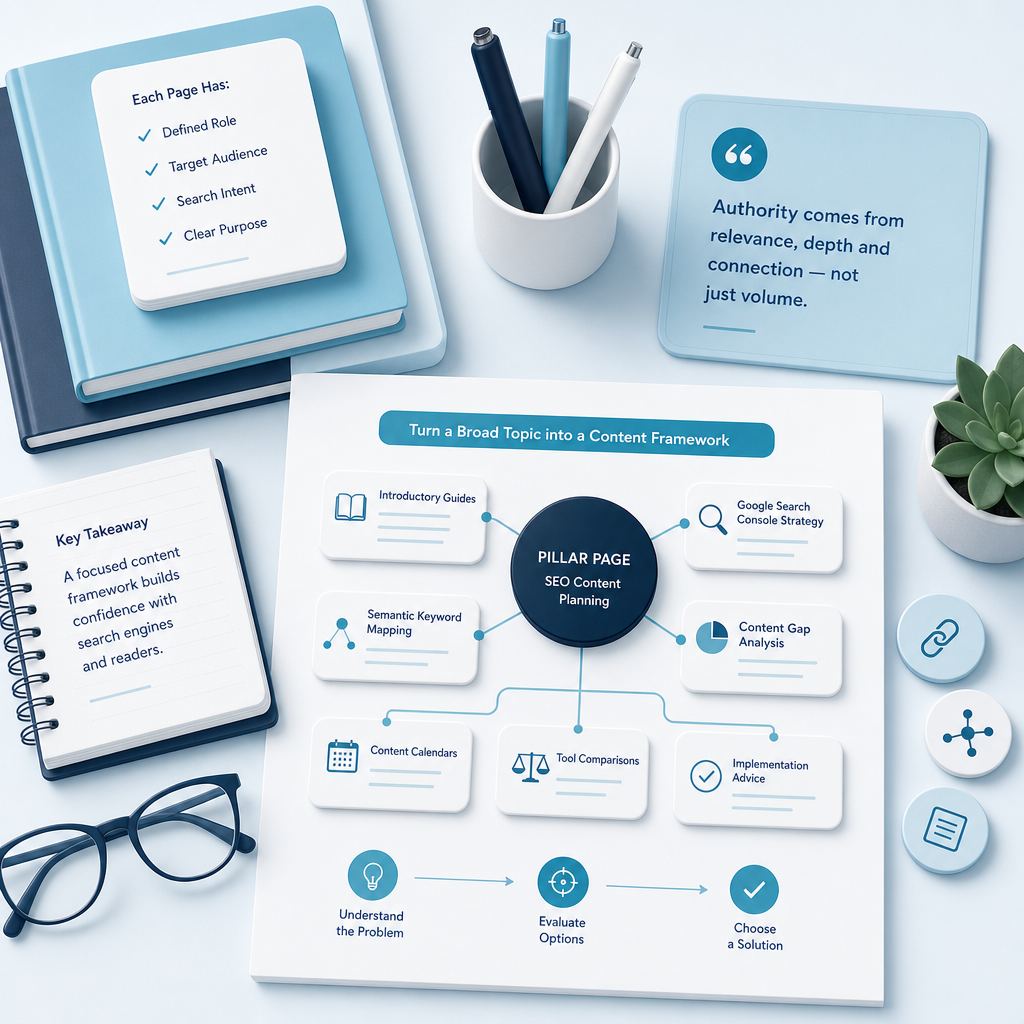
Topical authority planning is the process behind that outcome. It turns a broad business subject into a practical content framework containing pillar pages, supporting articles, comparison pages, local content and decision-stage resources. Each page has a defined role, audience and search intent.
For example, a small software company might focus on SEO content planning. Its map could include introductory guides, Google Search Console content strategy, semantic keyword mapping, content gap analysis, content calendars, tool comparisons and implementation advice. These subjects overlap naturally and help readers move from understanding a problem to choosing a solution.
Authority is not the same as publishing volume, domain strength or a claim of expertise. A newer website with focused, useful coverage can compete for relevant searches against a larger site that only touches a subject briefly. External references and links may support credibility, but they cannot replace clear, relevant content.
Why topical authority matters for small businesses
Large companies can often publish across many categories because they have specialist teams, established brands and substantial resources. A small business usually needs a narrower approach. Concentrating on a commercially relevant topic makes limited time and budget work harder.
When your pages cover connected questions, they can rank for a wider range of related searches without creating a separate article for every minor keyword variation. Search engines can understand the subject more clearly, while readers can move from a basic explanation to a practical guide or service page.
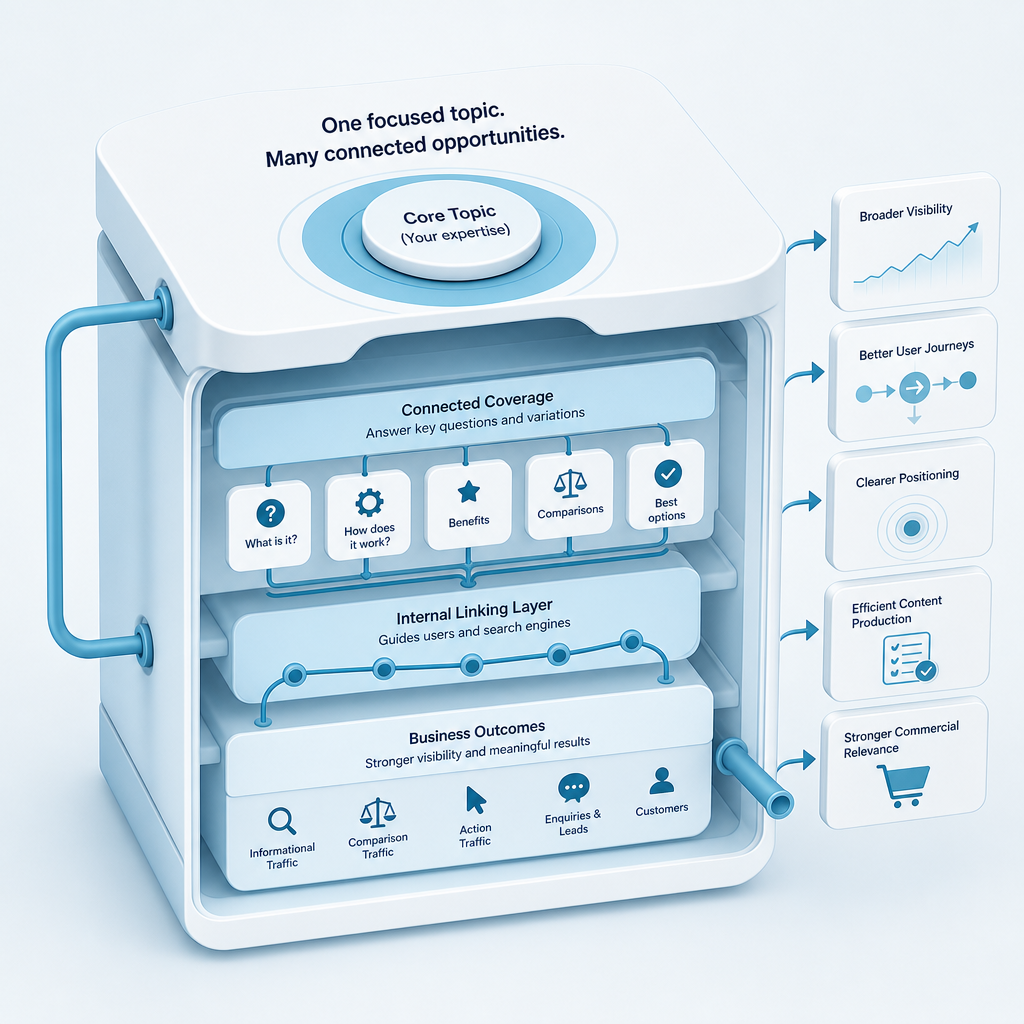
A well-planned cluster can support several business outcomes:
- Broader visibility: One connected subject can attract informational, comparison and action-focused searches.
- Better user journeys: Internal links help visitors find the next relevant answer instead of returning to search results.
- Clearer brand positioning: Consistent coverage shows what your business knows and where it can help.
- More efficient production: A content plan reduces repeated research and random publishing.
- Stronger commercial relevance: Educational content can lead naturally to service, product or enquiry pages.
These benefits do not appear automatically. A cluster can underperform if its articles overlap, fail to match intent or provide little original value. Planning must connect audience needs with business expertise and evidence from actual search performance.
Topical authority versus domain authority and backlinks
Domain authority is a third-party measurement of a website’s overall strength, usually influenced by factors such as links and site history. It can help when comparing websites, but it is not a direct Google metric and does not show whether a site is the best source for a particular subject.
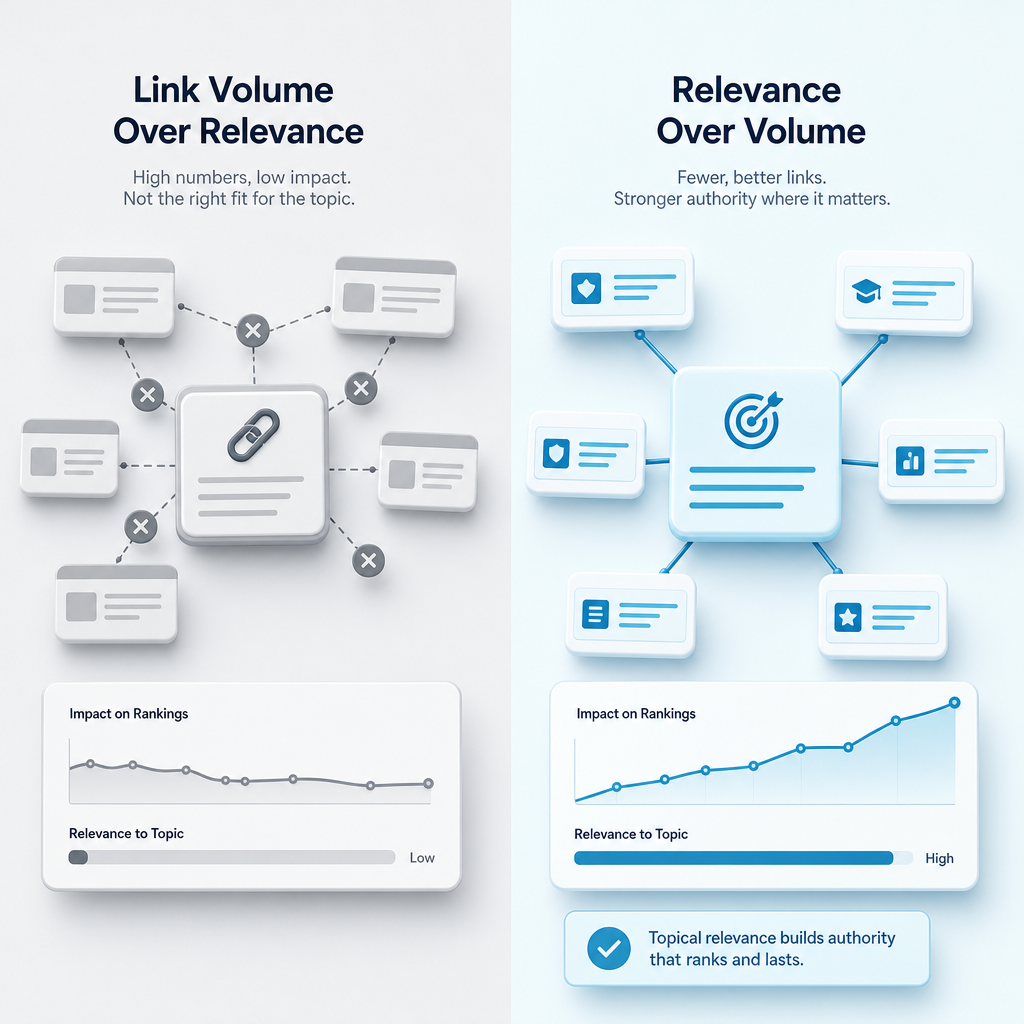
Topical authority is narrower. It asks whether a website demonstrates meaningful knowledge in one area. A focused service business may have fewer links than a national publisher but still offer a more relevant answer for a specific customer problem.
Backlinks and external mentions remain useful when they are relevant and editorially earned. A reference from a respected industry publication can support credibility and referral traffic. However, buying links, chasing volume or publishing on unrelated websites does not create genuine authority. Content quality, relevance and a sound site structure should come first.
| Approach | Strength | Best fit |
|---|---|---|
| Independent blog posts | Simple to start | Testing isolated questions |
| Topical clusters | Builds connected subject depth | Long-term organic visibility |
| SEO agency programme | Access to strategy and specialists | Limited internal capacity |
| AI SEO content platform | Combines data, planning and production | Lean teams needing repeatable workflows |
The right choice depends on your resources, the complexity of your market and how much control you want over research and production. Many businesses combine internal expertise with software rather than choosing between purely manual work and a traditional agency.
How topic clusters and topical maps work

A topical map is a structured view of the subjects, subtopics and questions your website could cover. It begins with a central theme and branches into related areas. The map can include search terms, audience problems, content formats, funnel stages and links between pages.
A topic cluster is the published version of part of that map. It normally contains a broad pillar page supported by more focused cluster pages. The pillar introduces the subject and connects to detailed articles. Supporting pages answer narrower questions and link back to the pillar where useful.
Consider a local technology consultancy planning content about cloud security. Its pillar page could explain the subject for small businesses. Supporting pages might cover security risks, compliance questions, cloud backup, employee access and choosing a provider. Each article serves a distinct intent while reinforcing the wider theme.
Internal links should be natural and descriptive. The pillar can link to its supporting pages, while supporting pages can link back to the pillar and to closely related articles. This structure helps readers and search engines understand relationships without forcing links into every paragraph.
A topical map should not become a rigid list of keywords. It needs room for new customer questions, product developments, seasonal needs and changes in search behaviour. Review it when performance data shows a page gaining impressions, when competitors cover an overlooked question or when an existing article needs a separate, more focused resource.
How a topic cluster is structured
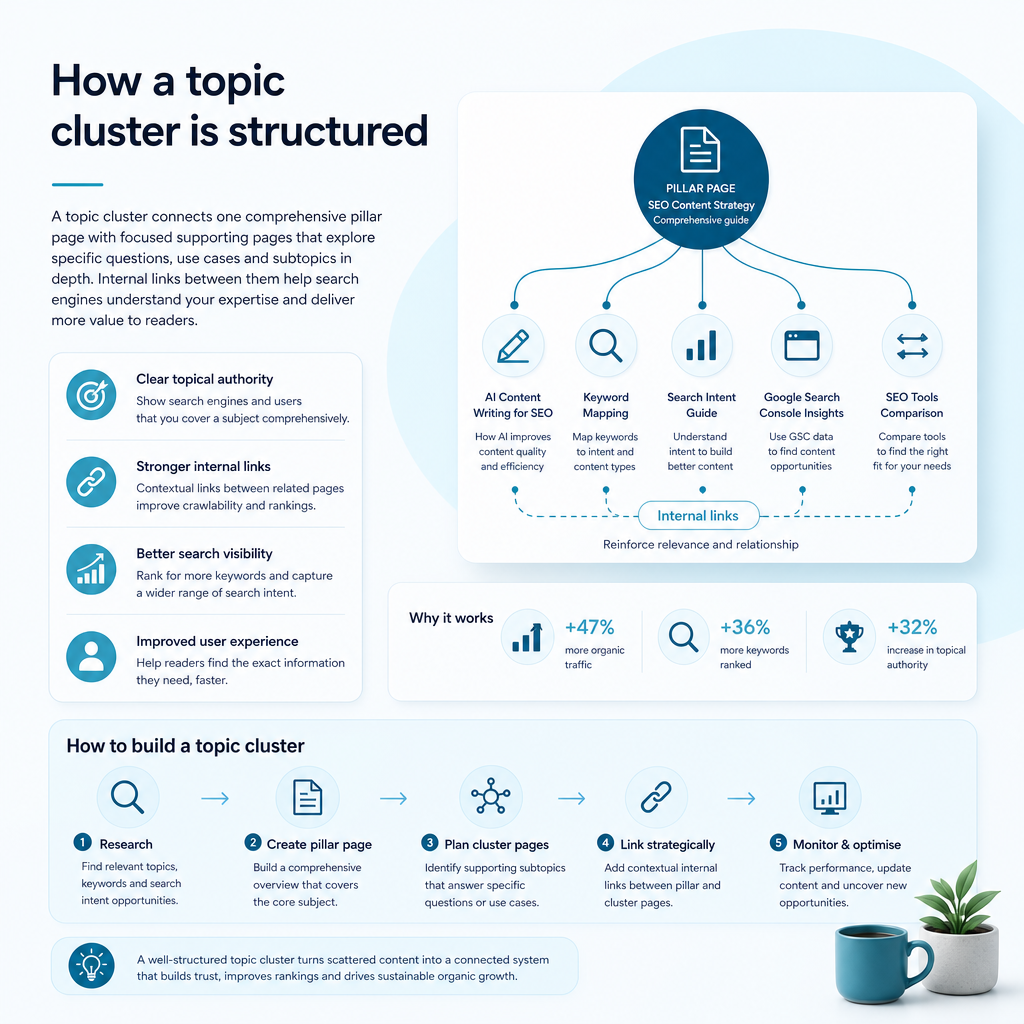
A useful cluster has three core components: a clear pillar topic, focused supporting content and intentional internal linking. Each part has a different job, but the value comes from how they work together.
| Component | Purpose | Example |
|---|---|---|
| Pillar page | Explains the main topic broadly and links to relevant supporting pages. | SEO content strategy for small businesses |
| Cluster page | Answers a focused question or addresses a specific search intent. | How to use Google Search Console for content planning |
| Internal links | Connect pages and clarify their relationship. | Descriptive links between the pillar and supporting articles |
Researching keywords, intent and content gaps
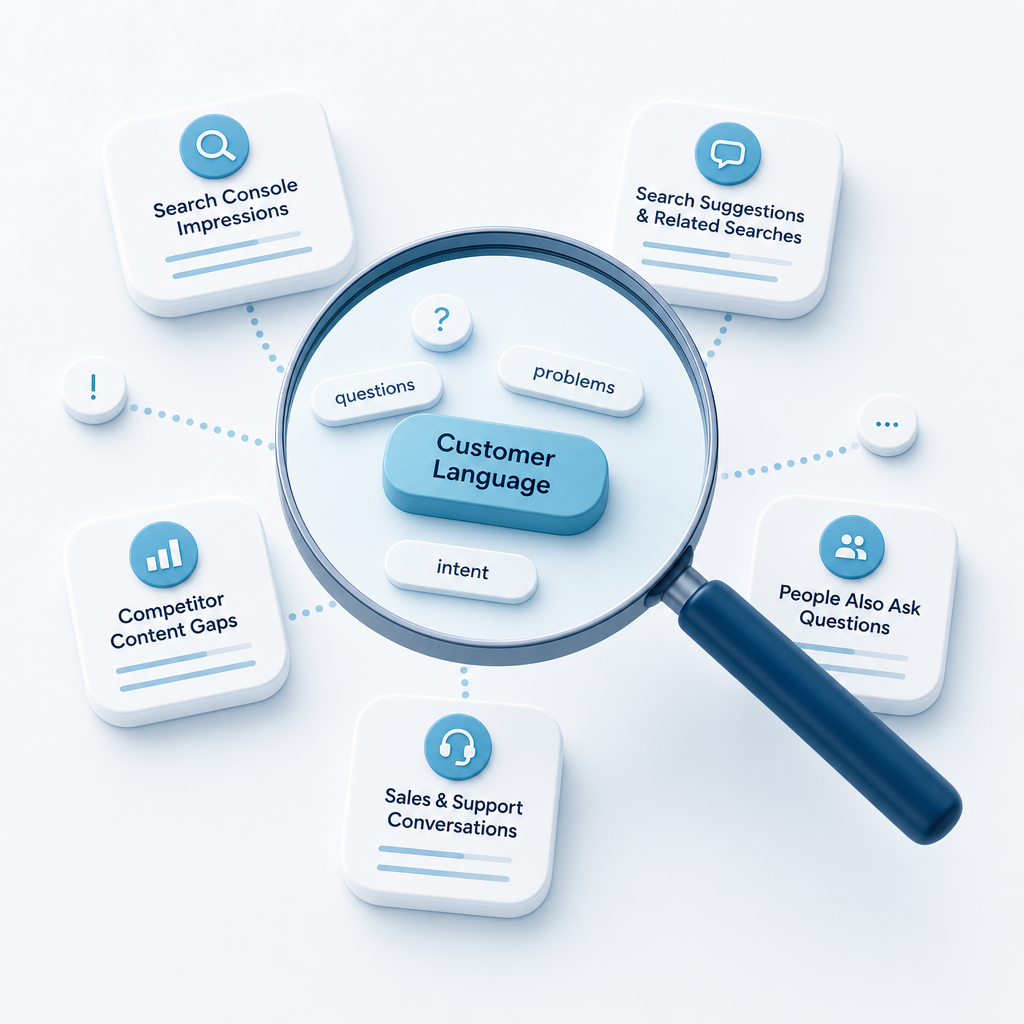
Keyword research remains useful, but topical authority planning uses it as evidence rather than as the entire strategy. The first task is to identify the language customers use, the problems behind those searches and the level of knowledge implied by each query.
Start with a few seed subjects that match your services. Review Google Search Console for queries already generating impressions, especially terms where your pages appear but do not receive many clicks. These searches can reveal realistic opportunities because Google already associates your website with the subject.
Then expand the research using search suggestions, related searches, People Also Ask results, competitor content-gap analysis and questions from sales or support conversations. Group similar terms by meaning and intent. A cluster might contain:
- Informational intent: “What is semantic keyword mapping?”
- Practical intent: “How to create an SEO content calendar.”
- Comparison intent: “SEO software versus an agency.”
- Commercial intent: “AI SEO content platform for small businesses.”
- Local intent: “SEO content creation for businesses in Manchester.”
Semantic keyword mapping connects related concepts that may not share the same wording. A page about local SEO content could naturally discuss location pages, service-area searches, Google Business Profile support and local customer intent. It does not need to repeat one phrase unnaturally.
Content-gap analysis should examine more than missing keywords. Ask whether competitors answer a customer question better, whether their content reflects a different intent and whether your business can add experience, examples or clearer guidance. Some valuable topics have modest measurable demand but help complete the subject and support commercial decisions.
How to create a topical authority plan step by step
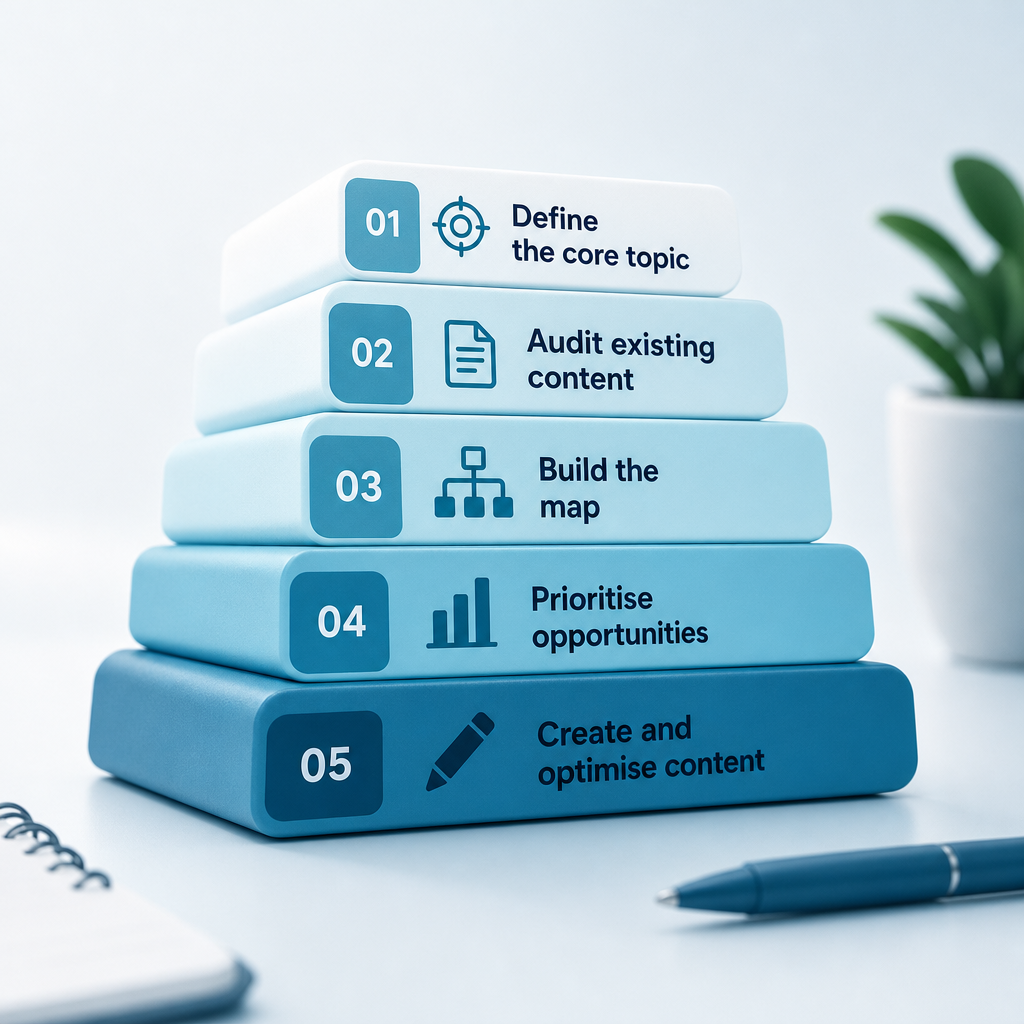
A practical plan begins with business relevance. Choose subjects where your organisation has genuine knowledge, where customers have recurring questions and where the content can support a service or commercial outcome.
1. Define the core topic
Choose a subject that is narrow enough to cover properly but broad enough to support several useful pages. “SEO” is too broad for most small businesses. “SEO content planning for growing service businesses” offers a clearer boundary and stronger connection to a real audience.
2. Audit existing content
List your current pages, their main intent, related queries, performance and internal links. Identify articles that overlap, pages with impressions but weak click-through rates and important customer questions that have no suitable page.
3. Build the map
Group topics into pillars and supporting pages. Record the intended keyword group, search intent, audience stage, content format and proposed internal links. Assign one primary purpose to each URL so two pages do not compete for the same need.
4. Prioritise opportunities
Do not publish in search-volume order alone. Prioritise pages where you have credible expertise, realistic competition, existing impressions, strong commercial relevance or an obvious gap in competitor coverage. A page close to page-one visibility may deserve attention before a highly competitive head term.
5. Create and connect the content
Write for the reader’s question first. Use clear headings, practical examples, trustworthy sources and a consistent point of view. Add internal links when they help someone continue their research, not simply to increase link counts.
6. Review the cluster
Track impressions, clicks, ranking groups, conversions and engagement over time. Refresh pages when the information changes or performance reveals a better way to answer the intent. Consolidate overlapping pages rather than allowing several weak URLs to compete.
Choosing the right solution for your business
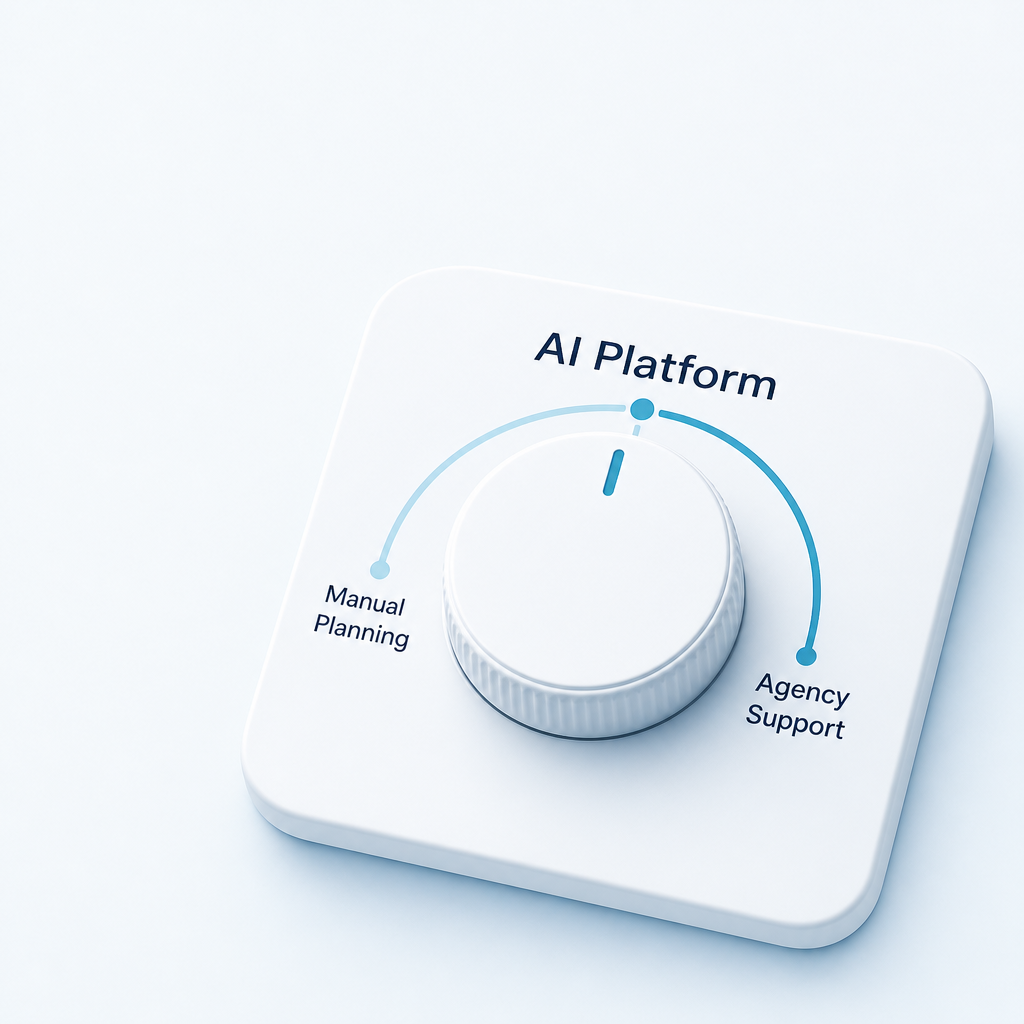
Small businesses usually compare three routes: managing topical authority planning manually, using general-purpose AI writing tools or working with an agency or specialist provider. Each can be suitable, but the differences are found in research quality, strategic context, review requirements and ongoing cost.
Manual planning gives you maximum control and can work well when the team has SEO experience and enough time. The challenge is consistency. Researching queries, checking competitors, mapping terms, writing briefs, producing articles and monitoring results can become a substantial weekly task.
Generic AI writing tools can speed up drafting, but they may produce text without understanding your existing rankings, customer priorities or competitive position. They are most useful when guided by a clear brief and reviewed by someone who understands the business. More words do not automatically create more authority.
A traditional SEO or content agency can provide strategic input and specialist capacity, but the cost and communication process may not suit every growing company. An AI SEO content platform sits between these options by combining automation with a data-led workflow. It should help identify opportunities, organise content and reduce repetitive work while leaving room for human judgement and brand review.
Ammpli is designed for small and growing businesses in the United Kingdom and English-speaking international markets. Its AI-powered SEO content platform combines Google Search Console and Analytics data with competitor research, search-intent analysis and semantic keyword mapping. This supports SEO opportunity analysis, content-gap analysis, topical authority planning, SEO content calendars and AI-powered SEO content creation.
The practical value is the connection between evidence and execution. Rather than starting with a blank prompt, a team can investigate where its website already has visibility, identify realistic opportunities and turn those findings into planned content. Features such as local SEO content creation, blog and brand analysis, direct CMS publishing and SEO performance reporting can reduce manual steps for teams that lack dedicated SEO staff.
That does not remove the need for review. Business owners and marketing managers should check accuracy, positioning, claims and customer relevance before publication. The strongest process combines real business knowledge with reliable search data and efficient production.
Common topical authority planning mistakes

Many content programmes fail because the plan is built around activity rather than a defined audience problem. Publishing every week can create the appearance of progress while leaving important intent gaps unresolved.
- Covering unrelated subjects: A mixed blog makes it harder to establish a clear area of expertise.
- Creating several pages for one intent: Similar articles can compete with each other and dilute internal links.
- Writing only for high-volume terms: Specific, commercially relevant questions may offer more realistic opportunities.
- Ignoring existing performance: Search Console data can reveal pages that need improvement before new content is created.
- Using weak internal links: Orphaned pages are harder for users and crawlers to discover.
- Confusing length with depth: A long article is not useful if it avoids the reader’s real question.
- Publishing without review: Automated drafts can contain errors, generic claims or an unsuitable brand voice.
- Never updating the map: Customer language, competitors and search results change over time.
Avoid treating topical authority as a quick campaign with a fixed outcome. Search visibility develops through consistent relevance, useful content and ongoing refinement. Measure patterns across a cluster instead of judging the whole strategy by one ranking.
Measuring progress and deciding when to get help
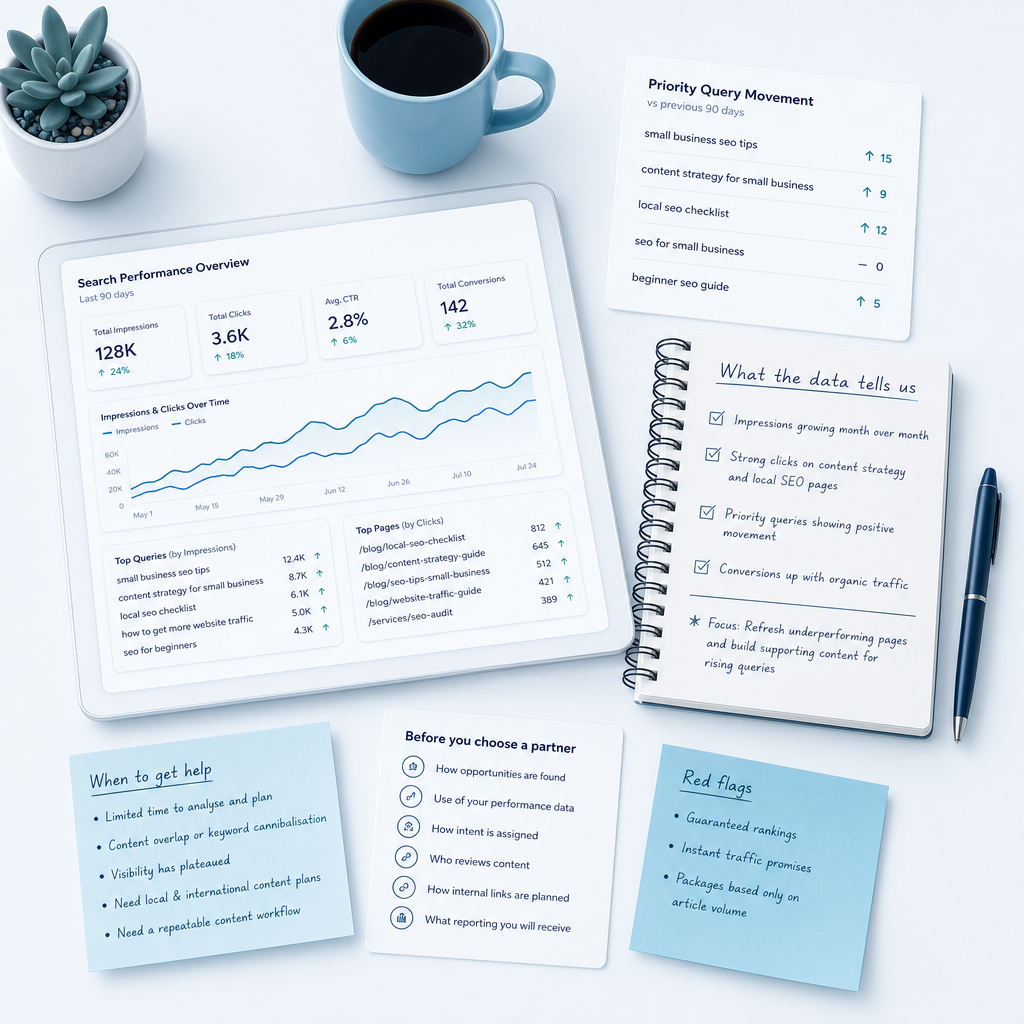
Measurement should connect content activity with meaningful business signals. Track impressions and clicks for topic groups, the number of pages gaining visibility, movement for priority queries, engagement and enquiries or sales influenced by organic search.
Google Search Console can show which queries bring impressions, which URLs receive clicks and where a page may need a stronger title or better alignment with intent. Analytics data can add information about engagement and conversions. Look at trends over a sensible period rather than reacting to daily movement.
Professional support makes sense when your team has an established website but lacks time to interpret data, map topics or publish consistently. It can also help when several articles overlap, organic visibility has plateaued or local and international audiences require different content plans.
Before selecting a provider or platform, ask how opportunities are found, whether recommendations use your own performance data, how intent is assigned, who reviews content, how internal links are planned and what reporting you will receive. Be cautious of guaranteed rankings, instant traffic promises or packages based only on article volume.
Ammpli helps teams turn search data into a repeatable content workflow without the cost or time commitment associated with a traditional agency. It is a practical option for founders, marketing managers and small teams that want a clearer way to plan and produce SEO content while retaining oversight of the final result.
Frequently Asked Questions
How long does topical authority planning take to show progress?
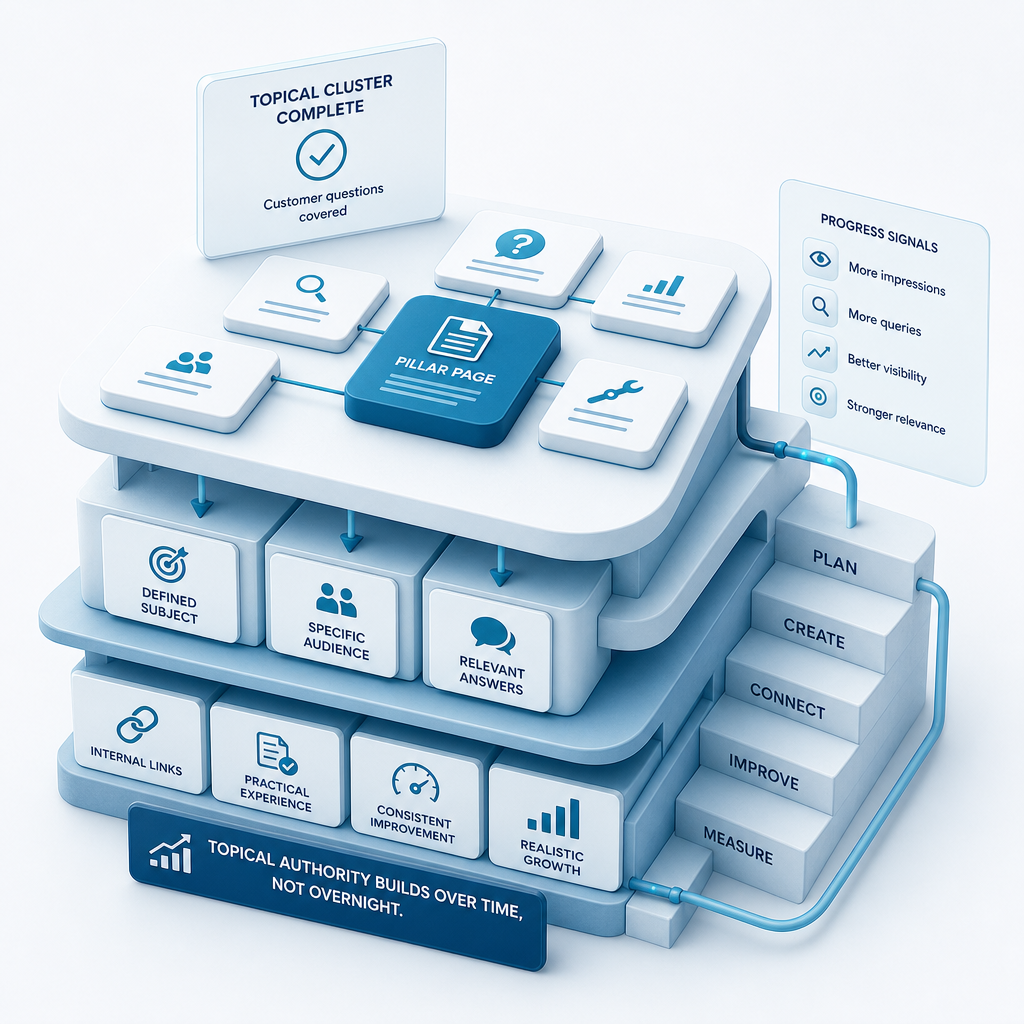
Progress varies by competition, website history, content quality and publishing consistency. Early signals may include more impressions, additional queries and improved visibility for existing pages. Treat topical authority as an ongoing programme rather than a fixed campaign, and review performance across the whole cluster instead of expecting every page to improve at once.
How many articles should a topical cluster contain?
There is no universal number. A small subject may need a pillar page and several supporting articles, while a complex market may require many more. Stop adding pages when the main customer questions are covered, new content adds little value or existing pages would be better improved and connected.
Can a small website compete with larger competitors?
Yes, a small website can compete by focusing on a defined subject, serving a specific audience and providing more relevant answers than broader competitors. It may not compete immediately for the widest terms, but focused topic coverage, strong internal links, practical experience and consistent improvement can create realistic opportunities.
Is an AI SEO content platform suitable for every business?
It suits teams that need help with research, opportunity discovery, planning and consistent production but still want control over accuracy and brand quality. Businesses with highly specialist, regulated or sensitive content may need additional expert review. Compare the platform’s data sources, workflow, reporting and publishing controls before choosing it.
Should every cluster page link to every other page?
No. Cluster pages should link to the pillar and to related pages when the connection is useful. Excessive or forced linking can make content harder to read. Relevance and context should guide the linking decisions.
How does Google Search Console help with topic clusters?
Google Search Console shows the queries and pages already generating impressions and clicks. This data can reveal content gaps, emerging themes and pages that may benefit from stronger supporting content or internal links.
Build a clearer path to organic visibility
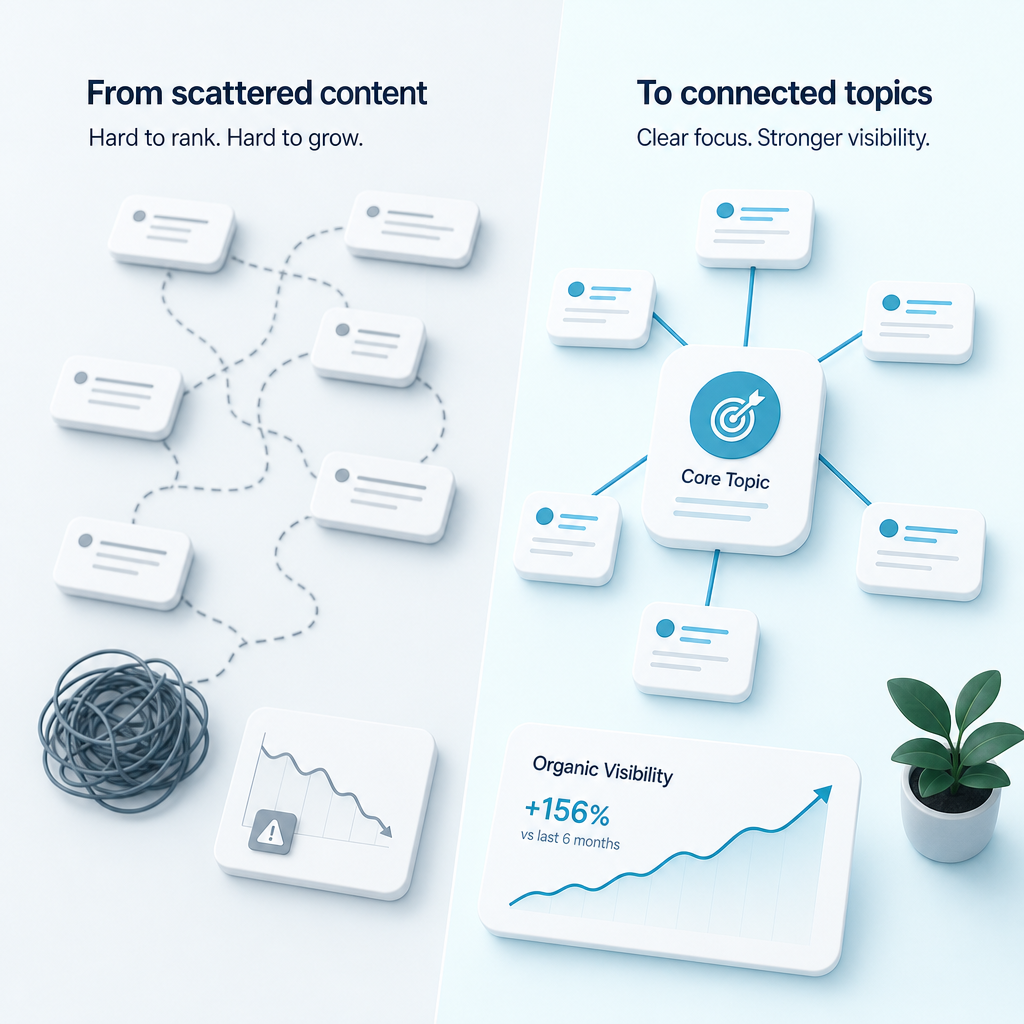
Topical authority planning gives small businesses a practical alternative to random blogging and isolated keyword targeting. By focusing on relevant subjects, mapping search intent, connecting pages and reviewing real performance data, you can create a content system that becomes more useful over time.
The right approach may be manual, supported by specialists or streamlined through an AI SEO content platform. What matters is that the process reflects your customers, your expertise and realistic opportunities. Start by reviewing your existing search data and identifying the topic where better coverage could support your next business goal.