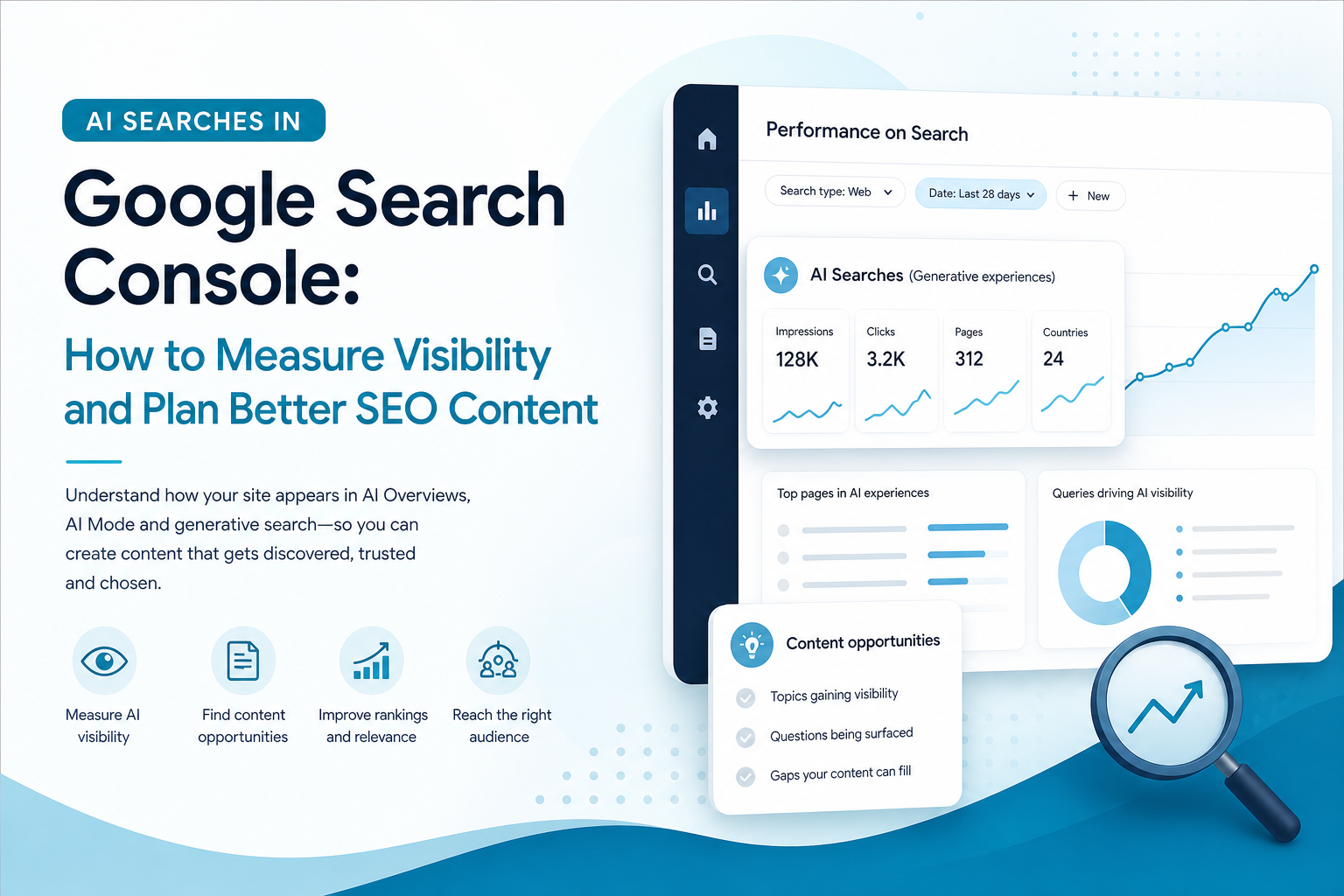
 Small businesses are beginning to appear in AI Overviews, AI Mode and other generative search experiences, but many owners still cannot tell what that visibility means for their website. You may see more impressions without a matching rise in clicks, or notice that traditional ranking reports no longer explain how customers discover your content.Understanding AI searches in Google Search Console gives you a clearer way to interpret these changes. Google is adding dedicated reporting for generative AI features, while its guidance confirms that the same sound SEO principles remain relevant: crawlable pages, useful content, clear structure and strong relevance to the searcher’s needs.This guide explains what the data includes, how to use it for SEO content planning and what to look for when choosing an AI SEO content platform such as Ammpli.
What AI searches in Google Search Console can show you
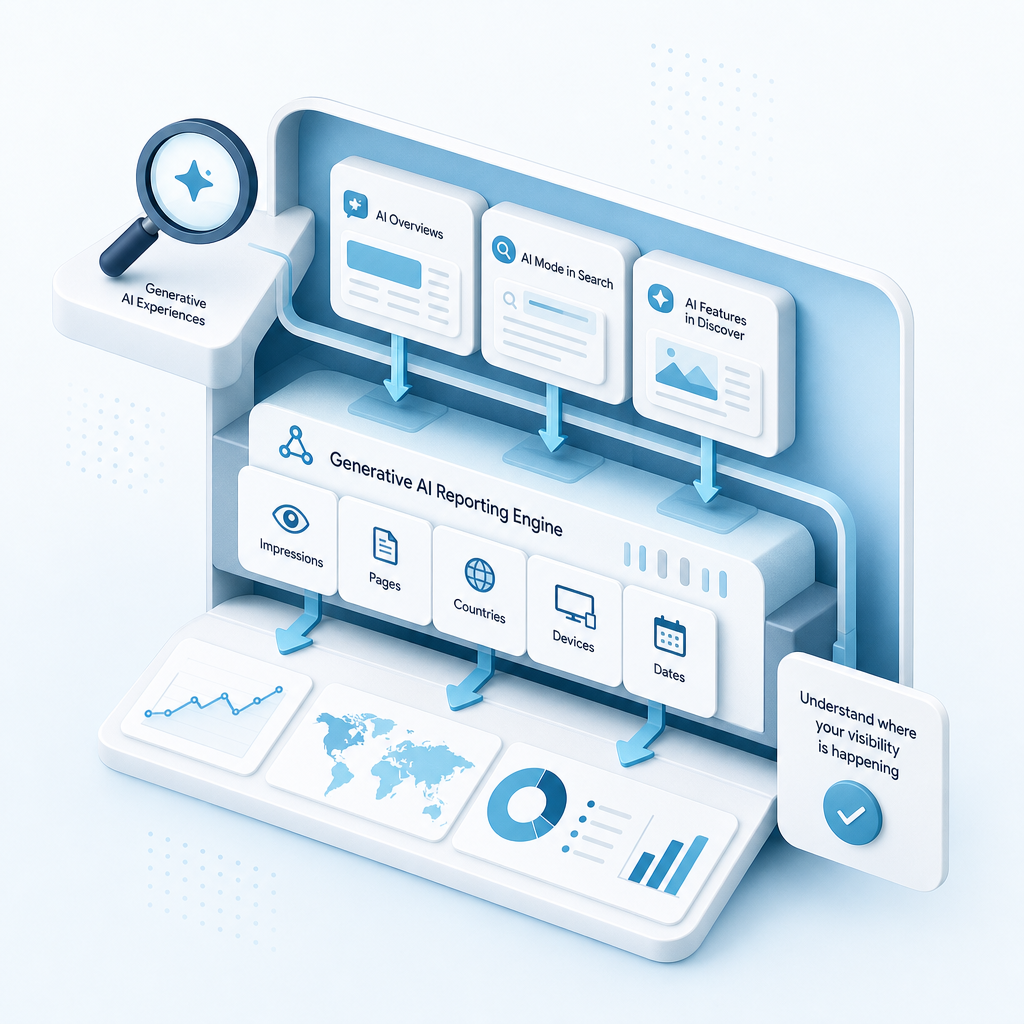
Google’s generative AI reporting is designed to show how your website appears within AI-powered experiences. The reports cover AI Overviews and AI Mode in Search, as well as generative AI features in Discover where available.
Google announced dedicated generative AI performance reports on 3 June 2026, with a wider rollout noted for 31 August 2026. The available views can help you understand which pages are being surfaced and where that visibility is happening.
- Impressions: how often URLs from your site appeared in generative AI features.
- Pages: which URLs were shown or referenced.
- Countries: where your visibility occurred.
- Devices: which devices people used in Search.
- Dates: performance over hourly, daily, weekly and monthly periods.
This is more useful than relying on a single average position. AI experiences can include several supporting links, follow-up questions and different layouts, so the route from visibility to website visit is less direct than a traditional blue-link result.
How AI Overviews and AI Mode affect SEO measurement
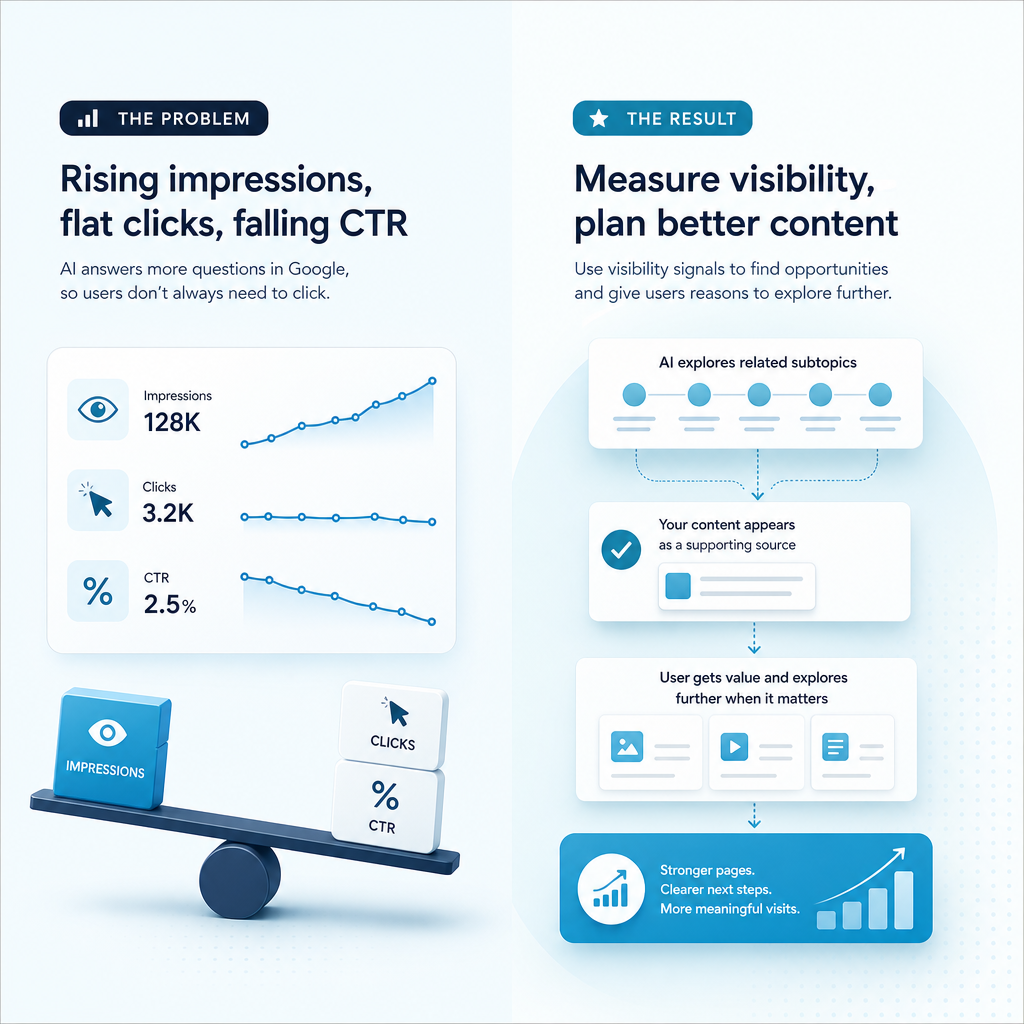
AI Overviews help users understand complex questions quickly and provide links for further exploration. AI Mode is designed for more detailed questions, comparisons and follow-up research. Both can use related searches across several subtopics before presenting a response.
That process creates new opportunities for relevant pages, but it also changes how performance should be judged. A page may be visible as a supporting source without receiving a click, particularly when the AI response answers much of the initial question within Google.
Impressions and clicks do not mean the same thing
An impression generally means that a qualifying link from your site appeared in an AI feature. A click requires the user to select that link and visit your website. Interaction within Google does not count as a website click.
This can produce a pattern of rising impressions, flat clicks and falling click-through rate. It does not automatically mean your content is performing badly. It may indicate that your content is gaining visibility for broader research queries, while the page needs stronger reasons for a user to continue to your site.
Average position needs careful interpretation
Position data can be harder to explain in AI-powered results because AI Mode may contain link cards, images and carousels. AI Overviews can also group several links within one result area. Treat average position as one signal rather than a complete description of how prominently your business appeared.
How to use Google Search Console data for better content decisions

Search Console becomes more valuable when you use it to guide decisions instead of simply recording reports. Look for pages that already receive impressions, queries where your site is relevant but not yet prominent, and topics that connect directly to your services.
For a small service business, the most useful opportunities often sit between existing visibility and stronger commercial relevance. For example, a technology provider may receive impressions for questions about SEO content planning but have no dedicated page explaining how its platform turns search data into a practical publishing plan.
Find pages with visibility but limited engagement
Review pages with impressions but relatively few clicks. Then ask whether the page answers the searcher’s question clearly, matches their intent and offers a logical next step. A stronger introduction, clearer headings, original examples or a more relevant service invitation may improve the user experience.
Group related queries by search intent
Do not treat every query as a separate article idea. Group related searches into themes such as education, comparison, problem solving and purchase intent. This supports semantic keyword mapping and helps prevent a website from publishing several thin pages that compete with one another.
Build topical authority around real demand
Topical authority comes from covering a subject thoroughly with connected, useful pages. A small business might build a cluster around Google Search Console content strategy, keyword opportunity finding, AI SEO content, local SEO content creation and performance reporting.
The aim is not to publish as much as possible. It is to create a clear set of resources that helps the audience understand a problem, evaluate options and take action.
What content works well for AI-assisted search experiences?
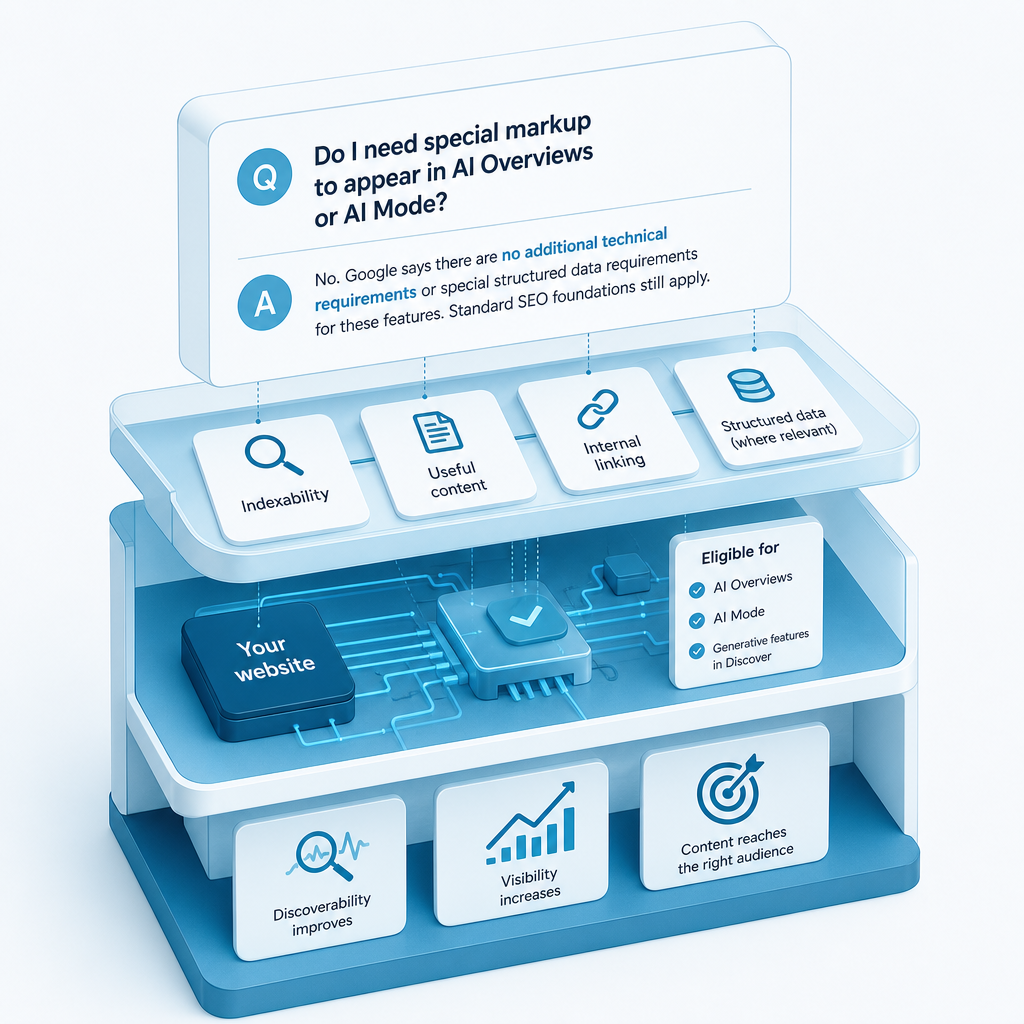
Google states that there are no additional technical requirements or special markup needed for AI Overviews or AI Mode. A page still needs to be indexed, eligible to appear in Search and eligible to show a snippet.
That does not mean content quality is unimportant. Pages need to be useful to people before they can be useful in an AI-supported search journey.
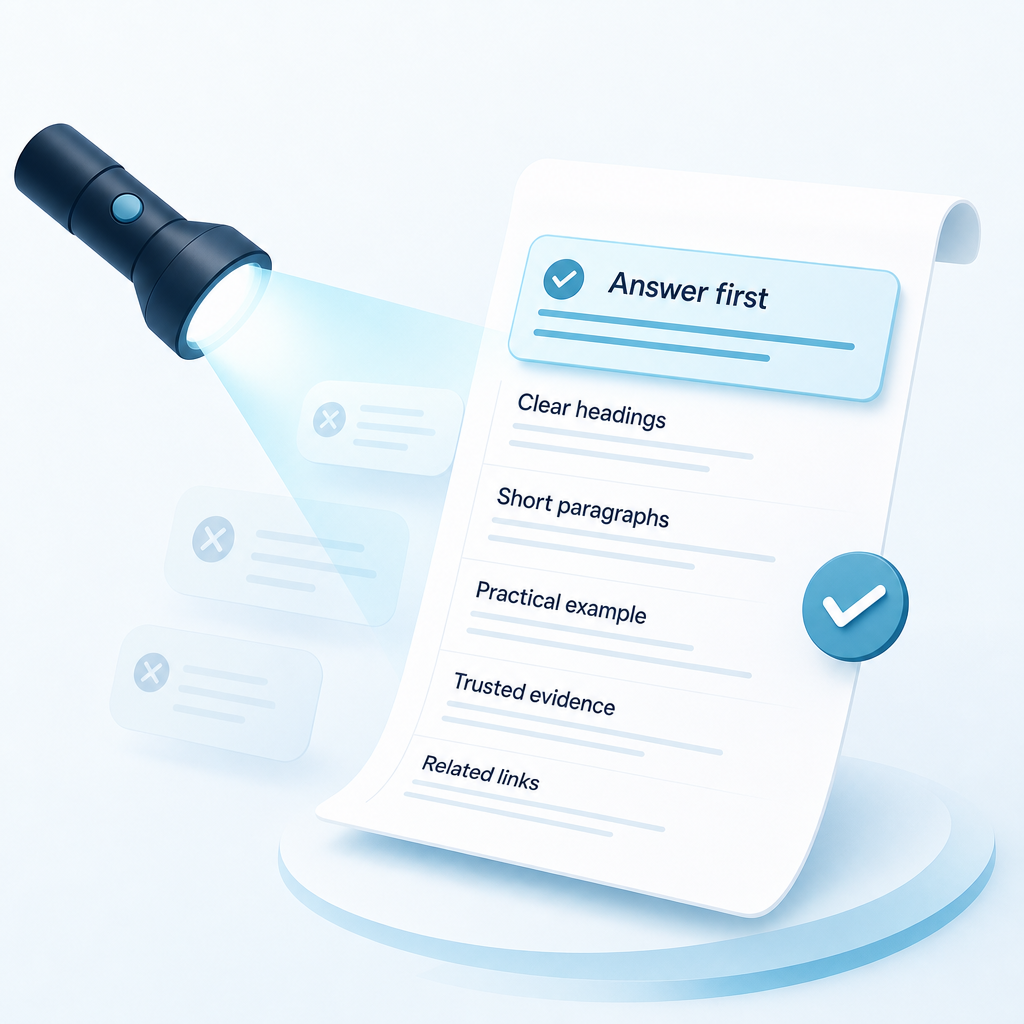
- Answer the main question early.
- Use descriptive headings and short, focused paragraphs.
- Explain technical ideas in practical language.
- Include original examples relevant to the customer.
- Support claims with trustworthy evidence when appropriate.
- Link to related pages across the website.
- Keep important information in text rather than hiding it in inaccessible formats.
- Use structured data only when it accurately reflects visible page content.
- Make service details, location and contact information clear.
For businesses serving the United Kingdom and English-speaking international markets, content should also reflect regional wording, customer expectations and local search intent where relevant. A page targeting a local service should make its service area and practical offering clear without repeating location terms unnaturally.
How to compare SEO content solutions
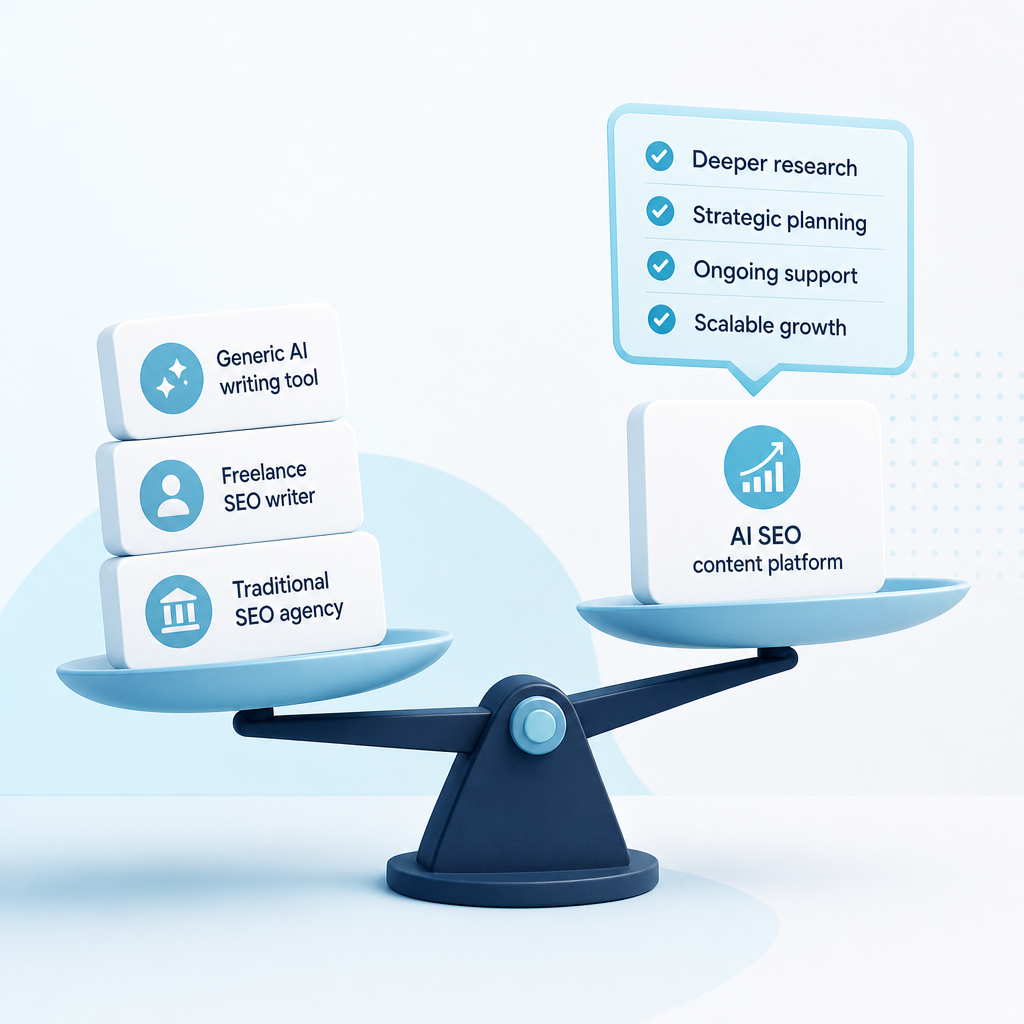
Small businesses often choose between generic AI writing tools, freelance writers, traditional agencies and specialist SEO content software. Each option can be suitable in certain circumstances, but the right choice depends on how much research, planning and ongoing involvement is included.
Use the table below to compare the level of support rather than focusing only on the headline price.
| Approach | Research and data | Planning support | Best suited to |
|---|---|---|---|
| Generic AI writing tool | Usually limited business-specific search data | Often requires manual planning | Teams that already have SEO expertise |
| Freelance SEO writer | Varies by experience and brief quality | May be limited to individual assignments | Businesses with a clear strategy and internal editor |
| Traditional SEO agency | Can include detailed research and reporting | Often highly managed | Businesses with a larger ongoing budget |
| AI SEO content platform | Can combine Search Console, Analytics and competitor insights | Supports repeatable opportunity and calendar planning | Growing businesses that need practical, scalable SEO support |
A good provider should explain what data is used, how recommendations are made and what remains under your control. Be cautious of services that promise guaranteed rankings or produce articles without showing how the topics relate to your existing website.
How Ammpli turns search data into content opportunities
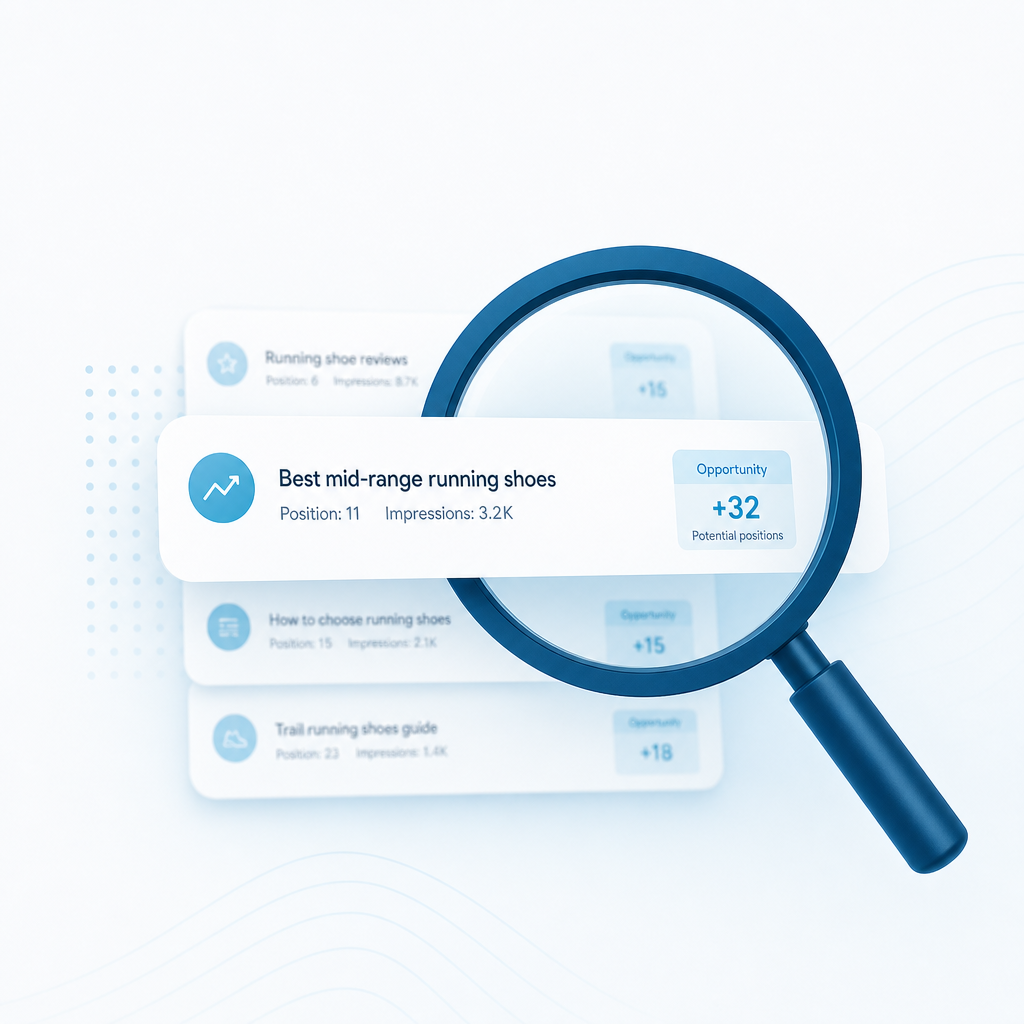
Ammpli is an AI-powered SEO content platform for small and growing businesses. It combines Google Search Console and Analytics data with competitor research, search-intent analysis and semantic keyword mapping.
The platform is designed for both businesses that already have an established website and some Google visibility, but lack the time, internal expertise or budget for a traditional SEO agency but also new businesses entering the market that need a presence. Its workflow connects opportunity analysis with practical content production.
The process
- Analyse existing performance: identify queries, pages and themes already generating impressions or engagement.
- Identify realistic opportunities: find relevant searches where your website has visibility but has not yet reached its strongest position.
- Review competitors and content gaps: compare the subjects and intent covered by competing pages.
- Map related topics: organise semantic keywords and supporting questions into a coherent plan.
- Create the content: produce data-driven, search-optimised articles aligned with your business and audience.
- Publish and measure: use content calendars, direct CMS publishing and SEO performance reporting to maintain momentum.
This approach helps replace guesswork with a repeatable process. It also supports local SEO content creation, blog and brand analysis, topical authority planning and keyword opportunity finding from one workflow.
What to check before choosing an AI SEO content platform
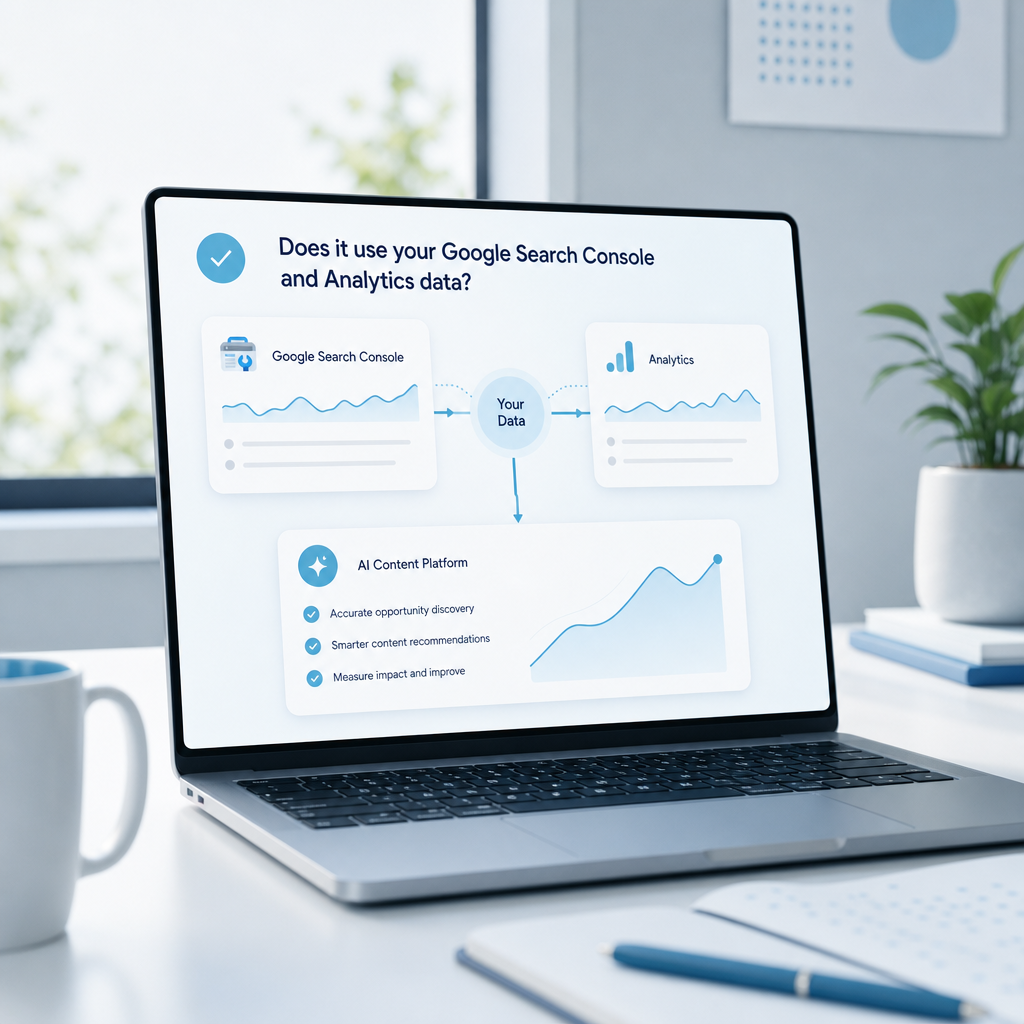
Before committing to SEO content software, check whether it can work with your actual website and business goals. A platform should make research easier without removing editorial judgement or creating content that sounds disconnected from your services.
Ask these questions before starting:
- Does it use your Google Search Console and Analytics data?
- Can it identify realistic opportunities rather than only high-volume terms?
- Does it analyse search intent and competitor content gaps?
- Can it support semantic keyword mapping and topical authority planning?
- Does it provide useful reporting after publication?
- Can it handle local and international English-language content where needed?
- Does it allow human review and control over the final article?
- Can it publish through your existing CMS workflow?
These questions separate an AI SEO content generator from a broader AI SEO content platform. Writing is only one part of the work. The quality of the opportunity, the fit with your business and the ability to learn from performance matter just as much.
Managing inclusion and control in generative AI features
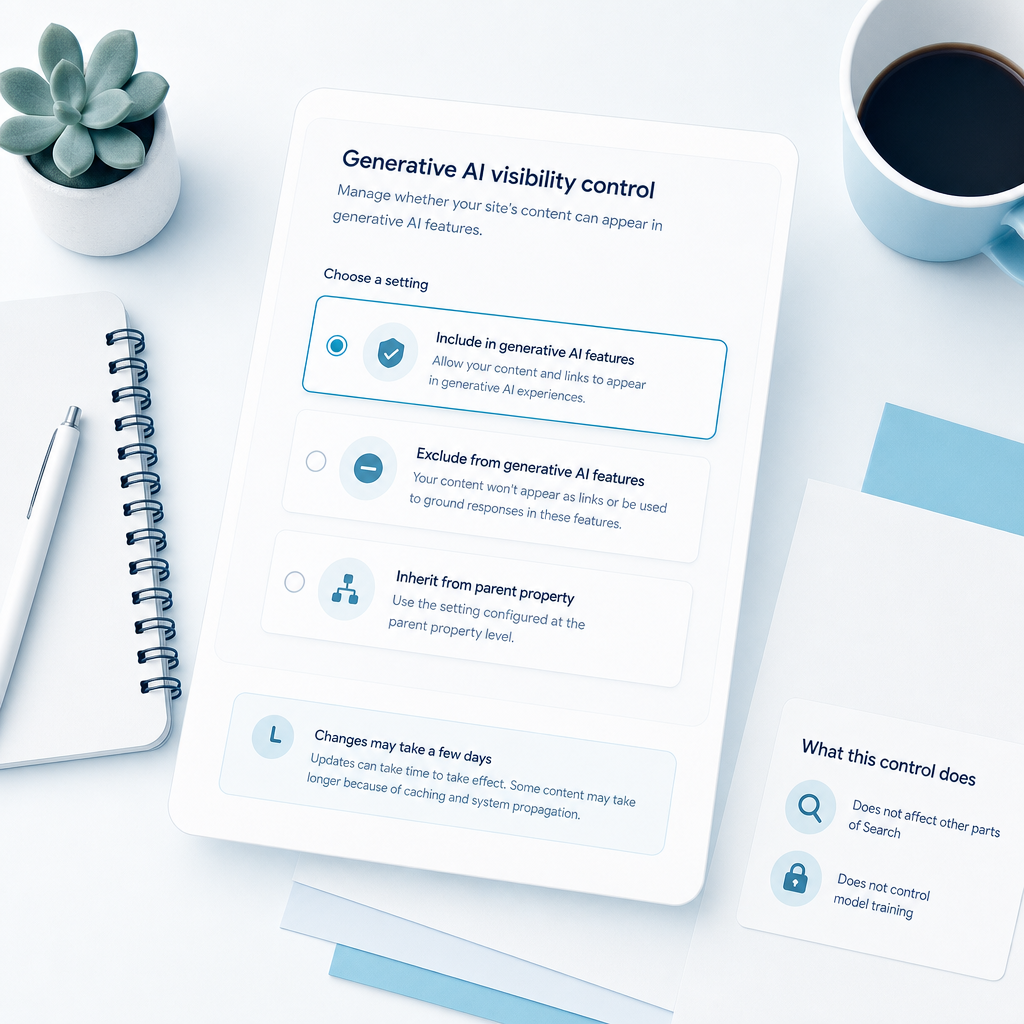
Google’s Search generative AI control allows verified property owners to manage whether their links and content can appear in selected generative AI features. The options include including the site, excluding it or inheriting the setting from a parent property.
If a site is excluded, its content will not appear as links or help ground responses in the covered features. Google states that this control does not affect other parts of Search and does not control model training. Changes can take a few days to take effect, with some content taking longer because of caching and system propagation.
For most businesses focused on organic visibility, the practical step is to review the setting, confirm that the preferred property is configured correctly and monitor the Generative AI performance report before making a decision.
Frequently Asked Questions
Does Google Search Console show AI searches separately?
Google is introducing dedicated generative AI performance reports for AI Overviews, AI Mode and generative AI features in Discover. Availability and reporting details may develop over time, so use the dedicated report alongside the overall Web performance report.
Why can impressions rise while clicks remain flat?
AI features can show your website as a supporting source without a user visiting it. Rising impressions with flat clicks may reflect greater visibility for research queries, a lower click-through opportunity within the AI result or a need to strengthen the page’s value and next step.
Do I need special markup to appear in AI Overviews or AI Mode?
No. Google says there are no additional technical requirements or special structured data requirements for these features. Standard SEO foundations still apply, including indexability, useful content, clear internal linking and accurate structured data where relevant.
Can Ammpli help me find content opportunities from Search Console?
Yes. Ammpli combines Google Search Console and Analytics data with competitor research, search-intent analysis and semantic keyword mapping. It can help identify realistic ranking opportunities and turn them into a practical SEO content plan.
Is an AI SEO content platform suitable for a small business?
It can be suitable when a business has an established website, some search visibility and limited time for manual research. Ammpli is designed for small and growing businesses that want data-driven content planning and production without the cost or complexity of a traditional agency relationship.
When should I start using AI search reporting?
Start when your website already receives impressions or rankings and you need clearer direction on what to publish next. Early reporting can help you build a stronger content calendar, monitor emerging visibility and connect SEO activity with engagement and enquiries.
Turn your search data into better content
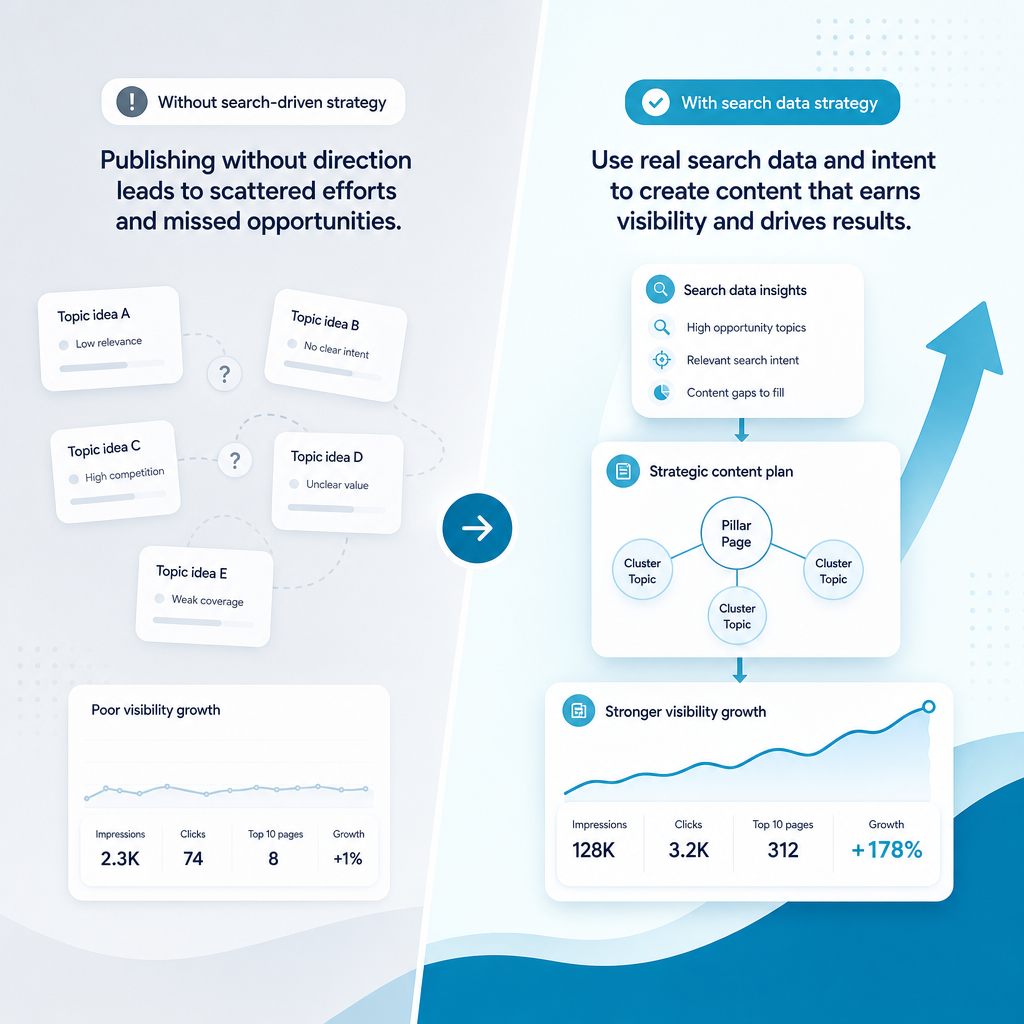
AI searches in Google Search Console are changing how businesses interpret organic visibility. The strongest response is not to publish more content at random, but to use real search data, clear intent and useful subject coverage to decide what deserves attention.
Ammpli brings opportunity analysis, competitor content-gap analysis, semantic keyword mapping, AI-powered SEO content creation and performance reporting into one practical platform for small businesses. It helps you find your next ranking opportunity and build a content plan based on the visibility your website already has.
Start your 14-day free trial and turn your search data into better content. No credit card required.